Health
Faith leaders urged to confront beliefs, family decisions driving maternal deaths in Kano

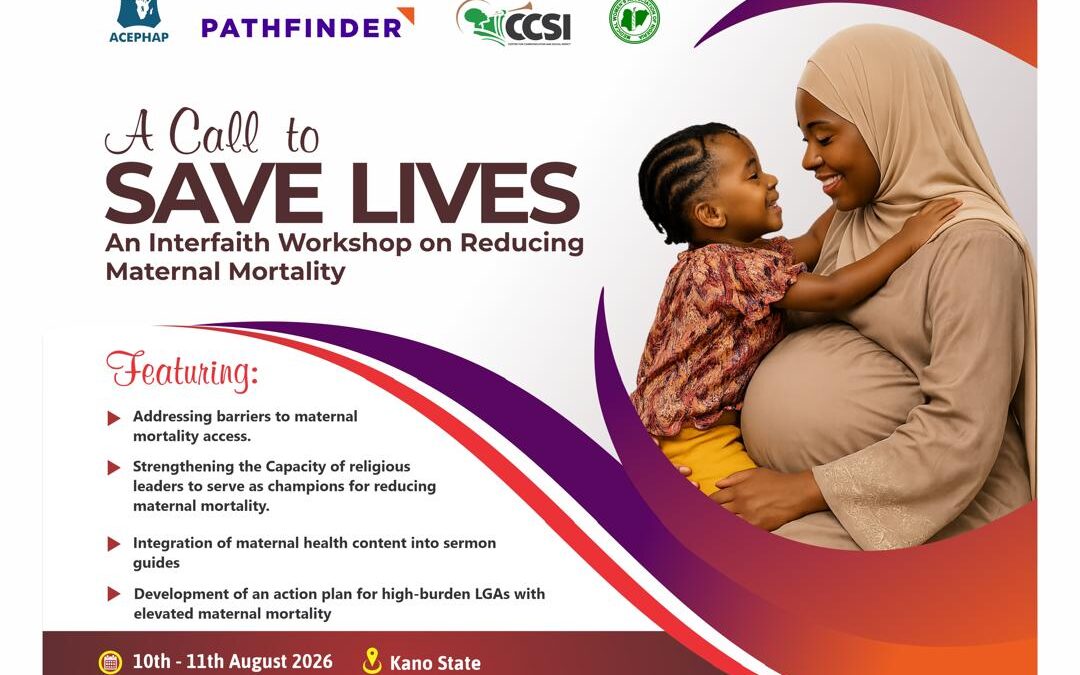

For many women in Kano, the risks associated with childbirth begin long before labour.
Cultural beliefs, religious misconceptions, financial hardship, delayed antenatal care and reliance on traditional remedies can prevent pregnant women from reaching health facilities when they need care.
These barriers were highlighted at a two-day interfaith workshop in Kano, where religious leaders, health professionals, government officials and development partners examined how communities can help reduce maternal deaths.
The workshop, titled “Save Lives: An Interfaith Workshop on Reducing Maternal Mortality”, was organised under the Advocacy and Implementation of Maternal, Newborn, Child Nutrition and Health (AIM-MNCNH) project and held on Monday in Kano State.
Participants examined the “three delays” associated with maternal deaths and findings from community dialogues in Gaya Local Government Area of Kano State.


The discussions showed that access to care is often determined by more than the availability of health facilities. Decisions by husbands and older family members, transport difficulties and beliefs about childbirth can all determine whether a woman receives timely care.
‘People listen to religious leaders’
Speaking on the role of religious leaders, Adeniyi Ogunbanwo, Secretary of the Christian Association of Nigeria (CAN) in Kano State, said they could play a significant role because of the trust communities place in them.
Mr Ogunbanwo said churches could use sermons, weddings, naming ceremonies and other gatherings to educate families about maternal health.
“Religious leaders, in terms of being realistic, people listen to us. So, we have a lot to play, and mostly by speaking,” he said.

He said churches could also support women who struggle to pay medical bills, noting that some churches have maternity wards.
However, Mr Ogunbanwo warned that religious beliefs should not be used to discourage women from seeking professional medical care.
He said some women interpret biblical references to childbirth as meaning they should be able to deliver without medical assistance.
According to him, CAN had been engaging the Kano State Primary Healthcare Board and other government structures on maternal health and would develop a sermon guide for churches across the state.

Family decisions
Beyond religious teachings, the discussions also highlighted the influence of family members on women’s decisions about seeking care.
Speaking on the findings from community engagements, Maryam Danjuma, Community Engagement Officer with Pathfinder International, said many pregnant women were not the final decision-makers when it came to seeking antenatal or delivery care.
Ms Danjuma said women often depended on their husbands, while husbands could themselves be influenced by mothers-in-law and older women in their communities.

She said some older women who had delivered at home in the past sometimes considered women who preferred health facilities to be lazy.
Ms Danjuma recalled a case discussed during a town-hall meeting in which a woman died after her relatives opposed her husband’s decision to take her to a health facility.
She also recalled a contrasting case in which a husband insisted that his wife register for antenatal care despite her initial refusal.
Transport and harmful practices worsen delays
Speaking further on the barriers identified during the community dialogue, Ms Danjuma said distance and transportation costs compounded the problem, particularly for women living in remote communities.
She said some communities were far from health facilities and lacked affordable transport.
She also raised concerns about “ruwan naƙuda”, a substance some women take during labour, sometimes mixed with herbs or pills.

According to her, the practice is deeply rooted in some communities and can cause complications.
Ms Danjuma said the challenges require community actors to work together rather than treating religious leaders as the only solution.
She said Pathfinder was therefore engaging men, health workers, traditional birth attendants and other influential community members.
Speaking on the role of traditional birth attendants, she said they could be part of the solution by referring women to health facilities, particularly when complications arise.
She added that some community meetings were also held inside health facilities to familiarise women with the environment and address concerns about privacy and treatment.
JNI challenges misconceptions about hospital care
The need to address misconceptions about medical care was also emphasised by Muhammad Gwagwarwa, Chairman of Jama’atu Nasril Islam (JNI) in Kano State.
Mr Gwagwarwa said religious leaders had a responsibility to challenge beliefs that discourage women from seeking medical care.

He said the organisation was invited to bring Islamic scholars together to discuss ways of reducing maternal deaths during and after childbirth.
Speaking on the scale of the problem, Mr Gwagwarwa said the figure presented at the workshop showed Nigeria accounts for 27 per cent of global maternal deaths.
He said some families believe seeking hospital care is unnecessary because childbirth is ultimately determined by God.
However, he stressed that Islam encourages people to seek treatment from medical professionals.
“Islam has established that people should seek healthcare and go to those who are experts in the field of health.
“Therefore, staying at home, refusing to go to the hospital and relying on fate has also contributed to these deaths,” he added.
Mr Gwagwarwa also attributed some of the challenges to the decline in experienced traditional birth attendants, saying those who previously assisted women had acquired considerable knowledge through years of practice.
He said JNI would take maternal health messages beyond mosques to schools, marriage ceremonies, Qur’anic learning centres, Maulud gatherings and Islamiyyah schools.

Responsibility extends beyond families
While the discussions focused strongly on beliefs and family decisions, Habiba Mijin-Yawa, Ameera of the Federation of Muslim Women of Nigeria, Kano State chapter, said responsibility for reducing maternal deaths extends beyond families.
Ms Mijin-Yawa said families, communities, government and health facilities all had roles to play.
She identified beliefs, irresponsible husbands and women’s attitudes among the challenges.
However, she, said the government and health facilities must also address gaps that discourage women from seeking care.
“This is not only on the husband, but also the government and even the hospitals,” she said.
Pathfinder seeks measurable change
Speaking on the expected outcome of the workshop, Olufemi Ibitoye, Technical Adviser, MNCH at Pathfinder International, said the initiative was designed to move religious leaders beyond advocacy towards measurable action.
Mr Ibitoye said Kano was selected because of its high burden of maternal mortality, with religious leaders drawn from high-burden local government areas.
He said participants had developed action plans for taking maternal health messages into their communities.
“What we are doing here is actually to save lives, an interfaith workshop to reduce maternal mortality in Kano State,” he said.
The project is funded by the Gates Foundation through a consortium led by ACEPHAP, with Pathfinder International, CCSI and American Women’s Association of Nigeria as supporting partners.
Mr Ibitoye said a sermon guide had also been developed to help religious leaders address antenatal care, danger signs and skilled birth attendance.
According to him, the initiative will use existing structures to track whether the intervention is producing results.
He said health promotion and advocacy officers at the LGA level would work with religious and community leaders to monitor antenatal attendance, facility deliveries, complications and maternal deaths.
Discover more from Premium Times Nigeria
Subscribe to get the latest posts sent to your email.





The Africa Centres for Disease Control and Prevention (Africa CDC) says the Ebola outbreak in the Democratic Republic of the Congo (DRC) remains active, with 7,820 cases and 3,779 deaths recorded nationwide.
Wessam Mankoula, regional director at the Northern Africa Regional Coordinating Centre, Africa CDC, said this during a Thursday webinar on the Ebola outbreak in the DRC and ongoing response efforts.
Mr Mankoula said the outbreak had affected 63 health zones across seven provinces, with 49 health zones still in the active phase and continuing to report cases across the DRC during response operations.
He said eight health zones had entered the sustained controlled phase, while six others were in the controlled phase after reporting no cases for specified periods under routine monitoring.
According to him, the outbreak has plateaued over the past five weeks, partly driven by declining cases in Ituri, the epicentre of the outbreak in DRC, and surrounding areas.
He, however, cautioned against interpreting the decline as evidence that the outbreak was under control, noting that some provinces were still recording upward trends in several affected provinces.

Mr Mankoula said cases in Ituri declined by 25 per cent during the latest three-week period, while deaths dropped by 31 per cent compared with the previous three weeks overall, as recently reported.
He said North Kivu recorded a different trend, with cases increasing by 56 per cent and deaths rising by 19 per cent during the same three-week period there, in recent weeks.
The official said North Kivu also recorded the highest case-fatality ratio of about 60.5 per cent, compared with the national average of approximately 48 per cent during the outbreak period.
He attributed the situation partly to insecurity and limited access to affected communities, which were making active case searches and contact tracing increasingly difficult for health workers in affected areas.
Mr Mankoula said children below five years were among the most affected groups, prompting collaboration with UNICEF to strengthen case management for paediatric patients in affected areas in the region as needed.
He said community transmission remained a major concern, with about 65 per cent of reported cases occurring within communities, requiring stronger engagement and deployment of community health workers across affected communities.
Mr Mankoula said the contact listing had improved from about 10 contacts per case at the beginning of the outbreak to approximately 20 per case in affected areas currently.
He said the figure remained below the target of 60 contacts per case, emphasising the need to strengthen contact tracing and community-based surveillance in affected communities nationwide.
READ ALSO: Ebola spread in DRC linked to delayed detection, insecurity — Africa CDC
The Africa CDC official said the response had also expanded laboratory capacity, with 24 laboratories now able to conduct more than 3,400 tests daily across affected areas in the affected region.
He said additional laboratory equipment and more than 100,000 test kits had been provided to strengthen testing in affected and neighbouring areas across the region, supporting response efforts. (NAN)
Discover more from Premium Times Nigeria
Subscribe to get the latest posts sent to your email.
The Africa Centres for Disease Control and Prevention (Africa CDC) says delayed detection, diagnostic challenges, insecurity and community mistrust contributed to Ebola’s rapid spread in eastern Democratic Republic of the Congo (DRC).
Yap Boum II, head of emergency preparedness and response, Africa CDC, said this on Thursday during a webinar on the ongoing Ebola outbreak in DRC.
Mr Boum said the outbreak involved Bundibugyo virus, a less commonly detected Ebola species, unlike the Zaire strain previously associated with most Ebola outbreaks in the DRC.
He said existing diagnostic test kits in eastern DRC could not initially detect Bundibugyo virus, allowing the disease to spread undetected before laboratory confirmation and response measures.
According to him, the outbreak was detected and officially declared on 15 May, almost five months after the disease had begun spreading in the region.
Mr Boum said delayed detection contributed to the rapid escalation from eight cases in three health zones to more than 2,000 cases across 46 health zones.
He said the outbreak had subsequently expanded to 63 health zones across seven provinces, making it the largest Ebola outbreak recorded in the DRC.
The official identified insecurity and limited accessibility in eastern DRC as major operational challenges affecting active case searches, contact tracing and access for response teams.
He said community mistrust had further complicated efforts to control transmission, requiring stronger engagement with affected communities and increased community-based response activities.
READ ALSO: Ebola: Nigeria on high alert as cases rise in DRC
Mr Boum said the current outbreak differed from previous Ebola outbreaks in the DRC because of the virus type, insecurity, accessibility challenges and community concerns.
He said the situation demonstrated the need for stronger diagnostic preparedness for less common pathogens, particularly in regions where outbreaks could spread before laboratory confirmation.
The Africa CDC official called for increased resources and political support to enable responders to access affected communities and strengthen disease-control operations safely.
He said the response required not only financial resources but also political support to improve security, community cooperation and access to affected areas.
(NAN)
Discover more from Premium Times Nigeria
Subscribe to get the latest posts sent to your email.
-

 Featured3 days ago
PLATEAU STATE: IS THERE PEACE, OR ONLY THE ABSENCE OF VIOLENCE?
-
News3 days ago
Plateau Killings: Rotjimwa Yilyok Urges Security Agencies to Intensify Action
-
Business4 days ago
General Business to Drive 72% of Mutual Benefits Assurance’s Projected ₦96.82bn GWP
-
Business3 days ago
Shettima Urges African Leaders to Process Minerals Locally