News
The sameness problem behind those unappetizing AI-generated menus


When it first happens to you, you think you’re crazy. You wander into a cafe and look at a menu with a variety of bagel sandwiches, but each illustration looks eerily flawless, precisely symmetrical, and oddly smooth, eliciting a visceral sensation that something isn’t right. You might think you’re paranoid, but you’re not losing your mind. Generative AI menus have hit the restaurant business courtesy of models trained on a narrow, “pleasing” aesthetic that feels wrong even when you can’t articulate why.
Sometimes, these illustrations are egregiously fake, like a burrito with cheese so bubbly and melty that it looks more like avant garde art than lunch. More often, they’re so ordinary looking that you only notice something is wrong when you take a second to look more closely.
“It’s almost like an alien trying to make a pizza without understanding its core principles,” Reality Defender CTO Alex Lisle told TechCrunch. (Reality Defender itself is part of a growing category of startups selling AI-detection and content-verification tools — a business that exists in part because of issues like this one.)
Lisle says that the way these models are built can help explain why illustrations seem to embrace such a specific aesthetic — one where every ice cream scoop is perfectly round, and where shrimp seem to have been genetically modified to eat their own tails, creating new “Lovecraftian food horrors.”
Large language models (LLMs) and diffusion models — the kinds of AI models that make seemingly omniscient chatbots and image generators like ChatGPT and Midjourney possible — are trained on vast quantities of data. The models then identify patterns in the datasets to predict what a user is looking for when they ask something like, “Make me a menu for a burger restaurant.”
“A lot of this stuff looks like a Chili’s menu from 2015, and there’s a reason for that,” Lisle said. “That was the corpus of work from which [the models] drew their function.”

New training data is invaluable to the companies building AI models — Amazon has even been found to source rare books to scan and add to its training data, only to destroy those books once they’ve been uploaded. It’s inevitable that some AI-generated content will seep into these incomprehensibly large data sets. But when AI models train on too much of their own AI-generated content, they risk model collapse.
“Model collapse is almost like a mad cow disease… when you feed the outputs from one model back into itself, eventually the inbreeding becomes too much, and the whole thing collapses,” Lisle explained. “What we see here is convergence, which isn’t necessarily model collapse.”
Convergence is a bit less extreme, degrading the quality of an AI’s outputs without making it entirely useless.
If someone asks an AI model to generate a menu for a fast food restaurant, the model will likely reference menus from Wendy’s, Burger King, McDonald’s, or another popular chain. These menus already share a similar style, which means that the AI-generated outputs will mimic that same style, only to further reinforce it further if the AI-generated menu ends up back in training data.
But menus and advertisements for food will always look better than the real thing, like a Big Mac in a McDonald’s commercial where each layer of the sandwich is arranged by a prop designer to look maximally appetizing. This effect can become even more pronounced in AI outputs.
“The optimization of the data sets is for pleasingness, or you know, not being offensive, and so there’s a way that turns into homogenization,” Lee Rainie, Director of the Imagining the Digital Future Center at Elon University, told TechCrunch. “What AI is known to do both in images and language is to shave off the edges.”
On a more localized scale, this smoothing of images seems to happen when you use an AI image generator to create a menu and apply edits to it. On X, a user named Labtec showed what happens when you make a menu in ChatGPT, then edit it 100 times to see how the food continues to look less and less like it should. (We replicated the experiment and found similar results.)
“The end result actually makes me uncomfortable,” Labtec wrote.
Restaurants are likely falling victim to this problem, revising their AI-generated menus to alter small details over and over, like prices or item names. It seems that with each edit, the food images become a tiny bit more round and smooth.
“People have an almost unexplainable sense about when they’re looking at something that’s AI-generated, compared with something that was real in the first place,” Rainie said. “There’s just a sensibility that people sometimes find hard to articulate, but they kind of know it when they see it and I think that’s one of the reasons why some of the early stories about the backlash [against restaurants using AI menus] is so pronounced.”
There’s science behind our aversion to these AI menus. Researchers at the University of Duisburg-Essen in Germany found that AI-generated food images exhibited an “uncanny valley” effect, where images of food that looked almost real elicited more disgust and unease than images that were obviously fake. That squeamishness only intensifies in light of the cultural context around AI.
If people react to these images so negatively, then that’s probably reason enough for restaurants to stop trying to make AI menus work. But the issues that bring us perfectly browned hamburger buns extend beyond the dinner table.
“Seeing and hearing has always been believing, to the point where even our court systems are entirely tuned to the idea that the gold standard in evidence is taped confessions and videotaped evidence,” Lisle said. “That’s no longer the case. The world has fundamentally shifted, for good or for ill.”
When you purchase through links in our articles, we may earn a small commission. This doesn’t affect our editorial independence.

The G-100 Coalition says opposition parties seeking to unite against President Bola Tinubu in the 2027 presidential election may unveil a single candidate just days or weeks before the poll.
The convener of the group, Salihu Lukman, disclosed this during an appearance on Channels Television’s Hard Copy programme.
Lukman, a former National Vice Chairman of the APC, said opposition parties were committed to picking a consensus candidate.
“I can tell you categorically, and my confidence about that comes from what I see in the leadership of the parties: they are committed and they are working, taking all the steps necessary.
“So it could be two months, some weeks to the election, or a few days to the election; they will come out and tell Nigerians this is the direction, and everybody will queue,” Lukman said.
The G-100 was set up to encourage opposition parties to rally behind one presidential candidate who could challenge the ruling APC in 2027.
The move followed an all-opposition summit held in Ibadan in April, where participants agreed to pursue a consensus candidate.
According to Lukman, the process has expanded beyond the six political parties that initially signed on, with efforts underway to bring more parties into the alliance.
He explained that political parties and their presidential candidates had taken over the process from the G-100 and were now negotiating directly to build the trust needed to reach an agreement.
“When the parties owned the process we had started and took it beyond, took it out of our hands and began to engage each other based on the need to develop the kind of confidence they need to trust one another,” Lukman said.
He said the lack of trust among opposition parties and their presidential candidates remained one of the biggest obstacles to forming a united front ahead of the 2027 election.
Lukman said a summit held on August 31 agreed to establish five working groups to handle different aspects of the proposed alliance, including the selection of a single presidential candidate.
According to him, each participating party would nominate members to the relevant working group through its presidential candidate or party leadership, and the representatives would operate under agreed terms of reference.
2027: G-100 coalition reveals when opposition will pick single candidate to face Tinubu
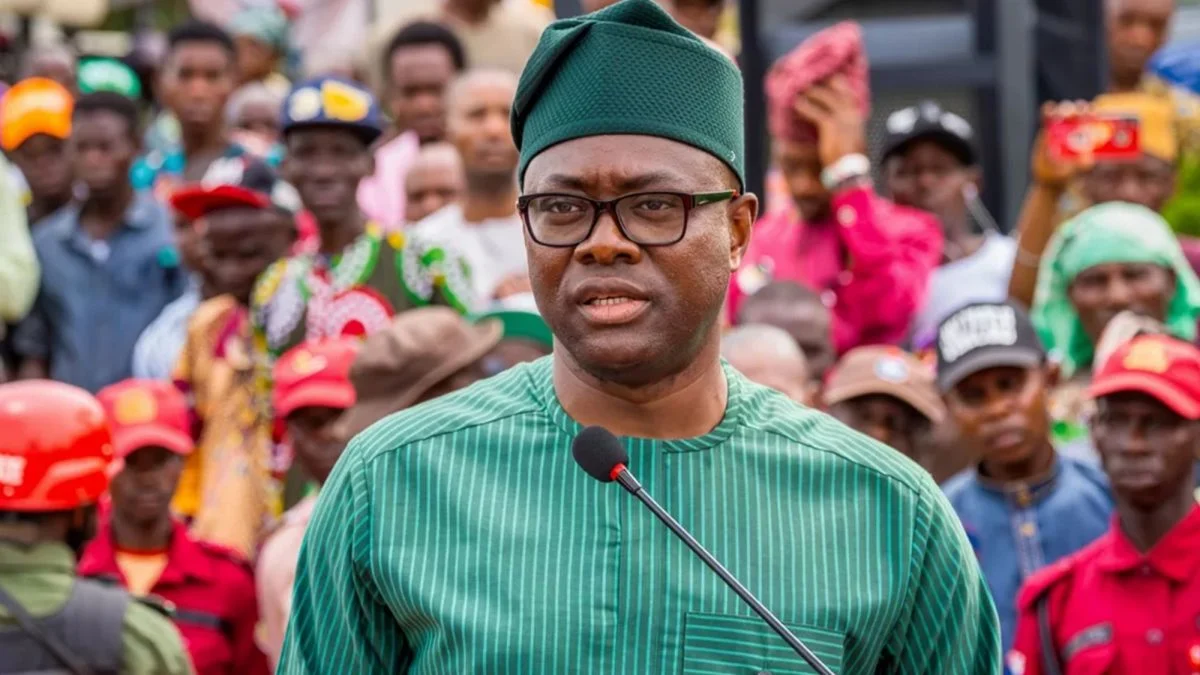
The camp of Seyi Makinde has vowed that its candidate, Oyo State Governor Seyi Makinde, will defeat President Bola Tinubu in 12 battleground states during the January 2027 presidential election.
The campaign organisation, which is promoting Makinde under the platform of the Allied Peoples Movement (APM), named Rivers, Oyo, Kaduna, Plateau, Borno, Enugu, Bauchi, Sokoto, Delta, Kano, Adamawa and Lagos states, as well as the Federal Capital Territory (FCT), Abuja, among the areas where it expects to defeat the President.
In a statement issued by its Director of Strategic Communications, Hon. Richard Nnanna Ihediwa, the organisation argued that Tinubu’s planned visits to the states would not change what it described as growing opposition to his re-election.
The campaign attributed the alleged resentment to the economic hardship facing Nigerians under the current administration, accusing the President’s policies and members of his inner circle of worsening public dissatisfaction through political arrogance.
The organisation also claimed that Makinde’s RESET NIGERIA agenda was gaining support across the country, particularly among young Nigerians seeking an alternative to the ruling All Progressives Congress (APC).
It challenged Tinubu to engage directly with Nigerians and assess their living conditions rather than rely on campaign rallies and political mobilisation ahead of the election.
“Mr. President should know that his visit to these states, if he eventually does, will not in any way change the direction or the determination of the people to vote him out,” the statement said.
The campaign organisation urged Tinubu to travel by road through the states to witness the condition of federal highways, public infrastructure and the living conditions of citizens.
“We challenge President Tinubu not to have a change of mind but visit the states to face the people. He should travel around the country by road and witness the decrepit state of federal highways, the squalor in which Nigerians live and the level of infrastructural decay across the country,” it added.
The organisation accused the Tinubu administration of spending trillions of naira on what it described as wasteful programmes and projects while ordinary Nigerians continue to face economic difficulties.
It also dismissed the President’s Renewed Hope Agenda, arguing that Makinde’s RESET NIGERIA programme would provide a more practical response to the country’s economic, security and governance challenges.
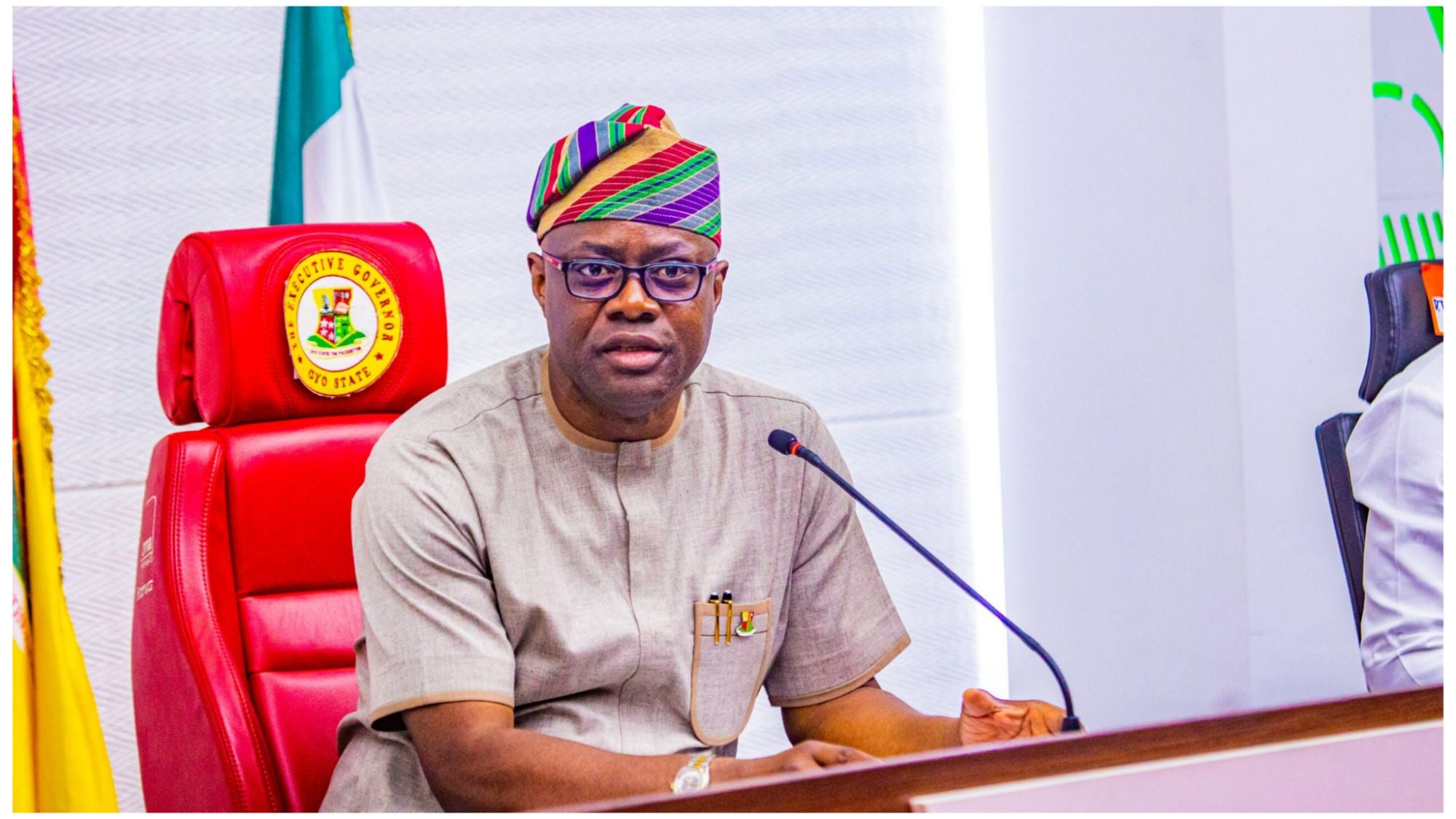
According to the organisation, the proposed programme would be built around an inclusive, four-year transitional government of national unity, with education, the economy, security and socio-political reforms identified as its four priority areas.
The campaign said Makinde’s economic plan would focus on increasing production to address poverty, while his security strategy would combine intelligence gathering with social reorientation and both kinetic and non-kinetic approaches.
On education, the organisation said the agenda would seek to expand access to quality and functional education. Its proposed institutional reforms would also promote inclusive governance and responsible leadership.
The organisation maintained that feedback from its campaign activities indicated that the RESET NIGERIA message was gaining acceptance, especially among young people who, it claimed, were increasingly looking towards Makinde for an alternative to the current administration.
It also criticised members of Tinubu’s campaign machinery, urging the President not to commit national resources to what it called his “Nebuchadnezzar” campaign council.
The organisation described the council’s members as failed politicians and argued that neither the President’s campaign structure nor the advantages of incumbency would prevent his defeat in the states it had identified.
Recall that the Minister of the Federal Capital Territory, Nyesom Wike, had declared that he would take responsibility if Tinubu failed to win both the FCT and Rivers State.
In September, Wike vowed to resign from his position as FCT Minister if the President lost Rivers State and the FCT in the 2027 presidential election.
Wike made the declaration while addressing members and leaders of the Apo Mechanics and Traders Association in Abuja, where he discussed his commitment to Tinubu’s re-election and the political arrangements being developed to mobilise support for the President.
The former Rivers State governor said his position as FCT Minister carried a political responsibility to help secure victory for Tinubu, particularly in the territory where he currently serves.
“If I cannot deliver where I work, then I’m not worthy to be here,” Wike said.
“If I lose FCT, I’m not supposed to be FCT Minister. By January 17, 2027, I will announce my resignation as FCT Minister should the President lose in Rivers State and the FCT,” he added.
-

 News4 days ago
MTN, Airtel take 90% of Nigeria’s 15m new subscribers as Glo shifts ground – Technology Times
-
News2 days ago
Miners Association Seeks Support To Unlock $3bn Gemstone Export Potential
-
Health2 days ago
Katsina health professionals declare 7-day warning strike
-
Business3 days ago
AFC Appoints CBN Governor Yemi Cardoso as Board Chairman