Health
Yobe govt spends N360m annually on free dialysis scheme

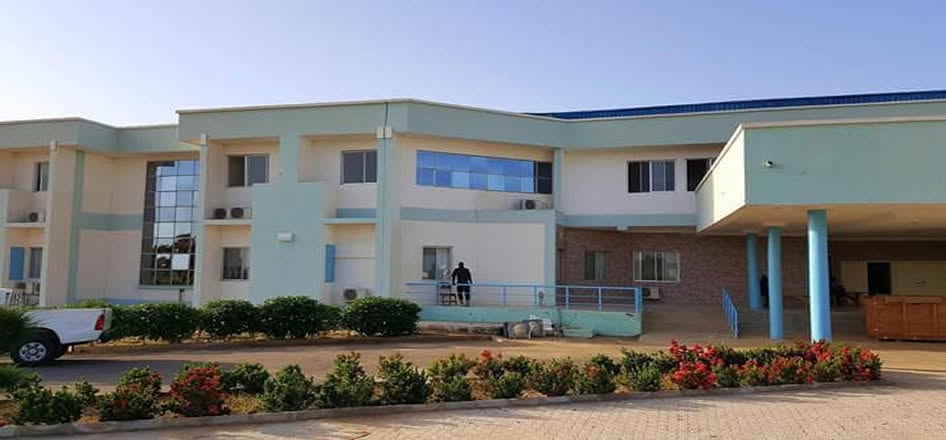

The Yobe State government spends about N360 million annually to provide free dialysis services at the Yobe State University Teaching Hospital (YSUTH), Damaturu, the hospital’s Chief Medical Director, Baba Goni, has said.
Mr Goni said the hospital conducts between 600 and 700 free haemodialysis sessions every month under the programme, which has been running since 2017.
He disclosed this in an interview with the News Agency of Nigeria (NAN) in Damaturu on Thursday.
According to him, the hospital spends N30 million monthly on the programme.
“In dialysis, you don’t count the number of patients because one patient can have two or three sessions in a week,” he said.

“The cost of dialysis per session in other teaching hospitals is about N50,000, excluding the cost of drugs, laboratory investigation and admission where necessary.”
Mr Goni said the state government had signed a Memorandum of Understanding (MoU) with a reputable company supplying dialysis consumables to ensure that the treatment was sustained.
He said the hospital also performed free fistula surgeries to have “vascular access” to patients with Chronic Kidney Disease.
According to him, vascular surgeons are usually invited to conduct the procedure on patients while the hospital pays for the services and purchases the required consumables.
The CMD said a water treatment plant and five additional dialysis machines were recently procured, bringing the total number of functional dialysis machines at the facility to 11.
Mr Goni said that plans had reached an advanced stage to establish another dialysis centre at the Specialists’ Hospital, Gashua, the epicentre of kidney disease in the state.
He said the proposed dialysis centre in Gashua was captured in the 2026 budget to justify the commitment of the state government to the project aimed at easing the suffering of the people.
“Recently, we travelled to Ghana with the Commissioner for Health, where we negotiated with some partners to bring in these dialysis machines and train our nurses and medical engineers who will maintain them,” he said.
“Very soon, people will start enjoying these services over there, so that they don’t have to bear the inconvenience and transportation cost of coming to Damaturu for the treatment.
“I am using this medium to appeal to our people for their understanding of the complex nature of planning and implementation of government projects, which usually take some time.”
Mr Goni announced that a preliminary report on the 2025 kidney disease research, sponsored by the state and conducted in Gashua, would soon be submitted to Governor Mai Mala Buni for necessary action.
He, however, said the report would be thoroughly scrutinised before causality could be established because drawing conclusions on things that were not clear could have economic consequences.
READ ALSO: Katsina health workers to begin 7-day warning strike 8 Sept
“Sometimes the report may suggest action to be taken against the economic livelihood of the communities. We don’t want to do that if we are not fully convinced because poverty is also a problem.
“Remember, during the COVID-19 pandemic, communities were locked down, and the consequences were worse than COVID because many people could not go out to fend for their families,” he said.
Mr Goni said the state and the Urology and Nephrology Centre, Mansoura in Egypt, had, in 2018, signed a Memorandum of Understanding (MoU) for training doctors and other specialists at the YSUTH on kidney transplant.
He said although, the programme was obstructed by the COVID-19 pandemic, efforts were made to resume its implementation.
(NAN)
Discover more from Premium Times Nigeria
Subscribe to get the latest posts sent to your email.








Bloating, a feeling of fullness or swelling in the abdomen, is common during pregnancy because hormonal changes slow digestion, increasing the likelihood of gas and constipation.
Although often harmless, persistent or unusual abdominal discomfort, particularly when accompanied by severe pain, vomiting, fever or vaginal bleeding, may indicate a condition requiring medical attention.
To explain the causes, management and warning signs of pregnancy-related bloating, PREMIUM TIMES spoke with Halimat Jimoh, a midwife, who also cautioned against self-medication.
Why bloating occurs during pregnancy
Ms Jimoh said bloating could occur at any stage of pregnancy, although some women experience it more during the first trimester because of hormonal changes.
She explained that increased progesterone levels relax the muscles of the digestive tract, slowing the movement of food through the intestines. This can cause gas accumulation, constipation and abdominal discomfort.
As pregnancy advances, the growing uterus may also put pressure on digestive organs.

According to her, pregnancy-related bloating is generally mild, may come and go, and can improve after passing gas or having a bowel movement.
However, she advised women not to assume that every episode of abdominal discomfort is a normal pregnancy symptom.
Warning signs women should not ignore
Ms Jimoh said severe or persistent abdominal pain, repeated vomiting, fever and vaginal bleeding should prompt medical assessment.
She noted that conditions such as gastrointestinal infections, appendicitis, gallbladder problems and intestinal obstruction could cause abdominal discomfort and swelling.
Severe upper abdominal pain, particularly on the right side, accompanied by a severe headache, changes in vision or sudden swelling of the face and hands, could indicate pre-eclampsia, a potentially serious pregnancy complication.
Other warning signs include difficulty breathing, fainting and a significant deterioration in the woman’s general condition.
She also advised women to seek immediate assessment if they notice reduced or absent fetal movements after their baby’s movements have become established.
Managing bloating safely
According to Ms Jimoh, fizzy drinks, beans and other gas-producing foods may worsen bloating in some women, while large meals and very fatty foods may increase digestive discomfort.
She recommended eating smaller, more frequent meals, eating slowly and drinking enough water. Gentle physical activity, such as walking, may also support digestion and relieve constipation.
For women experiencing constipation, she advised increasing fibre intake through fruits, vegetables and whole grains, while ensuring adequate fluid consumption.
However, she encouraged women to identify their individual food triggers rather than unnecessarily eliminating entire food groups from their diets.
Dangers of self-medication
Ms Jimoh warned against taking medicines or herbal preparations for bloating without consulting a qualified healthcare professional.
She explained that over-the-counter medicines are not automatically safe during pregnancy, as their suitability may depend on the stage of pregnancy and the woman’s individual circumstances.
She added that products described as natural are not necessarily safe, particularly when their ingredients have not been adequately studied in pregnancy or may interact with other medicines.
The midwife advised women to disclose their stage of pregnancy, medications and supplements to their healthcare providers before taking anything for persistent bloating or constipation.
She also cautioned that self-medication could mask symptoms of an underlying condition requiring treatment.
When to seek medical care
Ms Jimoh urged pregnant women to seek urgent medical attention when bloating occurs alongside severe or persistent abdominal pain, repeated vomiting, vaginal bleeding, fever, fainting or difficulty breathing.
READ ALSO: PT Health Watch: How Pregnancy-Induced Hypertension puts mother, baby at risk
Sudden swelling of the face or hands, severe headache, visual disturbances and severe upper abdominal pain also require prompt assessment because they may indicate pre-eclampsia.
She reiterated that reduced or absent fetal movements warrant immediate assessment.
According to her, persistent, severe or unusual symptoms should be investigated rather than simply treated as digestive discomfort.
She encouraged women to seek professional advice whenever they are unsure whether a symptom is normal, stressing that timely assessment can help identify complications and prevent delays in care.
Discover more from Premium Times Nigeria
Subscribe to get the latest posts sent to your email.

Kenya has confirmed a third case of Ebola after a 65-year-old woman tested positive while in quarantine.
The woman is a close relative of Kenya’s first confirmed patient, a 40-year-old who died from Ebola on 5 October, two days after arriving in Kenya from the Democratic Republic of the Congo (DRC).
The Associated Press (AP) reported that the woman had been in quarantine since 6 October and developed symptoms before testing positive. She has since been transferred to an infectious disease unit for treatment.
The second patient, a 39-year-old man from the same family, remains stable, according to Kenya’s Ministry of Health.
The ministry said there was no evidence of community transmission, as all three cases were linked to the first patient and the individuals had been in quarantine.
Nigeria’s preparedness
The development comes as Nigeria continues to monitor the regional outbreak and strengthen preparedness against possible importation of the virus.
PREMIUM TIMES reported on 7 October that the Nigeria Centre for Disease Control and Prevention (NCDC) was reviewing the country’s preparedness after Kenya confirmed its first imported case of the Bundibugyo strain of Ebola.
In a statement issued on 6 October, the NCDC said the case highlighted the risk of international importation through travel and population movement, including the possibility of the virus entering Nigeria.
The agency said it was working with the Federal Ministry of Health and Social Welfare, Port Health Services, state governments and other partners to strengthen surveillance, early detection, laboratory diagnosis, isolation, contact tracing and infection prevention.
It also said Nigeria conducted a national Ebola preparedness simulation exercise to assess its readiness to respond to a possible case.
As of 6 October, the NCDC said Nigeria had no confirmed Ebola case.
Contact tracing continues
Kenya’s first case involved a 40-year-old man who had been living in the DRC and travelled through Uganda before arriving in Nairobi. He tested positive for Ebola and died on 5 October.
The confirmation of a second case on 14 October raised concerns about further infections among people exposed to the initial patient.
PREMIUM TIMES reported on 14 October that the second patient, a 39-year-old close relative of the first case, developed symptoms while in quarantine.
At the time, Kenyan authorities had identified 128 contacts linked to the first patient, with 113 located and efforts ongoing to trace the remaining 15.
In its report on Friday, AP said three contacts of the initial patient remained unaccounted for, while authorities continued efforts to trace people who might have been exposed.
The latest case brings the number of confirmed Ebola infections in Kenya to three.
Regional outbreak
The cases in Kenya are linked to the ongoing Ebola outbreak in the DRC, where the Bundibugyo virus has caused thousands of infections and deaths.
The World Health Organisation (WHO) said the DRC had recorded 7,890 confirmed cases and 3,799 deaths as of 23 September.
The outbreak has raised concerns about cross-border transmission, particularly as people travel between affected areas and neighbouring countries.
The Bundibugyo virus is a distinct species of Ebola virus. No vaccine or treatment has been specifically approved for this strain.
Discover more from Premium Times Nigeria
Subscribe to get the latest posts sent to your email.
-

 News4 days ago
MTN, Airtel take 90% of Nigeria’s 15m new subscribers as Glo shifts ground – Technology Times
-
News2 days ago
Miners Association Seeks Support To Unlock $3bn Gemstone Export Potential
-
Health2 days ago
Katsina health professionals declare 7-day warning strike
-
Business3 days ago
AFC Appoints CBN Governor Yemi Cardoso as Board Chairman