News
Supporters’ Club Crisis: Sports Marketing Consultant Advocates 90-Day Election, Unified National Platform


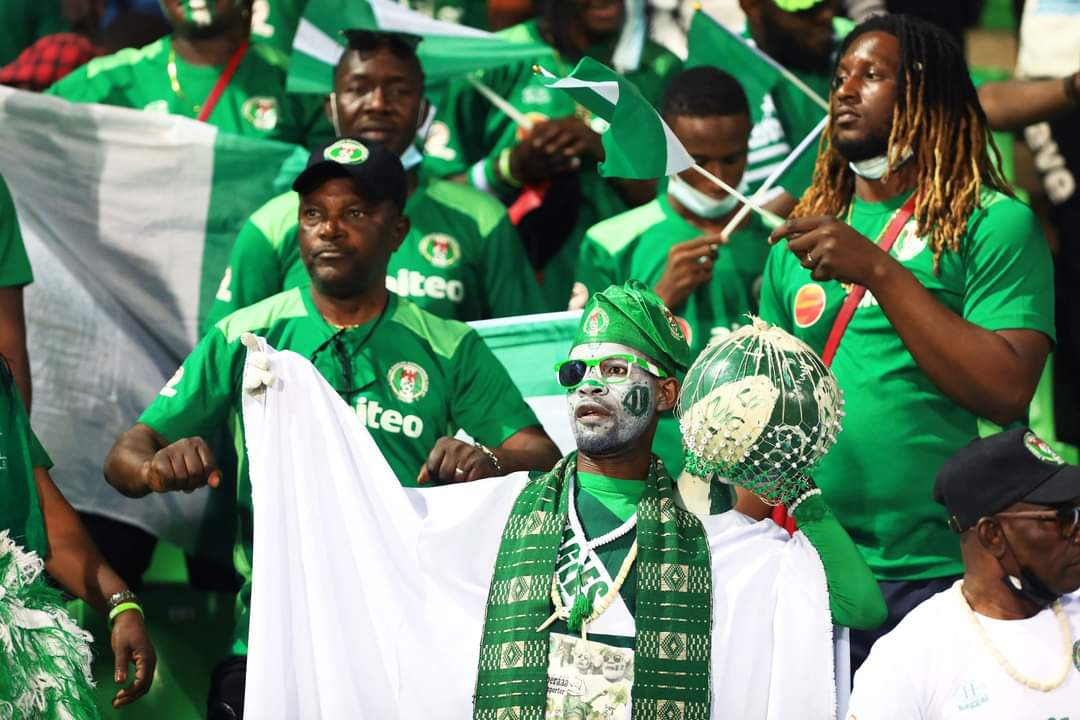
A Sports Marketing consultant to several Nigerian football supporters’ organisations, Olisemeka Obi, has called for an urgent and transparent resolution to the lingering leadership crisis within the Nigerian Football Supporters’ movement, following the expiration of the tenure of the Interim Management Committee (IMC).
Obi, who has worked professionally with different factions within the supporters’ movement, said the current situation should no longer be viewed as a contest between personalities or rival organisations, but as an opportunity to establish a sustainable structure for supporting Nigeria’s national teams.

Read Also: “We Need A New Start” — Ijeh Warns Against Return Of Former NFF Administrators | Sports247 Nigeria
Speaking against the backdrop of the controversy surrounding the continued operation of the IMC after the expiration of its mandate, Obi said the original unification initiative was a welcome development that should be preserved, but argued that an interim arrangement should not become permanent.
He noted that the subsequent resignation of the NFF Board which participated in the establishment of the IMC had made the situation more delicate, but should not be used as justification for extending an expired mandate.
“What we need now is a reset—not another faction,” Obi said.
According to him, the solution does not necessarily require the dissolution of the existing supporters’ organisations, which have their own histories, identities and loyal memberships.
Rather, he advocated a structure in which the six independent organisations retain their identities while operating under one recognised national coordinating platform for supporters of Nigeria’s national teams.
Under the proposed arrangement, he said, “the organisations should have one coordinated national supporters’ platform and delegation whenever Nigeria plays. There could be an agreed dress and branding arrangements where appropriate”. According to him, unified Supporters will have uniform chants, music and match-day activities with common rules and standards of engagement.
He also opined that there should be rransparent allocation of tickets, travel opportunities and other support with none of the factions claiming exclusive ownership of the Nigerian national team supporters’ movement.
Obi said such an arrangement would provide a more realistic definition of unity.
“Unity does not necessarily mean erasing history. It means agreeing on the things that must be done together,” he said.
He further called on the National Sports Commission, in conjunction with the appropriate transitional structure of the Nigeria Football Federation, to convene all recognised stakeholders and establish a neutral transition and electoral process.
The former consultant recommended that the entire process should be completed within 90 days, with a clear timetable covering reconciliation and verification of stakeholders, development of electoral guidelines, nominations and screening, campaigning, voting and handover.
He stressed that the election must be transparent, inclusive and credible enough to command the confidence of all participating organisations.
Obi, who has previously consulted for the Nigerian Football Supporters Club and was involved in attracting sponsorship funding for a World Cup trip, also worked with the Vincent Okumagba-led Super Eagles Supporters Club on events and media relations. He has equally consulted for the All Sports Supporters Club.
Drawing from his experience with the various organisations, he said the supporters’ movement must now move beyond personalities and institutionalise its leadership.
“Nobody should be bigger than the institution. The Super Eagles are bigger than every supporters’ club. Nigerian football is bigger than every individual,” Obi said.
He added that Nigerian football supporters deserve a structure whose legitimacy derives from a credible and transparent process rather than an expired mandate, political influence or personal loyalty.
Obi, who is a Chartered Public Relations practitioner urged all stakeholders to embrace statesmanship and focus on building a supporters’ movement capable of providing unified, professional and effective support for Nigeria’s national teams.
“Let the past be acknowledged. Let the disagreements be resolved. Let the six groups find a workable framework for unity. Let there be an election within 90 days, and let those who emerge be given the opportunity to build a supporters’ movement worthy of Nigerian football,” he said.
He emphasised that the ultimate objective should not be determining who controls the supporters’ movement, but how the movement can better support Nigeria and the Super Eagles.







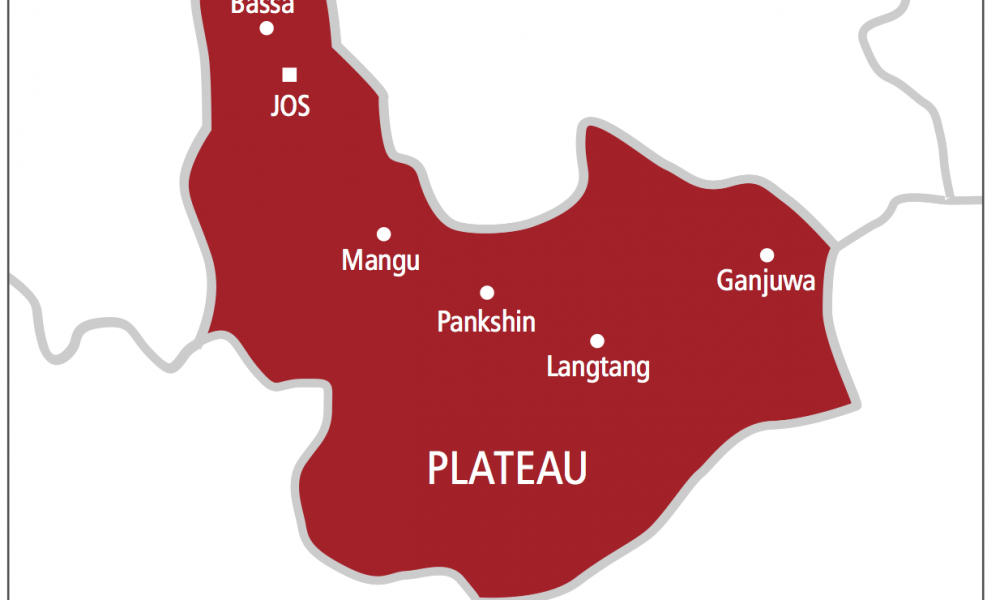
Plateau State has an estimated 11,000 tuberculosis (TB) cases in 2026, with 2,047 patients identified between July and September, according to a state health official.
The cases were disclosed by Yohanna Bot, the monitoring and evaluation officer of the Plateau State Tuberculosis and Leprosy Control Programme, at a media advocacy meeting on community-led monitoring of health services in Jos.
Mr Bot said the estimated burden was based on a TB prevalence rate of 219 cases per 100,000 people, warning that the disease remained a major public health challenge in the state.
“From our quarterly survey, we discovered that between July and September, 2,047 patients were identified and placed on treatment,” he said.
He added that the identified patients were receiving treatment at health facilities across the state.
Tuberculosis is an infectious disease that primarily affects the lungs and spreads through the air when an infected person coughs, sneezes or speaks.


Mr Bot identified malnutrition, advanced age, weakened immunity, overcrowding and HIV infection as factors that could increase the risk of contracting the disease or developing severe illness.
He also expressed concern over stigma and misconceptions surrounding TB, saying some residents attributed the disease to spiritual or ritual causes rather than seeking medical attention.
According to him, such beliefs discourage people from undergoing early diagnosis and starting treatment promptly.
Insecurity, displacement worsen TB risks
Mr Bot said insecurity and displacement were complicating efforts to detect and manage tuberculosis, particularly in Mangu, Jos South and Barkin Ladi local government areas.
He said displacement had led to the establishment of camps for internally displaced persons (IDPs), where overcrowded living conditions could facilitate the spread of the disease.
To address the challenge, he said the state programme was prioritising community outreach and active screening in IDP camps and correctional centres to identify people with TB and link them to treatment.
Mr Bot said patients who received effective treatment could become much less infectious after starting therapy, although the timing depended on their clinical condition and response to treatment.
He, however, raised concerns about shortages of anti-TB medicines, attributing the gaps in availability partly to disruptions in the supply chain and the programme’s dependence on international support, particularly funding from the Global Fund.
He called for increased public awareness to address stigma and misconceptions and urged residents with symptoms suggestive of TB to seek medical evaluation at health facilities.
Community monitoring targets healthcare gaps
Peter Ezekiel, the Plateau State programme officer of the Global Fund AIDS, Tuberculosis and Malaria Integrated Community-Led Monitoring Project, said Nigeria continued to face a significant burden of tuberculosis, HIV and malaria.
He said community-led monitoring was designed to involve residents and other stakeholders in identifying gaps in healthcare delivery and supporting interventions to improve access to essential services.
According to him, the approach helps communities identify barriers such as discrimination, stigma and gender-related challenges while advocating better infrastructure and increased domestic funding for healthcare.
Mr Ezekiel said the initiative had supported infrastructure rehabilitation, service improvements and stronger community participation in Plateau State.
He listed the rehabilitation and re-piping of toilet facilities at the Primary Health Centre in Rantya, Jos South, among the interventions carried out since June.
He said community stakeholders had also donated a scanning machine and 10 iron-framed chairs to the Primary Health Centre in Gangare, Jos North, as well as a blood pressure monitoring device to the facility in Dogon Agogo.
Other interventions included the provision of hospital bed mattresses to the Primary Health Centre in Pushit, Mangu, and tuberculosis sputum collection cups to the COCIN Rehabilitation Centre in Mangu.
Mr Ezekiel said community members had also provided 500 copies of patient enrolment forms to support healthcare delivery.
In Lamingo, he said residents mobilised resources to engage security personnel to protect night-shift workers and property at the local primary healthcare centre, with an agreed monthly payment of N15,000.
He said the interventions had improved infection prevention, patients’ experiences and healthcare delivery.
Mr Ezekiel called for stronger collaboration among communities, government agencies and health partners, alongside adequate funding for primary healthcare and greater accountability in the management of health resources.
READ ALSO: PT Health Watch: What you should know about Tuberculosis, why it persists
He also urged the expansion of national and state health insurance programmes to cover vulnerable people, particularly low-income earners.
Official highlights role of community monitoring
Yakubu Izang, the director of disease control and immunisation at the Plateau State Primary Health Care Board, said community-led monitoring was important for identifying healthcare delivery problems that might otherwise go unnoticed by government agencies.
He said the approach enabled communities and public officials to work together to identify challenges and develop solutions to improve access to healthcare services.
Discover more from Premium Times Nigeria
Subscribe to get the latest posts sent to your email.

Segun Showunmi, a member of the All Progressives Congress, APC, Presidential Campaign Council, PCC, has defended his wife’s redeployment to head the Electoral Operations Department of the Independent National Electoral Commission, INEC.
Showunmi said his role in Tinubu’s 2027 re-election campaign had nothing to do with his wife, Oluyemi Adeyemi-Showunmi, securing the position.
According to him, the posting was purely an internal administrative decision by the commission, urging those questioning it to examine her track record.
He made the remarks on Channels Television, where he became agitated after the presenter asked whether his wife’s new role was compensation for his political activities.
The controversy began after INEC redeployed Oluyemi, who was the commission’s administrative secretary in Lagos State, to its national headquarters to head Electoral Operations ahead of the 2027 elections.
In the reshuffle, Isah Magaji Gummi, who previously headed Electoral Operations, was moved to the Voter Registry Department, while Oluyemi took over his former position.
Reacting to insinuations linking his political activities to his wife’s elevation, Showunmi described her as a career INEC officer who had spent her entire working life with the commission.
He said she joined INEC immediately after completing her National Youth Service Corps, NYSC, programme in Maiduguri and had remained with the commission ever since, adding that her redeployment was an internal arrangement unrelated to him.
“That’s a civil servant you are talking about there. She’s a level 17 officer. Up till this posting, which comes within their own organisation and has nothing to do with anybody, I’m not even sure the President knows,” Showunmi said.
2027: Tinubu’s campaigner, Showunmi defends wife’s new INEC role
-
News2 days ago
NUCAP: Nigeria targets 20 million people with 3,700 telecom towers – Technology Times
-

 News2 days ago
Gunmen storm Plateau mining site, kill two persons
-
Business2 days ago
NCC Launches Internet Governance Working Group to Sustain Stakeholder Dialogue
-
News2 days ago
Nigeria needs stronger collaboration ‘to shape internet governance’ – Technology Times