Connect with us

News

Oura files to go public

info

Published

on

Oura ring 5.jpg

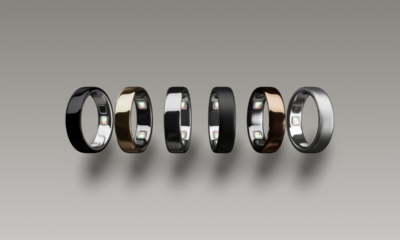
Oura, the smart ring maker, has filed to go public.

The filing with the Securities and Exchange Commission on Thursday shows that Oura’s revenue has jumped substantially in the past year. The company went from $697 million in revenue during the nine-month period that ended June 30 last year to $1.2 billion during the corresponding period this year.

The company has said previously said publicly that it generated $500 million in revenue in 2024, roughly $1 billion in 2025, and that it expected to generate close to $2 billion in revenue this year.

The company says it has sold 3.6 million rings over the past year, and that it currently has approximately 5 million paid members — that is, users who subscribe to its service for broader health metrics. The filing also says that Oura has an approximately 85% weighted-average 12-month membership retention rate, meaning that roughly 85% of members who sign up in a given month are still subscribed a year later.

The company’s rings, which sell in the range of $350 to $400, are, at their most fundamental level, fitness trackers designed to measure a user’s biometrics — everything from metabolism and heart rate to stress levels and sleep patterns. Paired with an app, the ring and that software are marketed by Oura as an “always-on health intelligence platform.”

Late last month, it was reported that Oura was looking raise $3 billion during its expected public offering. The company, which was founded in Finland in 2013, confidentially filed for an IPO in May. Bloomberg previously reported that the company is expected to seek a $16 billion valuation. In October of last year, it had been valued at around $11 billion.

In its SEC filing, Oura outlines where it believes its audience can widen in the coming years. “We believe our opportunity extends beyond traditional wearable use cases centered on activity and fitness tracking,” it says. “We believe our platform can support significantly larger populations as we continue to expand access, build clinical evidence, and deepen integrations with health plans, employers, and care providers.”

Oura also notes how its trove of data is fueling new AI integrations. “We believe we have amassed one of the largest and highest-quality longitudinal biometric datasets in consumer health, tracking over 50 health and wellness metrics and representing nearly 42 billion hours of physiological data,” it states. “This dataset powers our AI and machine-learning models, which decode complex physiological patterns and improve in accuracy, personalization, and predictive capability as member histories deepen.”

TechCrunch has reached out to Oura for more information.

The company, which now has offices throughout the world, including San Francisco, was recently hit with a proposed class action lawsuit accusing it of misleading users about the accuracy of its sleep tracking capabilities. The suit alleges Oura’s rings can’t actually detect the physiological signals needed to determine sleep stages, and instead rely on AI-generated estimates that the complaint describes as little more reliable than a coin flip. The litigation follows years of online complaints from users who said that Oura consistently rated their sleep as optimal when, in fact, it was not.

The company has disputed the allegations and previously told TechCrunch it will “defend against” the claims in the “appropriate legal forum.”

When you purchase through links in our articles, we may earn a small commission. This doesn’t affect our editorial independence.

Continue Reading
Click to comment

Leave a Reply

Your email address will not be published. Required fields are marked *

News

Osimhen Scores Again But Injury Scare Raises Fresh Concern For Super Eagles

info

Published

on

By

Osimhen Scores Again But Injury Scare Raises Fresh Concern For.jpg

Super Eagles striker Victor Osimhen produced a mixed night for Galatasaray on Friday, scoring against İstanbul Başakşehir before being forced off with an injury that could raise concerns over his availability for Nigeria’s upcoming 2027 Africa Cup of Nations qualifiers.

Osimhen opened the scoring in the 17th minute with a stunning effort to put Galatasaray ahead.

Read Also: “My Injury Changed Everything” — Aiyegbeni Reveals How Achilles Blow Ruined Chelsea Move

However, his night was cut short after he appeared to suffer a problem following a challenge with Christopher Operi in the 23rd minute. The Nigerian striker continued briefly but later felt the problem again after making a run behind the defence and signalled that he could not continue.

Osimhen was eventually substituted in the 33rd minute, with Barış Alper Yılmaz coming on as his replacement.

Initial reports describe the problem as a suspected muscle/groin injury, but there is currently no confirmed diagnosis or recovery timeline. Osimhen himself reportedly admitted after the incident that he did not yet know whether the injury was serious.

The timing could be significant for Nigeria.

The Super Eagles are scheduled to begin their 2027 AFCON qualifying campaign against Madagascar on September 23, before travelling to face Guinea-Bissau on September 27.

That leaves Nigeria with just under three weeks before the Madagascar encounter, meaning Osimhen could still have time to recover if the injury proves minor. However, a significant muscle strain or tear could put his participation in doubt.

For now, Osimhen has not been ruled out of the Super Eagles’ upcoming matches, and his availability will depend on further medical examinations and his recovery over the coming days.

The immediate concern for Nigeria will therefore be the results of those assessments.

He scored a spectacular goal, but the biggest question tonight is whether Osimhen will be fit when Nigeria need him most.

Continue Reading

News

AI compute provider Nscale is looking for $3.5B in pre-IPO financing

info

Published

on

By

GettyImages 2266843677.jpg

Nscale, a British AI infrastructure company founded just two years ago, has said it may go public as early as later this month. Ahead of that expected IPO, the company is reportedly in talks to raise an additional $3.5 billion.

Bloomberg reported Friday that the company is looking to sell $1.5 billion in convertible notes — a type of loan that can later convert into company stock — to a group of investors, while also seeking an additional $2 billion in financing from Nvidia.

Nvidia also participated in the firm’s Series B funding round in March, a $1.1 billion raise led by investment fund Aker. Nscale hailed its round as “the largest Series B in European history.” The company’s Series A round, in December of 2024, raised $155 million.

TechCrunch reached out to Nscale and Nvidia for comment.

AI infrastructure startups have seen immense growth amid the current era of AI enthusiasm, wherein compute has become a competitive currency.

Nscale recently signed a large deal with Anthropic worth approximately $45 billion. Earlier this week, reports emerged that Nscale had been telling potential investors that it has approximately $103 billion in revenue following the deal. That figure isn’t current sales; it’s a projection based on signed customer leases, according to The Information.

Continue Reading

Trending