News
Google’s latest AI weather model gives you no excuse to forget your umbrella


Scientists at Google Deepmind and Google Research released a new artificial intelligence model for weather forecasting today that sees our changing atmosphere more clearly and predicts its behavior more often.
WeatherNext 3 is the latest wave of a sea change in meteorology brought out by deep learning techniques, and Google says it will start feeding into weather information users see in search, Google Maps, and Gemini, as well as being available to users and researchers on Google’s cloud platforms.
“This is going to be the first time that some of the core variables feed and power a lot of the Google products,” Samier Merchant, a Google senior staff engineer, told TechCrunch.
The new model has already proven to be the most accurate among leading contenders tested on Operational WeatherBench, a utility for comparing AI forecasts built by the startup Brightband. It looks at metrics like temperature, windspeed, and humidity.
As well as beating out other deep-learning models built by Google, Microsoft, Nvidia, and the European Center for Medium-Range Weather Forecasting, it also beats traditional forecasts from the US National Weather service and the ECMWF.

Most weather forecasts come from government-owned supercomputers laboriously churning through mathematical equations written to describe the physics of weather; while these systems have become remarkably accurate, they are expensive and comparatively slow. After the ECMWF released more than half a century of weather data produced by these systems in 2018, deep learning researchers began training models that could make predictions far more quickly and with comparable accuracy to government tools.
“Weather is chaotic, and so small differences really start to perturb massively…Machine learning targets the problem we are really solving, which is approximate noisy physics from incomplete information and finite compute, and so it learns patterns from a lot of data,” Ferran Alet, a staff research scientist manager at DeepMind.
Since then, model-makers have pushed on the key weaknesses of AI forecasting models: They tend to forecast over a wider area—15 to 25 square km—than is truly useful, they’re not always great with rain, and they still depend on the formatted data-sets produced by government agencies.
WeatherNext 3 takes on all three challenges. On key variables, researchers told TechCrunch, it can predict down to a resolution of 5km. Its evaluations on rain are 60% improved over WeatherNext 2, and it can now produce hourly forecasts, instead of the standard prediction every six hours.

Those improvements are the result of specific choices made by the designers. WeatherNext 3 is a larger model, with 2.4 times more parameters than its predecessor, and tailoring the targets for the decoder heads to give more useful answers. While most weather forecasts output as metrics averaged across a 3D grid, DeepMind researchers have already won plaudits by tuning their model to also visualize cyclone paths.
This time around, the designers also trained the model to target its forecasts to specific weather data stations. This is important not only for offering more granular predictions, but also for being able to evaluate its work against specific, ground-truth data.
“The idea, with a lot of AI applications, is to try to run tasks as end-to-end as possible,” Daniel Rothenberg, an atmospheric scientist at Brightband, said. “Adding a capability where this model is now also predicting, say, what Denver’s airport’s weather station is going to measure on an hourly basis, just connects that forecasting task closer to the core.”
The model is able to forecast more frequently because it can ingest weather satellite data collected in real-time on an hourly basis. Feeding AI models on raw empirical observations, rather than the analysis produced by weather supercomputers, promises a more accurate forecast, but it is still technically challenging to get models to work with unformatted data.
Google says WeatherNext 3 is the “first” AI model to directly incorporate raw observations for a high-resolution global forecast, but the AI weather startup WindBorne says its model, WeatherMesh 6, has been incorporating raw observations from its fleet of weather balloons and other sources since late 2025. Asked about that, Google pointed out that its forecasts are higher resolution across the globe. Regardless, both models still rely on national weather datasets to perform forecasts, so more work will be required for true direct data assimilation.
While LLMs get the bulk of the attention, the transformer revolution in meteorology has been just as important. European and US weather agencies are already using AI models in their forecast products, and their speed and low cost promise to bring economic impact to poorer regions where the expense of high-quality sensors and supercomputers has put accurate forecasts out of reach.
Bill Gates recently cited AI-powered weather forecasting as a crucial benefit of the technology, with better forecasts improving crop yields in developing countries. Alet, the DeepMind researcher, said that higher-resolution forecasts of wind, rain, and cloud cover will be useful to make renewable energy projects more dependable.
“At the end of the day, I think Google is about providing useful information to the user, and a lot of what users are looking for has to do with the weather in some way or another,” Alet said.





News
2027: 'Tinubu doing politics, wickedness since becoming president' – Atiku's aide replies Alake

The Senior Political Assistant to the African Democratic Congress, ADC, presidential candidate, Atiku Abubakar, Demola Olarewaju, on Monday accused President Bola Tinubu of “doing politics and wickedness” since assuming office in 2023.
Olarewaju said that instead of ensuring good governance, Tinubu had been busy wooing state governors to support his re-election bid in 2027.
He made the remark in reaction to an explanation by the Minister of Solid Minerals Development, Dele Alake, on why Tinubu would not visit all states to campaign.
Speaking during the inauguration of the All Progressives Congress (APC) Presidential Campaign Council in Abuja, Tinubu said he could not visit all states for campaign activities because he would be focusing on governance.
Commenting on Tinubu’s position, Alake said the president had chosen 12 states to visit because they were “election deciders.”
Alake said, “The 12 states that President Tinubu chose to campaign in are actually election deciders; he should be commended for that. He is not going to abandon governance for campaigning.”
Faulting Alake’s remarks, Olarewaju insisted that Tinubu had no achievements to campaign on.
In a post on X, he wrote, “Bola Tinubu has been doing politics and wickedness since Day One instead of good governance, he was wooing Governors instead.
“Now time for campaign, but no achievement to campaign with. Instead, they want to pretend he’s too busy with governance. #TinubuMustGo abeg.”
2027: ‘Tinubu doing politics, wickedness since becoming president’ – Atiku’s aide replies Alake

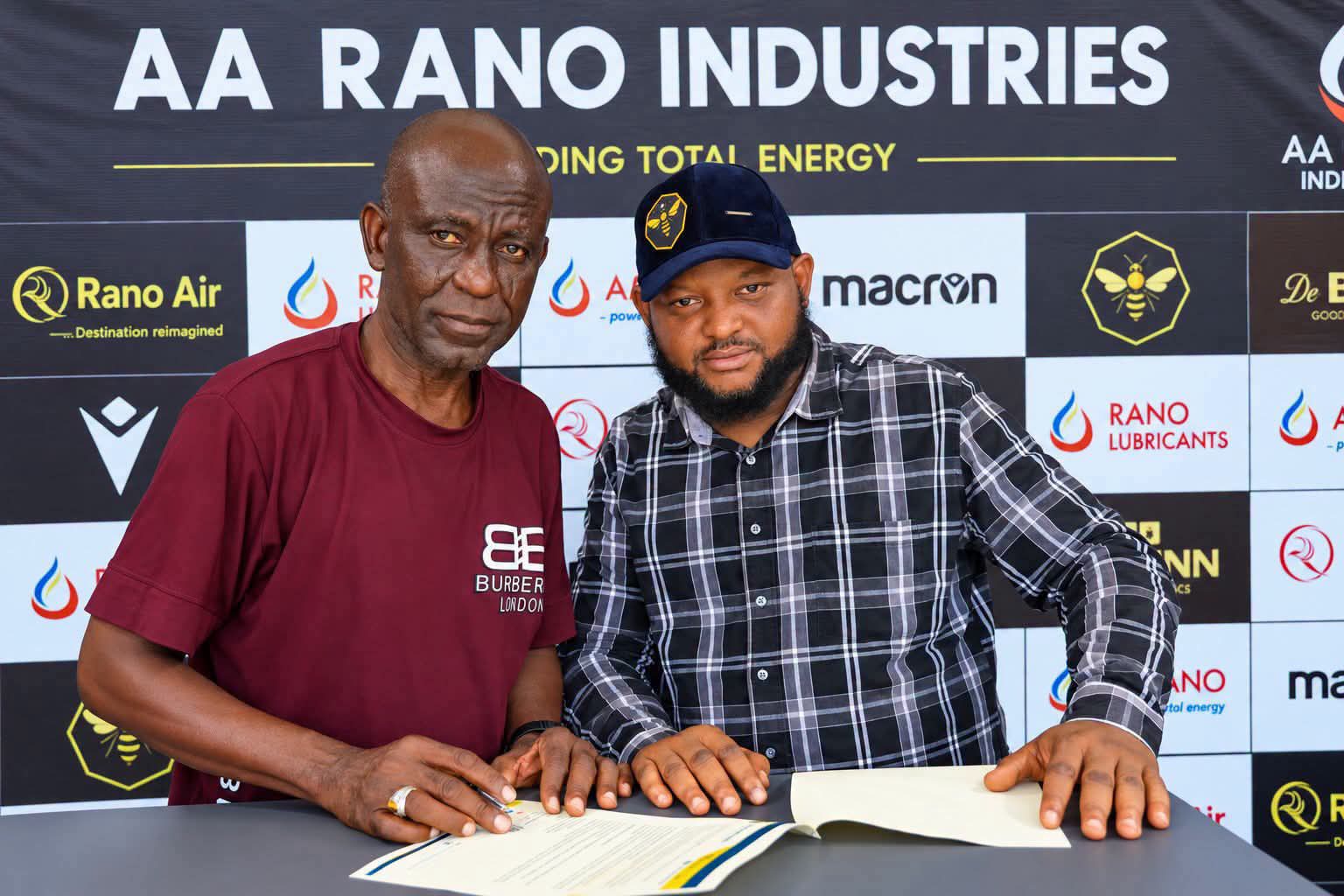
Nigeria Premier Football League (NPFL) newcomers Ranchers Bees have appointed Ma’aji Muhammad as their new head coach for the remainder of the 2026/2027 season, following the departure of Technical Adviser Usman Abd’Allah by mutual consent.
Sports247 reports that the appointment comes after the Kaduna-based club suffered a disappointing 3-1 defeat to Shooting Stars in their Matchday 9 encounter in Ibadan on Friday, October 16, 2026.
Muhammad now takes charge of a Ranchers Bees side seeking to rediscover its form and improve its position in the league following a difficult start to the campaign.
The decision to appoint Muhammad represents a new chapter for the newly promoted side as they attempt to establish themselves in Nigeria’s top flight.
Ranchers Bees have struggled for consistency in their opening nine league matches, recording just two victories, two draws and five defeats. The club’s latest setback came against Shooting Stars, where goals from Desmond Ojietefian, Damilola Akinola and Qamar Adegoke condemned the Kaduna outfit to a 3-1 defeat.
Although Isah Ndala Aliyu scored for Ranchers Bees and goalkeeper Tofa saved a second-half penalty, their efforts were insufficient to prevent another defeat.
The result increased the pressure on the club’s technical crew and ultimately preceded Abd’Allah’s departure.
Abd’Allah’s tenure came to an end after just 115 days in charge. The club confirmed his departure alongside some members of the technical crew in an official statement.
“Ranchers Bees Kaduna confirms that the club has parted ways with Technical Adviser Usman Abdullah and some members of the technical crew by mutual agreement,” the statement read.
During his nine NPFL matches in charge, Abd’Allah recorded two wins, two draws and five defeats, collecting eight points from a possible 27. His departure leaves Muhammad with the responsibility of addressing the team’s inconsistent results and restoring confidence within the squad.
For Ma’aji Muhammad, the appointment presents an opportunity to guide Ranchers Bees through a crucial period of their return to top-flight football.
The new head coach will be expected to improve the team’s performances, strengthen defensive organisation and help the players convert competitive displays into positive results.
Having collected eight points from their opening nine fixtures, Ranchers Bees need greater consistency to avoid becoming embroiled in a prolonged struggle near the lower end of the table.
Muhammad will also face the challenge of motivating a squad that has endured a difficult sequence of results.
The coaching change underlines the club’s determination to improve its fortunes before the season progresses further.
With Muhammad appointed for the remainder of the campaign, attention will now turn to how quickly he can implement his ideas and produce a positive response from the players.
The coming fixtures will provide an early indication of whether the managerial change can deliver the improvement Ranchers Bees require.
For the newly promoted Kaduna club, the message is clear: Ma’aji Muhammad has been handed the responsibility of turning around a difficult start and helping Ranchers Bees secure their place in the Nigeria Premier Football League.
-
News2 days ago
NUCAP: Nigeria targets 20 million people with 3,700 telecom towers – Technology Times
-

 News3 days ago
Gunmen storm Plateau mining site, kill two persons
-
News3 days ago
Nigeria needs stronger collaboration ‘to shape internet governance’ – Technology Times
-
Business2 days ago
NCC Launches Internet Governance Working Group to Sustain Stakeholder Dialogue