News
Sprains, pain, and whiplash: Waymo and Zoox test drivers are getting hurt as robotaxis scale

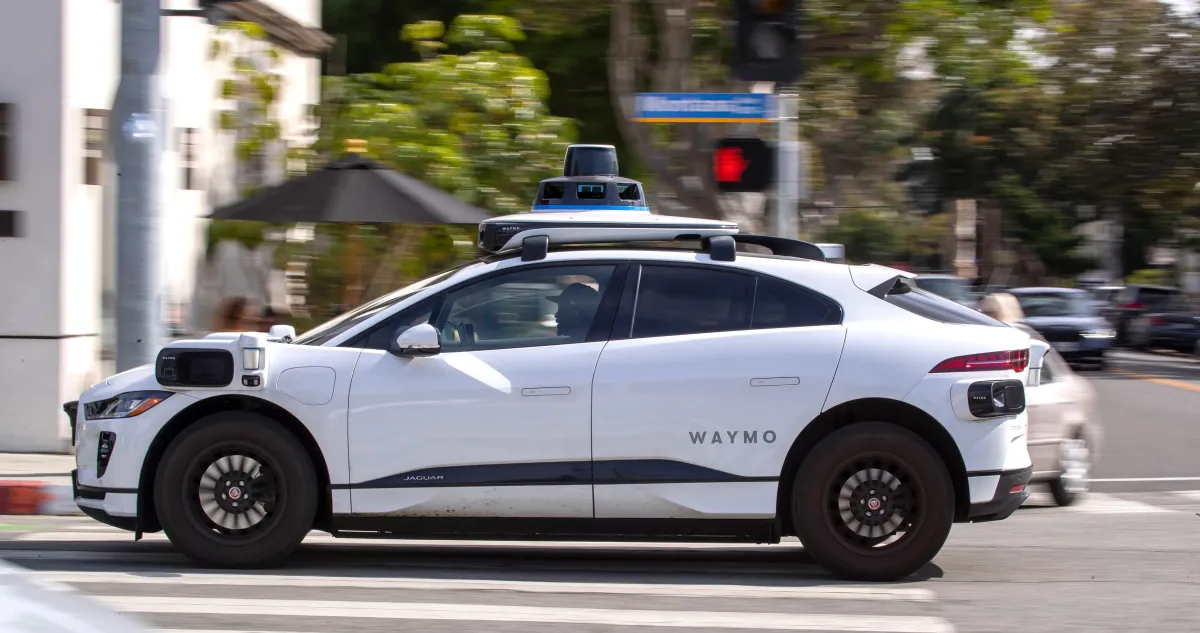
The rapid scaling of robotaxis over the last two years has come with a hidden human cost.
Test drivers for Waymo and Zoox sustained more than two dozen injuries in 2024 and 2025 from hard braking or other sudden movements made by the autonomous vehicles, according to a TechCrunch review of data submitted to the Occupational Safety and Health Administration.
These test drivers, who put autonomous vehicles through their paces on public roads, have suffered sprains, strains, whiplash, and more, according to OSHA data and interviews with former and current workers. Some have been sidelined for weeks or months.
Transdev, which employs and manages Waymo’s test drivers, reported 16 injuries tied to Waymo depot locations in three cities that were caused by the autonomous software braking hard or swerving suddenly. Zoox reported as many as eight worker injuries linked to hard braking.
Other autonomous vehicle companies do not appear in the dataset, though it’s possible they’re exempt. The Zoox and Waymo injuries appear because the companies classify themselves as taxi, limo, or transit services, which OSHA subjects to greater disclosure because they’re “higher-hazard” industries. OSHA also only requires establishments with 100 or more employees in these industries to make this information public, meaning test drivers in newer cities where operations haven’t scaled may have been injured on the job without appearing in this dataset.
TechCrunch was unable to learn whether Waymo or Transdev logged any new injuries in 2026. OSHA does not require companies to submit annual data until the following year as part of the agency’s Injury Tracking Application.
In Zoox’s case, injuries are still happening, according to sources who spoke to TechCrunch on condition of anonymity.
Two current and three former Zoox contractors told TechCrunch that the company’s test fleet vehicles — modified Toyota Highlander SUVs equipped with its self-driving system — were still braking hard and abruptly as recently as July. Three of those contractors said workers are still getting hurt. The workers were granted anonymity to discuss private operations.
Zoox declined to answer specific questions about the injuries it reported last year or the claims contractors made to TechCrunch about the continued hard-braking issues. The company said it follows necessary reporting requirements and takes injuries seriously.
Zoox also said hard-braking incidents are sometimes unavoidable and that the injuries reported last year represent a small percentage of the millions of miles its test fleet traveled.
Waymo also declined to answer questions about the injuries reported to OSHA.
“The safety of our riders, road users, and team is of paramount importance,” Waymo told TechCrunch. “As part of the process of responsibly deploying fully autonomous vehicles, we have driven tens of millions of miles with human operators behind the wheel. This is part of our ongoing validation process and learnings from these trips are integrated into the service.”
Transdev declined to comment.
More miles, more injuries

While Waymo has spent more than a decade developing its self-driving cars, it wasn’t until 2025 that it really started to scale. The company started offering rides in new cities and began mapping and testing in others, growing its commercial fleet to more than 1,500 vehicles by May 2025. Today, that fleet is more than 3,500 vehicles.
Waymo doesn’t break out how many vehicles it uses just for testing. But the amount of autonomous vehicle testing almost certainly increased as the company expanded its service areas and started to familiarize itself with entirely new locations.
Test driver injuries increased, too.
Transdev reported five Waymo test driver injuries in 2024 across San Francisco, Los Angeles, and Phoenix. One was related to hard braking, while the other four were related to erratic vehicle behavior.
In one case, a test driver reported that the car “suddenly backed up” while parking itself and “whipped the steering wheel,” catching his left hand and bending it “to the point he heard a crack in his wrist.” The employee spent more than two months away from work as a result.
The number of injuries jumped to 11 in those three markets in 2025, and hard braking was the cause of nearly all of them. Last September, a test driver in Phoenix wound up having to spend 157 days away from work after their vehicle “made an exaggerated breaking [sic] event without any obstruction.” At least two other injury reports specifically mention that the hard braking happened for no apparent reason.
The only injury report from 2025 that offers a reason for a hard-braking event involved an incident that happened in August in Los Angeles. The employee reported that “some kids were playing in the pathway.” The Waymo robotaxi stopped hard enough that the worker spent 175 days away from their job.
“Software braked harshly”

The Zoox contractors said hard braking — or “brake jabs,” as they are referred to internally — can happen multiple times on a single test drive, sometimes in the same location. They can happen at any speed, though higher-velocity braking incidents typically take a harsher toll on the body, the workers said.
The braking often happens when the autonomous driving system detects — or mistakenly detects — debris of some kind on the road, they said.
The scariest incidents, the contractors said, are when a test vehicle experiences a “nogo” — internal code for an entire system shutdown that often leads to a brake jab.
“You could be going 45 miles per hour and the car will enact a nogo, and suddenly you’re being whipped forward in the middle of the street, in traffic, and you need to be able to take over quickly,” one said.
This behavior shows up repeatedly in the injury reports Zoox submitted to OSHA.
On January 5, 2025, a Zoox test vehicle was driving autonomously in San Francisco when it abruptly slammed on the brakes. The “harsh” stop, as Zoox described it, injured the shoulder and upper arm of a contractor who was inside the SUV, leaving the worker on restricted duty for 16 days.
Later that month, another driver was hurt after a Zoox test vehicle made an “unexpected” stop, injuring their neck and leaving them with a swollen shoulder. It took the contractor eight days to return to work without restrictions.
Most of the Zoox-reported injuries appear to have happened to workers who sit in the driver’s seat of the SUVs. The company also reported an injury to an instructor who trains the test drivers. That injury took place on June 3 in San Francisco, when the test vehicle’s “software braked harshly,” causing the instructor in the back seat to report “sharp pain in lower right ribs and tightness in left shoulder upon returning to base.”
The injured instructor reported additional injuries to the spine and pelvis, though their work restrictions lasted only four days, according to the data.
Seven of the eight entries explicitly mention hard braking, nogos, or brake jabs. The eighth injury involved a worker who was sidelined for the longest amount of time — 46 days — and who reported “extreme back pain” after operating a test vehicle in Las Vegas in May 2025. Zoox wrote that the worker said they “were not sure if it was related to the behavior of the vehicle in autonomy or not but they said it hurts them to drive as well as take deep breaths,” and attributed the injury to a “vehicle maneuver.”
Zoox is dealing with these hard-braking issues as it finally begins offering a true commercial robotaxi service in a bid to compete with Waymo. The Amazon-owned company started charging for rides in its purpose-built robotaxi for the first time this month in Las Vegas. It offers free rides in San Francisco and is testing in Atlanta, Austin, Dallas, Los Angeles, Phoenix, Seattle, and Washington, D.C.
Four of the injuries Zoox reported in 2025 happened after the company issued a recall meant to resolve a year-long federal investigation into the tendency of its autonomous vehicles to brake unexpectedly. Zoox told TechCrunch the recall addressed an extremely narrow braking behavior and said the later incidents — and any resulting injuries — are unrelated to the software fix.
Two of the people who spoke to TechCrunch said that braking can be challenging even when manually driving the Zoox test cars because of the extra weight of the self-driving sensor suite. Test drivers are trained to brake with the extra weight, they said, though they added that minor injuries can be sustained even during that training process.
It’s hard to know if Zoox is experiencing hard-braking incidents with any regularity in its purpose-built vehicles, which do not have traditional controls such as a steering wheel or pedals. They either operate unoccupied or carry passengers who mostly aren’t employees – meaning any injuries wouldn’t be reported to OSHA.
Zoox has reported two robotaxi crashes to the National Highway Traffic Safety Administration in the last eight months in which hard braking for debris resulted in the purpose-built vehicles being rear-ended. The company’s descriptions of the crashes don’t specify what debris was spotted in either case.
When you purchase through links in our articles, we may earn a small commission. This doesn’t affect our editorial independence.








Electricity allocation to distribution companies serving Nigeria’s estimated 220 million people has dropped to 948 megawatts.
Checks on Friday by Peoples Gazette at about 3:15 p.m. on the Nigeria Grid website showed that the 11 electricity distribution companies received a combined allocation of 948MW.
According to the data, Ikeja Disco received the highest allocation of 133MW, followed by Eko Disco with 132MW and Ibadan Disco with 119MW.
Benin Disco received 115MW, while Enugu Disco got 110MW. Abuja Disco received 109MW, followed by Port Harcourt Disco with 104MW.
Yola Disco received 37MW, while Kano Disco got 31MW. Jos Disco and Kaduna Disco received 30MW and 28MW, respectively.
The development comes amid a worsening electricity crisis in Nigeria, with power generation on the national grid continuing to decline.
Nigeria’s national grid collapsed twice in four days in January. Generation crashed from 3,825 megawatts to 39 megawatts in minutes.
The Gazette reported that the Nigerian Independent System Operator (NISO) showed that power generation dropped to 0 megawatts (MW).


The 2027 senatorial candidate of the Allied People’s Movement, APM, in Bauchi Central, Abdulrazak Nuhu Zaki, has accused Senator Abdul Ahmed Ningi of working against his attempt to compel the contractor handling the abandoned Ningi Water Project to return to site.
Zaki said his efforts to get the project completed were frustrated despite support from lawmakers when he raised the matter at the National Assembly.
The former member of the House of Representatives disclosed this on Friday during an interview organised by the Bauchi Correspondents’ Chapel of the Nigeria Union of Journalists as part of its 2027 Election Interview Series.
He said the water scheme was already in existence before he entered the House of Representatives but stalled after the contract was awarded and money released, with only a well drilled before work stopped.
Zaki alleged that a company belonging to a former vice-president was awarded the contract, but failed to deliver the project, which was expected to address water shortages in Ningi town.
He said he decided to take the matter to the House through a motion, seeking to compel the contractor to resume work and fulfil its contractual obligations.
However, Zaki alleged that Senator Ningi, who was then serving in the Senate, took steps to discourage the intervention.
He said, "When I brought the matter before the National Assembly, I wanted the contractor to be brought back to the site to complete the project because the people of Ningi were in serious need of water."
The senatorial candidate claimed that Ningi subsequently approached the then Speaker of the House to challenge his involvement, arguing that questioning the project was tantamount to confronting the former Vice-President associated with its execution.
Zaki said he was more concerned about the public interest and the need to prevent public funds from being wasted on an uncompleted project.
Moving beyond the water project, the former lawmaker listed electricity and road infrastructure among the areas where he made contributions during his time in the House.
He claimed to have facilitated the installation of over 20 transformers in Ningi and Warji local government areas, including provisions for the two local government secretariats.
He also identified the Warji-Dogon and Warji-Gwaram feeder roads as some of the projects he facilitated, noting that the state government subsequently upgraded the routes to tarred roads.
On his 2027 Senate ambition, Zaki said he was relying on his previous legislative experience and the encouragement of constituents to seek a seat in the upper chamber.
He argued that experienced lawmakers were better positioned to navigate legislative procedures and influence budgetary allocations, alleging that first-time legislators were often disadvantaged by established networks within the National Assembly.
He said his experience in the Seventh Assembly had equipped him with the knowledge needed to represent Bauchi Central effectively.
The allegations against Senator Ningi, including claims surrounding the abandoned water project and the circumstances surrounding its execution, could not be independently verified.
Efforts to obtain Ningi's reaction were unsuccessful as of the time of filing this report.
Bauchi: Ningi frustrated move to revive abandoned water project – APM Senate candidate
-

 Business1 day ago
Elon Musk Launches X Money, Bringing Banking and Payments to Social Media Platform
-
News4 days ago
79% of local providers ready for Nigeria’s sovereign cloud, NITDA finds – Technology Times
-
News4 days ago
JOGAMA Announces November 20 Date for 16th Edition, Voting Closes November 17
-
Health1 day ago
JUTH Student Nurse Anaesthetist Dies After Collapsing During Football Match in Jos