News
Pentagon inks deals with Nvidia, Microsoft and AWS to deploy AI on classified networks

Published
4 months agoon
By
Preport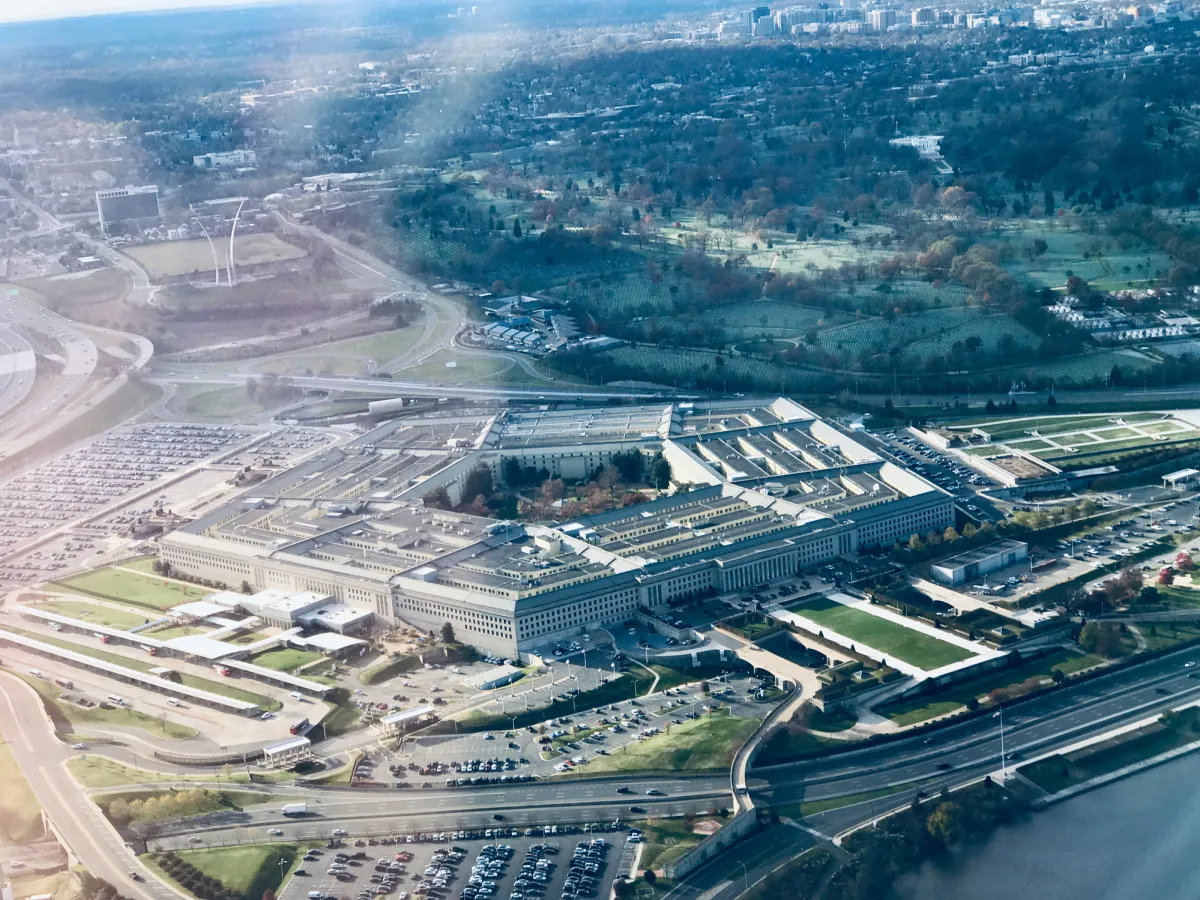
After landing agreements with Google, SpaceX, and OpenAI, the U.S. Defense Department said on Friday that it has signed deals with Nvidia, Microsoft, Amazon Web Services, and Reflection AI that allow it to deploy their AI tech and models on its classified networks for “lawful operational use.”
“These agreements accelerate the transformation toward establishing the United States military as an AI-first fighting force and will strengthen our warfighters’ ability to maintain decision superiority across all domains of warfare,” the statement reads.
The deals come as the U.S. Department of Defense has accelerated its diversification of AI vendors in the wake of its controversial dispute with Anthropic over usage terms of its AI models. The Pentagon wanted unrestricted use of Anthropic’s AI tools, but the AI lab insisted on guardrails to prevent Anthropic’s tech from being used for domestic mass surveillance and autonomous weapons.
The two are fighting it out in court at the moment, though Anthropic in March won an injunction against the Pentagon’s move to brand the company a “supply chain risk.”
“The Department will continue to build an architecture that prevents AI vendor lock-in and ensures long-term flexibility for the Joint Force,” the statement reads. “Access to a diverse suite of AI capabilities from across the resilient American technology stack will give warfighters the tools they need to act with confidence and safeguard the nation against any threat.”
The DoD said the companies’ AI hardware and models will be deployed on Impact Level 6 (IL6) and Impact Level 7 (IL7) environments to “streamline data synthesis, elevate situational understanding, and augment warfighter decision-making.” IL6 and IL7 are high-level security classifications for data and information systems that are deemed critical to national security, and require that these systems be protected physically, through strict access controls and audits.
The Pentagon said more than 1.3 million DoD personnel have so far used its secure enterprise platform for generative AI, GenAI.mil, which provides access to large language models (LLMs) and other AI tools within government-approved cloud environments. It is designed to help primarily with non-classified tasks like research, document drafting, and data analysis.
Techcrunch event
San Francisco, CA
|
October 13-15, 2026
When you purchase through links in our articles, we may earn a small commission. This doesn’t affect our editorial independence.
You may like
Business
ASHON Raises Alarm Over Universal Insurance Licence Revocation, Cites Threat to Market Confidence
Published
7 minutes agoon
September 1, 2026By
PreportThe Association of Securities Dealing Houses of Nigeria (ASHON) has raised the alarm over the revocation of Universal Insurance Plc’s operating licence by the National Insurance Commission (NAICOM), warning that the manner and timing of the regulatory action pose a serious threat to investor confidence in the Nigerian capital market.
In a position paper signed by its Chairman, Sehinde Adenagbe, the umbrella body of stockbroking firms registered with the Securities and Exchange Commission (SEC) said its concern was not with regulatory action itself, but with the sequence of events surrounding the revocation — which took effect on the same day Universal Insurance disclosed a binding ₦7.128 billion investment agreement aimed at resolving its capital shortfall.
SEE FULL PAPER BELOW
POSITION PAPER BY THE ASSOCIATION OF SECURITIES DEALING HOUSES OF NIGERIA (ASHON) ON THE REVOCATION OF THE LICENCE OF UNIVERSAL INSURANCE PLC AND THE NEED FOR COORDINATED, MARKET-SENSITIVE REGULATORY ACTION
Introduction
The Association of Securities Dealing Houses of Nigeria (ASHON), the umbrella body of Stockbroking Firms registered with the Securities and Exchange Commission (SEC), expresses its deep concern over the recent revocation of the operating licence of Universal Insurance Plc by the National Insurance Commission (NAICOM), and, more importantly, the manner and timing of the regulatory action as it affects investors, the Nigerian Exchange Limited (NGX), Stockbroking Firms and confidence in the Nigerian capital market.
ASHON fully recognizes and supports effective regulation. We equally recognize that recapitalization of regulated financial institutions is necessary where it is designed to strengthen financial resilience, protect policyholders and investors, improve risk-bearing capacity and safeguard the stability of the financial system.
Our concern is therefore not with recapitalization or prudent regulation. Our concern is with regulatory processes that may achieve the opposite of their intended objective by destroying value, unsettling investors and undermining confidence in publicly traded companies.
Universal Insurance Plc provides a particularly important case study.
On August 14, 2026, Universal Insurance disclosed to the Nigerian Exchange that it had entered into a binding investment agreement with FPNG Co-Nvest Limited for an equity investment of approximately ₦7.128 billion, through a private placement, which upon completion would give FPNG a 50.1% majority stake. The company stated that its board and shareholders had approved the transaction and that it was engaging NAICOM and other regulators to complete the recapitalization process. Yet, the cancellation of Universal Insurance’s registration took effect on the same date, 14 August 2026, pursuant to a NAICOM notice dated 13 August 2026. A receiver/provisional liquidator was subsequently appointed.
This sequence raises fundamental questions which, in our view, require urgent attention from NAICOM, the Federal Ministry of Finance and the Securities and Exchange Commission.
*_How can a listed company that is publicly pursuing a binding capital injection capable, subject to regulatory approval and completion, of addressing its capital shortfall be placed into liquidation at virtually the same point in time without a coordinated process that protects the interests of the investing public?_* More fundamentally, how should investors interpret a market in which a transaction capable of materially changing the financial position and ownership structure of a listed company be overtaken by regulatory action without the market infrastructure, particularly the Exchange and the investing public, having sufficient time to respond?
ASHON believes that this matter goes beyond Universal Insurance Plc. It raises an important policy question about the interface between sectoral regulators and the capital market where a regulated institution is also a publicly quoted company. We therefore call for an urgent review of the circumstances surrounding the revocation, an appropriate intervention by the Federal Ministry of Finance as the supervising ministry, and decisive action by the SEC to establish a permanent framework for regulatory coordination whenever the licence, solvency, capital adequacy or continued existence of a listed company is in question.
*ASHON’s Position*
ASHON unequivocally supports strong, independent and effective financial-sector regulation
A regulator must have the courage to act when an institution poses a threat to policyholders, depositors, investors or the wider financial system. Regulatory forbearance cannot be allowed to become a substitute for sound supervision. However, regulation must ultimately serve the public interest. A regulator should not approach its relationship with regulated entities as a servant-master relationship in which the only measure of success is the regulator’s ability to impose sanctions. Regulation is a public function. Its legitimacy derives from its contribution to the safety, soundness, fairness, transparency and development of the financial system. The ultimate question should therefore not simply be: “Has the institution complied with the regulatory requirement?”
It should also be: “What regulatory action best protects the public interest, preserves value, protects investors and strengthens the financial system?” This distinction is particularly important when the affected institution is a company listed on a public securities exchange.
*Recapitalization Is a Corrective Instrument, Not a Punishment*
ASHON believes that recapitalization should be understood for what it is: a mechanism for strengthening an institution, not a punishment for failing to meet a regulatory threshold at a particular point in time. Where shareholders, existing owners or prospective investors are willing and able to provide fresh capital, regulators should, within the law, facilitate an orderly process that gives such capital a reasonable opportunity to achieve its purpose. In the Universal Insurance case, the company disclosed a binding agreement for an investment of ₦7.128 billion from FPNG Co-Nvest Limited, with FPNG expected to emerge with a 50.1% majority stake upon completion. The company stated that it had obtained the relevant board and shareholder approvals and was engaging NAICOM and other regulators on the next steps. That development should have been viewed as evidence of an active attempt to solve the capital problem. It is understandable that a regulator must determine whether the proposed capital is acceptable, genuine, immediately available, free from unacceptable conditions and capable of satisfying all prudential requirements. Those are legitimate regulatory questions. But where such a transaction exists, the regulatory process should be structured to determine its viability before the irreversible step of licence cancellation and liquidation, where the law and circumstances permit.
A recapitalization exercise should therefore ask:
o Is fresh capital available?
o Is the source of the capital satisfactory?
o Has the transaction received the required corporate approvals?
o Does the proposed capital meet the applicable regulatory threshold?
o Can the transaction restore the institution to solvency?
o Will policyholders, investors and other stakeholders be better protected if the transaction is completed?
o Can the institution be placed under enhanced supervision while the transaction is concluded?
Where the answers are favourable, the public interest may be better served by an orderly resolution than by an immediate extinction of the listed company.
*The Universal Insurance Case Raises Serious Market-Integrity Questions*
Universal Insurance’s own regulatory filing is particularly important. The company disclosed that FPNG Co-Nvest Limited had agreed to invest ₦7.128 billion through a private placement and that, upon completion, FPNG would hold 50.1% of the company. Universal Insurance further stated that its board and shareholders had approved the transaction and that it was engaging NAICOM and other regulators. This announcement was made through the NGX disclosure system on 14 August 2026. Public reports subsequently indicated that NAICOM’s cancellation of the company’s registration took effect on that same date, based on a notice dated August 13, 2026. The temporal proximity of these events is deeply troubling from a market perspective. ASHON is particularly concerned about the possibility that investors could have traded in Universal Insurance shares at a time when a decisive regulatory action had already been taken or was already signed but had not yet been communicated through the appropriate capital-market channels. If that is confirmed by the relevant records, it presents a fundamental fairness issue.
The capital market operates on the principle that all investors should have access to material information on an equitable and timely basis. A regulatory decision capable of eliminating the value or tradability of a listed company’s securities is plainly information of extraordinary market significance. It should therefore never be possible, as a matter of institutional practice, for a sectoral regulatory decision concerning a listed company to become effective in circumstances where the Exchange, the SEC, market operators and investors are unaware that such a decision has already been made.
*The Exchange Cannot Be Treated as an Afterthought*
A listed company is no longer merely a private entity between its shareholders and its sector regulator. It is part of a public market infrastructure. Its shares are held by thousands of investors. Its securities are traded through licensed Stockbroking Firms. Its ownership is maintained through the Central Securities Clearing System. Its market price is discovered on the NGX. Its disclosures are disseminated to the investing public through established capital-market mechanisms. Consequently, a decision by a sectoral regulator that fundamentally affects the existence, solvency or licence of a listed company has implications far beyond the regulator and the regulated company.
There must be a formal and mandatory protocol requiring the relevant sector regulator to notify the SEC and NGX before taking final action against a listed entity, subject of course to legitimate exceptions involving immediate threats to life, assets, financial stability or evidence preservation.
The SEC has already demonstrated its commitment to regulatory coordination. In December 2025, the Commission launched its Regulatory Hub specifically to improve collaboration, information sharing, transparency and the timeliness and quality of regulatory decision-making among financial and economic regulators. The Universal Insurance situation should therefore be used as an opportunity to move this principle from policy aspiration to binding operational procedure.
*The Ordinary Investor Must Not Become the Casualty of Regulatory Action*
This is perhaps the most important aspect of our concern. The Nigerian capital market has spent considerable time rebuilding public confidence. The market has endured periods of severe downturn, loss of value, corporate failures, governance concerns and a general perception among many retail investors that the capital market is not sufficiently protective of ordinary investors. Yet Nigerians are beginning to return. They are buying equities again. They are responding to corporate offers. They are participating in rights issues and placements. They are entrusting their savings to Stockbroking Firms and other regulated capital-market institutions. The last thing the market needs is a situation in which an ordinary investor buys shares of a listed company in good faith, through a regulated Stockbroker, only to discover shortly afterwards that a regulatory decision had already been taken which fundamentally altered the status and value of that investment. That investor does not distinguish between NAICOM, SEC, NGX, CBN or another regulator. To the ordinary investor, the Nigerian financial system is one ecosystem. A loss caused by regulatory fragmentation is therefore perceived simply as a failure of the system. That perception can have consequences far beyond the affected company.
*The Impact on Stockbroking Firms Is also Significant*
ASHON members are directly exposed to this issue. Stockbroking Firms are currently operating in an environment in which they are themselves being required to strengthen their capital base and operational resilience. The SEC’s 2026 revised minimum-capital framework expressly seeks to strengthen market resilience, investor protection, financial soundness and operational capacity. Our members are therefore asking their shareholders and prospective investors to provide fresh capital to strengthen their businesses. At the same time, our clients are being encouraged to increase their participation in the Nigerian capital market. It is therefore extremely painful when investors who have responded positively to this call and committed money to the market subsequently find themselves exposed to an unexpected regulatory event concerning a listed company. Stockbrokers should not be placed in the impossible position of encouraging clients to invest in a regulated market while lacking reasonable assurance that regulatory agencies will coordinate their actions in a manner that protects market integrity. We cannot build confidence in the capital market with one hand while unintentionally destroying it with the other.
*Regulatory Action Must Be Proportionate and Value-Preserving*
ASHON is not suggesting that a regulator should be prevented from cancelling a licence where the law requires or permits it. Rather, we advocate a graduated regulatory-resolution framework.
Before a final revocation involving a listed entity, regulators should, where circumstances permit, consider measures such as:
o enhanced regulatory supervision;
o a formal capital-restoration plan;
o a time-bound recapitalization window;
o restrictions on dividend payments or other distributions;
o restrictions on new business where necessary;
o appointment of an independent adviser or special supervisor;
o controlled change of ownership;
o merger or acquisition solutions;
o bridge financing;
o temporary management intervention;
o or other statutory resolution mechanisms.
Licence cancellation should remain available where necessary, but it should be the result of a transparent resolution process rather than the first visible manifestation of regulatory failure.
The objective should be to preserve value where value can still be preserved.
*The Wider Economic Implications*
The implications extend beyond the shareholders of Universal Insurance.
A functioning capital market performs critical economic functions:
• It mobilizes domestic savings.
• It channels capital to productive businesses.
• It provides companies with alternatives to bank financing.
• It creates investment opportunities for households and institutions.
• It supports employment and economic activity.
• It facilitates ownership diversification.
• It improves corporate governance through public disclosure and shareholder scrutiny.
• It attracts domestic and foreign portfolio investment.
When investors begin to believe that regulatory actions can unexpectedly destroy the value of listed securities, the risk premium attached to Nigerian equities increases. Investors may demand higher returns before committing capital. Some may reduce their exposure. Others may move capital into fixed income, foreign assets or other jurisdictions. The consequence is higher cost of capital for Nigerian businesses and potentially lower investment and economic growth. This is precisely why regulatory decisions must be evaluated not only from a narrow sectoral perspective but also from the standpoint of their impact on the broader financial system.
*Lessons from Banking Recapitalization*
Nigeria has undertaken major banking recapitalization exercises in the past. Indeed, the SEC itself recently highlighted the Nigerian capital market’s role in mobilizing and absorbing approximately ₦4.65 trillion in the successful banking recapitalization exercise. This demonstrates that recapitalization can be an opportunity for the capital market rather than simply a compliance exercise. The lesson is clear: Regulatory reform and capital-market development should reinforce each other. A recapitalization exercise should create stronger institutions, deeper markets, new investment opportunities and greater confidence. It should not inadvertently create uncertainty over the securities of companies that are already listed and actively raising capital.
*Regulatory Secrecy and the “Military-Style” Swoop Must End*
ASHON is particularly concerned about the apparent practice whereby a regulatory decision is made, signed and operationalized before the capital-market ecosystem is informed. We use the phrase “military-style swoop” deliberately to describe a process in which a company and the market may be confronted with a fait accompli rather than being taken through an orderly regulatory-resolution process. We do not question the authority of regulators to act decisively when necessary.
We question the wisdom of acting without coordinated market communication where there is no immediate systemic emergency requiring secrecy. A regulator can be firm without being abrupt. A regulator can be decisive without being disruptive. A regulator can enforce the law while simultaneously protecting investors. These objectives are not contradictory.
*Due Process and the Right to Be Heard*
Regulatory effectiveness should not be measured solely by the speed with which sanctions are imposed. It should also be measured by the quality of the process leading to the decision. Where a company has raised or is in the process of raising capital, and where a credible investor has entered into a binding agreement, the regulator should be able to demonstrate that the proposed solution was properly considered and rejected, where rejection is ultimately necessary. The public deserves to understand:
o when the regulatory deficiency was established;
o when the company was notified;
o what remediation opportunities were provided;
o what representations the company made;
o whether proposed investors were assessed;
o whether the proposed capital injection was considered;
o whether the Exchange and SEC were consulted;
o why alternative resolution options were rejected; and
o why immediate revocation was considered to be in the public interest.
Transparency on these issues is not an attack on regulatory independence. It is a means of strengthening regulatory legitimacy.
*NAICOM’s Recent Engagement With the Federal Ministry of Finance Demonstrates That Regulatory Review Is Possible*
There is already a recent example of constructive supervisory intervention. In August 2026, the Federal Ministry of Finance directed NAICOM to suspend enforcement of disputed recapitalization fees involving NICON Insurance Limited and Nigeria Reinsurance Corporation pending determination of issues raised by the affected entities. The Ministry also requested NAICOM to provide legal justification for the requirements being challenged. ASHON welcomes this type of supervisory engagement. It demonstrates that regulatory firmness and regulatory review can coexist.
We therefore respectfully urge the Federal Ministry of Finance to examine the Universal Insurance matter with the same spirit of public-interest supervision.
*Our Recommendations*
ASHON proposes the following measures.
a. Immediate Review of the Universal Insurance Decision
We urge NAICOM and the Federal Ministry of Finance to urgently review the circumstances surrounding the revocation of Universal Insurance Plc’s licence, particularly in light of the ₦7.128 billion binding investment agreement disclosed to NGX on 14 August 2026.The objective should be to determine whether an orderly resolution capable of preserving value and protecting investors remains possible.
b. Immediate Regulatory Coordination Protocol
The SEC should establish, in conjunction with NAICOM, CBN, NGX, CAC and other relevant regulators, a mandatory protocol for dealing with listed companies facing licence cancellation, receivership, insolvency, recapitalization failure or other regulatory actions capable of materially affecting their securities.
c. Mandatory Prior Notification to SEC and NGX
Except in genuine emergencies involving systemic risk, fraud, dissipation of assets or other circumstances where prior disclosure would prejudice enforcement, no sectoral regulator should make effective a decision capable of materially affecting a listed company’s securities without simultaneously notifying the SEC and NGX through an agreed protocol.
d. Market-Wide Disclosure Protocol
Where regulatory action is likely to materially affect a listed company’s securities, the SEC and NGX should coordinate the release of the information to ensure that all investors receive it simultaneously. This will reduce information asymmetry and protect investors from trading on materially incomplete information.
e. Regulatory Resolution Framework for Listed Companies
Nigeria should develop a formal “Regulatory Resolution Framework for Listed Companies” covering banks, insurers and other regulated entities whose securities are traded on a recognized exchange. The framework should establish graduated intervention measures before liquidation or licence cancellation, where legally permissible.
f. Protection of Investors Who Trade Before Disclosure
Where it is established that a material regulatory decision had already been made but was not communicated to the market, the SEC, NGX and relevant regulator should jointly examine transactions executed during the information gap and determine appropriate measures to protect market integrity and affected investors.
g. Regulatory Impact Assessment
Before the final revocation of a listed company’s licence, regulators should conduct a documented assessment of the consequences for:
o shareholders;
o retail investors;
o creditors;
o policyholders or customers;
o employees;
o Stockbroking Firms;
o the Exchange;
o market liquidity;
o financial stability; and
o public confidence.
h. Institutionalize Inter-Regulatory Information Sharing
The SEC’s Regulatory Hub provides an appropriate technological foundation for this objective. The platform was specifically designed to facilitate secure and timely information sharing and collaboration among regulators. The existence of the platform should now be matched by binding operating procedures.
*The Role of the SEC*
ASHON calls upon the Securities and Exchange Commission, as the apex regulator of Nigeria’s capital market, to remain as usual firm in defending the integrity of the market and the interests of investors. The SEC has been up and doing in their responsibility not merely to regulate Stockbroking Firms and other capital-market participants, but also to protect the credibility of the market itself. The Investments and Securities Act 2025 reinforces the investor-protection architecture of the Nigerian capital market, including the establishment and operation of investor protection funds and mechanisms for addressing investor losses in specified circumstances.
We therefore implore the SEC to:
o engage NAICOM immediately on the Universal Insurance matter;
o insist on a coordinated approach whenever the securities of a listed company are affected by sectoral regulatory action;
o investigate the timing and dissemination of the Universal Insurance decision;
o examine whether investors traded during a period when material regulatory information had already been determined but was not publicly available;
o establish clear rules for inter-regulatory notification;
o and ensure that no future listed company is placed in a similar situation without appropriate capital-market coordination.
ASHON stands ready to work with the SEC in developing these mechanisms.
*Our Appeal to NAICOM*
ASHON respectfully appeals to NAICOM to see this intervention not as an attempt to undermine its regulatory independence but as a call for better regulation. NAICOM’s mandate is important to the Nigerian economy. A strong insurance industry is indispensable to economic development.
But a strong regulator is not merely one that can close an institution. A strong regulator is one that can:
o identify problems early;
o compel corrective action;
o attract fresh capital;
o facilitate orderly change of ownership;
o protect policyholders;
o protect investors;
o preserve viable institutions;
o minimize systemic disruption; and
o maintain public confidence.
The best regulatory outcome is not necessarily the most severe outcome. It is the outcome that best serves the public interest.
*Conclusion*
ASHON believes that the Universal Insurance episode should become a turning point in the development of Nigeria’s financial regulatory architecture. We must not create a regulatory environment in which sectoral regulators operate in silos while the consequences of their actions are borne by investors, Stockbroking Firms, Exchanges and the wider economy. Nigeria needs joined-up regulation. We need regulators that speak to one another before decisions are taken, not after market damage has occurred. We need regulators that understand that a listed company is part of a broader market ecosystem. We need regulatory enforcement that is firm but fair, decisive but coordinated, independent but accountable, and above all, directed towards preserving public confidence. ASHON therefore urges: NAICOM to review the circumstances surrounding the Universal Insurance revocation; the Federal Ministry of Finance to exercise its supervisory responsibility and intervene where necessary to ensure that the public interest is protected; and the SEC to stand firmly with the Nigerian capital market by establishing a permanent policy and operational framework that prevents the recurrence of such incidents involving listed and publicly traded companies. The Nigerian capital market cannot afford another cycle in which ordinary investors, after being encouraged to return to equities, discover that regulatory decisions have unexpectedly placed their investments at risk. Recapitalization should strengthen institutions, not destroy value. Regulation should protect the market, not inadvertently destabilize it. Enforcement should restore confidence, not erode it. And above all: The Nigerian investor must never become collateral damage in a dispute or disconnect between financial regulators. ASHON remains committed to supporting the SEC, NGX, NAICOM, CBN, the Federal Ministry of Finance and other stakeholders in building a Nigerian financial system that is properly regulated, investor-focused, transparent, coordinated and capable of attracting and retaining domestic and international capital.
*Sehinde Adenagbe*
Chairman: Association of Securities Dealing Houses of Nigeria (ASHON)
August 2026
The post ASHON Raises Alarm Over Universal Insurance Licence Revocation, Cites Threat to Market Confidence appeared first on Business Today NG.
News
This startup is fuel-injecting hydrogen to make cargo ships more efficient
Published
8 minutes agoon
September 1, 2026By
Preport
It’s one the most iconic scenes in the Fast & Furious film franchise: Paul Walker’s thumb comes off the steering wheel and smashes a small red button, pumping nitrous oxide into the engine of his Mitsubishi Eclipse and giving the car an explosive boost.
This is not exactly how the hydrogen-injection system developed by a startup called Newlight works on cargo ships. In fact, the company’s system uses compressed hydrogen fuel to boost efficiency — not to beat Vin Diesel. But it’s an analogy that’s proved to be useful for co-founder Evyatar Cohen.
“Instead of getting power, we actually say to the engine: ‘Hey, reduce the fuel [flow] to the engine, we don’t need as much because we have some nitrous. It’s [just] called hydrogen,’” he told TechCrunch in an exclusive interview.
The small team based in the San Francisco Bay Area has developed this hydrogen injection system as a retrofit, which it claims can be installed in less than two weeks without needing a dry dock. It cuts fuel use and emissions by more than 20%, and can save some vessels as much as $500,000 in annual costs, according to the startup.
Newlight does this by constantly monitoring the diesel engine and finding optimal moments, down to the millisecond level, to inject the hydrogen fuel. That includes measuring exhaust temperature, combustion pressure, and air intake pressure, and increasing or decreasing the hydrogen flow every time a piston moves inside the engine’s cylinders.
The startup says this hybrid system has completed its first long-range commercial voyage: an 8,500-nautical mile trip from Singapore to Ghana. Newlight installed its tech on a 650-foot-long Lomar Shipping bulk carrier ship for the test. The startup said its system reduced fuel consumption by 24% and carbon dioxide emissions by 28%.
“It was amazing,” Haran Cohen Hillel, Cohen’s co-founder and the CEO of Newlight, said of the month-long voyage. “Being onboard and seeing the system operate in real conditions was a completely different experience from anything we had done in the lab.”
Turning the system on with his co-founder for the first time, he said, was an “emotional moment for both of us.”
“We spent a lot of time monitoring the system, the engine behavior, and the performance, and what impressed us most was how smoothly everything worked,” he told TechCrunch. “Seeing the system integrate with the vessel, operate reliably, and deliver the results we had been working toward was a huge milestone for us and for the entire Newlight team.”
The combination of those projections, the clever pitch, and the years Cohen and Hillel spent working in the Israeli Navy has helped the duo secure a $9 million seed round. The fundraise included investment from lomarlabs, the venture arm of Lomar Shipping, BIRD Energy, a joint venture between the U.S. Department of Energy and the Israel Ministry of Energy, deep tech funds Undeterred Capital and CiRi Ventures, and Fusion VC, an accelerator for Israeli startups in the U.S.
Newlight also says it’s attracting commercial interest. The company claims it has signed agreements to put the hydrogen injection system on 12 vessels across multiple companies with “broader fleet rollouts planned for next year.”
There are other companies working to use fuel injection methods to cut emissions and boost efficiency, including with ammonia or methanol. But Newlight argues its hydrogen setup is leaner and requires fewer changes to the diesel engines typically used on cargo ships.
The two co-founders also told TechCrunch they see opportunities beyond the marine industry, too — though they expect to stay focused on the sea for now.
“We’re an energy company, right? So we look at the whole energy situation that is happening around the world, with transportation, and data centers, and we have some investors that even have trains,” Hillel said. “But we’re gonna try to be focused on shipping right now, and to get on a scale there, and then we can probably expand.”
When you purchase through links in our articles, we may earn a small commission. This doesn’t affect our editorial independence.
Trending
-

 Events1 day ago
Nigeria’s Christian Leaders to Unite in Abuja for First Lausanne Congress in Over 10 Years (Register Now)
-
Business3 days ago
OpenAI to end Cursor deal with SpaceX over contract, safety concerns
-
News3 days ago
Sony Music, Warner sue Anthropic, alleging a “brazen campaign” of intellectual property theft
-
Health3 days ago
FG deploys task force to respond to diphtheria outbreaks in Kano, Katsina