Business
Linkage Assurance delivers 748% profit surge in Q1 despite tough operating environment



BY NKECHI NAECHE-ESEZOBOR—Underwriting firm, Linkage Assurance Plc has released its unaudited financial results for the first quarter ended March 31, 2026, posting a sharp surge in profitability despite a challenging operating environment.
The standout highlight is the company’s profit after tax (PAT), which soared by 748 percent to N6.25 billion, up from N736.3 million in the corresponding period of 2025. Similarly, profit before tax (PBT) jumped by 689 percent to N6.57 billion, compared to N833.2 million a year earlier.
This remarkable performance signals a decisive turnaround in bottom-line growth and positions Linkage Assurance among the standout performers in Nigeria’s insurance sector for the quarter under review.
A closer look at the results reveals a significant surge in investment and other income, which rose by 425 percent to N8.60 billion from N1.64 billion in the prior year. This underscores the company’s ability to navigate its operating environment and capitalise on market opportunities.
Insurance revenue for the period recorded a modest increase of 6 percent to N6.40 billion. However, insurance service expenses rose by 73 percent, reflecting the company’s readiness to meet claims obligations promptly and reinforce customer trust.
Linkage Assurance also strengthened its financial position during the period, with a more robust balance sheet as total assets grew by 13 percent to N87.27 billion from N76.9 billion, driven by increased investment holdings and business expansion.
Commenting on the results, Daniel Braie, Managing Director/CEO of Linkage Assurance Plc, said the company is strategically positioned to deepen customer confidence through quality service delivery and prompt claims settlement.
“What we have promised as an insurer is to be there for our customers when they need us. That is why we prioritise claims and ensure they are delivered promptly,” he said.
He expressed optimism about the company’s outlook for the coming quarters, noting that it remains well-positioned to sustain strong market performance and deliver value to stakeholders.
Management’s 2026 theme of “Consolidation” underscores a deliberate focus on balancing growth with operational efficiency. The company is prioritising expansion in profitable segments, operational and financial excellence, digital transformation, product innovation, and enhanced customer experience.
The post Linkage Assurance delivers 748% profit surge in Q1 despite tough operating environment appeared first on Business Today NG.
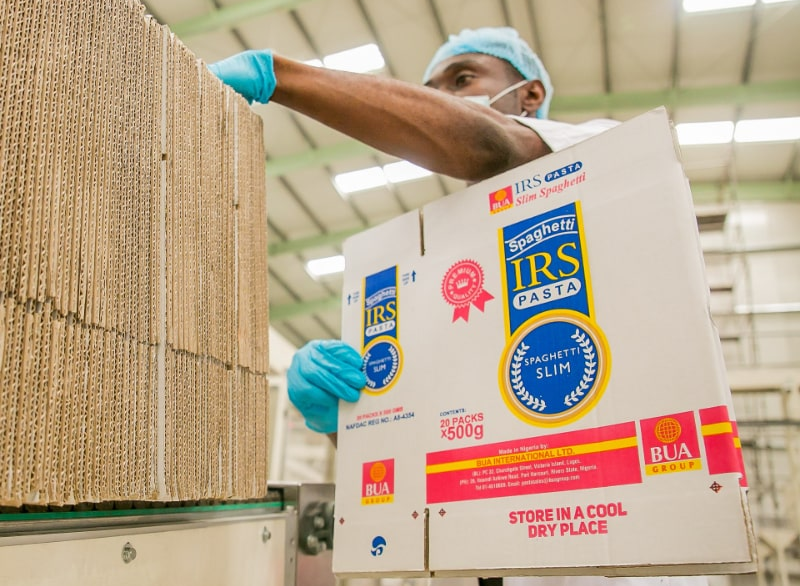
Africa’s leading food manufacturing company, BUA Foods Plc, has proposed a dividend of N28.00 per ordinary share, totalling about N504 billion for the 2025 financial year.
Africa’s leading food manufacturing company, BUA Foods Plc, has proposed a dividend of ₦28.00 per ordinary share, totalling about ₦504 billion for the 2025 financial year.
The company stated that the proposal is subject to shareholders’ approval at its 5th Annual General Meeting, scheduled for 15 July at the Transcorp Hilton Hotel, Abuja. At the meeting, shareholders will also consider the company’s audited financial statements for the year ended 31 December 2025, as well as other statutory and corporate governance matters.
For the 2025 financial year, BUA Foods reported revenue of ₦1.77 trillion, representing a 16 per cent increase over the previous year. The company also recorded a 95 per cent growth in profit after tax to ₦518.4 billion. In comparison,ile total assets increased by 27 per cent to ₦1.39 trillion, reflecting continued investment in manufacturing capacity and capabilities, operational excellence, and long-term value creation.
The food manufacturer noted that the meeting follows a period during which BUA Foods delivered strong financial performance, enhanced operational efficiency, and reinforced its position as one of Nigeria’s most valuable consumer goods companies.

Meeting agenda
Commenting ahead of the meeting, the Managing Director of BUA Foods Plc, Ayodele Abioye, said the AGM would provide an opportunity to engage shareholders, review the company’s performance, and discuss its future direction. He noted that despite a challenging operating environment, the company sustained strong performance through disciplined execution and its commitment to delivering quality food products.
Mr Abioye attributed BUA Foods’ achievements to the support of customers, supply partners, its board, management, employees, and other stakeholders. He added that BUA Foods would continue to focus on creating sustainable long-term value through investments in capacity expansion and strengthening food security in support of national development.
READ ALSO: Access Holdings’ working to resume dividend payment – Chairman
“The 5th Annual General Meeting provides an important opportunity to engage with shareholders, reflect on another year of strong performance, and discuss the future direction of the business. Despite a dynamic operating environment, BUA Foods continued to demonstrate resilience through disciplined execution and an unwavering commitment to delivering quality food products to millions of consumers. Looking ahead, the focus remains on creating sustainable long-term value through continuous investments in capacity expansion, with capabilities that strengthen food security for national development,” Mr Abioye said.
The food company reaffirmed its commitment to delivering sustainable returns, strengthening stakeholder confidence, and advancing its purpose of nourishing lives every day.

-

 News3 days ago
Sports commission reaffirms commitment to hockey revival
-
Business1 day ago
Plateau Govt Procures 500 Truckloads of Fertilizer, Subsidises 50kg Bags at ₦20,000
-
News2 days ago
Weightlifting Federation’s Technical Director Sefiya Onubaye Reveals Advantages Of Team Nigeria’s ‘Final Camping’ In Aberdeen
-
News3 days ago
PEPSA Intensifies Drainage Clearance and Flood Response Across Jos