News
Palm Sunday attack: Plateau Govt arraigns suspects amid tight security

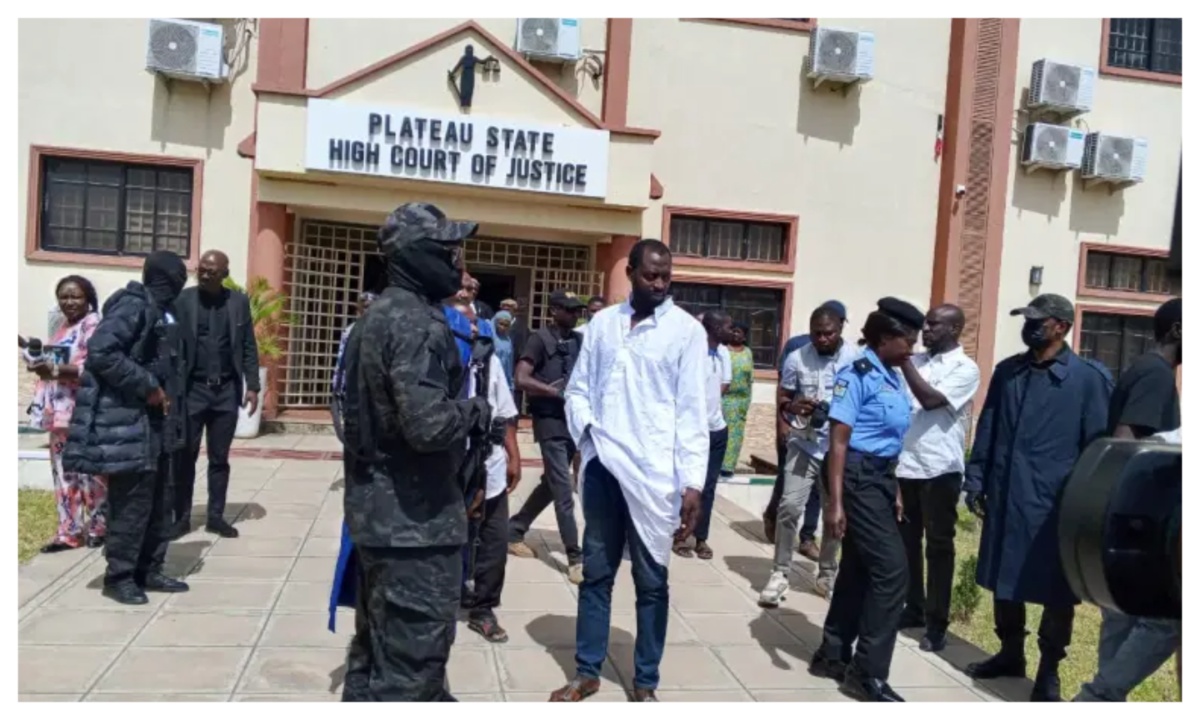
There was a heavy security presence on Thursday at the Plateau State High Court in Jos as the state government arraigned four suspects linked to the deadly Palm Sunday attack on Angwan Rukuba community in Jos North Local Government Area.
The suspects, who were arrested by the Department of State Services, DSS, between April 3 and April 10, 2026, were brought before the court under tight security arrangements aimed at preventing any breakdown of law and order.
Court proceedings began after the defendants arrived at the Plateau State High Court of Justice at about 9:20 a.m., with security operatives stationed within and around the premises.
The Plateau State Government filed charges bordering on criminal conspiracy and terrorism-related offences
against the accused persons in connection with the attack.
Those arraigned include Isa Umar Ibrahim, Auwalu Abubakar (also known as Auwalu Dogo), and Musa Abubakar Ibrahim, also identified as Yaroro, alongside one other defendant.



The proposed establishment of state police is facing a major test as only four state Houses of Assembly have so far approved the constitutional amendment needed to make the reform possible.
Edo, Osun, Oyo and Rivers are the only states confirmed to have given their concurrence to the proposal, according to checks across the country.
The development comes barely three weeks after the National Assembly transmitted the Constitution of the Federal Republic of Nigeria, 1999 (Sixth Alteration) Bill, 2026, to the 36 state Houses of Assembly.
Politics Nigeria gathered that the bill was transmitted on September 16 for consideration and approval by the state legislatures.
The National Assembly had set a 30-day administrative timeframe for the assemblies to communicate their decisions.
However, the Constitution does not prescribe 30 days as a mandatory deadline for the states.
The major hurdle is the constitutional requirement for at least 24 of the 36 state Houses of Assembly to approve the proposed alteration.
With only four states having so far approved the bill, another 20 state legislatures must still back the proposal before the constitutional threshold can be reached.
The slow pace has therefore raised fresh questions over whether the reform can secure the required number of state approvals within the period being targeted by the National Assembly.
The National Assembly had earlier clarified that the State Police Services Bill was the only constitutional alteration bill transmitted to the 36 state assemblies at this stage.
It said the decision to prioritise the bill followed widespread concerns over insecurity and the need to provide a constitutional framework for decentralised policing.
South-West divided over proposal
In the South-West, Osun and Oyo have already approved the bill, while other states are still at different stages of consideration.
The Osun State House of Assembly approved the proposed constitutional amendment after considering the provisions clause by clause.
Oyo lawmakers also approved the bill after going through its provisions during plenary.
Ondo and Ekiti have confirmed receipt of the proposal but have yet to conclude consideration.
In Ondo, the draft was read on the floor and distributed to lawmakers for study.
Ekiti is also expected to begin formal consideration after the completion of its internal legislative procedures.
Lagos State had earlier endorsed the idea of state police and called for an accelerated process.
However, its position on the specific constitutional amendment transmitted by the National Assembly remains unclear.
The Lagos Assembly had backed the establishment of state police during plenary in July, but there has been no clear public confirmation that it has formally approved the full constitutional amendment and transmitted its resolution to the National Assembly.
Ogun State has also received the proposal. The House has constituted a committee to examine the bill before it is presented for full consideration.
Rivers, Edo approve as others wait
In the South-South, Rivers and Edo have approved the amendment.
The Rivers State House of Assembly unanimously endorsed the proposal after considering the constitutional provisions before the lawmakers.
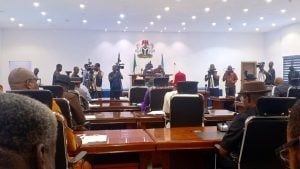
The Speaker, Martin Amaewhule, said the proposal was designed to strengthen Nigeria’s security architecture and bring policing closer to the people.
The House recorded 25 votes in favour, with no opposition or abstention.
The Rivers Assembly also noted that the proposal would retain the Federal Police while creating a constitutional framework for state police services.
Edo lawmakers similarly granted concurrence to the amendment.
Cross River has commenced consideration after the bill received its first reading.
Delta State has confirmed receipt of the document but is consulting stakeholders before taking a final position.
Bayelsa, meanwhile, had yet to formally debate or vote on the proposal.
Northern states yet to catch up
The process is also moving slowly across much of Northern Nigeria.
Several assemblies have received the bill but are yet to debate it, while others have complained that they are still waiting for formal transmission.
Kano, Kwara, Kebbi, Taraba and Gombe are among the states where lawmakers have said the proposal had not been formally received or scheduled for consideration.
In Kogi, the bill has been received but no decision has been taken.
Yobe, Borno, Nasarawa, Zamfara and Sokoto have also received the proposal but have yet to approve it.
In Yobe, the Assembly confirmed that the bill had been received but was yet to appear on the Order Paper.
“The bill has been received by the House, but it has not yet been listed in the proceedings or Order Paper for consideration,” Legal Secretary to the Assembly, Ibrahim Madaki, said.
Nasarawa has also acknowledged receipt of the bill.
Speaker Danladi Jatau said lawmakers would study the proposal before taking the necessary legislative steps.
In Sokoto, Deputy Speaker Kabiru Ibrahim Kware confirmed that lawmakers had received the bill but had not started debate.
“We have received the bill from the National Assembly, but we have not commenced deliberation on it yet,” he said.
Bauchi has taken a step further by setting up a committee to examine the proposal and submit its report to the House.
Plateau is currently among the Northern states that have begun the formal legislative process.
The bill has been read in the House and consideration has commenced.
South-East yet to produce approval
The South-East is also yet to record a formal approval among the states covered in the latest checks.
Anambra, Enugu and Imo have not completed consideration of the proposal.
Abia is expected to take a position after lawmakers resume from recess on October 6.
The Acting Clerk of the Abia House of Assembly, Pastor Promise Onwukwe, said lawmakers must consider the matter collectively on the floor.
“The House is currently on recess and will resume on Tuesday, October 6. Members cannot vote in isolation; it must be done in the hallowed chambers. So, when they resume, I believe they will do the needful,” he said.
Ebonyi, however, has confirmed receipt of the bill and promised to give it accelerated consideration.
Nonetheless, the proposed amendment is intended to create a constitutional basis for state police while retaining the Nigeria Police Force at the federal level.
It also provides for safeguards and national standards governing the operation of state police services.
The reform has remained one of the most prominent issues in Nigeria’s security, particularly as the country continues to grapple with kidnapping, banditry, terrorism and other forms of violent crime.
-

 News3 days ago
PLASU Opens Doors to Global Investors at 2nd Inaugural Lecture
-
Health2 days ago
Plateau: Medical Women Association of Nigeria Marks Older Persons Day with Free Outreach
-
News3 days ago
Plateau Specialist Hospital Celebrates Nigeria at 66, Salutes Mutfwang’s Health Initiatives
-
News3 days ago
Nigeria At 66: Rotjimwa Yilyok Salutes President Tinubu, APC Leadership and Plateau Government