News
Runway started by helping filmmakers. Now it wants to beat Google at AI.

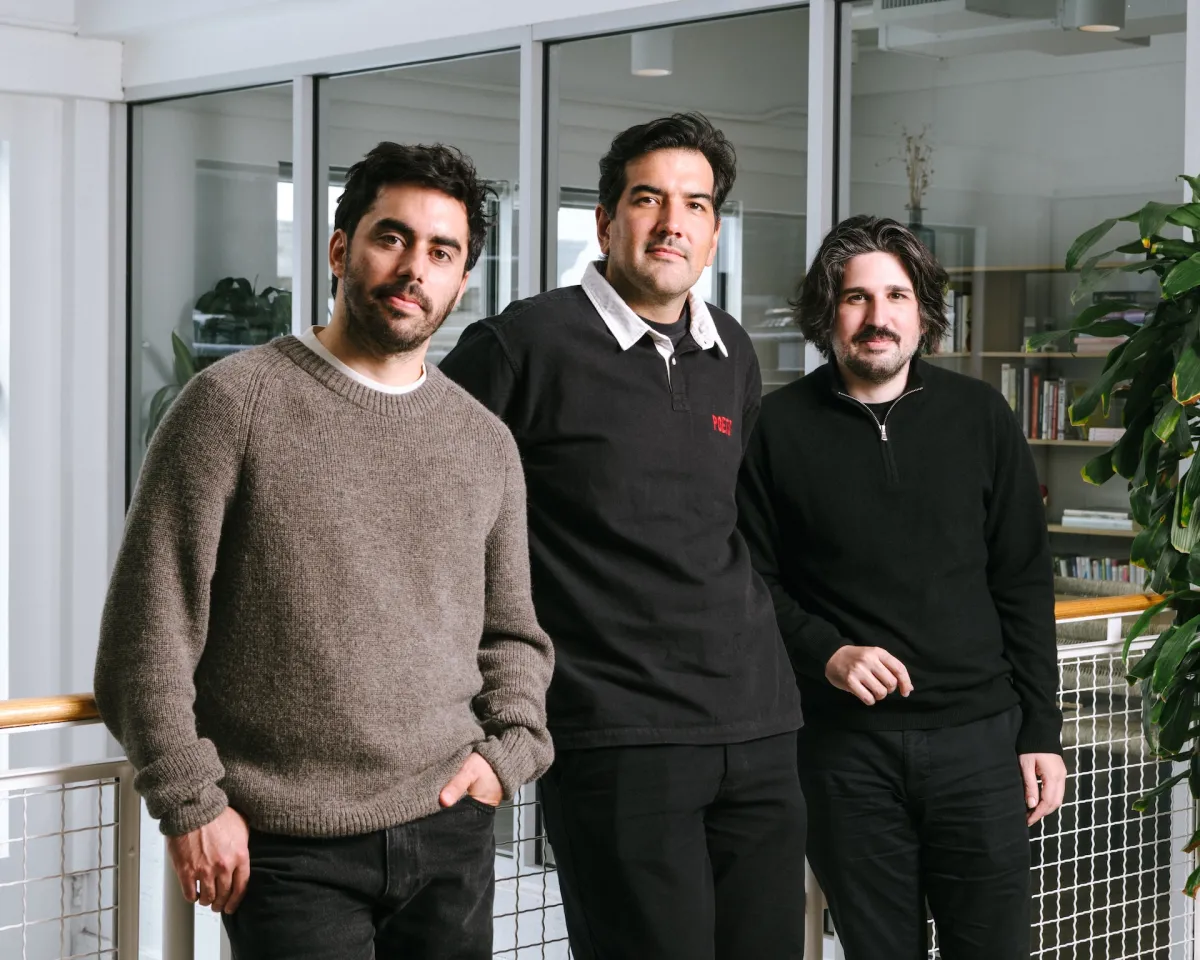
AI video generation startup Runway doesn’t have the typical Silicon Valley pedigree. No Stanford founders, no ex-Google founders, no nine-figure seed round that bought them time to ignore revenue. Its three founders — two from Chile, one from Greece — met at NYU’s Tisch School of the Arts and built the company in New York.
Runway also could be, depending on who you ask, one of the most consequential AI companies today. Not because of what it has built, but because of what it is trying to build next.
For the past several years, the AI industry has largely operated on the premise that intelligence lives in language. Large language models like OpenAI’s ChatGPT and Anthropic’s Claude reflect that bet.
Runway, alongside other competitors, is making a different one. Its founders believe the next form of AI intelligence won’t be built from text, but from video and world models that learn how the world works, not just how humans describe it. That distinction sounds academic. Its implications are not.
Runway co-Founder and co-CEO Anastasis Germanidis said training models directly on observational data from the world is the next frontier of AI. The companies that get there first, he argues, won’t be the ones who perfected language.
“We’re basically bound by our own understanding of reality,” Germanidis told TechCrunch from Runway’s homey sunlight-filled headquarters near Union Square.
“Language models are trained on the entire internet, on message boards and social media, on textbooks — distilling the existing human knowledge,” Germanidis continued. “But to get beyond that, we need to leverage less biased data.”
Founded in 2018, Runway built its reputation on video-generation models — including its latest Gen-4.5 — and AI tools that let people turn text prompts into editable, cinematic content.
Today, Runway’s technology powers production workflows for filmmakers and ad agencies, and the company has signed deals with major media players like Lionsgate and AMC Networks. Its tools have even been used in films such as “Everything Everywhere All At Once.”
Runway is now valued at $5.3 billion and, according to one of its founders, added $40 million in annual recurring revenue in the second quarter of 2026.
If Runway’s bet that video generation is the path to world models pays off, the result will be felt from Hollywood to drug discovery. If it doesn’t, Runway risks being outpaced by competitors with far deeper pockets — Google chief among them.
Taking the leap
Within the last six months, the startup has put its plan into action and expanded beyond video generation, launching its first world model in December, with plans to launch another this year. (World models are AI systems that simulate environments well enough to predict how they’ll behave.)
Runway isn’t alone in its pursuit of turning physics-aware video models to world models, with near-term use cases in interactive entertainment, gaming, and robotics training. Startups Luma and World Labs are on a similar trajectory, and Google has pointed its Genie world model in the same direction.
Everyone is after some version of the same thing: AI that solves humanity’s hardest problems. That’s far from Runway’s original product, but it’s the result of both emergent capabilities in the technology and founders who were predisposed to follow where it led.
For his part, Germanidis sees world models as scientific infrastructure. The more sensory data and observations you train a single model on, the closer you get to a working digital twin of the universe — one you can run experiments on faster than any lab could. Much of the scientific process is just waiting on results, he points out. If you could compress that waiting, you could compress progress itself.
“If we can build a better scientist than human scientists, we can accelerate progress in how we understand the universe and how we solve problems,” Germanidis said.
The moonshot

Germanidis fell in love with programming as an 11-year-old in Athens and came to the U.S. at 18 to study neuroscience and film. He turned back to computer science, working at several Silicon Valley tech firms before deciding he’d had enough of the culture. Co-CEO Cristóbal Valenzuela, born and raised in Santiago, studied economics as an undergraduate before working in film and then software. Another Santiago native, Chief Innovation Officer Alejandro Matamala-Ortiz studied advertising and ran a design firm.
The three met in 2016 while attending NYU’s ITP (Interactive Communications Program), a graduate program that Valenzuela described as an “art school for engineers.”
The co-founders had all aspired to be filmmakers at certain points in their lives, according to Matamala-Ortiz. So Runway started with a simple mission: Can we use AI to make everyone a filmmaker?
After releasing their first video generation model in February 2023 — which is staggeringly unimpressive compared to what Runway is putting out today — that mission evolved into: Could we make everyone a great filmmaker, according to Matamala-Ortiz.
It required growing the team to what it is today. The company has 155 workers spread across offices in New York, London, San Francisco, Seattle, Tel Aviv, and most recently, Tokyo. “But throughout this process, we learned that these models can understand how the world works, and if you scale them, they can be useful for many other different things,” he added.
Things like robotics, drug discovery, and climate modeling — the kinds of problems that have stumped researchers for decades. Last year, Runway launched a robotics unit which Germanidis says has already resulted in real-world testing and deployments.
Germanidis, like others, sees the field heading toward training a single model on many different modalities — text, video, voice, and other sensors — and thinks the compounding effect is the point.
His own moonshot goal for Runway’s technology, given enough time and resources, is biological world models and anti-aging research.
Whether Runway can carry its video dominance into world models is far from settled, and the competition isn’t waiting around. Runway was among the first to AI video generation, but world models are a different race with deep-pocketed and well-respected competitors. Google, former Meta chief scientist Yann LeCun, AI’s ‘godmother’ Fei-Fei Li, and a growing field of startups are all chasing the same goal.
Kian Katanforoosh, CEO of AI skills benchmarking company Workera and a lecturer at Stanford, pointed out that no one has yet proven the jump between video intelligence and generalized reasoning via world models, but that doesn’t mean it’s impossible. He said that if Runway wants to turn its world model bet into reality, it will need to continue gathering resources — compute chief among them.
Runway has deals with CoreWeave and Nvidia, but wouldn’t confirm whether it has dedicated cluster access — the kind of guaranteed, large-scale compute that training frontier models requires.
“How are you going to build a foundational model without a cluster?” Katanforoosh asked. “I don’t think anybody can do that.”
Runway has raised $860 million to date, including a $315 million round in February from strategic partners like AMD Ventures and Nvidia. That’s roughly in line with its most immediate competitors, Luma AI and World Labs, which have raised $900 million and $1.29 billion, respectively, according to PitchBook.
But Runway is also going up against incumbents like OpenAI, which has raised around $175 billion per CEO Sam Altman, and tech behemoth Google, whose parent company Alphabet is worth $4.86 trillion. Google is Runway’s biggest threat. The company’s Veo model competes directly with Runway’s video generation business, while its Genie world model targets the same longer-term territory Runway is racing towards.
Katanforoosh nodded at OpenAI, which shuttered its video platform Sora in March after burning roughly $1 million per day in compute costs with barely $2.1 million in revenue according to some estimates. His point: resources alone don’t guarantee survival. They don’t guarantee it for Runway either.
Katanforoosh isn’t writing Runway off. He pointed to AI audio startup ElevenLabs, which has outperformed OpenAI and Google on their own benchmarks, despite lacking the resources and pedigree of either. Runway, he argues, could follow a similar playbook.
The comparison isn’t lost on Runway’s founders. Valenzuela says the startup’s lack of Bay Area “standardization” gives them an edge. Not only do they have diversity of thought, he contends, but without Silicon Valley ties, they had to be scrappier, lacking the war chest many of their peers have access to that would have insulated them from the need to generate revenue early.
And according to Michelle Kwon, Runway’s chief operating officer, the company isn’t in a rush to raise more funds, even as compute demands increase with scale.
“Their background has led them to be early, to be right more often than not, and to build a culture that moves incredibly quickly,” early investor Michael Dempsey, managing partner at Compound, told TechCrunch.
For Valenzuela, that culture starts with how he sees the world in the first place. He spends whatever free time he has — not much, as a co-CEO and new father — reading books, including the Chilean poet Nicanor Parra, whom he describes as the antithesis of Pablo Neruda: less formal, less academic, holding a view that poetry belongs to the people rather than to rules.
“Rules are just rules they invented,” Valenzuela said. “That’s a driving force of how we do things at Runway. They say Silicon Valley is here and that’s where the startups are. Why? Those are just made up rules. Scrub them all and start again.”








Business
Sierra Leonean President Bio, Elumelu rally West African private sector to turn regional potential into investment, jobs

The President of Sierra Leone and immediate past Chair of the ECOWAS Authority of Heads of State and Government, Julius Maada Bio, and leading African investor and Chairman of Heirs Holdings, Tony Elumelu, have called on West Africa’s private sector to move decisively from the promise of regional integration to its delivery.
They both called for support to mobilise capital, build competitive industries, create jobs, and transform the region’s vast economic potential into shared prosperity.
Hosting President Bio in Lagos ahead of the inaugural West Africa Integration and Investment Summit (WAIIS), Mr Elumelu brought together leading private sector and financial institution leaders for the inaugural physical meeting of the WAIIS Private Sector Advisory Board.
The meeting focused on four strategic areas with the potential to reshape West Africa’s economic future: energy trade and industrialisation, strategic minerals, agribusiness, and digital transformation.
President Bio set out an ambitious vision for WAIIS to consolidate a regional market of more than 400 million people and mobilise businesses from within West Africa and across the world to deepen trade, investment and economic cooperation.
“We are partners in execution — let us transform ideas into partnerships, partnerships into investments, and investments into lasting prosperity for our continent,” Mr Bio told members of the Advisory Board.


He added: “But potential is not prosperity. Our task is to convert these advantages into productive enterprises, competitive industries, regional value chains, jobs and wealth.”
Mr Elumelu welcomed President Bio’s initiative to place private capital and enterprise at the heart of the regional agenda, reaffirming his commitment to mobilising African and international investment alongside leading African financial institutions, including the Africa Finance Corporation, Afreximbank, United Bank for Africa (UBA), Ecobank, etc., to support the execution of priority projects.
The approach reflects Mr Elumelu’s philosophy of Africapitalism—the belief that the African private sector has a defining role to play in catalysing the continent’s economic transformation through long-term investment in critical sectors.
Mr Elumelu stressed that Africa’s businesses must increasingly look beyond national borders and combine capital, expertise and capabilities to build enterprises and industries capable of competing at scale, while creating jobs and expanding opportunity across the sub-region.
“This is consistent with our aspirations to create jobs for our young people,” Mr Elumelu said. “We have all it takes to be prosperous.”
But private sector ambition, he noted, must be matched by decisive government action.
“Governments must provide the policy certainty, regulatory efficiency and security required to give investors the confidence to commit capital for the long term.”
Lagos State Governor, Babajide Sanwo-Olu, underscored the importance of industrialisation and the free movement of goods and services in building a truly integrated West African market. He stressed that political leaders must provide the enabling environment, certainty and assurances required for businesses to invest, produce and trade across borders.
At the centre of the discussion was a shared conviction that West Africa has the scale, resources, talent and entrepreneurial capacity to become one of the world’s most dynamic economic regions.
With the Summit now less than two months away, Mr Bio called on members of the Advisory Board to move from advocacy to active mobilisation: engaging prospective investors directly, matching them with viable projects, and identifying the financing gaps, policy decisions and other interventions required to move transactions forward.
WAIIS will take place on 17–18 November 2026 at the Julius Maada Bio International Conference Centre in Lungi, Sierra Leone, bringing heads of state, investors and business leaders together to advance investment across energy, strategic minerals, agribusiness and digital transformation.
READ ALSO: How Nigeria’s Population Commission mismanaged N245 billion on undelivered products, other controversial contracts – Auditor-General
Notable names on the WAIIS Private Sector Advisory Board are Tony Elumelu — Chairman, Heirs Holdings; Aliko Dangote— Group President/Chief Executive, Dangote Group; Folorunso Alakija — Executive Vice Chairman, FA Limited; Samuel Dossou-Aworet — Founding Chairman, Petrolin Group; George Elombi — President & Chairman of the Board of Directors, Afreximbank; and Abdul Samad Rabiu, Chairman/CEO, BUA Group.
Others are Wale Tinubu — Group Chief Executive, Oando PLC; Samaila Zubairu — President & Chief Executive Officer, Africa Finance Corporation; Alain Ebobissé — Chief Executive Officer, Africa50; Jean-Claude Kassi Brou — Governor, Central Bank of West African States; Paulo Gomes — Founder and Chairman, Orango Investment Corporation; Benedict Okey Oramah — Chairman, Africa Trading Minerals (ATMIN); and Habib Yérim Sow — Group Chairman & CEO, Teyliom Group.
Discover more from Premium Times Nigeria
Subscribe to get the latest posts sent to your email.
-

 News3 days ago
2027: El-Rufai’s detention could hurt APC, generate sympathy – SEDSAC director, other analysts express views
-
News4 days ago
Nigerians warned as AI creates new sextortion threat – Technology Times
-
News2 days ago
Lucid Motors’ EV output falls to lowest level in almost 2 years
-
Business3 days ago
NAIPE 11th Annual Conference Moves to 12 Noon as 28 Stakeholders Back Event