News
Nigeria extradites suspected romance scam operator to US over $1.5 million fraud – Technology Times


The Nigeria Police Force has extradited a suspected cyber fraudster, Samuel Ugberease, to the United States over alleged involvement in online romance scams and wire fraud schemes that targeted victims through digital platforms.
The extradition was executed by the INTERPOL National Central Bureau (NCB) Abuja following the completion of legal and diplomatic procedures between Nigerian and U.S. authorities, in what officials describe as part of intensifying international cooperation against transnational cybercrime networks.
Police investigations allege that between 2014 and 2018, Ugberease and members of his syndicate operated sophisticated online fraud schemes targeting female victims in the United States, particularly within the Eastern District of North Carolina.


Investigators say the syndicate used fake online identities and fabricated dating profiles to build fraudulent emotional relationships with victims before manipulating them into transferring large sums of money under false pretences and staged emergencies. According to investigators, one victim allegedly lost more than $1.5 million to the operation.
Investigators say the syndicate used fake online identities and fabricated dating profiles to build fraudulent emotional relationships with victims before manipulating them into transferring large sums of money under false pretences and staged emergencies.
According to investigators, one victim allegedly lost more than $1.5 million to the operation.
INTERPOL Red Notice triggers Lagos airport arrest, Police says
Authorities arrested Ugberease on December 14, 2025, at the Murtala Muhammed International Airport shortly after he arrived on a flight from South Africa.
The arrest followed the issuance of an INTERPOL Red Notice, an international alert mechanism used to locate and provisionally detain wanted persons pending extradition proceedings.
The Nigeria Police say investigations revealed that the syndicate operated a layered financial structure designed to conceal the movement and origin of illicit funds.
“Further investigations established that proceeds of the fraud were laundered through multiple bank accounts used to receive, process, and conceal illicit funds,” the NPF says.
The case also exposed what investigators describe as a sophisticated international money laundering infrastructure linked to online romance fraud operations.
According to the United States Department of Justice, members of the network allegedly operated domestic financial nodes that controlled so-called “drop accounts” opened under fraudulent Georgia-based export companies.
Investigators say the accounts were used to obscure financial trails and rapidly transfer money through multiple banking channels before fraud detection systems could freeze the assets.
The structure allegedly enabled the syndicate to move funds from victims in the United States through commercial banking networks and eventually outside U.S. financial jurisdiction.
Romance scams: Nigeria intensifies global cybercrime crackdown
The case adds to a growing list of international cybercrime investigations involving Nigerian suspects and highlights expanding cooperation between Nigerian and foreign law enforcement agencies in tackling online fraud, financial crimes, and digital criminal networks.
In recent years, U.S. authorities have intensified investigations into romance scams, business email compromise schemes, wire fraud, and crypto-enabled financial crimes linked to transnational cybercrime groups.
The Nigeria Police Force says it is increasingly relying on INTERPOL intelligence systems, extradition agreements, and international policing partnerships to combat cybercrime and organised financial fraud.
Nigeria has also stepped up broader anti-cybercrime enforcement efforts.
Earlier in May 2026, Nigerian authorities extradited another foreign suspect wanted in connection with an alleged $245 million fraud investigation.
The Nigeria Police recently announced the repatriation of $23,000 recovered from an international romance scam operation involving a victim in the Cayman Islands, describing the recovery as part of its intelligence-led strategy against transnational cybercrime.
Meanwhile, the Economic and Financial Crimes Commission deported 192 foreign nationals convicted of cyber-terrorism and internet fraud following major enforcement operations in Lagos linked to romance scams and cryptocurrency investment fraud schemes.
In March 2026, the EFCC also warned that illicit global cryptocurrency transactions exceeded $160 billion in 2025, underscoring growing international concern over digital financial crimes and crypto-enabled fraud networks.
Stay ahead with real-time reports, breaking news, and exclusive insights delivered directly to your phone. Don’t settle for outdated information. Join TECHNOLOGYTIMES NEWS on WhatsApp for 24/7 updates.
Join Our Whatsapp Channel



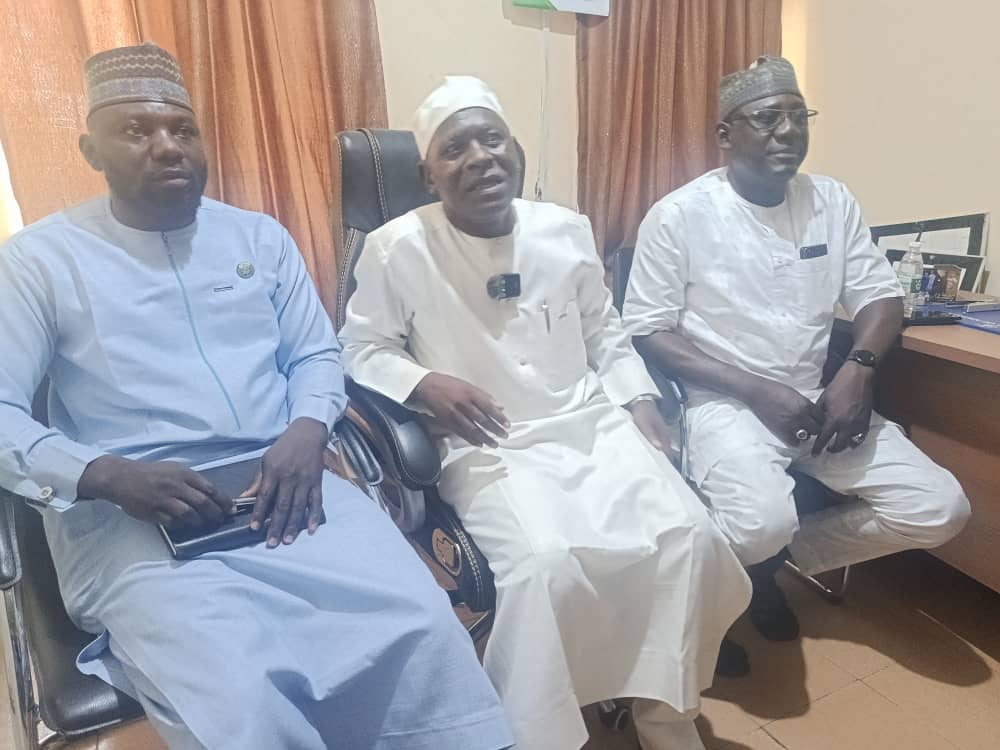

The Plateau State chapter of the Miyetti Allah Cattle Breeders Association of Nigeria (MACBAN) has warned against attributing the killing of the Deputy Commander of Operation Rainbow, CSP Dennis David Babale, to Fulani people without credible evidence.
This was just as MACBAN condemned the killing of the senior police officer, who was ambushed by gunmen in Barkin Ladi Local Government Area of Plateau State on Tuesday.
Politics Nigeria recalls that Babale was attacked at about 4:06 p.m. while travelling in a Toyota Hilux along the Bokkos-Barkin Ladi road.
According to reports, the security personnel came under fire from unidentified gunmen while responding to a distress call.
Troops of Sector 4, Operation Enduring Peace, subsequently moved to the scene following the distress report.
Babale sustained gunshot wounds during the attack and was evacuated to the General Hospital, Barkin Ladi, where he later died from his injuries.
The Plateau State Police Command also confirmed the incident, saying a Chief Superintendent of Police attached to Operation Rainbow was killed in an ambush along Gagshi Road between Barkin Ladi and Bokkos.
Police spokesman in the state, Alfred Alabo, said investigations were ongoing to identify those responsible for the attack and bring them to justice.
Security personnel subsequently launched operations and a manhunt for the attackers in the area.
The incident occurred amid renewed security concerns in Barkin Ladi, Bokkos and Mangu local government areas.
In a statement issued on Thursday, MACBAN Plateau State Chairman, Ibrahim Yusuf Babayo, said the killing of the police commander showed that the wave of violence in the state should no longer be treated with kid gloves.
The association called on the government and security agencies to intensify efforts to end the recurring violence.
MACBAN also extended its condolences to the Inspector-General of Police, the Nigeria Police Force, the families of the deceased and others affected by the attack.
The group, however, strongly cautioned against what it described as the premature attribution of violent incidents in Plateau State to the Fulani community.
MACBAN said no credible security agency had established that Fulani people were responsible for the attack on Babale.
“We are, however, deeply concerned by the growing trend of attributing every violent incident in Plateau State to the Fulani community without credible evidence or the outcome of any official investigation,” the statement said.
According to the association, such allegations could inflame tensions and undermine efforts by security agencies to identify and prosecute the actual perpetrators.
It warned individuals and groups against making inflammatory statements or spreading unverified claims that collectively blame the Fulani community for security incidents.

“Criminals should be treated as individuals, regardless of their ethnic or religious background. No community should be condemned without credible evidence,” MACBAN said.
The association urged the Nigeria Police Force and other security agencies to conduct a thorough, impartial and transparent investigation into the killings and ensure that those responsible are arrested and prosecuted.
MACBAN said the continuous loss of innocent lives was unacceptable, stressing that no community benefits from violence.
It called for justice, dialogue and respect for the rule of law as part of efforts to restore lasting peace in Plateau State.
The association also urged its members to continue abiding by the law and called on all stakeholders to reject hate, misinformation and collective blame.
-

 Featured1 day ago
PLATEAU STATE: IS THERE PEACE, OR ONLY THE ABSENCE OF VIOLENCE?
-
News1 day ago
Plateau Killings: Rotjimwa Yilyok Urges Security Agencies to Intensify Action
-
News1 day ago
Former Archbishop of Canterbury Justin Welby Calls for Peace, Protection of Communities During Plateau Visit
-
Business2 days ago
General Business to Drive 72% of Mutual Benefits Assurance’s Projected ₦96.82bn GWP