News
Plateau North Youth Coalition Backs Prof. Chris Kwaja’s Senatorial Ambition, Cites Peacebuilding Experience and Inclusive Leadership

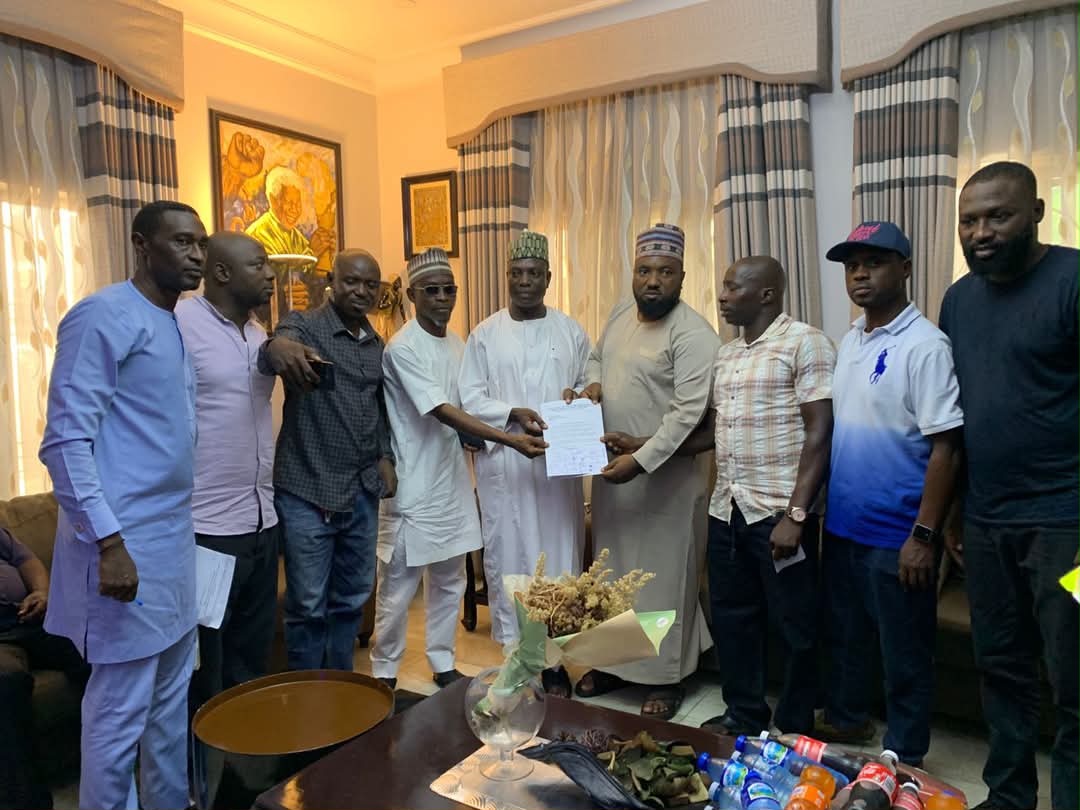
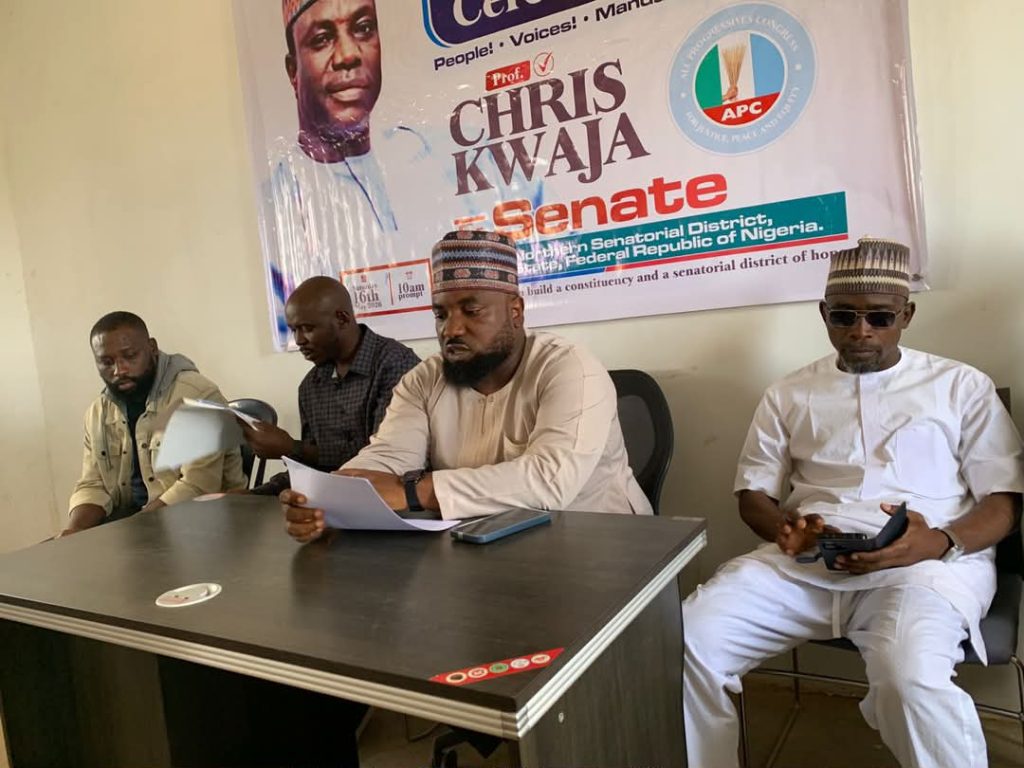
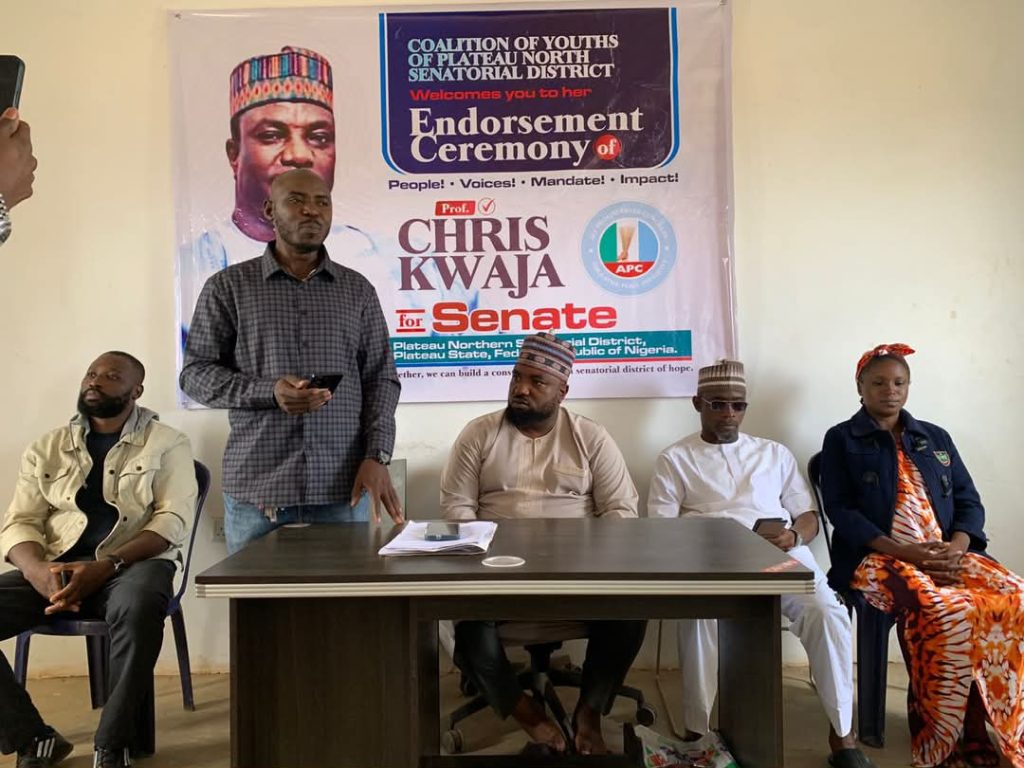
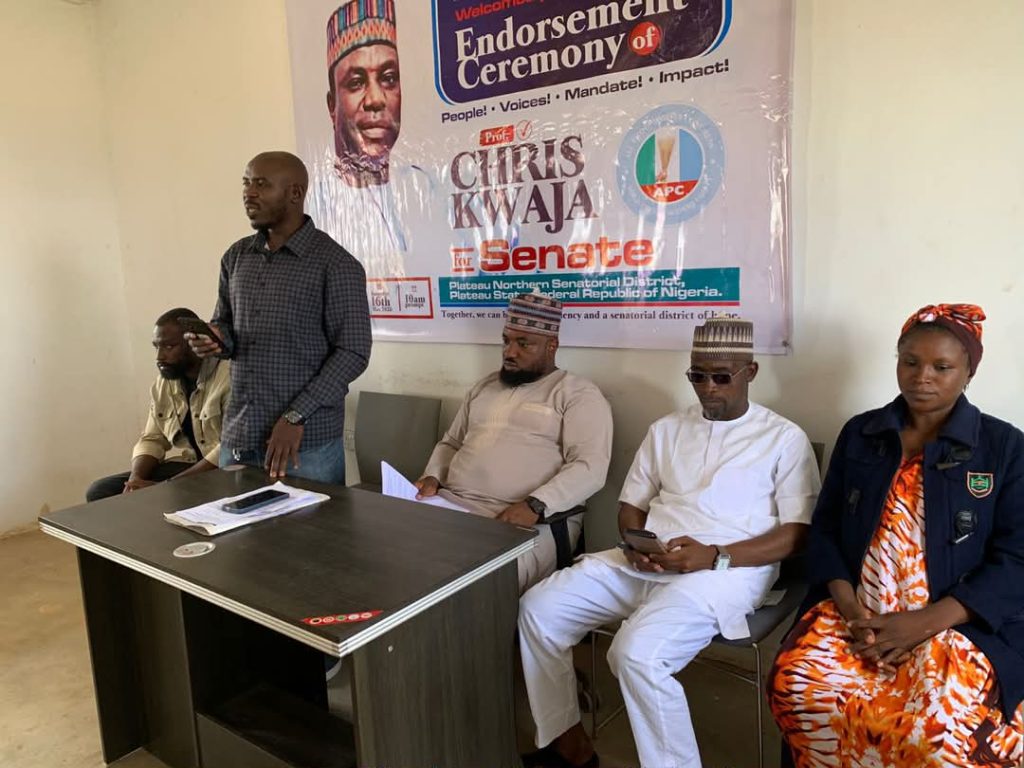
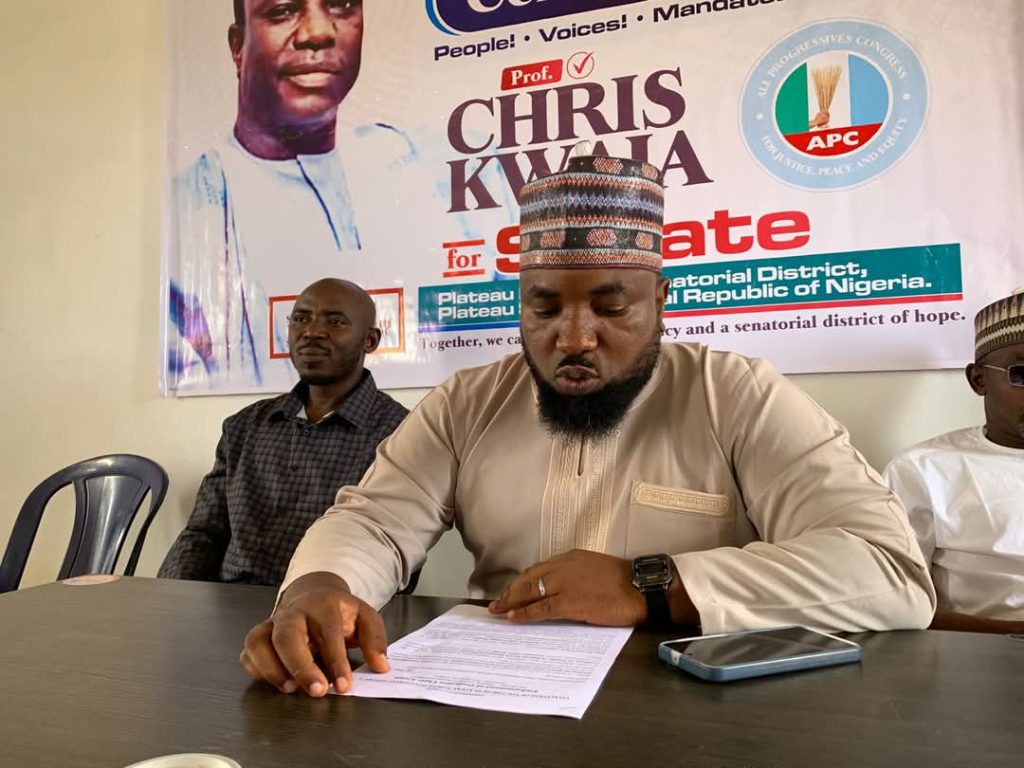
The Coalition of Youths of Plateau North Senatorial District has formally endorsed Prof. Chris Kwaja for the Senate seat representing Plateau North Senatorial District, describing him as a visionary leader with the experience, integrity, and competence required to provide purposeful representation for the zone.
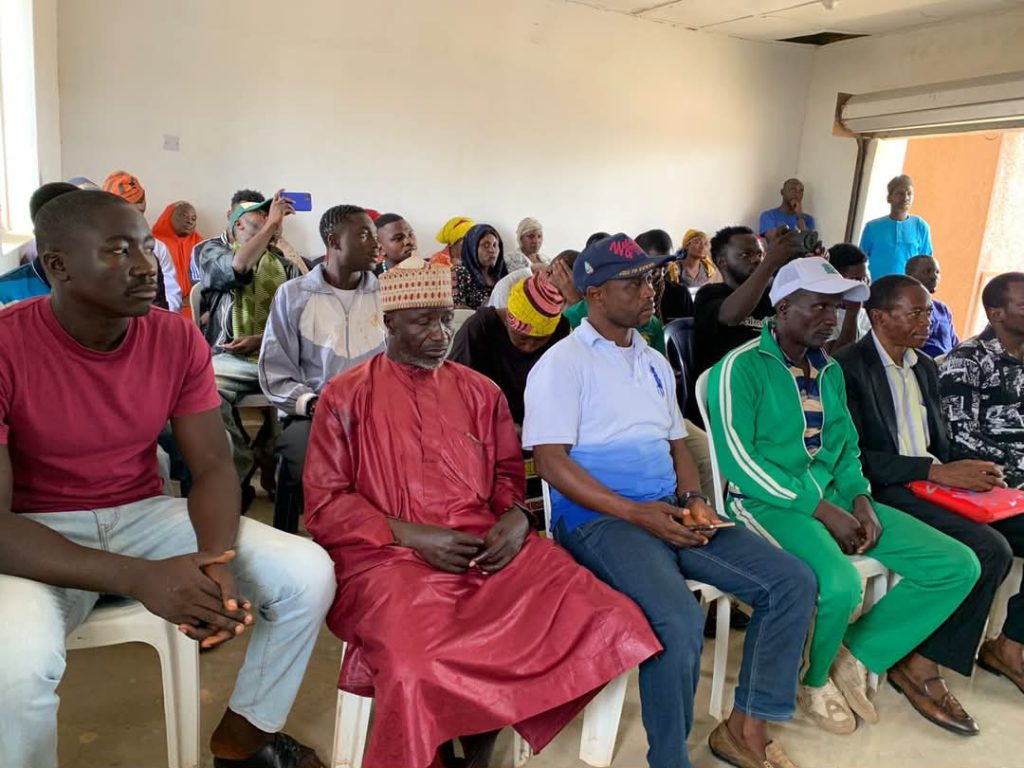
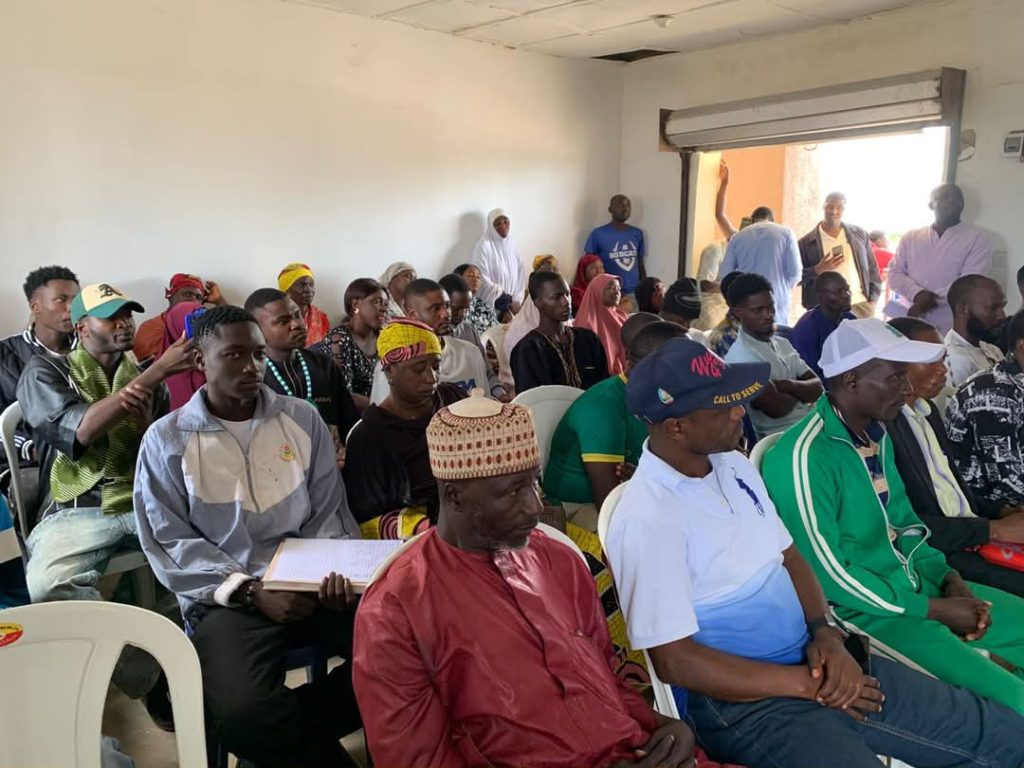
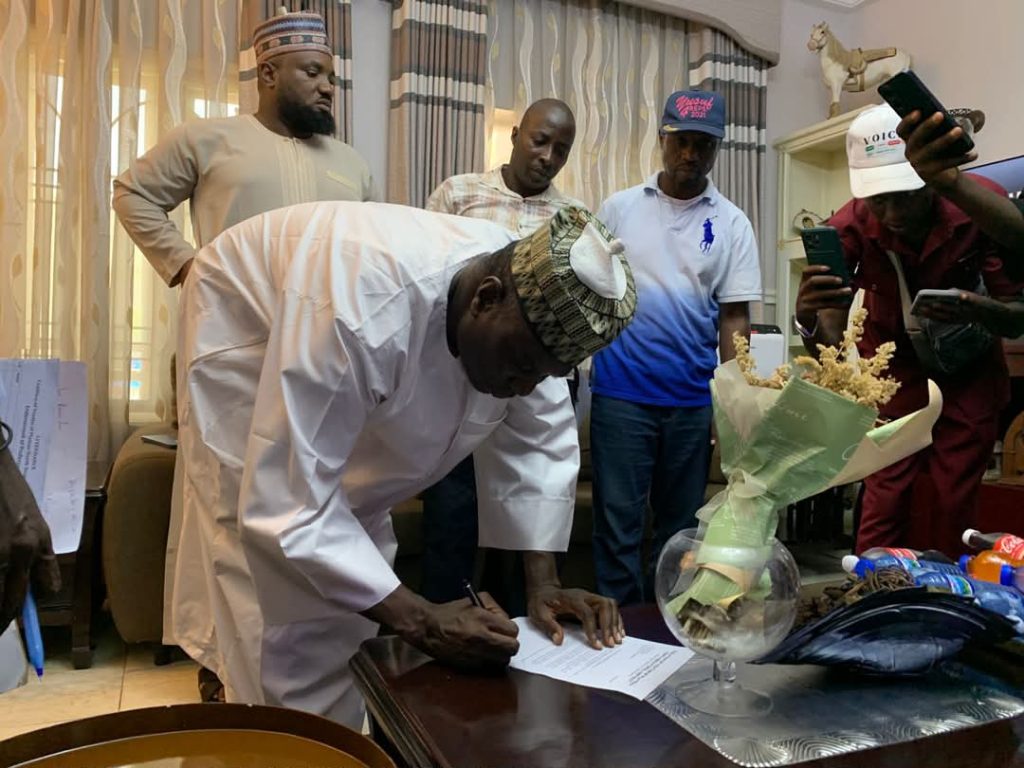
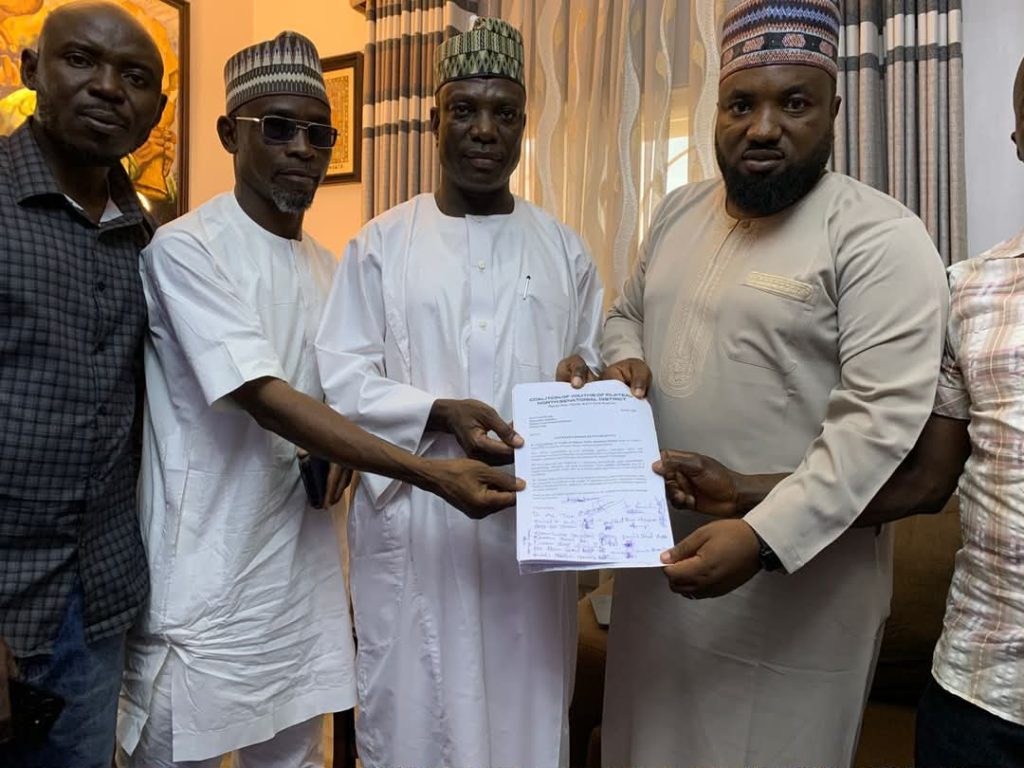
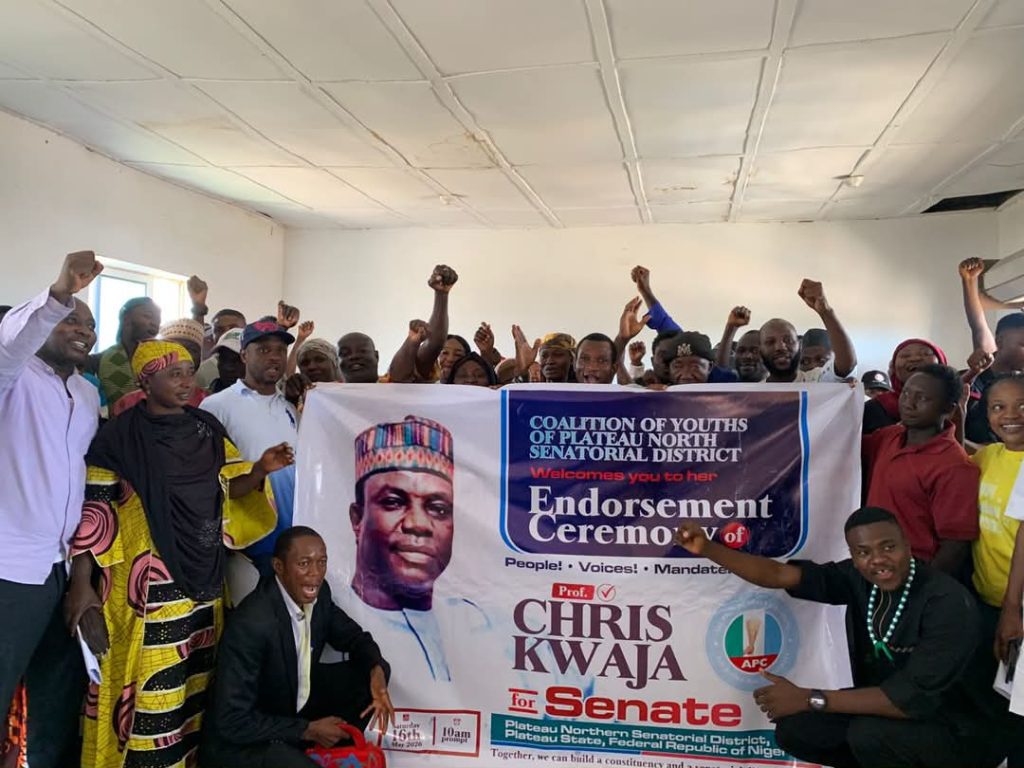
The endorsement, which took place on May 16, 2026, in Mista Ali (Mc Alley), Pengana Constituency of Bassa Local Government Area; the home constituency of Prof. Kwaja, brought together youths, stakeholders, and supporters from across the senatorial district. In a jointly signed letter and endorsement address, the coalition said its decision followed careful consideration of his leadership qualities and track record in peacebuilding, governance, youth empowerment, and community development.
Speaking during the event, the coalition praised Kwaja’s extensive local and international experience, noting his contributions in peace and security, governance, diplomacy, and policy development. The group highlighted his role as Country Director for Nigeria at the United States Institute of Peace (USIP), his previous service as Director-General of Research and Planning in Plateau State, his tenure as Commissioner for Local Government and Chieftaincy Affairs, as well as his engagements with international institutions including the United Nations Human Rights Council.
The youths described him as “a global voice with deep local roots,” adding that his understanding of Plateau State’s social and political realities positioned him to effectively represent the interests of the people at the National Assembly.
The coalition also commended his consistent commitment to youth inclusion, peacebuilding, and inclusive governance, stressing that Plateau North requires a leader capable of bridging generational divides, strengthening unity, and advancing development across the district.
According to the coalition, Prof. Kwaja’s aspiration resonates deeply with the urgent need to break the cycle of poverty and exclusion in society. They noted that his message of leadership is rooted in the conviction that governance must actively dismantle structural poverty and expand opportunities for those at the margins, describing this as central to the motivation behind his political ambition.
In his remarks, Chris Kwaja said his aspiration is driven by a desire to give hope and representation to the less privileged and minority groups within society. He stated that he purchased the senatorial nomination form on behalf of ordinary people who often feel excluded from leadership, emphasizing that “one with God is a majority” and that everyone has the capacity to aspire and lead regardless of background.
He further urged young people, minorities, and all those who feel shut out of opportunity to hold each other up in the pursuit of change, stressing that transformation in society is not an individual journey but a collective responsibility. According to him, solidarity, mutual encouragement, and shared growth among such groups remain essential for building a more inclusive and just society.
Kwaja also challenged those present to reflect on the kind of society they desire and to begin contributing actively to positive change within their immediate communities and spheres of influence. He added that meaningful societal transformation requires collective responsibility and deliberate efforts from citizens at every level, reaffirming that his ambition is centered on improving the lives and opportunities of people across Plateau North Senatorial District.
Reflecting on his previous service in government, Kwaja recalled his time as Director-General of Research and Documentation and Commissioner for Local Government and Chieftaincy Affairs under the administration of former Governor Jonah Jang. He expressed appreciation to Da Jonah Jang for the opportunity to serve Plateau State, noting that the experience provided him with a platform to apply his knowledge and expertise in governance and public service for the benefit of the people.
The senatorial hopeful further emphasized the need to involve more young people in governance and decision-making processes, stressing that the future belongs to the youth and that they must be given space to participate actively in shaping society. He also noted that individuals should not limit themselves based on their background, drawing attention to the idea that greatness can emerge from unexpected places. He referenced the biblical account of Jesus, where people questioned, “Is this not the son of the carpenter?”, yet He went on to perform great wonders and is recognized as the Messiah, carrying the message and purpose of God.
He added that victory is not merely about winning elections, but about ensuring that the voices of the people are not silenced. According to him, collective voices and shared civic engagement are what society needs to drive meaningful change and build a better future.
The event ended with a formal declaration of support by the Coalition of Youths of Plateau North Senatorial District, which reaffirmed its commitment to mobilizing support for Chris Kwaja’s senatorial bid under the vision slogan: “Voices – People! Voices! Mandate! Impact!”





Politics in Benue is usually very interesting and this is more so because, often than not, it is always treated like a race for immediate applause instead of lasting legacies.
On that strength, every administration wants quick projects, loud ribbons cutting ceremonies and visible but ephemeral promises. However and sadly, real development takes time and this is because a house is not built by painting the walls before laying the foundation, but this is the situation we were witnessing in Benue before the coming of Governor Alia.
That is why the argument for Governor Hyacinth Alia in 2027 deserves serious consideration. An administration that deserves one term to figure out the real problem, lay the foundation, and another to build on the foundation laid.
Governor Alia took over the reins of Benue State at a really difficult moment, having been handed a state that was bleeding, a state was in hemorrhaging. Before the coming of Alia, Benue faced insecurity, unpaid obligations, weak institutions, youth unemployment and a struggling economy.
These problems are not going to disappear because Alia simply wishes them to disappear; they won’t disappear through one budget or one political season. They require patience, discipline and continuity in commitment.
Every administration’s first term should be judged by the problems it met, the foundation it creates. Pertinent questions should include – are public finances becoming more transparent? Are workers paid more regularly? Are schools receiving attention? Are hospitals better equipped? Are roads being repaired in a way that connects farmers to markets? Is security being handled with greater seriousness instead of media theatrics?
A farmer in Mbagwaza needs a motorable road to move cassava to either Ihugh, Lessel or Adikpo. A trader in Agila needs a safer route to Igumale, another trader from Gbajimba needs a good road to Makurdi to reach customers. A student in Vandeikya needs a functioning classroom, not another abandoned school project. A mother in Obi needs a health centre where basic treatment is available without travelling for hours.
Such changes may not produce instant excitement, but they create the structure on which lasting progress stands. This is the path the governor is on.
The first four years should therefore be about putting systems in place – restoring confidence in government, strengthening local administration, supporting agriculture, improving security and opening the economy to private investment.
The second term would then provide the time to expand these efforts, complete unfinished projects and turn early reforms into measurable results.
Benue cannot afford to keep starting afresh every four years because people are ambitious to prove a point that has no need to be proven.
Each new government should not spend its first year discovering what the previous one already knew. Continuity should not mean researching what is already known to the current administration. It should mean giving credible policies enough time to mature while holding the government accountable.
If Alia’s administration is laying the foundation, the people must ask one simple question – is the work moving Benue forward? And the answer on the lips of the people of Benue is Yes, Benue is moving from negative to positive, a fact even the opposition are not in denial.
Sir Tersoo Kula, mnipr
Chief Press Secretary to the Governor.
Tersoo Kula: Benue 2027 for Alia – One term to lay the foundation, another to build

The National Drug Law Enforcement Agency, NDLEA, has arrested an 83-year-old woman, Mrs Uloma Uchechi Sunday, with consignments of methamphetamine and Colorado in Abia State, barely a year after she was prosecuted and convicted for a similar offence.
Uloma was arrested on Wednesday, October 7, 2026, at her residence in Ite-Uzo, Umuaguma, Obingwa Local Government Area of Abia State.
A statement by the NDLEA said quantities of methamphetamine and Colorado were found tied around her waist with a wrapper during the operation.
Her arrest followed credible intelligence that she was operating a drug joint where criminal elements who terrorise residents of the community allegedly gathered.
The 83-year-old had previously been arrested by NDLEA operatives on May 17, 2025, at the same residence, alongside her 32-year-old daughter, Chisom Uchechi.
During that operation, the agency recovered 50 grams of methamphetamine, 522 grams of skunk, 260 grams of fresh cannabis leaves and 12 grams of tramadol.
The two women pleaded guilty and were sentenced to 12 months in prison or a fine of N200,000 each. They paid the fines and were released by the court.
“Undeterred, the notorious old woman promptly returned to the criminal trade and escalated the scale by setting up a drug joint where she harbours dangerous characters,” the statement said.
In another operation at the Port Harcourt International Airport, Omagwa, Rivers State, NDLEA operatives, working with the Nigeria Customs Service, arrested a South African woman, Gebashe Sithandiwe Jessie.
She was arrested with 30 parcels of Thai Loud, a species of cannabis, weighing 32.74kg.
The drugs were concealed in two travelling bags.
The suspect had travelled from Thailand through Doha on Qatar Airways flight QR1431.
According to the NDLEA, she confessed to having previously trafficked drugs through other African countries and was expanding her route to Port Harcourt when she was arrested.
At the Import Shed of the Murtala Muhammed International Airport, MMIA, Ikeja, Lagos, NDLEA operatives also intercepted a consignment of nine7 cartons from Pakistan aboard a Royal Air Maroc flight.
The cargo was placed under surveillance after it arrived on September 29.
A joint examination of the shipment on Tuesday, October 6, led to the discovery of 354,000 tablets of Tapentadol 250mg weighing 307.20kg.
In another operation at the Lagos airport, the agency intercepted a consolidated cargo from the United Kingdom after it arrived on September 29.
Six Ghana-Must-Go bags in the consignment were found to contain 70 parcels of Colorado, a synthetic cannabinoid, weighing 75.90kg.
A clearing agent, John Edrah, 54, was the first suspect arrested in connection with the seizure on September 30.
He was followed by Taofiq Ajibola, 54, an Uber driver, who was arrested while collecting one of the bags at a logistics company in the Mafoluku area of Oshodi.
Adetunji Adebayo and Kazeem Damola Dosunmu, 48, a clothing trader, were later arrested when they came to collect the remaining five bags.
The NDLEA said Ajibola stated that the drugs were sent by a UK-based associate, Lukman Sa’idu, while Dosunmu said his consignments came from another UK-based man identified as Yusuf.
In Cross River State, NDLEA officers, following surveillance, raided Iyala Nkun village in Ikom Local Government Area on Sunday, October 4.
The operation led to the arrest of Adama Inuwa, 46, with 181 bags of cannabis sativa weighing 1,100kg and 17.15kg of cannabis seeds.
In Edo State, NDLEA operatives intercepted a black Toyota Camry at Otuo, Owan East Local Government Area, on Monday, October 5.
The vehicle was found to be carrying 1,049 blocks of compressed cannabis weighing 702.83kg.
Monday Orji, 52, Monday Lawal, 40, and Precious Uduegele, 20, were arrested in connection with the seizure.
In a separate raid at Asoro, off Sakponba Road, Benin City, NDLEA operatives arrested Ojugo Mercy, 26, with 989 grams of Loud, 13 grams of Colorado and 83 grams of methamphetamine.
In Ondo State, a 21-year-old suspect, Happy Endurance, was trailed to her hideout in the Shasha area of Akure on Monday, October 5, where NDLEA operatives recovered 29 bags of cannabis weighing 290kg.
On the same day, officers raided an apartment at Oba-Ile, Akure, leading to the arrest of Tunde Adebayo, 42, with 35 bags of the same psychoactive substance weighing 351kg.
In Taraba State, NDLEA operatives, supported by soldiers, arrested Abdulrasheed Mohamed, 31, and Abubakar Saidu, 37, at Chanchanji village in Wukari Local Government Area on Friday, October 9.
The suspects were found with 166,200 tablets of Tramadol 225mg weighing 107kg.
Also on Friday, NDLEA officers conducting a stop-and-search operation along the Kano-Maiduguri road in Kano State arrested Yahaya Musa, 32.
He was found with 24,990 capsules of Tramadol, 50,000 tablets of Diazepam and 22,000 tablets of Exol-5.
In Kaduna State, NDLEA operatives on patrol along the Zaria-Kaduna Expressway arrested Mohammed Musa, 29, with 31 jumbo bags of skunk and 775 blocks of the same substance.
The drugs had a combined weight of 1,027kg.
In Lagos, a suspect, Musbau Balogun Adekunle, was arrested in Orile on Tuesday, October 6, with 32.51kg of skunk and 52.65kg of its seeds, bringing the total weight to 85.16kg.
Meanwhile, NDLEA operatives also recovered assorted rifles and ammunition during a raid on the residence of 45-year-old Christian Chukwudi Uju at Rukuba Road, Jos, Plateau State, on Thursday, October 8.
The items recovered from him included 47 grams of methamphetamine, two pump-action rifles, one locally made gun, 199 live cartridges, five rounds of 7.62mm ammunition and one round of 9mm ammunition.


83-year-old woman arrested with meth, Colorado as NDLEA seizes drugs nationwide
-

 News3 days ago
Robot data startup Mecka AI nabs $60M from Sequoia
-
Business2 days ago
Communications Ministry made ₦345.5 million duplicate payment for Abuja ICT Park project
-
Business2 days ago
Fuel subsidy would cost Nigeria over N20trn yearly — Minister
-
News2 days ago
LumenUs helps automate tedious paperwork in times of grief