News
The offline desk gadget that actually got me to sit up straight

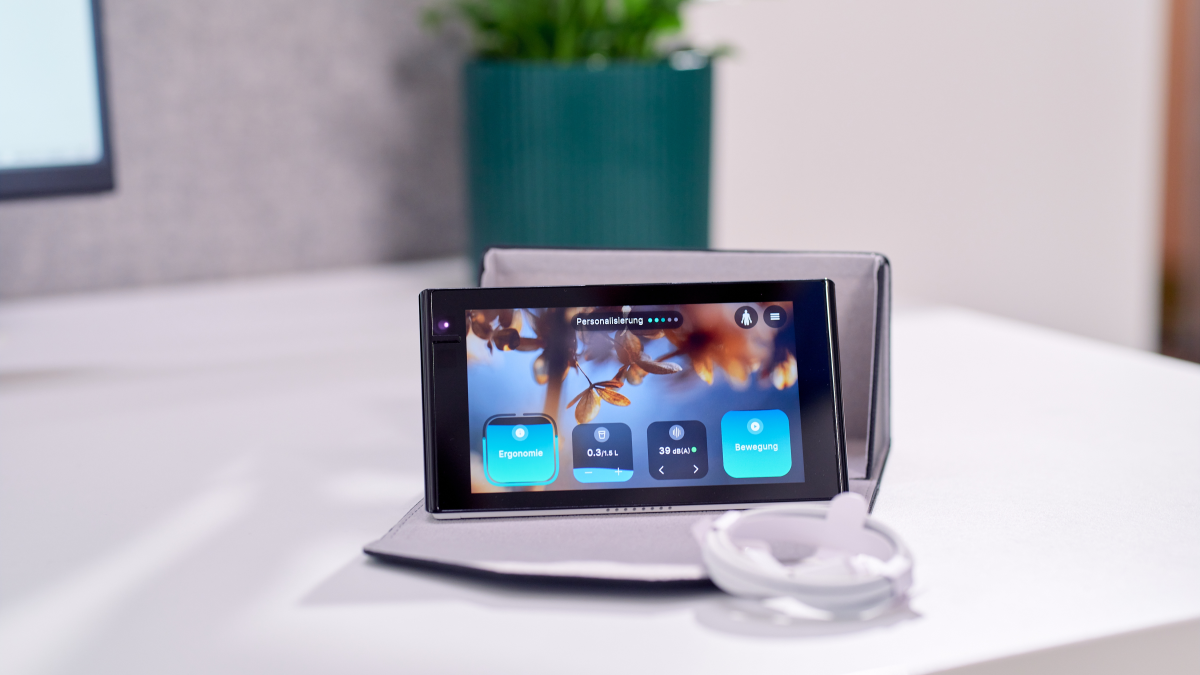
Working from home has its own perils. Pets can be demanding, your back aches from hours at a desk, or you simply forget to move. There are a few apps that nudge you to move around or indicate that you’re not sitting in an ideal position, but they’re easy to dismiss.
I’ve spent the better part of a decade at a home desk, iterating on the setup as I go — gaming chair, lumbar support, the works. None of it guarantees good posture.
Then I came across Isa, a desk device from German startup Deep Care that takes a different approach entirely. It tracks posture, hydration, light, sound, and movement. And it does all of it without a camera or an internet connection, which, in an era of always-on surveillance, is a meaningful differentiator.
Here’s how it works and what’s inside. Isa has a 5.5-inch IPS HD screen and looks like a table clock. It is powered by USB-C; the company supplies a power unit with it, but you can use any of your existing chargers too, as it has a power consumption rating of roughly 2.45W.
The key sensor for the device is the Time-of-Flight (ToF) 3D depth sensor on the front — the same technology used in facial recognition and some smartphone cameras — that tracks posture and movement. It also enables beta features, such as counting the number of times you’ve had water or other liquids. The company said that the sensor works in the range of 0.15 meters to 1.8 meters. That means if the device is sitting on your desk, it can measure your movement, even when you stand up and move about. It also packs several other sensors: a ToF 1D sensor, a gyroscope, a barometer, a light sensor, a sound level sensor, a CO₂/VoC sensor, and a temperature and humidity sensor.

Getting started is straightforward — the device asks for a few details about you and your work routine. I found it strange that there was no option to set the device to India time (or any other Asian time zone). The company said Isa currently supports only EU and US time zones. Fair enough for now — but broader time zone support, or even a simple world clock, feels like a basic expectation for a desk device.
On the screen, Isa displays your posture with a squircle (a rounded square) ring that fills or empties based on how well you’re sitting, while a water-tank-style widget tracks your drinking. If you are not sitting in the correct posture, the indicator will turn yellow. The Apple Watch-style ring is a surprisingly effective nudge — when I see yellow or red, I straighten up almost instinctively.
The device vibrates to alert you if you’ve been slouching for too long, and I’m okay with that kind of mild shaming. That alert also indicates if you are leaning far too forward or back and helps you correct your stance.

A similar widget tracks movement, and if you have been stationary for a while, Isa suggests you get up, with on-device guided exercises to follow. When you return to your desk after a break, the movement tracker resets.
Deep Care chose not to include a cameras, which helps with privacy, but it comes with trade-offs.

If a bottle or some other object sits between you and the sensor, it may read that as a person and log you as stationary. Pets or housemates passing by can trigger the sensor, too. Isa usually figures out that you’ve stepped away and goes to a digital clock display, but I would have liked a manual button to tell it I’m not at the desk so it stops tracking.
Because of the sensor-only approach, the device occasionally told me I’d been stationary for too long when I’d been sitting for under half an hour. These are minor inconveniences. On balance, the device made me check my posture more often than I used to, and the exercise suggestions are truly useful.

To process all these features, the device uses a quad-core 2 GHz processor. The device can connect to Wi-Fi for software updates, but you can turn it off at any time.
Deep Care was founded by three former Bosch employees and initially sold Isa directly to businesses. It recently expanded to consumers — a shift that signals confidence in the retail market for workplace wellness hardware, and a test of whether a subscription model layered onto premium hardware can find a mainstream audience.
Isa is priced at €299 ($354) with two subscription tiers. The core plan (€4.99 per month) gives you access to posture tracking, healthy sitting habit tracking, drinking habit detection, and its exercise library. The Pro plan(€7.99 per month) lets you track light, noise, and CO2 levels for a healthy working environment.
The company plans to use Isa’s sensor suite to venture into mental health-related tracking. It claims that by using signals like posture, head movement, and chest movement, the device can measure breathing patterns. Plus, paired with environmental data like noise, light levels, and CO2 level, the company wants to introduce a stress-related score.
Even if you skip the mental health features, Isa is a solid device for anyone serious about posture and movement. It isn’t cheap, and the subscription adds to the long-term cost. But if you or someone you know works from home and has been meaning to do something about their desk habits, it’s one of the more thoughtful options out there.
When you purchase through links in our articles, we may earn a small commission. This doesn’t affect our editorial independence.









The Allied Peoples Movement, APM, presidential candidate, Seyi Makinde, on Thursday, criticised President Bola Tinubu’s popular “Emi Lokan” slogan ahead of the 2027 presidential election.
Makinde said Nigerians did not need “turn-by-turn nepotism”, arguing that voters should be free to decide who becomes the country’s next president in 2027.
The Oyo State governor spoke during the APM’s town hall meeting in Akure, Ondo State.
According to Makinde, “How can someone say, ‘Eemi lokan’, in a country like Nigeria? You were given the opportunity. If you recall the 1999 presidential election, the South-West voted massively for Baba Olu Falae, but the rest of Nigerians voted for Baba Obasanjo. So, this is not an issue that only the South-West can resolve; it is an issue we must address collectively as Nigerians.
“We do not want ‘turn-by-turn nepotism’, nor do we want a situation where people say, ‘I will vote for projects because it is my turn’. You will not finish those projects, and when it becomes someone else’s turn, they will do the same thing. We will end up with a Nigeria where we cannot get value for the resources belonging to Nigerians.
“The Reset Nigeria agenda is about building a country where infrastructure development supports economic growth and addresses the concerns of young people and women.
“Once we fix our economy, no zone will be left behind, and no demographic group will be left behind.”
2027: ‘Nigerians don’t want emi lokan’ – Makinde mocks Tinubu
News
FOGMMON PLATEAU CONGRATULATES EJIDIKE UGOCHUKWU (𝙈𝙞𝙣𝙨𝙩𝙧𝙚𝙡 𝙅𝙞𝙙) ON HIS APPOINTMENT AS NATIONAL PRESIDENT

-

 News4 days ago
Euromatch NPFL: Matchday 9 results
-
News4 days ago
No agenda, no rush, no leaving San Francisco: Benchmark’s partners on investing in a frenzied market
-
News3 days ago
Amazon to fund 12 small nuclear reactors at former Indiana coal plant
-
News3 days ago
Mamdani says feds have abdicated on AI, urges New Yorkers to push back