News
Meta will now allow parents to see the topics their child discussed with Meta AI

Meta announced on Thursday that parents using its supervision tools can now see the topics their teen has asked Meta AI about in the past week on Facebook, Messenger, or Instagram.
Parents will see a new “Insights” tab within the supervision hub showing the topics their teen has been discussing with the AI chatbot. Topics can range from “School,” “Entertainment,” and “Lifestyle” to “Travel,” “Writing,” and “Health and Wellbeing,” among others, Meta says.
Parents can select a topic to see the subcategories that fall within each one. For example, “Lifestyle” breaks down into fashion, food, and holidays, while “Health and Wellbeing” covers fitness, physical health, and mental health.
The update is now available in the U.S., U.K., Australia, Canada, and Brazil, and will roll out globally in the coming weeks.
Meta first previewed these insights back in October when it said it was developing new tools to help parents guide their teens through AI.

Other previewed tools would have allowed parents to block access to specific AI characters or disable them entirely. However, Meta suspended teens’ access to its AI characters globally across all of its apps in January, saying it planned to develop an updated version specifically for teens.
For those unfamiliar, Meta AI characters are interactive AI personas with distinct personalities, designed for users to engage with as if they were real people filling specific roles — like a chef — or as recognizable celebrities, such as Snoop Dogg and Paris Hilton.
Techcrunch event
San Francisco, CA
|
October 13-15, 2026
Meta suspended teens’ access to these characters just days before a lawsuit against it was set to go to trial in New Mexico, in which the social media giant was accused of failing to protect minors on its platforms. Meta ultimately lost the case, marking the first time a court has held the company legally liable for endangering child safety.
That case is one of many lawsuits that Meta and other Big Tech companies are facing over child safety. Given the timing, it’s not surprising that Meta halted access to the AI characters or that it’s now looking to inform parents about what their child is discussing with Meta AI.
Meta also announced on Wednesday that it is giving parents suggested conversation starters intended to help them talk openly and without judgment about their teens’ experiences with AI. Additionally, the company says it is launching a new AI Wellbeing Expert Council to help shape the development of its AI products for teens.
When you purchase through links in our articles, we may earn a small commission. This doesn’t affect our editorial independence.
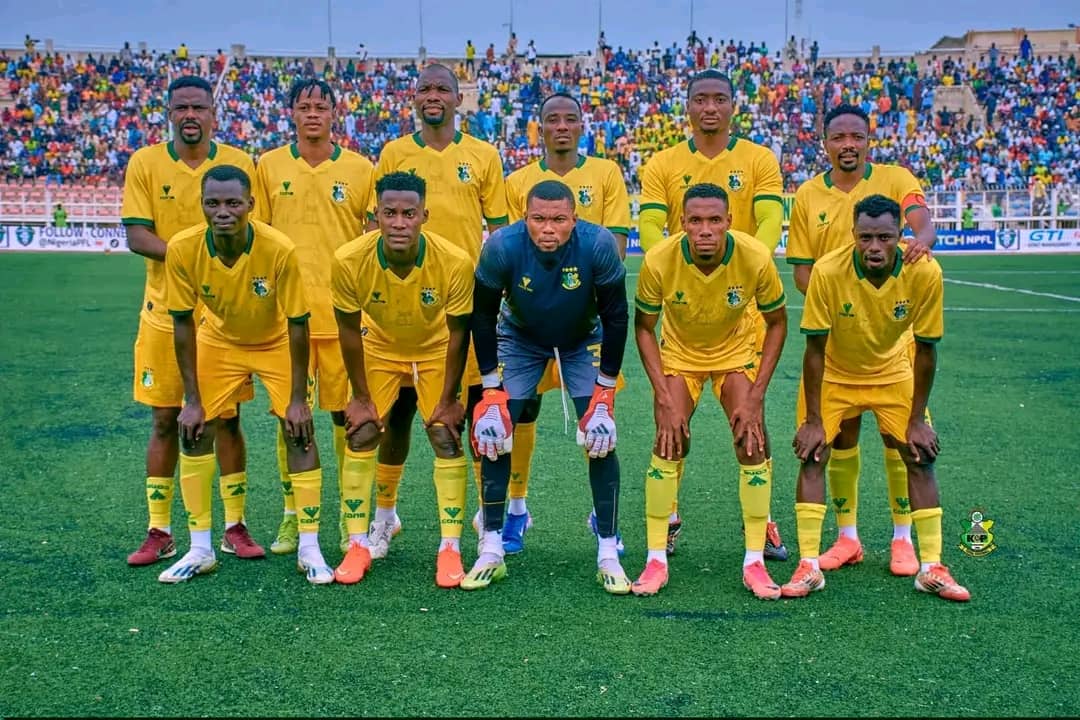
Kano Pillars and Sporting Lagos played out a 1-1 draw in an entertaining EuroMatch Nigeria Premier Football League Matchday 7 encounter in Kano, with both sides settling for a point after a closely contested battle.
Sports247 reports that the result means the Mai Su Gida have now followed up their previous goalless draw against Enyimba with another stalemate, while Sporting Lagos also recorded their second consecutive draw after being held to a barren 0-0 draw by Ikorodu City in the Lagos Derby.
Kano Pillars started the encounter with the intention of making home advantage count, but Sporting Lagos remained organised and disciplined as both teams searched for an opening.
The breakthrough finally arrived deep into first-half stoppage time when Valentine Ugwu put Sporting Lagos ahead in the 45+2nd minute, giving the visitors a valuable lead heading into the interval.
Kano Pillars responded strongly after the restart and quickly found a way back into the contest.
The hosts were rewarded in the 48th minute when Abdullahi Musa drew Kano Pillars level, finishing off a move created by veteran midfielder Rabiu Ali, whose assist once again underlined his influence in the Pillars midfield.
With the score level at 1-1, both sides pushed for a decisive second goal, but neither could find the breakthrough during the remainder of the encounter.
Kano Pillars will take encouragement from their ability to recover from going behind, while Sporting Lagos will also be satisfied with securing a point away from home after surrendering their lead.
For the Mai Su Gida, the draw represents another opportunity gained but also another two points dropped from a winning position, as they continue their campaign in search of consistency.
Sporting Lagos, meanwhile, remain unbeaten across their recent fixtures but will be looking to convert their promising performances into maximum points as the season progresses.
The 1-1 result leaves both teams with plenty to build on, particularly in attack, as they prepare for their next assignments in the EuroMatch NPFL.
With the league campaign continuing to gather momentum, Kano Pillars and Sporting Lagos will now turn their attention to their upcoming fixtures, hoping to turn future draws into victories.

-

 News3 days ago
PLASU Opens Doors to Global Investors at 2nd Inaugural Lecture
-
Health2 days ago
Plateau: Medical Women Association of Nigeria Marks Older Persons Day with Free Outreach
-
News3 days ago
Plateau Specialist Hospital Celebrates Nigeria at 66, Salutes Mutfwang’s Health Initiatives
-
News3 days ago
Nigeria At 66: Rotjimwa Yilyok Salutes President Tinubu, APC Leadership and Plateau Government