Business
S&P upgrades Nigeria’s credit rating, FG reacts

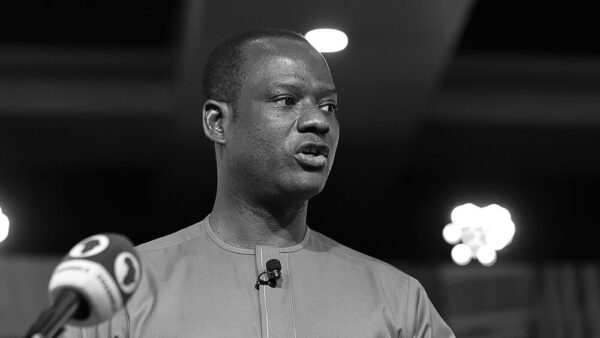
S&P Global Ratings has upgraded Nigeria’s credit rating from B- to B with a Stable Outlook, an indication that the US-based agency believes Nigeria’s economy is getting better.
The improved rating was disclosed by finance minister Taiwo Oyedele in an X post early on Saturday.
“This latest upgrade by S&P follows similar positive rating actions in 2025 by Fitch Ratings and Moody’s Ratings,” Mr Oyedele wrote.
PREMIUM TIMES reports that Fitch and Moody’s had upgraded Nigeria’s sovereign rating, with Fitch also raising the rating from B-to B with a stable outlook.
Mr Oyedele said the improved ratings by the three global ratings firms indicate their belief in President Bola Tinubu’s economic policies.

“It further reinforces growing international confidence in Nigeria’s economic reform trajectory, policy consistency, and medium-term growth prospects,” he wrote.
Read Mr Oyedele’s full statement below.
T ’ &
The Federal Government welcomes the decision by S&P Global Ratings to upgrade Nigeria’s sovereign credit rating from ‘B-’ to ‘B’ with a Stable Outlook.
This latest upgrade by S&P follows similar positive rating actions in 2025 by Fitch Ratings and Moody’s Ratings. It further reinforces growing international confidence in Nigeria’s economic reform trajectory, policy consistency, and medium-term growth prospects.
These independent assessments collectively affirm that the difficult but necessary reforms undertaken under the leadership of President Bola Ahmed Tinubu, GCFR, are yielding measurable results and laying the foundation for a more stable, transparent, and resilient economy.
In particular, S&P highlighted improvements in Nigeria’s external position, stronger balance of payments dynamics, increased oil production, expanding domestic refining and export capacity, and the sustained implementation of key macroeconomic reforms including foreign exchange market liberalisation.
The agency also recognised ongoing fiscal reforms aimed at broadening the tax base, improving public revenue mobilisation, enhancing fiscal transparency, and strengthening debt sustainability. Notably, Nigeria’s debt-to-revenue ratio has improved significantly since 2023 and is projected to decline further as reforms continue to mature.
The upgrades by Fitch, Moody’s, and now S&P send a strong signal to global investors, development partners, financial markets, and the international business community that Nigeria is regaining macroeconomic credibility and restoring confidence in the management of its economy.
The government remains firmly committed to prudent fiscal management, macroeconomic stability, and structural reforms that promote inclusive and sustainable growth. We have maintained our position against the reintroduction of inefficient fuel subsidies which historically created significant fiscal distortions, incentivised smuggling, weakened foreign exchange liquidity, and diverted scarce public resources away from critical national priorities.
We remain committed to a market-driven economy anchored on transparency, competition, and effective regulatory oversight. Accordingly, the Federal Government will continue to uphold policies that support free enterprise, respect private investment, and provide a stable and predictable environment for businesses and investors to thrive.
While these positive ratings developments are encouraging, we recognise that the work ahead remains substantial. We are focused on addressing inflationary pressures, improving food security, expanding decent job opportunities, and ensuring that economic growth translates into meaningful and inclusive prosperity for all Nigerians.
The Federal, States and Local Governments will continue to implement reforms with discipline, pragmatism, and compassion while maintaining close engagement with citizens and all stakeholders.
The Federal Government appreciates the resilience, patience, and support of Nigerians in this reform journey. The improving outlook from leading global rating agencies will further position our country to attract investments and and enhance the country’s ability to secure financing on more favourable terms. We are strengthened in our resolve to build a stronger economy that is globally competitive, fiscally sustainable, and works for all Nigerians.





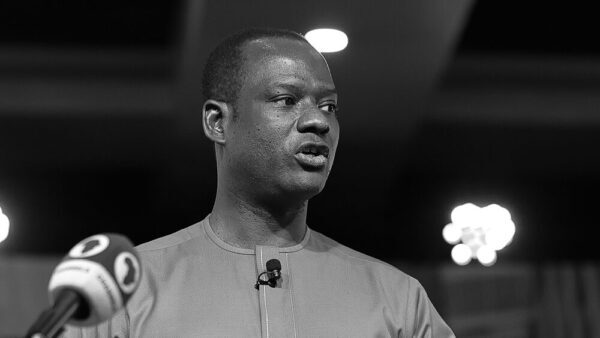
Nigeria’s Finance Minister and the Coordinating Minister of the Economy, Taiwo Oyedele, on Wednesday said the country is fortunate to have President Bola Tinubu at the helm of affairs at a time of economic challenges and global uncertainty.
Mr Oyedele made the remark on Wednesday on the sidelines of the World Bank/International Monetary Fund (IMF) meetings in Bangkok, Thailand, where he praised the president for his willingness to implement difficult economic reforms and his understanding of economic and monetary policy issues.
“I say to myself every time that Nigeria is lucky to have a leader like Mr President,” the minister said.
“A leader that says ‘I’ll do the right thing, even when it’s not popular’. There are so very few of them, and our president is not saying it; he’s doing it, he’s doing it even with pre-election (concerns),” he added.
Since assuming office in May 2023, the Tinubu administration has introduced a series of economic reforms, the impact of which international institutions like the World Bank and the IMF have acknowledged
The reforms include the removal of costly petrol subsidies, which had been a major drain on public finance for years, the unification of the foreign exchange rates and the sharp devaluation of the naira to attract foreign capital.

Although abolishing fuel subsidies has boosted government revenue and is seen as an investor-friendly move, it has triggered a cost-of-living crisis and spurred inflationary pressures.
Reforms in the foreign exchange market have helped increase accretion to external reserves, which stood at $55.1 billion as of 9 October, its peak level in over 18 years.
The banking sector also underwent a recapitalisation exercise that ended in March and helped Nigerian banks raise N4.7 trillion in new capital.
According to the Central Bank of Nigeria, the recapitalisation strengthened banks’ capital adequacy ratios, keeping the sector above international Basel benchmarks.
Mr Oyedele said President Tinubu possesses two attributes uncommon among leaders, notably those of democratic governments.
READ ALSO: AFC appoints Cardoso as board chairman
The first is his willingness to do what he considers right, even when the decision is unpopular or politically difficult.
“I remember at least three issues that were discussed with him recently, and on my own I would offer to say ‘maybe we wait until after the election’. And his question is always, ‘Is it the right thing to do?’ Yes, yes, it is. Why do we have to wait?” Mr Oyedele said.
“Number two attribute is that our President gets it. It’s not easy to understand issues to do with the economy, finance, monetary policy, like respect for the independence of the monetary authority. For Mr President, it’s 100 per cent,” he added.
The minister added that the president’s position on such matters has made it unnecessary for officials to discuss the issue with him repeatedly.
“We don’t even talk about it. So, I feel like we are so blessed, we cannot afford to wait even one minute,” he said.
Discover more from Premium Times Nigeria
Subscribe to get the latest posts sent to your email.
-
Business4 days ago
Veritas Kapital CEO Nwakuche Joins Coal City University Governing Council
-

 News2 days ago
Meta releases its first frontier model, Muse Wonder
-
News4 days ago
2027: INEC publishes final names of governorship candidates across states [FULL LIST]
-
News4 days ago
‘Anarchy will consume everybody’ – Peter Obi breaks silence on Enugu NDC attack [VIDEO]