Connect with us

Business

Oyedele unveils Tax Ombud website, digital portal to strengthen taxpayer protection

info

Published

on

Admin ajax 2.jpg

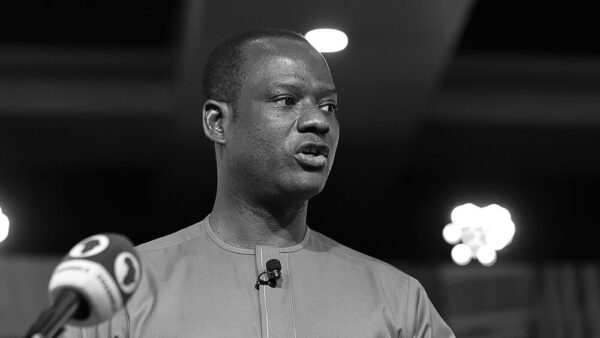
The Minister of Finance and Coordinating Minister of the Economy, Taiwo Oyedele, on Monday unveiled the official website, toll-free call centre and digital case management portal of the Office of the Tax Ombud, describing the platforms as part of efforts to build a fairer, more transparent and taxpayer-friendly tax system in Nigeria.

Speaking during the unveiling ceremony in Abuja, Mr Oyedele said the initiative reflects the government’s broader fiscal reform agenda focused on improving taxpayer confidence, simplifying tax administration and strengthening accountability within the revenue system.

The minister said that disputes are inevitable in any tax system, but what matters is the availability of credible and accessible mechanisms to resolve them.

“The modern tax system must be built not only on efficient revenue collection, but also on fairness, accountability, transparency, and trust,” Mr Oyedele said.

He added that, “Taxpayers must have confidence that when disputes arise, because they always arise, they will be heard fairly, treated respectfully, and provided with accessible and affordable timely resolution mechanisms.”

PT WHATSAPP CHANNEL

According to him, the establishment of the Office of the Tax Ombud aligns with ongoing tax reforms aimed at reducing arbitrariness, protecting taxpayer rights, encouraging voluntary compliance and creating a globally competitive fiscal system.

He said the digital platforms being unveiled represent “a new era in tax administration,” in which taxpayers are treated as partners in national development rather than adversaries.

“With these few words of mine, but with great excitement for the journey ahead of us, I hereby unveil the official website of the Office of the Tax Ombud, along with the toll-free centre and case management portal,” he said.

In his remarks, the Chief Executive Officer of the Tax Ombud, John Nwabueze, described the launch as a major institutional reform aimed at strengthening fairness, transparency, and public trust in Nigeria’s tax administration.

Mr Nwabueze said the office was established under the Joint Revenue Board of Nigeria Establishment Act 2025 to serve as an independent and impartial institution for resolving taxpayer complaints and disputes.

“The Office of the Tax Ombud was therefore created as an independent and impartial institution to provide taxpayers with accessible, timely and cost-effective mechanisms for addressing complaints, resolving disputes and promoting voluntary tax compliance,” he said.

According to him, the office will serve as a bridge between taxpayers and revenue authorities through conciliation, stakeholder engagement, and alternative dispute-resolution mechanisms to reduce prolonged litigation.

He added that the newly launched digital systems would allow taxpayers to submit complaints online, track cases in real time, access tax guidance, and communicate directly with trained support personnel through the call centre.

“Today is more than a technology launch. It is the acquisition of a renewed public service architecture designed around accessibility, responsiveness and citizens’ confidence,” he stated.

Mr Nwabueze also praised President Bola Tinubu’s administration for pushing institutional tax reforms and acknowledged Mr Oyedele’s role in driving the initiative.

“The Office of the Tax Ombud is the Honourable Minister’s baby,” he said.

Also speaking at the event, the Minister of Information and National Orientation, Mohammed Idris, said there was a need for stronger public awareness of the role of the Tax Ombud and the broader objectives of the government’s economic reforms.

Mr Idris said many Nigerians still do not fully understand the purpose of the ongoing reforms being implemented under President Tinubu’s administration.

“At the time that President Bola Tinubu has embarked on enormous reforms to reposition this country on the path to sustainable progress and development, it is important for all of us to know what these reforms entail and which direction we are going,” he said.

READ ALSO: Oyedele pledges to transform economic reforms into tangible benefits for Nigerians

The minister argued that recent economic indicators suggest the reforms are beginning to yield results, citing improvements in government revenue, inflation trends and rising investor interest in Nigeria.

He also pledged that the Ministry of Information and National Orientation would continue supporting public awareness efforts around the reforms and the work of the Tax Ombud.


Continue Reading
Click to comment

Leave a Reply

Your email address will not be published. Required fields are marked *

Business

Eno leads pre-delivery inspection of Ibom Air’s third Airbus A220-300 aircraft in Canada

info

Published

on

By

Gov Eno during pre delivery inspection at Airbus facility in Mirabel Canada.jpg

MTN ADVERT

The Governor of Akwa Ibom State, Umo Eno, has led a delegation of State Executives and members of the Ibom Air’s management team to a pre-delivery inspection of the airline’s third Airbus A220-300 aircraft at the Airbus production facility in Mirabel, Canada, ahead of its formal delivery and reception in Akwa Ibom.

This is contained in a press statement issued by Aniekan Essienette, the group manager, marketing and communication, Ibom Airlines Limited, on Friday in Uyo, Akwa Ibom State.

According to the statement, the inspection marks another significant milestone in Ibom Air’s fleet modernisation and growth strategy and is part of the acceptance process before the aircraft enters commercial service.

The aircraft is Ibom Air’s third Airbus A220-300 and the second A220 to be received under the airline’s firm order for 10 Airbus A220 aircraft placed in 2021. Its addition marks a further step in Ibom Air’s commitment to expanding capacity, strengthening connectivity, and operating one of Africa’s most modern fleets.

The delegation was received by Guillaume Chevasson, head of the A220 Programme and chief executive officer of Airbus Canada, during the inspection, which formed part of the formal acceptance process ahead of the aircraft’s delivery.

PT WHATSAPP CHANNEL

Speaking on the significance of the event, the Chief Executive Officer of Ibom Air, George Uriesi, said, “This pre-delivery inspection represents an important milestone in our fleet expansion programme and brings us one step closer to welcoming this aircraft to Nigeria.

“As demand for air travel continues to grow across our markets, we remain focused on investing in modern aircraft that deliver superior operational efficiency, reliability, safety, and passenger comfort.

“The Airbus A220 continues to be the ideal aircraft for our network strategy, and we look forward to deploying this latest addition into our network in furtherance of our growth objectives.”

Eno speaks of govt’s commitment to Ibom Air’s growth

Commenting on the development, Governor Eno, said, “The inspection of this aircraft reflects the state government’s commitment to the continued growth of Ibom Air as a strategic asset for Akwa Ibom State. This investment aligns with the ARISE Agenda and our vision of establishing Akwa Ibom as a leading aviation hub, supported by world-class infrastructure and a modern airline.

“We look forward to formally receiving this aircraft in Akwa Ibom State and to the economic opportunities that enhanced connectivity will create for trade, tourism, investment, and regional development.”

Speaking on the partnership with Ibom Air, Mr Chevasson said they were honoured by Ibom Air’s trust in Airbus and the A220 family.

“The A220 is the ideal aircraft for the airline’s fleet modernisation, thanks to its exceptional operational flexibility, fuel efficiency, passenger comfort, and performance across domestic and regional networks, and we look forward to supporting Ibom Air’s continued growth for many years to come,” he said.

The aircraft also incorporates features that further support Ibom Air’s commitment to continuous improvement in operational capability, efficiency, and customer experience.

Upon completion of the delivery processes, the aircraft will be ferried to Nigeria, where it will be officially received into the Ibom Air fleet in Akwa Ibom before commencing commercial operations.


Discover more from Premium Times Nigeria

Subscribe to get the latest posts sent to your email.

Continue Reading

Business

Asaba Incident: Aircraft’s black box data overwritten after crew flew back to Lagos

info

Published

on

By

752180467 122290366652219269 2152974567012239928 n.jpg

MTN ADVERT

The Nigerian Safety Investigation Bureau (NSIB) has said critical data from the flight recorder of the private jet that landed on a road near Asaba Airport was overwritten after the aircraft was flown back to Lagos before investigators could take custody of it.

The Director-General of the NSIB, Alex Badeh, disclosed this on Friday during a virtual media briefing, saying the development would make it more difficult for investigators to reconstruct what happened during the unusual landing.

The incident involved a US-registered Bombardier Challenger 601-3A operated by VMO Aero Limited, which landed on a paved road near Asaba Airport in Delta State on 10 June instead of the designated runway.

The aircraft, which was flying from Lagos to Asaba under Instrument Flight Rules, was carrying four crew members and three passengers. No injuries were reported.

The crew later flew the aircraft back to Lagos before investigators arrived at the scene.

PT WHATSAPP CHANNEL

Mr Badeh said the return flight resulted in the flight recorder overwriting data that could have assisted the investigation.

He said the recorder was expected to have a longer recording capacity but, in this case, investigators recovered only about two hours of low-quality data.

“The rule allows them to have a 26-hour electric recorder but we discovered that it only recorded for about two hours of low quality,” he said.

He explained that because the aircraft had flown from Lagos to Asaba and then back to Lagos, the recorder had overwritten information from the period investigators were most interested in.

That has left investigators with less flight data from the aircraft’s movement around the time of the wrong-surface landing.

Mr Badeh, however, said the loss of the data would not end the investigation, adding that the bureau was using other methods to establish what happened.

What happened at Asaba

The incident had earlier raised questions about how the aircraft ended up on a road despite having been cleared to land at Asaba Airport.

PREMIUM TIMES had reported that the preliminary investigation showed the crew discontinued its initial approach before attempting a second approach to Runway 11.

The crew believed it was correctly aligned with the published Required Navigation Performance procedure before landing on a paved road under construction near the airport instead of the runway.

The aircraft subsequently departed the roadway and returned to Lagos.

Following its arrival in Lagos, the Nigeria Civil Aviation Authority (NCAA) grounded the aircraft and suspended VMO Aero Limited’s Permit for Non-Commercial Flight pending investigations.

The development also attracted the attention of the Minister of Aviation and Aerospace Development, Festus Keyamo, who described the incident as a serious security breach.

Mr Keyamo had said the aircraft had been cleared by air traffic control to land on the runway but instead landed on a concrete road outside the secured airport environment.

He also raised concerns about the crew’s decision to leave the scene before investigators could examine the aircraft.

The crew was subsequently arrested on arrival in Lagos and handed over to the State Security Services (SSS) for further investigation.

Crew flew aircraft back without ATC clearance

Mr Badeh said the decision to return the aircraft to Lagos before investigators arrived created a major challenge for the safety investigation.

He said the pilot flew the aircraft back to Lagos without clearance from Air Traffic Control (ATC).

The additional flight, according to the NSIB boss, caused the recorder to overwrite some of the data from the original journey.

Flight recorders use continuous recording systems in which newer information can replace older data once the available storage capacity is reached.

As a result, the additional flight can affect the availability of information investigators need when reconstructing an occurrence.

Mr Badeh said the NSIB was still working to recover as much information as possible through other investigative methods.

He also said another flight recorder-related issue had been identified, but cautioned against drawing conclusions about what caused it.

“Although the FTR of the airplane did not work as well, I am not sure what happened but I think it was part of the cleaning, I’m not sure and I am not going to blame the operators yet.”

He added that the bureau would wait for the outcome of the investigation before reaching conclusions.

“So, for me I don’t think the airlines are going out of their way to destroy evidence,” he noted.

Mr Badeh said the NCAA had issued letters of investigation to operators reminding them of their obligation to preserve relevant data.

He noted that the NSIB had also held a workshop with operators on the need to preserve evidence after occurrences.

The bureau, he said, would continue engaging operators on the issue.

‘Crew don’t trust investigators’

Beyond the technical difficulties created by the overwritten data, Mr Badeh raised concerns about what he described as a wider safety culture problem within the aviation industry.

He said some pilots and crew members were reluctant to provide investigators with complete information because they feared that admitting mistakes could cost them their jobs.

“The crew don’t trust NSIB; they are scared of losing their jobs. It is a major problem we are dealing with,” he said.

According to him, the bureau does not recommend punitive sanctions for crew members who provide information during safety investigations.

“We do not recommend punitive sanctions, and we constantly assure crew members that nobody should be penalised for telling the truth,” Mr Badeh said.

The concern is significant because safety investigations depend heavily on accurate information from flight crews, alongside flight data, cockpit recordings, air traffic control communications and other evidence.

Where investigators cannot obtain complete information, it can become more difficult to establish the sequence of events and identify lessons that could prevent a similar occurrence.

NSIB raises funding concerns

Mr Badeh also used the briefing to raise concerns about the bureau’s funding and the possible effect of a proposed reduction in its share of the five per cent Ticket Sales Charge (TSC).

The NSIB is opposing a proposal by the Nigerian Airspace Management Agency (NAMA) to reduce its share of the TSC from six per cent to four per cent.

The proposal was presented at a public hearing of the House of Representatives and is intended to increase NAMA’s allocation.

The TSC is collected by the NCAA and distributed among several aviation agencies.

Mr Badeh said the NSIB already receives the lowest allocation among the relevant agencies and that reducing its share further would put additional pressure on the bureau.

“We already get the lowest percentage of all the agencies. With this proposed reduction, it’s going to severely affect the NSIB,” he said.

“The Bureau is already grappling with shortfalls in its current allocation; an additional cut is unsustainable,” he added.

ALSO READ: Asaba aircraft aborted first landing attempt before touching down on construction road — NSIB

The funding concern comes as the NSIB’s responsibilities have expanded beyond aviation.

The bureau now conducts multimodal safety investigations covering aviation, maritime, rail and road transportation.

Mr Badeh said the NSIB had not received its full six per cent allocation since around April or May, although he maintained that the funding shortfall had not prevented the bureau from carrying out investigations or expanding its operations.

“We are working on a more sustainable funded formula for the NSIB. I’m not sure what that’s going to look like yet, but we are talking with the NRS and the Presidency to figure this out,” he said.

The funding challenge also comes as the bureau works to complete its transition from the Ministry of Aviation and Aerospace Development to the Presidency.

Mr Badeh said the administrative process was substantially complete, with legislative amendments awaiting review by the Attorney-General of the Federation before consideration by the Federal Executive Council and the National Assembly.

The House of Representatives had previously approved the legislative framework for transferring the bureau to the Presidency.

The NSIB is also seeking funding from other transport agencies as part of its multimodal responsibilities.

Mr Badeh said the bureau had yet to receive applicable funds from the Nigerian Railway Corporation, while the Nigerian Maritime Administration and Safety Agency had disputed its obligation to remit certain charges.

He, however, commended the Federal Airports Authority of Nigeria for its cooperation with the bureau.

The developments surrounding the Asaba incident have therefore raised issues beyond what caused the aircraft to land on a road.

For the NSIB, the investigation now involves reconstructing the occurrence despite the loss of critical flight data, while also examining the circumstances that led the crew to leave the scene and return the aircraft to Lagos before investigators arrived.

The bureau’s findings are expected to establish the factors that led to the wrong landing and identify measures that could prevent a recurrence.


Discover more from Premium Times Nigeria

Subscribe to get the latest posts sent to your email.

Continue Reading

Trending