News
AI code-testing startup Blacksmith’s valuation jumps almost 10x in less than a year









The North-Central All Progressives Congress, APC, Forum has declared that it is the zone's turn to produce Nigeria's President in 2031.
Should President Bola Tinubu of the APC emerge winner of the 2027 presidential election – scheduled for January 16, 2027 – he would round off his second term in 2031. Going by the power rotation arrangement between the southern and northern parts of the country, it is expected that the presidency will go to the North in 2031.
Already, some prominent northern politicians are positioning themselves for the presidency in 2031. They include Vice President Kashim Shettima, from Borno State in the North-East, and Nigeria Democratic Congress, NDC, vice presidential candidate, Rabiu Kwankwaso, from Kano State in the North-West.
So far, the North-Central seems to have been left out in discussions and permutations concerning the return of the presidency to the North in 2031.
However, the race to succeed Tinubu, within the APC, appears to have taken off as the North-Central APC Forum, a collection of APC stakeholders from Plateau, Benue, Nasarawa, Niger, Kogi and Kwara, has staked the claim of the North-Central zone to the presidency in 2031.
A resolution to push for the zoning of the presidency to the North-Central was taken at the End of the Year Stakeholders Meeting of the North-Central APC Forum in Abuja. The decision was announced on Saturday in Abuja by Chairman of the Forum, Alhaji Saleh Zazzaga, who is the Deputy Coordinator 1, Grassroots Mobilization and Engagement, North-Central, APC Presidential Campaign Council, and Director of Support Groups of the Governor Caleb Mutfwang Election Campaign in Plateau State.
Zazzaga added that the North-Central APC Forum also restated its resolve to back Tinubu "massively" in the 2027 election.
Zazzaga said, "2031 is our turn to produce Nigeria's president and that is the major reason the people of the North-Central resolved to vote for President Bola Tinubu massively in the 2027 election.
"We arrived at this resolution at our just concluded End of the Year Stakeholders Meeting. The decision is that we will work to ensure that Tinubu gets at least 80 percent of the votes in the North-Central in the presidential election so that he will complete his second term, after which it will now be the turn of the North-Central to produce the president. We decided that we will not allow anybody from the North-Central to support any other presidential candidate who is not from the zone."
Zazzaga further claimed that, in the build-up to the 2027 election, opposition parties, including the NDC and the African Democratic Congress, ADC, are currently 'not functioning' in the North-Central as a result of the stakeholders' resolution to vote massively for Tinubu, in the expectation that the presidency will come to the zone in 2031.
"If you check across the North-Central you will notice that the major opposition parties, ADC and NDC, are not functioning and this is because the people of the North-Central have resolved to vote massively for Tinubu in the coming election so that nobody will contest with us in 2031," Zazzaga, a member of the APC presidential campaign council in 2023, added.
Explaining why the presidency should go to the North-Central in 2031, Zazzaga said the zone is the only one in the North that is yet to produce the president or vice president.
He described the situation as unjust, insisting that for the sake of equity and justice, the North-Central should be allowed to produce Nigeria's president in 2031.
He also pointed to what he described as the North-Central's demonstrated commitment to the APC, noting that the zone was the first where all the six states were governed by the APC.
Zazzaga equally pointed to the zone's support for Tinubu's election in 2023. Data from the 2023 election shows that Tinubu got the highest percentage of votes in the South-West (55.7%), followed by the North-West (40.8%) and the North-Central (40.3%).
The North-Central APC Forum urged all the people of the zone to support Tinubu's re-election, stressing that it will pave the way for the zone to produce the president in 2031.
The Forum equally called for the election of APC governors and members of the National Assembly across the North-Central.
"Having APC governors in all the states of the North-Central will strengthen our bid to produce the president so we are calling on our people to vote massively for the party and we are assuring them that we will defend their interests and desire for a Nigerian President from the North-Central in 2031," Zazzaga declared.
DAILY POST reports that the North-Central APC Forum led the agitation for the return of the position of APC national chairman to the North-Central, in line with the party's zoning arrangement, following Adamu Abdullahi's uncompleted tenure. The agitation led to the emergence of Prof. Nentawe Yilwatda as the national chairman of the party.
It is turn of North-Central to produce Nigeria’s President in 2031 – APC Forum
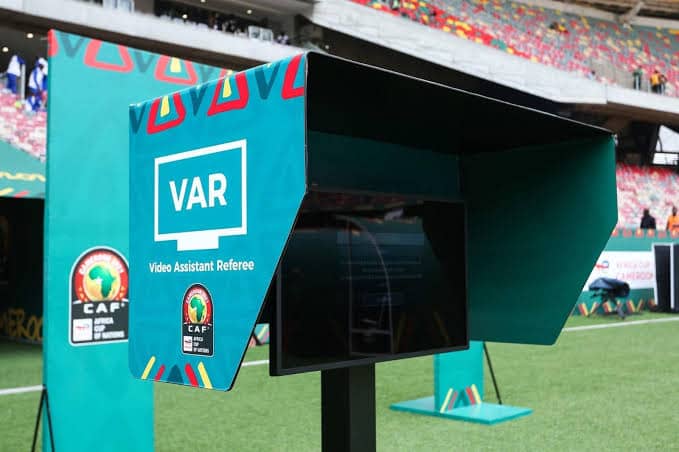

The Confederation of African Football (CAF) has announced the introduction of Video Assistant Referee (VAR) technology for the group stages of the 2026/27 CAF Interclub Competitions.
The decision represents a significant development in African club football, as it will mark the first time the technology is deployed during the group phase of both the CAF Champions League and CAF Confederation Cup.
Previously, VAR was only introduced from the knockout stages of the two competitions, meaning clubs competing in the group phase had to play without the additional video-review system.
Sports247 reports that the new arrangement will extend the use of VAR across more matches, providing referees with technological support when reviewing key match incidents and making important decisions.
VAR is designed to assist match officials in reviewing potential goals, penalty decisions, direct red-card incidents and cases of mistaken identity, with the aim of reducing clear and obvious errors.
Its introduction at the group-stage level is expected to strengthen officiating standards and provide additional support for referees as Africa’s leading clubs compete for continental honours.
The 2026/27 campaign will therefore represent a new chapter for CAF’s flagship club competitions, with the technology set to play a more prominent role throughout the tournament.
-

 Events3 days ago
PENIEL 2026: AGNN Calls for Deeper Encounter with God, Unity and National Transformation
-
Events3 days ago
Plateau Govt Backs AGNN’s PENIEL 2026, Says Unity Among Christians Critical to Peace
-
News1 day ago
‘The Righteous Are Not on the Throne, That Is Why Nigerians Are Suffering’ — SDP’s Adewole Adebayo Fires the APC While Speaking to Press at Jos Conference
-
Events2 days ago
Encountering God, Advancing His Kingdom: AGNN PENIEL 2026 Ends with Calls for Responsible Leadership