News
FIFA IS NOT A SHIELD AGAINST ACCOUNTABILITY: GOVERNMENT CAN REFORM SPORTS WITHOUT TAKING OVER FOOTBALL

There is a dangerous narrative beginning to circulate around Nigerian football.
It tells Nigerians that the moment the government questions the administration of football, FIFA will immediately suspend Nigeria.
That argument sounds frightening.
But it is also far too simplistic.
FIFA rules protect football associations from undue interference. They do not place football above the laws, financial regulations and accountability mechanisms of the country in which it operates.
That distinction matters.
The Nigeria Football Federation is a FIFA member association and must enjoy operational independence. FIFA’s statutes require member associations to manage their affairs independently and without undue influence from third parties.
But independence does not mean immunity.
The government can fund football.
The government can build stadiums.
The government can finance national-team programmes.
The government can support grassroots development.
The government can demand accountability for public money.
The government can investigate allegations of financial misconduct through the appropriate institutions.
The government can regulate the broader sporting environment.
What it cannot legitimately do under FIFA’s rules is take over the NFF’s football administration, dictate its elections or install its own football leadership.
That is the line.
And the world has already shown us that this line can be managed without turning every disagreement into a FIFA war.
Look at Sri Lanka.
FIFA suspended the country’s football federation in January 2023 because it determined that government interference had affected the federation’s affairs. But FIFA did not leave the country permanently suspended. By August 2023, the suspension had been lifted after the necessary steps were taken to restore the federation’s autonomy.
Pakistan provides another example.
FIFA suspended the Pakistan Football Federation in February 2025. Less than a month later, FIFA lifted the suspension after the PFF Congress unanimously approved constitutional amendments that FIFA and the Asian Football Confederation had validated.
Zimbabwe went through an even longer crisis.
FIFA suspended the Zimbabwe Football Association for 18 months. Eventually, FIFA lifted the suspension and appointed a normalisation committee with a defined mandate to run the daily affairs of the federation, restructure its administration and prepare the ground for a new leadership process.
Kenya has also experienced FIFA intervention and eventually had its suspension lifted after the required conditions were addressed.
So what is the lesson?
The lesson is not “never question football.”
The lesson is:
“If football governance is broken, fix it through a process that respects football’s autonomy.”
That is very different.
Nigeria does not have to choose between two extremes:
Do absolutely nothing because FIFA might complain.
Or:
Take over the NFF and risk a confrontation with FIFA.
There is a third option.
Accountability.
If public money is being spent on football, Nigerians have the right to know how that money is being used.
If there are allegations of financial misconduct, they should be investigated.
If national teams are repeatedly failing, there should be a proper technical and administrative review.
If the domestic leagues are struggling, the structures should be examined.
If the NFF’s governance needs improvement, its statutes and electoral system can be reformed through the appropriate football processes.
And if the people running football have failed, the democratic process should provide the mechanism for replacing them.
That is not a FIFA violation.
That is governance.
And there is an important development Nigerians should not overlook.
The NFF itself has already established a process for its next elective Congress. The federation’s 2026 Extraordinary General Assembly approved amendments to its statutes and electoral framework, while the Elective Congress has been scheduled for September 27, 2026.
So if the argument is that Nigerian football needs change, the question should be:
How do we make that election more credible, transparent and representative?
Not:
How do we secretly control the election?
And not:
How do we frighten Nigerians with the word FIFA?
There is another reason this conversation matters.
The NFF itself has now established a fact-finding committee following Nigeria’s recent poor run of results, including the Super Falcons’ failure to qualify for the 2027 Women’s World Cup.
That is precisely the kind of process we should be demanding.
Investigate.
Publish the findings.
Identify the failures.
Recommend reforms.
Implement them.
Measure the results.
If government provides the money, government should be able to ask what happened to the money.
If FIFA provides development funds, FIFA should be able to demand proper reporting.
If sponsors provide money, sponsors should demand commercial accountability.
If Nigerians provide public funds, Nigerians deserve transparency.
None of that requires government to run the NFF.
In fact, the argument that government cannot demand accountability because of FIFA could become dangerous in itself.
Because what happens if an organisation receives public money but nobody is allowed to ask questions about it?
That is not autonomy.
That is impunity.
And Nigeria should reject both extremes.
We should not support political control of football.
But we should also not allow the word FIFA to become a magic word that stops every legitimate conversation about accountability.
The examples from Sri Lanka, Pakistan, Zimbabwe and Kenya show something else: even when FIFA does intervene, the process is not necessarily permanent. Suspensions can be lifted when the underlying governance problem is addressed and the federation’s autonomy is restored.
Therefore, Nigerians need to stop being frightened by hypothetical FIFA bans and start asking concrete questions.
What exactly has the government alleged?
What evidence exists?
What public money is involved?
Which institution is responsible for investigating it?
What does Nigerian law provide?
What does the NFF constitution provide?
What does FIFA require?
Where is the boundary between legitimate oversight and prohibited interference?
Those are intelligent questions.
Not propaganda.
Not panic.
Not political slogans.
NIGERIAN FOOTBALL DOES NOT NEED A GOVERNMENT TAKEOVER.
But it also does not need a football federation that believes autonomy means nobody can question it.
The solution is much simpler:
Government should govern government money.
Football people should govern football.
Auditors should audit.
Investigators should investigate.
The NFF Congress should elect.
FIFA should enforce its statutes.
And Nigerians should demand that every institution does the job it was created to do.
FIFA AUTONOMY MUST NOT BECOME A SHIELD AGAINST ACCOUNTABILITY.
And accountability must never become an excuse for political capture.
Nigeria is capable of doing both things correctly.
Protect football from political control.
And protect Nigerian football from institutional impunity.



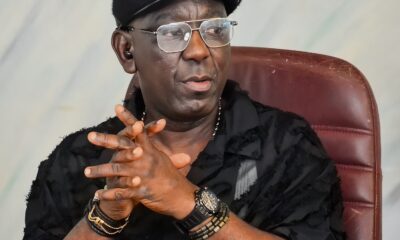


Senator Aminu Waziri Tambuwal has dismissed reports suggesting that he is planning to defect from the African Democratic Congress, ADC, to the All Progressives Congress, APC, ahead of the 2027 general election.
In a statement issued by Tambuwal’s spokesperson, Prince Daniel, on X, the reports circulating on social media were described as false and baseless. The statement insisted that the former governor of Sokoto State had no plans to join the ruling party.
The position was contained in a statement issued on Monday by Prince Daniel, Special Adviser on Media and Strategy to the senator, on behalf of the AWT Media Office.
The statement said Tambuwal’s longstanding relationships with politicians across party lines should not be interpreted as evidence of a planned political realignment.
According to the media office, photographs and video clips circulating online did not establish that the senator was negotiating to defect to the APC.
It added that exchanging greetings or interacting with members of other political parties should not be mistaken for a change in political allegiance.
“Senator Tambuwal remains firmly committed to the ADC,” the statement said, adding that his focus was on strengthening the party, building broad cooperation and mobilising Nigerians ahead of the 2027 general elections.
The media office urged Nigerians to focus on the country’s pressing economic, security and governance challenges rather than engage in unsubstantiated political speculation.
It maintained that Tambuwal remained committed to accountable leadership, democratic values and the welfare of Nigerians.
The statement also called on media organisations and social media commentators to verify reports concerning the senator with his media office before publication.
“Speculation must never be presented as fact,” it added.
News
2027: 'Tinubu doing politics, wickedness since becoming president' – Atiku's aide replies Alake

The Senior Political Assistant to the African Democratic Congress, ADC, presidential candidate, Atiku Abubakar, Demola Olarewaju, on Monday accused President Bola Tinubu of “doing politics and wickedness” since assuming office in 2023.
Olarewaju said that instead of ensuring good governance, Tinubu had been busy wooing state governors to support his re-election bid in 2027.
He made the remark in reaction to an explanation by the Minister of Solid Minerals Development, Dele Alake, on why Tinubu would not visit all states to campaign.
Speaking during the inauguration of the All Progressives Congress (APC) Presidential Campaign Council in Abuja, Tinubu said he could not visit all states for campaign activities because he would be focusing on governance.
Commenting on Tinubu’s position, Alake said the president had chosen 12 states to visit because they were “election deciders.”
Alake said, “The 12 states that President Tinubu chose to campaign in are actually election deciders; he should be commended for that. He is not going to abandon governance for campaigning.”
Faulting Alake’s remarks, Olarewaju insisted that Tinubu had no achievements to campaign on.
In a post on X, he wrote, “Bola Tinubu has been doing politics and wickedness since Day One instead of good governance, he was wooing Governors instead.
“Now time for campaign, but no achievement to campaign with. Instead, they want to pretend he’s too busy with governance. #TinubuMustGo abeg.”
2027: ‘Tinubu doing politics, wickedness since becoming president’ – Atiku’s aide replies Alake
-
News2 days ago
NUCAP: Nigeria targets 20 million people with 3,700 telecom towers – Technology Times
-

 News3 days ago
Gunmen storm Plateau mining site, kill two persons
-
News3 days ago
Nigeria needs stronger collaboration ‘to shape internet governance’ – Technology Times
-
News2 days ago
Nigeria’s Ojeleye John Tope Gets Second Futsal AFCON Assignment, to Officiate Mozambique–Tanzania Clash Tonight