News
NIGERIA HAS LOST ITS WOMEN’S FOOTBALL ADVANTAGE — AND AFRICA IS CATCHING UP FAST


For more than three decades, Nigeria’s Super Falcons were the standard of African women’s football.
Ten Women’s Africa Cup of Nations titles. Every FIFA Women’s World Cup from the beginning of the competition. Generations of players who dominated the continent.
Read Also: 14th Women AFCON: Swart’s heroics foil Super Falcons’ search for World Cup ticket
But that era has now reached a disturbing turning point.
For the first time in the history of the FIFA Women’s World Cup, Nigeria will not be at the tournament.
South Africa’s 2–1 victory over the Super Falcons in Casablanca on Thursday ended Nigeria’s final route to the 2027 World Cup.
But perhaps this should not be viewed simply as a failure of the Super Falcons.
Perhaps it is the clearest evidence yet that the rest of Africa has finally caught up.
Look at Malawi.
The Scorchers were appearing at the WAFCON for the first time in 2026. They did not come merely to make up the numbers. They reached the semi-finals and secured Malawi’s historic first-ever Women’s World Cup qualification.
Look at Morocco.
The country has invested heavily in women’s football, and AS FAR has become a continental force, winning the CAF Women’s Champions League in 2025 and earning the right to represent Africa at FIFA’s inaugural Women’s Champions Cup.
Look at South Africa.
Banyana Banyana have transformed themselves from challengers into African champions and have now defeated Nigeria when a World Cup place was on the line.
And across the continent, CAF says women’s football is being strengthened through coaching education, better administration, grassroots development, refereeing and more structured domestic leagues.
This is the part Nigerians must understand.
Africa did not wait for Nigeria to remain dominant.
Other countries started building.
For years, Nigeria had an enormous advantage because many of our best players grew up playing together for long periods, particularly through the domestic system and national-team pathways.
The Super Falcons of previous generations were not simply eleven talented Nigerians assembled for a tournament.
They were products of a football culture that continuously produced players.
Today, that advantage is much smaller.
And there is another uncomfortable reality: Nigerian players are increasingly finding opportunities in women’s leagues outside Nigeria, while African leagues are becoming more organised and competitive.
CAF’s Women’s Champions League has also created a continental platform with meaningful financial rewards; participating clubs received at least $150,000 in the 2024 edition, while the winners received $600,000.
So perhaps the question is no longer:
“Why did the Super Falcons fail?”
The bigger question is:
“Why did Nigeria stop developing faster than the countries chasing us?”
We should support the Falcons.
We should respect the players.
We should recognise their achievements.
But we must also recognise what this moment represents.
Nigeria has won ten WAFCON titles. That history is extraordinary.
But history cannot qualify a team for the next World Cup.
Systems do.
Leagues do.
Academies do.
Coaching structures do.
Investment does.
Player development does.
And if Nigeria does not rebuild those foundations, the Super Falcons’ absence from Brazil may not remain a once-in-history event.
THE SUPER FALCONS HAVE NOT SUDDENLY BECOME A BAD TEAM. AFRICA HAS SIMPLY STOPPED WAITING FOR NIGERIA.
The real alarm is not that Nigeria lost to South Africa.
The real alarm is that the countries Nigeria used to look down on are now building football systems capable of defeating Nigeria when it matters most.
This should not be a blame game.
It should be a wake-up call.
NIGERIA DID NOT LOSE WOMEN’S FOOTBALL IN ONE MATCH. WE MAY HAVE BEEN LOSING THE ADVANTAGE FOR YEARS.






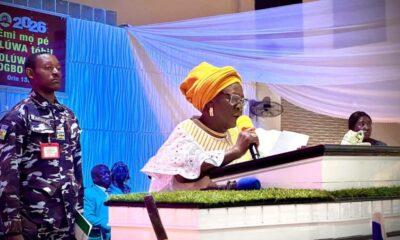


Resident doctors have given the federal government a 14-day ultimatum to begin implementing outstanding agreements on their welfare and working conditions or face “further industrial action.”
The ultimatum takes effect from 1 October 2026, according to a communique issued at the end of the Nigerian Association of Resident Doctors’ (NARD) 46th Annual General Meeting (AGM) in Calabar, Cross River State.
According to the document signed by the association’s new President, Ogar Idoko, Secretary-General, Besongngem Akotanchi, and Publicity and Social Secretary, Ashimom Msughter, the meeting was held from 21 to 26 September.
The doctors said the ultimatum became necessary due to ongoing delays in resolving several welfare and professional issues, despite the government’s previous engagements and commitments.
Outstanding allowances, salaries
The resident doctors demanded the immediate payment of 19 months of outstanding Professional Allowance Table (PAT) arrears.
They also demanded payment of outstanding arrears arising from the 25/35 per cent upward review of the Consolidated Medical Salary Structure (CONMESS) for doctors and other affected health workers.


The association said several medical doctors were still owed salary and promotion arrears in various federal health institutions.
It also demanded the immediate correction of omissions and errors in the payment of the 2026 Medical Residency Training Fund (MRTF). It called for an upward review of the fund to reflect the current cost of residency training.
The doctors said the reviewed MRTF should also be captured in the 2027 Appropriation Act.
Other demands
The resident doctors called for the accelerated conclusion of the long-running Collective Bargaining Agreement between the Nigerian Medical Association and the federal government.
They said the unresolved review of the CONMESS salary structure had remained outstanding for about 17 years and was contributing to the brain drain affecting the health sector.
The association also called for a sustainable recruitment system to address “the critical manpower shortages occasioned by brain drain and guarantee safe and effective healthcare delivery.”
It demanded the implementation of the approved work-hour regulation policy, including functional biometric systems to document working hours and a standardised system for compensating doctors for excess workload.
The doctors also called for the implementation of “the Assault on Health Workers Prevention Policy across all health institutions with clear accountability mechanisms” and the payment of outstanding pension contributions.
The association further demanded urgent improvements in healthcare infrastructure, equipment and essential medical facilities across the country.
It said poor infrastructure and inadequate equipment were affecting patient safety, healthcare delivery and the training of resident doctors.
Threat of industrial action
Under the resolution, the AGM mandates that the NARD National Executive Council (NEC) “closely monitor” the government’s response over the next two weeks.
The association said it would take “all necessary lawful and constitutionally sanctioned actions”, including further industrial action, if the authorities failed to demonstrate meaningful compliance within the stipulated period.
The latest ultimatum follows several rounds of disputes between resident doctors and the federal government this year.
In January, the doctors suspended a planned nationwide strike scheduled to begin on 12 January after the National Industrial Court restrained the association from embarking on the action, and the government made fresh commitments.
READ ALSO: Resident doctors commend Uba Sani for prioritising healthcare workers’ welfare
In April, resident doctors commenced a nationwide strike over the reversal of the Professional Allowance Table and other outstanding financial obligations. The action was suspended less than 24 hours later following government interventions.
In June, the association issued another 21-day ultimatum over unpaid allowances, salary arrears and delays in the residency training fund.
The resident doctors’ latest ultimatum, therefore, gives the federal government until 1 October to “commence demonstrable implementation of the resolutions contained in this communique.”
Discover more from Premium Times Nigeria
Subscribe to get the latest posts sent to your email.
-

 Health4 days ago
WHO expands recommended contraceptive options, backs longer-lasting methods
-
News3 days ago
Crusoe abandons $1.25B plan to use Boom turbines at AI data centers
-
News4 days ago
PDP dissolves Kano State Working Committee, chairman accepts removal
-
News2 days ago
Alex Otti should be campaigning for Peter Obi not backing Tinubu – NDC