Business
Tax Ombud seeks stronger collaboration with revenue agencies to protect taxpayers’ rights



The Office of the Tax Ombud has called on revenue-generating agencies to designate liaison officers to strengthen coordination, resolve taxpayer complaints faster and improve accountability within Nigeria’s tax system.
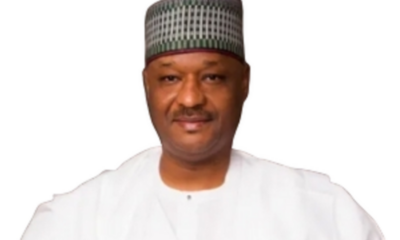
The Tax Ombud and Chief Executive of the Office of the Tax Ombud, John Nwabueze, made the call on Thursday at a stakeholder engagement in Abuja.

The engagement, themed “Promoting Fairness, Transparency and Trust in Tax and Revenue Administration in Nigeria,” focused on improving the relationship between taxpayers and government institutions responsible for collecting public revenue.
Mr Nwabueze said the objective of the office was not to undermine revenue collection but to ensure that the exercise of government’s power to collect taxes was matched by fairness, transparency and access to redress.
“Today is not simply about discussing taxation and revenue. It is about strengthening the relationship between the taxpayer and the institutions responsible for administering public revenue,” he said.

He explained that the Tax Ombud mechanism represented an important development in modern tax administration, where the rights and concerns of taxpayers are considered alongside the need for government to generate revenue.

From tax collection to taxpayer protection
Mr Nwabueze traced the development of the Ombudsman system to Sweden, where the modern institution originated in 1809, before specialised taxpayer advocacy emerged in other countries.
He said the United States established the Office of the Tax Ombudsman within the Internal Revenue Service in 1979, marking a shift towards specialised protection for taxpayers within tax administration.
According to him, Nigeria is the ninth country globally and the third in Africa to adopt the tax advocacy mechanism.
He said the establishment of the Nigerian Office of the Tax Ombud under the Joint Revenue Board of Nigeria (Establishment) Act, 2025, was therefore part of a broader international evolution in tax administration.
For years, Nigeria’s tax dispute-resolution system was largely built around objections to tax assessments, administrative reviews, the Tax Appeal Tribunal and the courts.
Mr Nwabueze said those mechanisms remained important, particularly in determining substantive tax liabilities, but there had been a gap for taxpayers facing administrative or procedural difficulties in their dealings with revenue authorities.
He added that the Tax Ombud was created to help fill that gap.
The office receives, investigates and resolves complaints relating to taxes, levies, regulatory fees and charges, customs duties and excise matters.
However, he clarified that its mandate does not extend to determining substantive tax assessments, which fall within the jurisdiction of the appropriate tax dispute-resolution institutions, including the Tax Appeal Tribunal.
“Our institution is impartial, accessible, and most importantly, free to all taxpayers. We are committed to timely, professional mediation and to escalating systemic issues to the highest levels for policy remedies,” he said.
According to him, the office has 14 days to resolve a complaint, with a possible seven-day extension where necessary. Unresolved matters may be escalated to the National Assembly in accordance with the law.
Mr Nwabueze said the Tax Ombud had already begun implementing measures to make the institution more accessible to taxpayers.
These include the launch of its website, an interactive contact centre and a case-management portal through which taxpayers can submit complaints, obtain information, track cases and receive assistance.
He said the office was also progressively digitalising its internal processes and service delivery systems to reduce reliance on manual procedures and improve efficiency.
The aim, he said, was not merely to introduce technology but to use it to make taxpayer services faster, more transparent and accountable.
He also announced plans to expand the physical presence of the office beyond Abuja.
According to him, the Tax Ombud is working with state governments to establish zonal offices across the country, with at least three expected to commence operations within the next few weeks.
He said the eventual objective was to take the services of the office closer to taxpayers across the country, including individuals and businesses that may find it difficult to access the institution from the Federal Capital Territory.
Taxpayer rights charter coming
Another major initiative, Mr Nwabueze said, is the development of a Taxpayer Bill of Rights and Obligations Charter, which is expected to be launched in the coming weeks.
He highlighted that the charter would explain the rights and responsibilities of taxpayers and set out the standards of fairness, transparency and accountability they should expect from tax and revenue authorities.
The document, he added, would be published on the office’s digital platforms and other public channels.
Mr Nwabueze urged tax and revenue authorities to support its dissemination through their offices and digital platforms, saying that greater awareness of taxpayer rights could encourage voluntary compliance, prevent disputes and build trust between taxpayers and government institutions.

Ombud seeks liaison officers
The Tax Ombud also proposed a formal coordination mechanism between his office and revenue-generating agencies.
He urged the agencies to designate liaison officers who would serve as institutional points of contact with the Office of the Tax Ombud.
The officers, he said, would facilitate the timely communication and referral of taxpayer complaints, early resolution and prevention of disputes, information sharing within the limits of the law, and identification of recurring administrative challenges.
They would also help with the implementation and follow-up of recommendations arising from interventions by the Tax Ombud.
Mr Nwabueze noted that such framework would allow individual complaints to be resolved more quickly while helping government identify systemic problems affecting taxpayers.
Stakeholders seek fairer tax administration
Speaking on behalf of the Minister of Finance and Coordinating Minister of the Economy, Taiwo Oyedele, the minister’s representative, Olufemi Olarinde, described the Office of the Tax Ombud as a new and independent institution established to address taxpayer grievances, promote systemic reforms and serve as a bridge between taxpayers and revenue authorities.
Mr Olarinde commended the office’s efforts to deepen collaboration, embrace digital innovation and promote accountability, fairness and trust in Nigeria’s tax administration.
Other stakeholders also called for greater transparency and consultation in the administration of taxes and revenue.
Representing the Corporate Affairs Commission, the Director of Finance and Accounts, Emmanuel Sunday Inyang, said a sustainable tax system depended on taxpayers understanding their obligations and being treated fairly.
He stressed the importance of transparency, efficient business registration processes and collaboration among government agencies, saying the protection of taxpayer rights should go alongside efforts to improve compliance.
The representative of the FCT Internal Revenue Service, Hassan Usman, also emphasised the importance of transparency and accessible services in building confidence in the tax system.
The Director-General of the Nigerian Shippers’ Council, Vivian Chimizia Azubuike, called for greater fairness and transparency in tax policies affecting the maritime sector, particularly small and medium-sized enterprises.
READ ALSO: Tax Ombud braces for digital asset tax disputes, seeks greater public awareness
Ms Azubuike also urged revenue authorities to institutionalise consultations with stakeholders before issuing new tax circulars.
She said fairness and swift resolution of disputes should become a standard feature of tax administration.
The engagement also featured a panel discussion involving representatives of the Manufacturers Association of Nigeria, the Nigerian Association of Chambers of Commerce, Industry, Mines and Agriculture, fintech associations and the ICT team of the Office of the Tax Ombud.
The discussions focused on practical measures to improve taxpayer confidence, strengthen dispute resolution, promote digital innovation and improve collaboration between businesses and tax authorities.
The stakeholder engagement brought together representatives of government agencies, private-sector organisations, civil society groups and the media to discuss ways of making Nigeria’s tax administration more responsive, equitable and trusted.
Mr Nwabueze said the success of the institution would ultimately depend on cooperation between taxpayers and revenue authorities.
He urged stakeholders to see taxpayer protection and revenue mobilisation as complementary rather than competing objectives.
“The journey to a trusted tax system is a collective one,” he said.
Discover more from Premium Times Nigeria
Subscribe to get the latest posts sent to your email.




A social media claim that OPay has stopped using customers’ phone numbers as account numbers and is now issuing standard bank account numbers has sparked confusion among users of the fintech platform.
The claim, which circulated among social media users, urged OPay customers still using their phone numbers as account numbers to visit OPay agents to have their accounts updated.
“OPay is no longer using phone numbers as account numbers. They’re now issuing standard account numbers, so if you’re still using your phone number as your OPay account number, hurry to an OPay agent to get yours updated,” an X user, Israel Gharee, posted.
However, an OPay official, who spoke on condition of anonymity, told PREMIUM TIMES that the claim is inaccurate, adding that the company would communicate any major changes to its customers through its official communication channels.
“I have seen the tweet. But even from the comments you will see people are already correcting him. If we have any update or news, we will always share through our communication channels,” the official said on Sunday.
Clarification
The official said the claim may have been prompted by OPay’s My BizPayment feature, which provides users with a separate account number for business transactions.

The feature is available to existing OPay users who want to use their accounts for business purposes. It allows users to provide information about their businesses and, after completing the process, receive a merchant account number.
The existence of the merchant account number does not mean OPay has replaced the phone-number-based account details used by its regular customers.
The business account number is associated with the user’s existing OPay account and is intended for business-related transactions.
BizPayment account
My BizPayment is a business feature within the OPay app, and it’s not a recent update.
Users can access it through the “Me” section of the app and provide information about their businesses, including the nature of the business and how it operates.
The process includes different business categories and operating models. Once the required information is provided, eligible users can proceed to generate a merchant account number.
ALSO READ: Eight years on, OPay keeps Nigerian businesses moving
The account number generated through this process may therefore look different from the phone-number format associated with a regular OPay account.
That distinction appears to be at the centre of the social media claim.
No instruction to change existing accounts
There is no indication from OPay that ordinary customers have been instructed to visit agents to replace their existing phone-number-based account details.
The company said any change to its account system would be communicated through its official channels.
The OPay official said the availability of a separate merchant account number through My BizPayment should not be interpreted as an announcement that OPay has discontinued the use of phone numbers for regular customer accounts.
Discover more from Premium Times Nigeria
Subscribe to get the latest posts sent to your email.
Business
Leadway Assurance Calls for Stronger Climate Risk Solutions to Protect Africa’s Food Systems
-

 Health4 days ago
WHO expands recommended contraceptive options, backs longer-lasting methods
-
News3 days ago
Crusoe abandons $1.25B plan to use Boom turbines at AI data centers
-
News4 days ago
PDP dissolves Kano State Working Committee, chairman accepts removal
-
News2 days ago
Alex Otti should be campaigning for Peter Obi not backing Tinubu – NDC