News
Motsepe Urges Calm as FIFA Crisis Deepens, Backs March 2027 Election


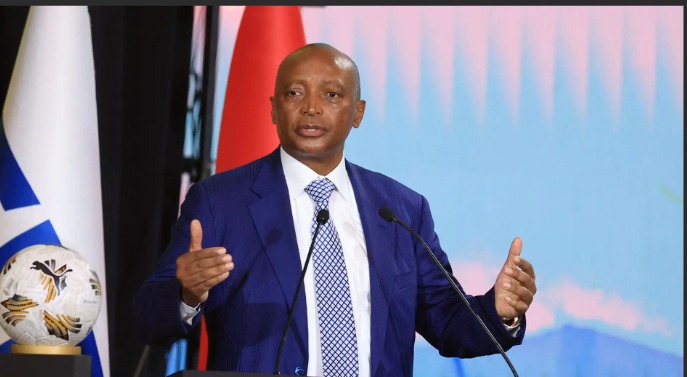
Confederation of African Football (CAF) President Patrice Motsepe has called for calm and unity amid the growing crisis within world football’s governing body, insisting that the FIFA presidential election in March 2027 should provide the appropriate platform for members to determine the organisation’s direction.
Speaking in Salzburg around the UEFA Super Cup, Motsepe said the current disagreements should not descend into prolonged internal conflict, urging all sides to respect FIFA’s electoral and governance processes.
Read Also: ‘Africa Must Protect Its Interests’ — CAF’s Lux September Speaks on FIFA Crisis | Sports247 Nigeria
FIFA’s 211 member associations are expected to decide the organisation’s leadership at the 77th FIFA Congress in Rabat, Morocco, on March 18, 2027. Current president Gianni Infantino is seeking another term.
Motsepe maintained that the election should allow the various candidates and member associations to make their positions clear through the established democratic process rather than through continued public confrontation.
The CAF president also reiterated his support for Infantino, describing him as a leader who has shown commitment to African football.
“Gianni Infantino has been loyal to Africa and has shown a deep commitment to African development and growth.”
His comments come amid a major dispute over FIFA’s proposed Forward Enterprise, which involved plans for private investment in FIFA competitions and triggered strong opposition from UEFA, CONCACAF and other stakeholders. FIFA eventually abandoned the proposal after widespread criticism over transparency and the consultation process.
Motsepe said the current situation should instead encourage dialogue, cooperation and respect for due process.
Africa’s position could be particularly influential at the election because CAF’s 54 member associations represent the second-largest voting bloc in FIFA, behind UEFA’s 55.
With the FIFA presidential contest approaching, Motsepe’s position keeps CAF firmly aligned behind Infantino while other confederations continue to demand changes in FIFA’s leadership and governance.


France has reported the world’s first documented human infection with Shamonda virus (Shav) in a patient with a severely weakened immune system who died in early October.
According to a BBC report, French health authorities said it was an “exceptional case in a severely immunocompromised patient” and there was currently no risk to the public.
Shav is a disease that primarily affects cattle and can be spread by infected midges. Cases have also occurred in sheep, goats, alpacas and horses, but infections in people were previously unheard of.
The World Health Organisation (WHO) and European Centre for Disease Prevention and Control (ECDC) said they were monitoring the situation, with French officials still investigating how the virus had spread to a human.
In a post on his official X account, WHO Director-General, Tedros Ghebreyesus, said the agency was working with French authorities to establish the source of the infection, possible routes of transmission and any potential public health risks.
Mr Ghebreyesus said the French patient was in an area where the Shamonda virus was circulating in animals and where Culicoides midges were also present.


“WHO is in contact with French authorities who are collecting information to better understand the source of infection in the first human patient, possible routes of transmission and any potential risk to public health,” he said.
What is Shamonda virus?
Shamonda virus primarily affects animals, particularly cattle, and spreads between animals through the bites of infected Culicoides midges, small biting insects. It has also been detected in sheep, goats and horses.
The virus was first identified in Nigeria in the 1960s and has circulated in parts of Africa and Asia for decades without any previously documented human infection.
French authorities believe the patient may have contracted the virus through a midge bite in eastern France, where infections had been detected in animals during the spring and summer.
The patient was receiving treatment for a ‘serious’ illness at a hospital in Lyon when he/she developed neurological complications that preliminary findings suggested were very likely linked to the virus.
Investigations are continuing to determine how the infection occurred and whether the virus contributed to the patient’s death.
Emerging disease concerns
The development comes amid international attention to other infectious disease threats this year, including hantavirus and Ebola.
Hantavirus is a group of viruses primarily transmitted to humans through contact with infected rodents or their urine, droppings and saliva. Depending on the strain, infection can cause severe respiratory illness or affect the kidneys.
In May, a cluster of hantavirus infections linked to a cruise ship prompted an international response after three people died among 13 reported cases. The outbreak was declared over in July.
Ebola, meanwhile, causes a severe illness that can include fever, vomiting, diarrhoea and, in some cases, internal or external bleeding. The disease spreads through direct contact with the blood or other bodily fluids of infected people and contaminated materials.
Nigeria confirmed an imported case of Ebola caused by the Bundibugyo virus in the Federal Capital Territory on 20 October, following an outbreak that began in the Democratic Republic of the Congo (DRC) and spread to other countries.
The WHO has said the Shamonda virus case appears isolated based on current evidence, although investigations into how the patient became infected and the potential public health implications are continuing.
Discover more from Premium Times Nigeria
Subscribe to get the latest posts sent to your email.

The presidential candidate of the African Action Congress, AAC, Omoyele Sowore, has said the ruling All Progressives Congress, APC, has no moral right to stop him from using the Presidential Villa for his campaign.
Sowore, who spoke on Arise Television's Prime Time on Thursday, said the APC has turned the Villa into its party office.
"If the APC can use the Presidential Villa for its political activities with catering, logistics, and security provided, we are entitled to the same," Sowore said.
"The APC has been using the Presidential Villa for meetings, launches, and weddings in some cases. It is fair for us to ask. We will only pay for this if the APC can provide receipts for all the times they used the presidential villa banquet hall," he said.
Sowore's comment comes days after his party wrote to President Bola Tinubu requesting to use Aso Rock for the inauguration of its Presidential Campaign Council on November 11, 2026, with food and logistics for 5,000 guests.
The request was dismissed by APC National Secretary, Ajibola Basiru, who described Sowore as a "skit maker".
Sowore, however, insisted that Aso Rock is a public property and opposition parties should be granted the same privilege the ruling party enjoys.
2027: If APC uses Aso Rock for meetings, weddings, we deserve same – Sowore dares Tinubu
-

 News4 days ago
No agenda, no rush, no leaving San Francisco: Benchmark’s partners on investing in a frenzied market
-
News3 days ago
Amazon to fund 12 small nuclear reactors at former Indiana coal plant
-
News3 days ago
Mamdani says feds have abdicated on AI, urges New Yorkers to push back
-
News2 days ago
Meta’s Muse hits 10M U.S. downloads in 40 days, a milestone reached by only 11 other apps