Health
WHO recommends Phase III trial of Ebola vaccine against Bundibugyo virus



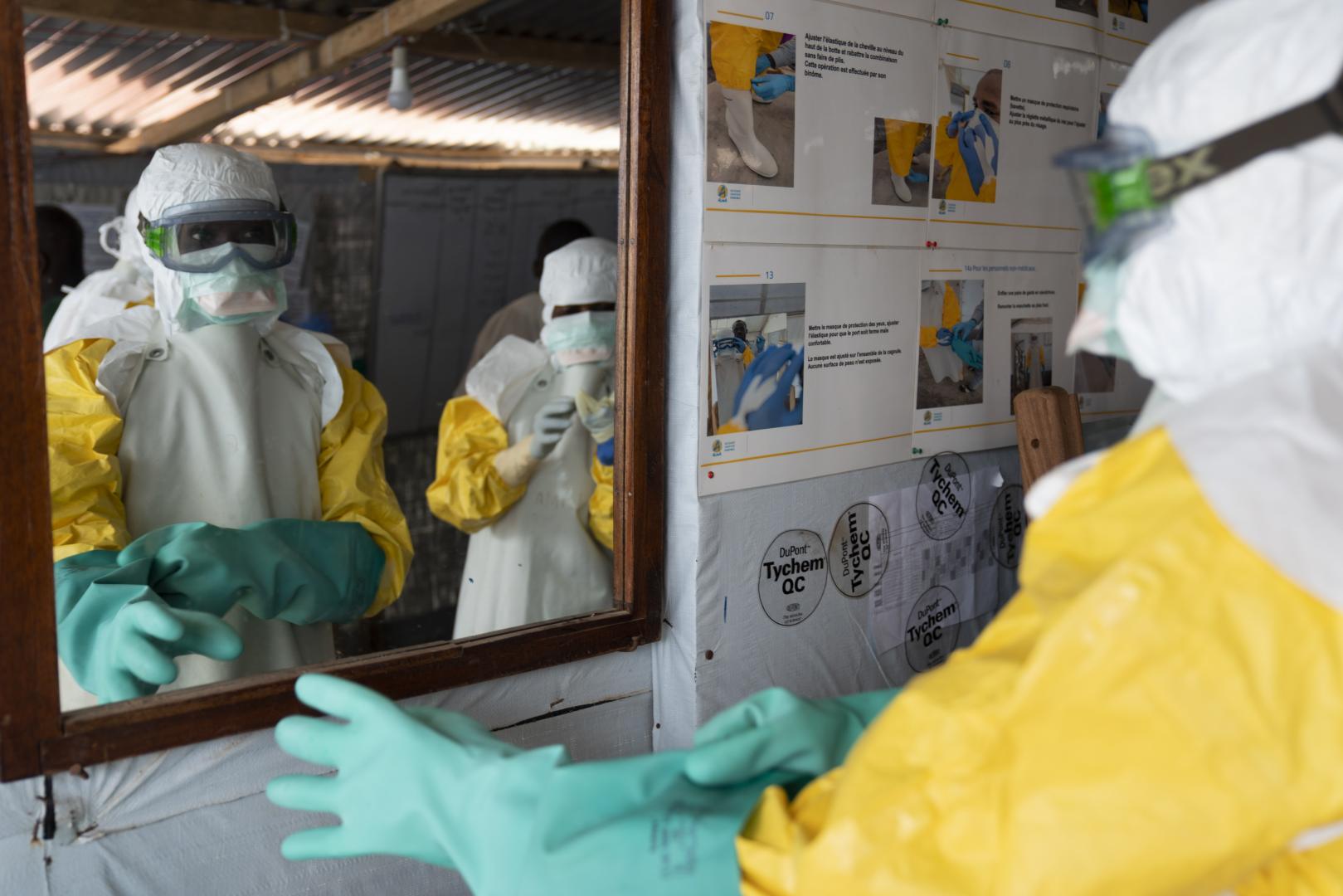
The World Health Organisation (WHO) has recommended a Phase III trial of an Ebola vaccine to test whether it can protect against Bundibugyo virus disease.
WHO Director-General, Tedros Ghebreyesus, disclosed this in a video posted on his official X account on Thursday.
Ghebreyesus said two vaccines specifically developed against the Bundibugyo virus had entered Phase I safety trials in humans. At the same time, new animal studies had shown promising evidence that Ervebo, an Ebola vaccine, could also provide cross-protection against the virus.
He said the findings prompted WHO to recommend Ervebo for inclusion in a Phase III trial, which the organisation hopes to begin as soon as possible.
However, it is not yet known whether Ervebo can protect humans against Bundibugyo virus disease.

Mr Ghebreyesus said the Phase III trial would help establish whether the vaccine is safe and effective and could provide evidence needed to make it available for the current outbreak and future outbreaks.
No licensed vaccines
The development comes as the Bundibugyo virus outbreak in the DRC has become the second-largest Ebola outbreak on record.
As of Thursday, the country had recorded 4,449 confirmed cases and 2,061 deaths across five provinces and 53 health zones, according to the WHO.
The health agency said the outbreak was spreading faster than any previous Ebola outbreak at the same stage and could surpass the 2014–2016 West African outbreak, which remains the largest on record, with more than 28,000 cases and 11,000 deaths reported in Guinea, Liberia and Sierra Leone.
Bundibugyo virus is one of the viruses in the Ebola family that can cause severe and often fatal disease in humans.
Unlike Ebola virus disease caused by the Ebola virus, there is currently no licensed vaccine specifically approved for the prevention of Bundibugyo virus disease.
WHO said in June that Ervebo, the only licensed and WHO-prequalified Ebola vaccine, is approved for Ebola virus disease but not for Bundibugyo virus disease.
The current outbreak was first detected in the DRC in May, following an unexplained cluster of deaths in Ituri Province that was investigated. Laboratory testing confirmed Bundibugyo virus disease, prompting the DRC government to declare its 17th Ebola outbreak.
Uganda also confirmed imported cases linked to the outbreak in the DRC. WHO subsequently determined that the outbreak in the two countries constituted a Public Health Emergency of International Concern.
Previous Bundibugyo virus outbreaks have had case fatality rates between 30 and 50 per cent, according to the WHO.
PREMIUM TIMES reported on 9 August that WHO had already recommended Ervebo for evaluation in a randomised clinical trial after reviewing evidence suggesting that it could provide some protection against Bundibugyo virus.
Treatment advancement
Mr Ghebreyesus also disclosed progress in research into treatments for Bundibugyo virus disease.
He said a WHO-sponsored partners trial had reached 100 patients.
The trial is assessing potential treatments for the disease and is intended to generate evidence on which therapies can improve outcomes for infected patients.
READ ALSO: DRC Ebola outbreak becomes second-largest on record WHO
Mr Ghebreyesus said the milestone showed that research could be mobilised rapidly and responsibly even during a difficult outbreak.
He called on partners to support and accelerate the vaccine trial, while emphasising that the response requires collaboration among the DRC government, WHO, Africa Centres for Disease Control and Prevention (CDC) and other partners.
Discover more from Premium Times Nigeria
Subscribe to get the latest posts sent to your email.



Six proven climate and health interventions could prevent 1.6 million deaths annually and generate trillions of dollars in economic benefits if implemented globally, the World Health Organisation (WHO) has revealed.
The measures, which include heat-health warning systems, access to safe water and sanitation, cleaner household energy and more efficient fossil fuel pricing policies, could generate $3.9 trillion in annual economic welfare benefits and a further $5.4 trillion in fiscal gains.
The WHO disclosed this in a new report titled ‘Global benefits and costs of prioritised actions on climate change and health’, released ahead of the 31st United Nations Climate Change Conference (COP31), where countries are expected to present their climate commitments.
According to the report, the six interventions could prevent one in every 40 deaths globally, based on modelled projections, while avoiding 16.7 billion tonnes of carbon dioxide emissions annually.
The estimated emissions reduction is equivalent to 31 per cent of global annual greenhouse gas emissions, excluding emissions from land use, land-use change and forestry.
The report, which the WHO described as its first comprehensive assessment of the economic and fiscal returns from scaling up the six recommended interventions, highlights the potential health and financial gains of integrating public health considerations into climate policies.

It argues that many health consequences of climate change are preventable through existing solutions, but governments must implement them across health and other sectors that determine people’s health.
Six interventions
The report identifies six interventions: heat-health warning systems, climate-resilient drinking-water services, basic sanitation services, hygiene and handwashing facilities, cleaner household fuels and technologies for cooking and heating, and efficient fossil fuel pricing policies.
The WHO estimates that five of the interventions could generate $24 in benefits for every $1 invested, with returns expected to be greater in low- and middle-income countries.
Heat-health warning systems are projected to deliver particularly high returns, generating an estimated $835 in benefits for every $1 invested.
The report attributes the high returns to the relatively low cost of expanding existing warning systems and their potential to prevent heat-related illnesses.
Efficient fossil fuel pricing policies, however, are projected to deliver the largest overall gains.
Such policies, including removing inefficient fossil fuel subsidies and appropriately taxing fossil fuels, could prevent 1.2 million deaths annually while generating $3 trillion in economic welfare benefits and $5.4 trillion in fiscal gains.
Health at the centre of climate action
Commenting on the findings, WHO Director-General Tedros Ghebreyesus said the climate crisis was also a health crisis, but many of its consequences could be prevented using existing interventions.
READ ALSO: WHO raises alarm as 75% of diabetes cases in Africa remain undiagnosed
He said expanding proven and affordable interventions could save millions of lives, particularly in countries with the greatest need.
“The climate crisis is a health crisis, but much of the harm it causes can be prevented with tools we already have,” he said.
Mr Ghebreyesus urged governments to place health considerations at the centre of climate action as they prepare for the next round of international climate negotiations.
The WHO said countries were already experiencing record-breaking climate shocks in 2026, investing in measures that protect human health and the environment increasingly urgent.
The health body called on governments, development partners and financing institutions to use the economic evidence to scale up the interventions, noting that they could deliver simultaneous benefits for public health, climate mitigation and national economies.
Discover more from Premium Times Nigeria
Subscribe to get the latest posts sent to your email.
-

 News4 days ago
Plateau APC 2027 Campaign Council inaugurated today in Jos
-
News4 days ago
Nigerians’ data appetite drives MTN Nigeria revenue to ₦2.68tn – Technology Times
-
News2 days ago
Plateau Ndigbo Crown Chief Johnson Nwosu as New Igwe
-
News2 days ago
Anthropic is working on a system to prove AI models’ identity