Health
Nigeria partners China to expand radiotherapy capacity

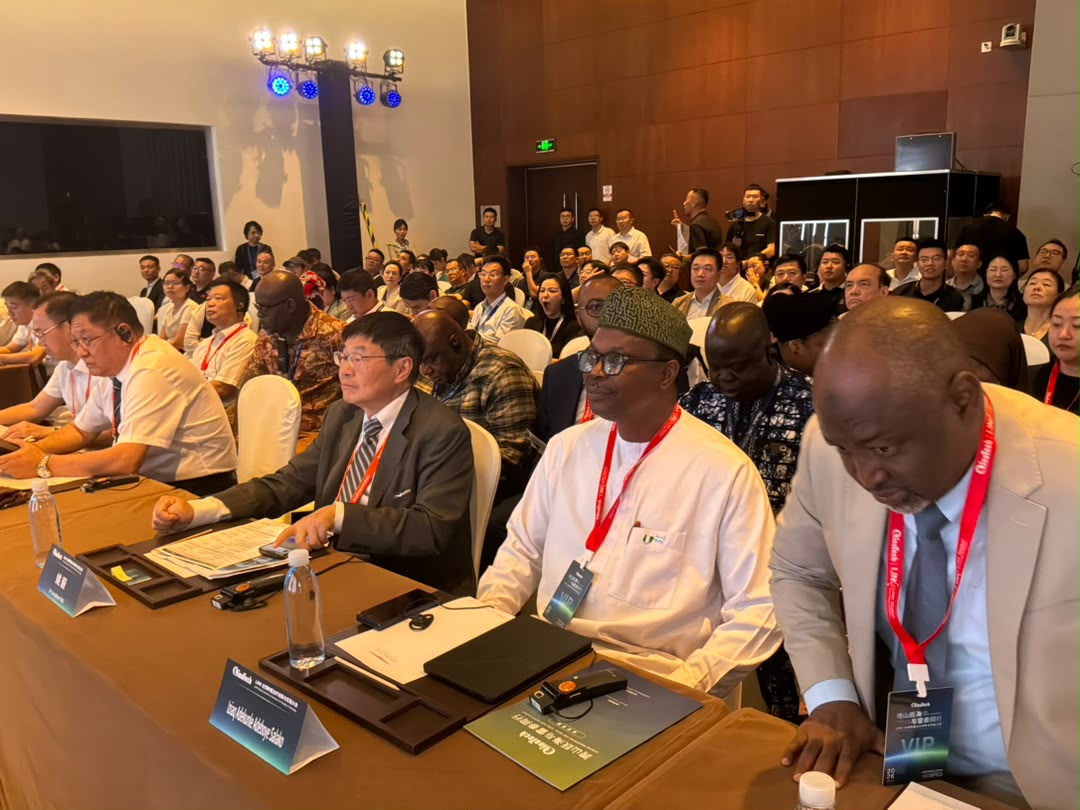

The Nigerian government has strengthened its partnership with China to expand cancer care through technology transfer, professional training, research and expansion of radiotherapy capacity.
The Minister of State for Health and Social Welfare, Iziaq Salako, disclosed this while delivering the opening address at the LINK Global Summit on Innovation and Practice in Oncology at the China National Convention Centre in Beijing, China.
This is according to a statement issued on Saturday and signed by Ado Bako, Assistant Director, Information and Public Relations, Federal Ministry of Health and Social Welfare.
The statement added that Nigeria also signed a strategic cooperation agreement with LinaTech, a Chinese company specialising in advanced radiation therapy solutions.
Cancer burden
Salako said cancer remained a national priority, noting that Nigeria recorded an estimated 127,763 new cancer cases and 79,542 deaths in 2022.

He said breast, prostate and cervical cancers accounted for more than 40 per cent of cancer mortality in the country.
According to the minister, Nigeria’s mortality-to-incidence ratio improved from 62.3 per cent in 2022 to 59.6 per cent in 2024, although he acknowledged that “significant work remained to be done.”
He said the government had, since May 2023, accelerated interventions across cancer prevention, awareness, early detection, treatment, financing, infrastructure, and research.
Salako cited the introduction of the Human Papillomavirus (HPV) vaccine into routine immunisation in October 2023, saying more than 14 million girls aged nine to 14 years had been reached.
He also mentioned the National Initiative for Cancer Early Detection, Screening and Coordinated Access to Network Care (NICE-SCAN), as well as initiatives of the Task Force for the Elimination of Cervical Cancer, as part of efforts to improve early detection and referral.

China partnership
The minister said the emerging partnership with China would provide technical assistance in radiotherapy, support joint research and development, facilitate academic exchanges, and build professional capacity.
He said Nigeria was a founding African partner of the LINK Global Oncology Alliance and had also participated in the inauguration of the Radiotherapy Working Group of the China-Africa Hospital Alliance.
Salako said Nigeria wanted the cooperation agreement to result in a joint work plan with designated focal persons and quarterly milestones.
“We want to see the twinning of our cancer centres of excellence, the National Institute for Cancer Research and Treatment(NICRAT), and our tertiary hospitals like the National Hospital, Abuja, with the Chinese cancer hospitals,” he said.
He also called for the establishment of a designated clinical training base in Nigeria to serve as a West African hub for advanced radiotherapy training.
He said Nigerian radiation oncologists, medical physicists, radiotherapy technologists and biomedical engineers should also have opportunities for fellowship training in China.
Beyond equipment
Salako said Nigeria’s long-term objective was not simply to acquire cancer equipment but to develop the technical and human capacity required to install, maintain and eventually manufacture cancer technologies locally.
“Machines without people are monuments,” he said, stressing that trained personnel, maintenance systems and sustainable technical support must back every linear accelerator installed.
He said Nigeria would also pursue technology transfer, local assembly and servicing of radiotherapy and imaging equipment, joint clinical trials, cancer registry-linked research, artificial intelligence-assisted treatment planning, adaptive radiotherapy and tele-oncology collaborations by 2030.
The minister said the government’s incentives for health manufacturing, including zero-duty and zero-VAT measures, provided an enabling environment for investment in local production and technology transfer.
Cancer treatment, research
Mr Salako said six cancer centres of excellence were being developed, with three already completed and commissioned in Katsina, Enugu and Benin.
He said the centres were equipped with modern linear accelerators, while work on the remaining three was progressing.
He also disclosed that President Bola Tinubu had approved the procurement and installation of 35 additional linear accelerators between 2026 and 2028 to expand access to radiotherapy further.
The minister said the government had also strengthened NICRAT, which had trained about 140 early-career cancer scientists and supported 24 research grants.
ALSO READ: Cancer Care: Nigeria has only eight certified radiotherapy centres – Official
He identified the National Cancer Access Programme, Catastrophic Health Insurance Scheme, National Cancer Health Fund, and Social Determinants of Cancer Care Fund as mechanisms to improve access to cancer medicines and care while alleviating the financial burden on patients and families.
Salako said the interventions were being implemented under the Nigeria National Cancer Control Plan 2026–2030, which prioritises prevention, decentralised diagnosis and treatment, financial risk protection, oncology workforce development, clinical trials and cancer registries.
He also mentioned the recent inauguration of the Blood Cancer Consortium as part of efforts to enhance coordination in the national cancer-control response.
He stated that the government aimed for the China partnership to help translate oncology innovations into tangible improvements in patient care.
“Innovation in oncology is meaningful only where it reaches the patient. Let this summit be remembered not for what was displayed, but for what was delivered. Nigeria is ready, our plan is costed, our partners are welcome, and the patients are waiting,” he said.
Discover more from Premium Times Nigeria
Subscribe to get the latest posts sent to your email.



A mental health advocacy group, Nigerian Mental Health (NMH), has welcomed the Senate’s passage of the Suicide Prevention Bill, 2024 (SB 730), seeking to decriminalise attempted suicide in Nigeria.
The bill, sponsored by the senator representing Cross River South Senatorial District, Asuquo Ekpenyong, passed second reading on 13 October 2026 and was referred to the Senate Committees on Health (Secondary and Tertiary) and Judiciary, Human Rights and Legal Matters for further consideration.
NMH and the Nigeria Suicide Prevention Advocacy Working Group (NSPAWG) made their position known in a joint statement shared with PREMIUM TIMES on Friday, calling for inclusive public hearings as the bill progresses.
The organisations urged the Senate committees to allow mental health professionals, civil society organisations, healthcare professionals and people with lived experience to contribute to the legislative process.
Why the bill matters
Under Section 327 of the Criminal Code and Section 231 of the Penal Code, attempted suicide remains a criminal offence, with survivors exposed to the risk of prosecution and imprisonment.
NMH and NSPAWG said criminalisation can discourage people experiencing suicidal distress and their families from seeking timely support.

“A person who survives a suicide attempt should be able to access care without fear of criminal punishment,” the organisations said.
The groups cited World Health Organisation (WHO) estimates that Nigeria records more than 15,000 deaths by suicide and roughly 300,000 suicide attempts annually.
The bill’s sponsor, Mr Ekpenyong, said during deliberations, that attempted suicide should be treated as a mental health emergency requiring medical intervention rather than criminal punishment.
What the bill proposes
The proposed legislation seeks to establish a coordinated national framework for suicide prevention, going beyond the removal of criminal penalties for attempted suicide.
It proposes medical assessment, referral, treatment and follow-up support for people who survive suicide attempts, as well as crisis-response services.
The bill also provides for training of relevant professionals and first responders, public education and stronger national data collection.
NMH and NSPAWG said effective implementation would require clear responsibilities, sustainable funding and accountability.
The organisations said the bill’s progress builds on advocacy efforts following the passage of the National Mental Health Act, 2021.
NMH said it launched the #SuicideNotCrimeNG campaign, bringing together more than 40 mental health organisations, professional associations and civil society partners calling for an end to the criminalisation of attempted suicide.
Akpabio’s position
The Senate’s consideration of the bill also featured opposition from Senate President Godswill Akpabio to removing imprisonment as a punishment for attempted suicide.
During the debate, Mr Akpabio argued that removing the penalty could encourage suicide attempts.
“If you attempt suicide, make sure you die. Anyone who attempts and fails will go to jail,” he said.
He also called for adequate input from state Houses of Assembly during the public hearing to avoid conflicts between the proposed legislation and existing laws.
Call for public hearings.
NMH and NSPAWG urged the two Senate committees handling the bill to ensure that the next stage of consideration is informed by evidence, the experiences of affected people and the practical realities of delivering mental health services across Nigeria.
“The Senate has moved the process forward; now it is our turn. This next stage, which opens the door to public hearings, is a meaningful opportunity for people with lived experience, mental health professionals, and civil society to engage and help shape a framework that protects lives and upholds human dignity,” said Chime Asonye, founder of NMH.
ALSO READ: World Mental Health Day: NHRC seeks inclusion of human rights focus in strategic plan
The organisations urged Nigerians, health advocates and community leaders to participate by submitting memoranda and supporting the national petition for decriminalisation.
They also renewed their call on the Federal Ministry of Health and Social Welfare to “operationalise and adequately fund the Department of Mental Health Services established under the National Mental Health Act, 2021.”
“The bill’s passage through second reading is progress, but the legislative process is not over. Nigeria needs a legal and service-delivery framework that prioritises prevention, treatment, recovery and the dignity of people experiencing suicidal distress,” NMH noted.
Discover more from Premium Times Nigeria
Subscribe to get the latest posts sent to your email.

Bloating, a feeling of fullness or swelling in the abdomen, is common during pregnancy because hormonal changes slow digestion, increasing the likelihood of gas and constipation.
Although often harmless, persistent or unusual abdominal discomfort, particularly when accompanied by severe pain, vomiting, fever or vaginal bleeding, may indicate a condition requiring medical attention.
To explain the causes, management and warning signs of pregnancy-related bloating, PREMIUM TIMES spoke with Halimat Jimoh, a midwife, who also cautioned against self-medication.
Why bloating occurs during pregnancy
Ms Jimoh said bloating could occur at any stage of pregnancy, although some women experience it more during the first trimester because of hormonal changes.
She explained that increased progesterone levels relax the muscles of the digestive tract, slowing the movement of food through the intestines. This can cause gas accumulation, constipation and abdominal discomfort.
As pregnancy advances, the growing uterus may also put pressure on digestive organs.
According to her, pregnancy-related bloating is generally mild, may come and go, and can improve after passing gas or having a bowel movement.
However, she advised women not to assume that every episode of abdominal discomfort is a normal pregnancy symptom.
Warning signs women should not ignore
Ms Jimoh said severe or persistent abdominal pain, repeated vomiting, fever and vaginal bleeding should prompt medical assessment.
She noted that conditions such as gastrointestinal infections, appendicitis, gallbladder problems and intestinal obstruction could cause abdominal discomfort and swelling.
Severe upper abdominal pain, particularly on the right side, accompanied by a severe headache, changes in vision or sudden swelling of the face and hands, could indicate pre-eclampsia, a potentially serious pregnancy complication.
Other warning signs include difficulty breathing, fainting and a significant deterioration in the woman’s general condition.
She also advised women to seek immediate assessment if they notice reduced or absent fetal movements after their baby’s movements have become established.
Managing bloating safely
According to Ms Jimoh, fizzy drinks, beans and other gas-producing foods may worsen bloating in some women, while large meals and very fatty foods may increase digestive discomfort.
She recommended eating smaller, more frequent meals, eating slowly and drinking enough water. Gentle physical activity, such as walking, may also support digestion and relieve constipation.
For women experiencing constipation, she advised increasing fibre intake through fruits, vegetables and whole grains, while ensuring adequate fluid consumption.
However, she encouraged women to identify their individual food triggers rather than unnecessarily eliminating entire food groups from their diets.
Dangers of self-medication
Ms Jimoh warned against taking medicines or herbal preparations for bloating without consulting a qualified healthcare professional.
She explained that over-the-counter medicines are not automatically safe during pregnancy, as their suitability may depend on the stage of pregnancy and the woman’s individual circumstances.
She added that products described as natural are not necessarily safe, particularly when their ingredients have not been adequately studied in pregnancy or may interact with other medicines.
The midwife advised women to disclose their stage of pregnancy, medications and supplements to their healthcare providers before taking anything for persistent bloating or constipation.
She also cautioned that self-medication could mask symptoms of an underlying condition requiring treatment.
When to seek medical care
Ms Jimoh urged pregnant women to seek urgent medical attention when bloating occurs alongside severe or persistent abdominal pain, repeated vomiting, vaginal bleeding, fever, fainting or difficulty breathing.
READ ALSO: PT Health Watch: How Pregnancy-Induced Hypertension puts mother, baby at risk
Sudden swelling of the face or hands, severe headache, visual disturbances and severe upper abdominal pain also require prompt assessment because they may indicate pre-eclampsia.
She reiterated that reduced or absent fetal movements warrant immediate assessment.
According to her, persistent, severe or unusual symptoms should be investigated rather than simply treated as digestive discomfort.
She encouraged women to seek professional advice whenever they are unsure whether a symptom is normal, stressing that timely assessment can help identify complications and prevent delays in care.
Discover more from Premium Times Nigeria
Subscribe to get the latest posts sent to your email.
-

 News4 days ago
MTN, Airtel take 90% of Nigeria’s 15m new subscribers as Glo shifts ground – Technology Times
-
News2 days ago
Miners Association Seeks Support To Unlock $3bn Gemstone Export Potential
-
Health3 days ago
Katsina health professionals declare 7-day warning strike
-
Business3 days ago
AFC Appoints CBN Governor Yemi Cardoso as Board Chairman