Connect with us

News

OpenAI is reportedly preparing legal action against Apple; it wouldn’t be the first partner to feel burned

info

Published

on

Screenshot 2025 10 06 at 1.13.28PM.png

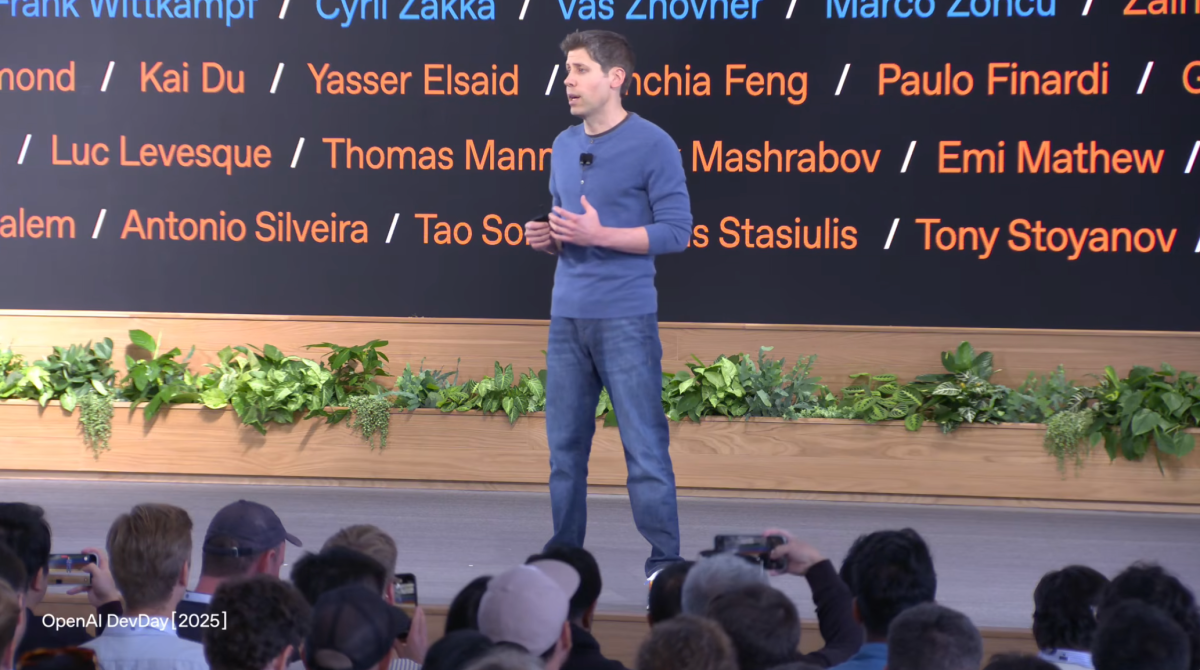
OpenAI is so frustrated with Apple over a ChatGPT integration that failed to deliver the subscribers and prominence it expected that the company is now actively exploring legal action against the iPhone maker, Bloomberg News reported Thursday, citing people familiar with the matter.

According to Bloomberg, OpenAI has enlisted an outside law firm to work through its options, which could include sending Apple a formal breach-of-contract notice without necessarily escalating to a full lawsuit (at least not immediately). Any legal move would likely wait until after the conclusion of OpenAI’s ongoing trial with Elon Musk.

Still, it’s a reminder of what a difficult partner Apple can be for major software companies. The iPhone is an enormously attractive platform for growth, but it’s fully under Apple’s control — and companies that build there are only guests. From Google to Adobe, there’s a long history of Apple showing guests the door when they seem as if they’re getting too comfortable.

TechCrunch has reached out to both OpenAI and Apple for comment.

The OpenAI partnership, announced at Apple’s Worldwide Developers Conference in June 2024, wove ChatGPT into Apple’s operating systems as an option within Siri and as part of the iPhone’s Visual Intelligence feature (allowing users to use their camera to analyze their surrounds and send photos to ChatGPT with related questions).

OpenAI, along with industry watchers, expected the deal might eventually funnel billions of dollars in new subscriptions its way and give the company prime real estate across one of the world’s most-used mobile ecosystems. Instead, Bloomberg reports, OpenAI has grown increasingly aggravated, complaining that the integration has been buried, its features hard to find, and that revenue from the tie-up is nowhere close to projections. “They basically said, ‘OpenAI needs to take a leap of faith and trust us,’” one OpenAI executive told Bloomberg. “It didn’t work out well.”

Apple, for its part, has its own grievances, including concerns about OpenAI’s privacy standards and, according to Bloomberg, irritation over OpenAI’s push into hardware, an effort led by former Apple executives including ex-design chief Jony Ive.

Either way, OpenAI is hardly the first partner of Apple to regret hitching its wagon to the company. Apple has a long history of embracing partners and then alienating them. The most famous case is Google Maps, which was a flagship feature of the original iPhone. It was so central to the device’s appeal that its removal in 2012 — replaced by Apple’s markedly inferior Apple Maps product — became one of the biggest tech fiascos of the decade, prompting a rare public apology from CEO Tim Cook. The friction between the two companies had been building for years at that point, thanks to the rollout of Google’s Android phone a year after the iPhone’s 2007 debut; after Google’s then-CEO Eric Schmidt stepped down from Apple’s board in 2009, that rivalry only intensified.

Adobe has some scar tissue, too. Steve Jobs refused to support Flash on the iPhone and iPad, publishing a famous open letter in 2010 explaining why and effectively dooming the technology. Flash never recovered its footing on mobile.

Then there’s Spotify, which spent years arguing that Apple leveraged its control over the App Store to disadvantage rival music streaming services after launching Apple Music in 2015. The European Commission agreed, fining Apple nearly €1.8 billion in March 2024.

Sometimes these rifts can be overcome in the name of commercial interests. Google is now Apple’s AI infrastructure partner, having struck a multiyear deal in January to power the next generation of Apple Intelligence with Gemini models. Apple is paying Google roughly $1 billion a year.

In the meantime, OpenAI has had its own share of strained relationships lately. Elon Musk’s lawsuit against the company — which accuses OpenAI of abandoning its nonprofit founding mission and operating in bad faith — is currently at trial.

The company has also reportedly navigated tensions with Microsoft, its biggest backer and infrastructure partner, as it pushes for greater independence ahead of its own IPO ambitions.

When you purchase through links in our articles, we may earn a small commission. This doesn’t affect our editorial independence.

Continue Reading
Click to comment

Leave a Reply

Your email address will not be published. Required fields are marked *

Business

NDIC sues Wema Bank over N125bn Banana Island properties, N401m disputed payment

info

Published

on

By

MixCollage 14 May 2026 08 39 PM 7513.jpg

The Nigeria Deposit Insurance Corporation (NDIC), acting as liquidator of the defunct Gulf Bank Plc, has filed two separate suits against Wema Bank at the Federal High Court in Lagos, seeking the recovery of disputed Banana Island properties valued at about N125.38 billion and an alleged unauthorised payment of N401 million.

According to court documents shared with PREMIUM TIMES on Thursday, the case marked FHC/L/CP/466/26 and another companion suit, were filed under the Failed Banks (Recovery of Debts) and Financial Malpractices in Banks Act.

The NDIC said the action forms part of efforts to recover assets linked to the defunct bank, whose licence was revoked by the Central Bank of Nigeria (CBN) in January.

At the centre of the dispute are 12 high-value properties in Banana Island, Lagos, which NDIC explained were acquired through companies linked to Gulf Bank before its collapse.

NDIC is asking the court to declare the alleged disposal of the assets illegal and to compel Wema Bank to either return the title documents or pay the current value of the properties.

PT WHATSAPP CHANNEL

NDIC also challenged what it described as a disputed payment of N401 million, which it said was collected by Wema Bank from the United Bank for Africa (UBA), acting as its agent bank.

Gulf Bank collapsed after its operating licence was revoked by the Central Bank of Nigeria (CBN) on 16 January 2006, due to insolvency and failure to meet capitalisation requirements.

Allegations of asset stripping

In a witness statement on oath filed on 6 March, a former Deputy Director at NDIC and ex-head of its Criminal Investigation Unit, Joseph Okolonji, said he personally supervised investigations into the transactions.

He told the court that the probe uncovered alleged efforts to strip the defunct bank of six Banana Island properties registered in the name of Euston Wenberg Engineering Company Limited.

According to him, the properties, measuring 13,794.145 square metres, are now valued at about N62.07 billion based on an estimated rate of N4.5 million per square metre.

Mr Okolonji alleged that Wema Bank gave the impression that the assets were sold for N250 million, even though it had no legal interest in the properties.

He also said investigators found no evidence of any valid interbank deposit to justify Wema Bank’s custody of the assets.

NDIC disputes the alleged deposit

NDIC argued that Wema Bank’s claim was based on a purported interbank placement of N771.79 million allegedly linked to Gulf Bank.

However, it said a joint special examination conducted by the CBN and NDIC in 2005 found no record of such a deposit in Gulf Bank’s books.

The report, according to NDIC, showed that Gulf Bank later described the funds as investments tied to Bankers’ Acceptances involving Ibom Power Company and Grix Nigeria Limited—an explanation regulators rejected.

NDIC further said there were no supporting banking documents such as placement memoranda, deposit slips, or account statements to back the transaction.

It also faulted Wema Bank’s reliance on two managers’ cheques issued in 2005 by Access Bank and Intercontinental Bank, totalling N250 million, which it linked to the disputed properties.

The corporation described the figure as unrealistic, arguing that even a single Banana Island property at the time was worth more than N500 million.

Second suit over Bacad-linked properties

In the second suit, NDIC is also challenging ownership of another six Banana Island properties allegedly acquired through Bacad Finance and Investment Limited, later renamed Supra Commercials Limited.

NDIC said Gulf Bank held the majority shares in the company and used it to acquire the properties, which cover about 13,979.974 square metres and are now valued at N62.91 billion.

It alleged that the bank later planned to develop the land into a luxury estate in partnership with Shelter Afrique before its collapse.

The corporation said Wema Bank later took possession of the assets and claimed they were sold for N524 million through managers’ cheques issued between 2006 and 2007.

It also accused the bank of collecting N401 million from UBA in 2009, despite earlier approval of only about N1.63 million as the amount due after liquidation.

NDIC said it had referred aspects of the transactions to the Economic and Financial Crimes Commission (EFCC) for investigation.

It listed several senior lawyers and retired security officials involved in its probe, including Senior Advocate of Nigeria (SAN) D.A. Awosika, Pekun Sowole, retired Deputy Inspector General of Police Abiodun Alabi, and Joseph Okolonji.

The corporation also said it would call estate valuer Adebare Esan as a witness.

Wema Bank’s objection

Wema Bank, through its legal team led by Oladapo Olanipekun, Kehinde Ogunwunmiju, and Tunde Afe-Babalola, who are all SANs, challenged the jurisdiction of the court.

It argued that the dispute did not arise from a banking transaction covered by the Failed Banks Act and insisted that there was no debtor-creditor relationship between the two parties.

The bank also argued that the case is statute-barred, saying the transactions occurred between 2006 and 2007.

READ ALSO: Heirs Holdings’ portfolio companies ranked among Africa’s top 50 high-growth businesses

It urged the court to dismiss the suits.

The court adjourned the matter until 25 June for further hearing.

Background

NDIC, as the statutory liquidator of failed banks in Nigeria, is empowered to recover assets and liabilities on behalf of depositors. Its action in this case is anchored on the Failed Banks (Recovery of Debts) and Financial Malpractices in Banks Act, which gives the Federal High Court jurisdiction over such matters.

Gulf Bank Plc was wound up after its licence was revoked by the Central Bank of Nigeria. Since then, NDIC has continued to trace and recover assets allegedly linked to the bank before its collapse.


Continue Reading

News

Garkawa Stakeholders Endorse Timdi Nkat for Assembly Seat, Declare Support for Mutfwang

info

Published

on

By

IMG 20260514 WA0008.jpg

Stakeholders from Garkawa District in Mikang Local Government Area of have unanimously endorsed Mr. Timdi Nkat as their consensus candidate for the State House of Assembly ahead of the 2027 general elections, while also reaffirming their support for the re-election of Governor .

The endorsement followed a stakeholders’ meeting held on Thursday, attended by political leaders, traditional rulers, elders, youth and women groups, as well as party faithful drawn from Youm, Tehl and Piapung districts.

Participants described the gathering as a significant step toward strengthening political unity and alignment in Mikang ahead of the 2027 elections.

Speaking on behalf of the Youm stakeholders forum, former State Auditor, Mr. Ishaku Fanto, said the emergence of Timdi Nkat was the outcome of extensive consultations involving the Mwo Youm of Garkawa, traditional rulers, political stakeholders and community leaders.

According to him, the decision was based on fairness, equity and inclusive representation, stressing that Youm District remains the only major district in Mikang yet to produce a member of the Plateau State House of Assembly.

Fanto maintained that it was only just for the district to be given the opportunity to occupy the seat, while also pledging the continued support of the people for Governor Mutfwang’s administration and re-election bid in 2027.

Former member of the House of Representatives for Mikang/Shendam/Qua’an Pan Federal Constituency, Hon. Innocent Tirsel, said zoning arrangements have continued to promote fairness, peaceful coexistence and balanced political representation in the area.

He noted that after Piapung District occupied the State Assembly seat for 16 years and currently holds the chairmanship position of Mikang Local Government Council, equity demands that power be rotated to another district.

Tirsel urged political parties to sustain the culture of inclusion and fairness to ensure peace and electoral success.

Also speaking, former Chairman of Mikang Local Government and ex-member of the Plateau State House of Assembly, Hon. Isa Kungwai, cautioned against actions capable of undermining the unity and political understanding that have existed in the area over the years.

He said Mikang’s political strength lies in mutual respect and collective decision-making, calling on stakeholders to avoid personal interests that could threaten peace and stability.

Former Director-General of PEPSA, Mr. Nuhu Longpes, described the endorsement of Timdi Nkat as a reflection of the collective will of the people and a demonstration of political maturity and inclusiveness.

On behalf of Piapung stakeholders, former Speaker of the Plateau State House of Assembly, Rt. Hon. George Daika, urged political actors to place the unity and future of Mikang above personal ambitions.

Daika commended stakeholders for embracing dialogue and consensus, insisting that sustainable political progress can only be achieved through fairness, inclusion and mutual respect.

He added that the endorsement of Timdi Nkat represents not only the aspirations of the Youm people but the broader interest of Mikang as a whole.

Among those who attended the meeting were Chairman of the Plateau State Civil Service Commission, Prof. Paul Wai; former Transition Committee Chairman, Hon. Magdaline Bagudu; former Executive Secretary, Emmanuel Taukek; Barr. Chasil Drenkat; elected and supervisory councillors, as well as youth and women groups.

In a show of solidarity, stakeholders and supporters later proceeded to the Mikang Local Government Council Secretariat, where they formally presented their resolutions to the Executive Chairman of the council.

The meeting ended with renewed calls for unity, equity and collective commitment toward ensuring a common political direction for Mikang ahead of the 2027 elections, with Timdi Nkat emerging as the consensus choice for the State Assembly seat.

Continue Reading

Trending