Connect with us

News

CODE Unveils 2025 Report, Reveals $177.7bn Annual Climate Finance Gap

info

Published

on

IMG 20260501 WA0006.jpg

By Perpetua Onuegbu/Grant Onyeke

Connected Development (CODE) has unveiled its 2025 Annual Report, highlighting 177.7 billion dollars annual financing gap for Nigeria to meet its climate obligations, while calling for reforms in global climate funding architecture.

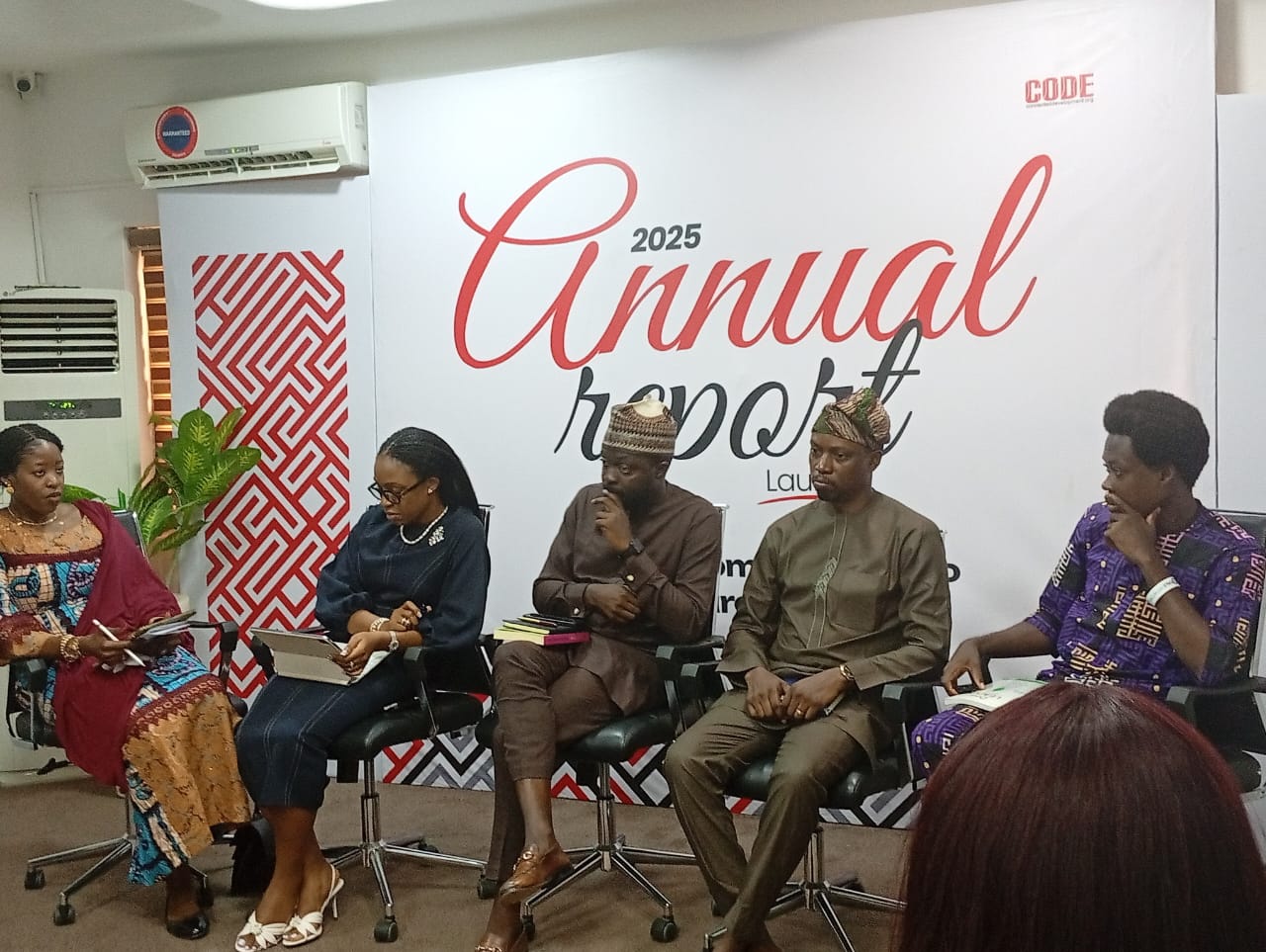
Acting Chief Executive Officer of CODE, Ms Hyeladzira Mshelia, presented the report in Abuja.

She said that Nigeria received 4.928 billion dollars in climate finance over seven years, with 75 per cent of the funds coming as loans.

The News Agency of Nigeria (NAN) reports that the report with the theme “Leading Communities to Action”, highlighted the projects the organisation had undertaken since inception such as ‘Follow the Money, Climate Action’ among others.

“CODE follows the money, and in 2025, we tracked funds across 12 African countries, covering 4,772 schools, oil-producing communities in the Niger Delta and federal allocation data largely inaccessible to ordinary Nigerians,” she said.

She noted that the organisation applied its Follow the Money methodology to Nigeria’s Basic Health Care Provision Fund (BHCPF), stressing that lack of transparency in health security financing could have life-threatening consequences.

According to Mshelia, under the Adolescent Girls Initiative for Learning and Empowerment (AGILE), CODE monitored schools in Borno, Ekiti, Kaduna, Kano, Katsina, Kebbi and Plateau States.

The acting CEO said there were improvements in scholarship delivery and digital learning access, but identified gaps in school safety and disability inclusion.

“We did not stop at documentation; we triggered corrective actions because accountability without reform is ineffective,” she said.

Mshelia, added that through the Power of Voices Partnership, 119 community members in four states were trained on their rights under the Petroleum Industry Act, strengthening accountability in Niger Delta communities.

Beyond its findings, Mshelia said CODE developed a Gender-Responsive Education Sector Planning roadmap in Bauchi State and established a Civic Integrity Club in a special needs school in Cross River.

She added that the organisation expanded its footprint to 12 African countries with the launch of Follow the Money in Sierra Leone and trained more than 450 students through civic hackathons and advocacy initiatives.

Highlighting impact stories, Mshelia cited Dorathy Stephen, a participant in the Girl-Child Education Project, who was later appointed to a ministerial committee on sexual harassment in Bauchi State.

Looking ahead to the 2027 general elections, Mshelia stressed the need for strengthened civic engagement and transparency.

“Nigeria is a few months away from general elections. What happens now in terms of civic education and citizen participation will determine the quality of that election,” she said.

The event also featured a Panel Discussion Session with the theme “From Accountability to the Ballot” where panellists looked at critical issues that could deter credible and transparent elections.

Senior Adviser, Policy and Strategy, Office of the Speaker, House of Representatives, Chimdi Neliaku said government must look for innovative ways to communicate its policies to the citizens for better understanding.

She added that it would close up the trust gap between the government and the citizenry.

Neliaku also urged the government to prioritise competing issues and needs of the people in order to deliver good governance.

On his part, Ibrahim Faruk, Programme Coordinator (Africa Division), Yiaga Africa, noted that one of the critical risks to election integrity was the fear of INEC officials being partisan and the fear of bodily harm due to insecurity.

Faruk also listed fake news and the use of AI in manipulating events and issues.

He, therefore, called for adequate information management to citizens as 2027 election draws near, adding that a well-informed citizen is the most powerful citizen.

Other participants called on the media to focus on politicians and the political class to propel them into action to deliver the dividends of democracy to the people.

NAN further reports that the event was also used to launch the Digital Mobilisation Lab, Cohort 2 which the organisation said is a structure to support democratic accountability and continued community-based monitoring.(NAN)(www.nannews.ng)

Edited by Francis Onyeukwu

Continue Reading
Click to comment

Leave a Reply

Your email address will not be published. Required fields are marked *

Business

Africa records hydropower growth but Nigeria still suffers power shortages — Report

info

Published

on

By

Whats the Difference Between Distribution Transmission Power Lines.png

MTN ADVERT

Africa added more than 4,200 megawatts (MW) of new hydropower capacity in 2025, making it a fast growing region for hydropower development globally, according to a new report released by the International Hydropower Association (IHA).

The report, 2026 World Hydropower Outlook, said the continent commissioned 4,297 MW of new hydropower capacity during the year, the second consecutive year that additions exceeded 4,000 MW.

The growth was driven largely by the completion of mega projects in Ethiopia and Tanzania, even as more than 90 per cent of Africa’s hydropower potential remains untapped.

The findings come as Nigeria continues to grapple with chronic power shortages, frequent grid collapses and one of the world’s largest electricity access deficits despite possessing significant hydropower resources.

Malcolm Turnbull, president of the International Hydropower Association, said countries are increasingly turning to hydropower and energy storage solutions as they seek reliable electricity supplies amid growing dependence on renewable energy and rising geopolitical uncertainties.

PT WHATSAPP CHANNEL

“As electricity systems become more dependent on variable renewables, and geopolitical tensions make reliance on imports more challenging, countries are increasingly recognising the importance of flexibility, long-duration storage and resilient domestic generation. Hydropower and pumped storage are uniquely positioned to provide these services at scale,” he said.

Ethiopia, Tanzania lead Africa’s growth

According to the report, Ethiopia fully inaugurated the 5,000 MW Grand Ethiopian Renaissance Dam (GERD) in 2025, making it the largest power station in Africa.

Tanzania also completed the Julius Nyerere Hydropower Project, a development the report said has substantially reduced the country’s dependence on diesel-powered electricity generation.

The report noted that Africa’s hydropower expansion places the continent at the forefront of global growth in conventional hydropower development.

However, it warned that progress remains far below potential.

“Despite progress, only around 10% of Africa’s hydropower potential has been realised, representing one of the most significant development opportunities in the world, with direct implications for electrification, industrial growth and energy security across a continent growing at twice the global average,” the report stated.

Most projects, it said, remain stalled by financing difficulties, regulatory bottlenecks and delays in securing approvals.

The report also identified weak transmission infrastructure and fragmented electricity networks as major barriers preventing power generated from reaching consumers efficiently.

Nigeria’s modest progress

Nigeria received only a brief mention in the report, which highlighted the rehabilitation of the Kainji Hydroelectric Power Station.

According to the report, the upgrade added 80 MW to the facility, increasing its installed capacity to 600 MW.

The modest increase contrasts sharply with the scale of new investments seen elsewhere on the continent.

Hydropower remains a critical component of Nigeria’s electricity supply. The Kainji, Jebba and Shiroro hydroelectric plants together account for a significant share of power delivered to the national grid.

Yet electricity supply remains inadequate for Africa’s most populous nation.

Data from the Nigerian Electricity Regulatory Commission (NERC) show that while Nigeria’s installed generation capacity exceeds 14,000 MW, actual available generation is significantly lower because of gas constraints, transmission limitations, ageing infrastructure and operational challenges.

The country has also experienced multiple national grid collapses in recent years, highlighting long-standing weaknesses in the electricity value chain.

Energy access challenge

The report arrives at a time when Nigeria is seeking to expand electricity access and reduce dependence on self-generated power.

According to the World Bank, about 86 million Nigerians lack access to electricity, giving the country the largest electricity access deficit in the world.

Businesses and households spend billions of naira annually on diesel and petrol generators to compensate for unreliable grid supply, a situation that raises production costs and constrains economic growth.

Although the 700 MW Zungeru Hydropower Plant has begun contributing electricity to the grid, several proposed hydropower projects across the country have faced delays linked to funding, environmental concerns and implementation challenges.

The IHA report suggests that while Africa is witnessing a resurgence in hydropower development, countries such as Nigeria will require significant investments in generation, transmission and energy storage infrastructure to fully benefit from the continent’s vast renewable energy potential.


Continue Reading

News

Walmart-backed Flipkart expands quick-commerce push as Amazon ramps up in India

info

Published

on

By

Flipkart.jpg

As quick commerce becomes India’s next e-commerce battleground, Walmart-backed Flipkart said Wednesday that its Minutes service has built a network of 1,000 micro-fulfillment centers — small, strategically located warehouses designed to enable deliveries in minutes — less than two years after launch, a milestone Amazon is also targeting as it expands its fast-delivery business in the South Asian nation.

Flipkart said it plans to expand the network to 1,500 micro-fulfillment centers by the end of 2026, a rapid buildout that would further strengthen its position in India’s fiercely competitive quick-commerce sector, where Blinkit, Zepto, Swiggy Instamart, and Amazon are racing to add infrastructure and customers.

Based on current store counts and announced expansion plans, Flipkart could emerge as India’s second-largest quick-commerce network by micro-fulfillment center count, behind Blinkit, which operates 2,243 such centers, according to a recent note by Jefferies. Rivals Zepto and Swiggy Instamart are also expanding their networks.

India has emerged as one of the world’s fastest-growing quick-commerce markets, with companies racing to build networks that can deliver everything from groceries and beauty products to electronics in minutes. Blinkit, owned by food-delivery company Eternal, remains the market leader, while Zepto, Swiggy Instamart, Flipkart, and Amazon are investing heavily to expand their reach and win customers.

The competition has intensified in recent months as Amazon accelerates the rollout of Amazon Now, which is currently available in more than 15 cities and operates over 500 micro-fulfillment centers. The company plans to expand the service to 100 cities with more than 1,000 micro-fulfillment centers while broadening its assortment beyond groceries into categories such as apparel, electronics, and home products.

The shift is also showing up in shopping patterns on Flipkart Minutes, which launched in August 2024. Demand is increasingly coming from categories such as electronics, beauty, and personal care products rather than just groceries, Kunal Gupta, head of Flipkart Minutes, told TechCrunch. Orders on the platform have grown about 400% from a year earlier, while customer retention has increased 20% year-over-year, he said. Both figures come from the company and could not be independently verified.

“What began as a way to fulfill everyday essentials has evolved into a fundamentally new shopping habit for millions of Indians,” Gupta said. “Customers are not just ordering more; they are ordering differently.”

Flipkart said it has expanded Minutes to more than 130 cities and 8,000 postal codes, with growth increasingly coming from smaller cities beyond India’s largest metropolitan areas. Those markets recorded more than 4,000% growth from a year earlier, aided by expansion into 90 new cities, according to the company.

The trend, Gupta said, is visible in the pace at which newly launched markets are maturing. He cited cities such as Patna, Guwahati, and Siliguri as examples of where new stores are ramping up faster than expected, and described Lucknow as one of Flipkart Minutes’ best-performing markets despite the company not yet covering the entire city with its network.

Amazon is also betting on demand outside India’s largest cities. The company told TechCrunch that 70% of new Prime members come from smaller markets and that it remains on track to double its Prime membership base from 2023 levels by year-end. Amazon added that everyday essentials now account for one in every two units shipped on Amazon.in, with Amazon Now increasing shopping frequency among customers.

Gupta told TechCrunch that Flipkart is seeing customers use Minutes alongside its main e-commerce platform rather than as a replacement for it, driving more frequent purchases and helping expand into categories such as fresh produce and daily essentials. The company said average order values for fruits and vegetables rose 30% year-over-year.

Flipkart, Gupta said, plans to continue opening between 75 and 100 micro-fulfillment centers a month while expanding into additional cities across the country.

The rapid expansion by Flipkart and Amazon underscores how India has become a testing ground for the next phase of e-commerce, with companies racing to turn quick commerce from a grocery-delivery service into a broader shopping platform. The country already has more than 5,500 dark stores, according to Bernstein, and industry analysts expect that number to rise to about 7,500 by 2030 as companies expand into smaller cities and widen their product offerings.

“We will continue to expand rapidly, will not slow down after 1,000 stores as well, and we are going all in,” Gupta said.

When you purchase through links in our articles, we may earn a small commission. This doesn’t affect our editorial independence.

Continue Reading

Trending