News
How one venture firm is investing in an increasingly fragmented world

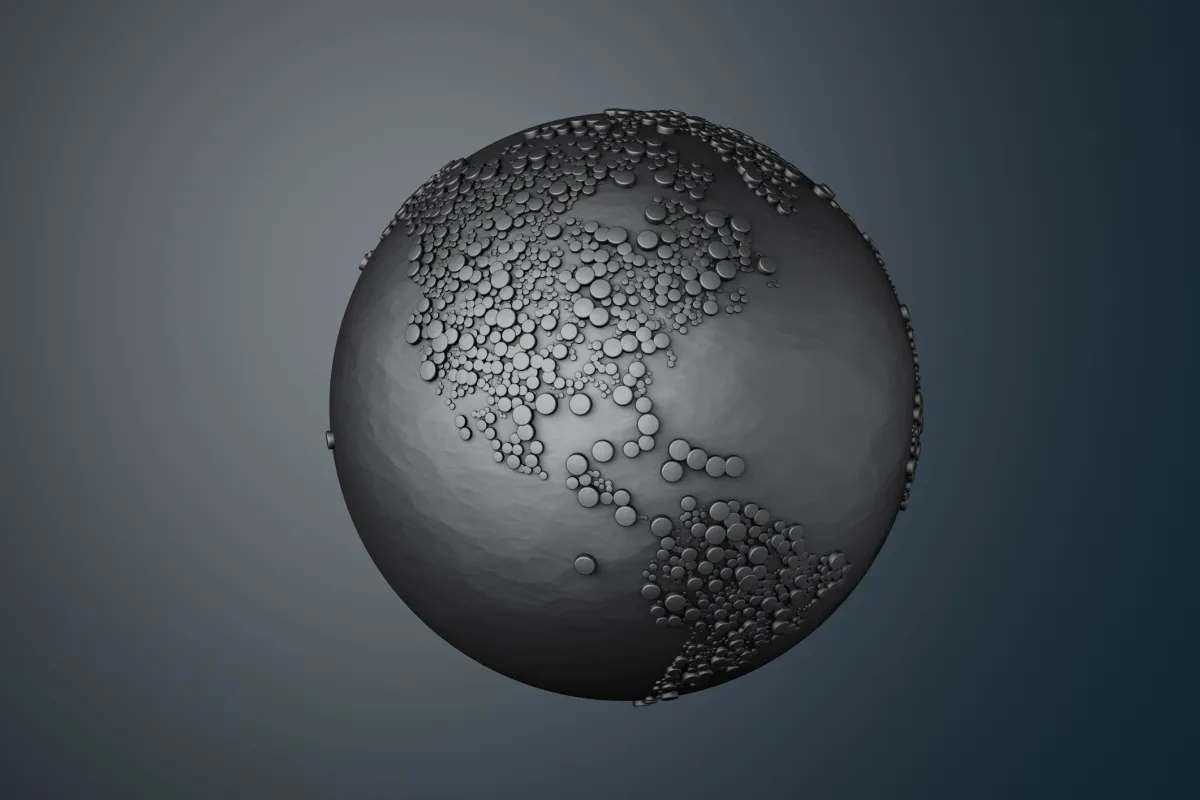
The world today is riven by cultural differences, political divisions, and geopolitical disputes — a challenging environment for any investor hunting for startups that can grow large enough to deliver venture-scale returns.
Kompas VC has developed a regionally sensitive strategy to help it navigate, and invest in, this fragmented world. And it’s putting fresh capital towards this approach with a new €160 million fund ($187.5 million), the firm told TechCrunch.
“We see the world really falling into three main spheres of economic activity, of political activity — the U.S., Europe, and China,” Sebastian Peck, partner at Kompas VC, told TechCrunch. “We certainly see today that these three domains follow very, very different trajectories.”
Kompas has staked its reputation on backing startups that tackle core industrial competitiveness challenges, from manufacturing and supply chains to critical infrastructure and sustainability. Those themes haven’t disappeared, but different regions emphasize them to varying degrees.
“There was a lot of enthusiasm around these themes back in 2021,” Peck said. “In 2026, we’re in a very, very different paradigm. It’s all about AI, it’s all about fast growth, very explosive growth. A lot of big topics that we partially play to but also are not really part of what we stand for.”
“Our focus is in the physical world, anything around producing physical goods,” he added, saying that Kompas focuses on startups working on decarbonization, productivity, and risk management. “We’ve found our niche.”

That niche turns out to be pretty broad. Reshoring is en vogue in nearly every market, and depending on the startup, those markets typically have more than enough scale for a firm like Kompas.
Techcrunch event
San Francisco, CA
|
October 13-15, 2026
Though dwarfed by some venture funds these days, Kompas’s newly raised second fund should give it ample opportunity to lead early stage rounds with checks ranging from €3 million to €5 million.
As a European fund, Kompas has access to a range of founders and startups in the region. But it must weigh how global fragmentation might limit the potential for some to deliver venture returns. Peck cites prefab housing as an example. The approach is widely used in Scandinavian countries, but it isn’t as common in Germany or the rest of Europe, let alone the United States.
“It feels like such an intuitive solution. It’s a product that is effectively an industrial product. It should be highly scalable,” he said. Ultimately, the reason it doesn’t resonate outside Scandinavia has more to do with “cultural conditioning” than the technology itself, he said. “In that industry, if the U.S. isn’t the market you can go to, you need to look very, very carefully at whether there’s a large enough addressable market.”
The fragmentation extends beyond housing. For example, in Europe, sustainability is still broadly attractive, in contrast to the U.S., where the theme doesn’t have the cachet it did several years ago.
Still, a lot can change quickly, Peck acknowledges. “We are investing over 10-, 15-year horizons. That’s a few legislative periods to bridge, and sometimes things swing in unexpected directions.”
The shifting landscape poses a challenge, but also an opportunity for a smaller investor like Kompas. “I think there’s a great space for highly focused, highly specialized, smaller funds like ours to be the first check-in and bring sweep up certain themes and certain founders,” Peck said.
When you purchase through links in our articles, we may earn a small commission. This doesn’t affect our editorial independence.


Cancer is one of the leading causes of death worldwide, but health experts say many cancer cases are linked to preventable risk factors.
The World Health Organisation (WHO) estimates that cancer caused nearly 10 million deaths globally in 2024, accounting for almost one in six deaths worldwide. It says about 38 per cent of cancers can currently be prevented by avoiding known risk factors and implementing evidence-based prevention strategies.
Cancer continues to affect thousands of families in Nigeria every year. According to WHO, an estimated 130,000 new cancer cases were diagnosed in 2022, with 80,000 deaths.
While cancer can result from several factors, including genetic changes, age and environmental exposures, some established risks are linked to infections, substances and behaviours that can be prevented.
In a recent health awareness video, Nigerian physician and health communicator, Chinonso Egemba, popularly known as Aproko Doctor, highlighted some of these risks, including hepatitis B, aflatoxin, tobacco, alcohol and human papillomavirus (HPV).

Hepatitis B
According to Aproko Doctor, hepatitis B is particularly dangerous because it can remain in the body without obvious symptoms while damaging the liver.
“When it goes untreated and untested, it’s a virus that starts attacking your liver. Many Nigerians currently are living with it right now, and many of them don’t know because it can sit quietly inside your body for years without a single symptom,” he said.
His warning is supported by WHO, which says chronic hepatitis B infection can cause cirrhosis and liver cancer.
WHO estimates that 240 million people were living with chronic hepatitis B globally in 2024, with the infection contributing to about 1.1 million deaths, mainly from cirrhosis and hepatocellular carcinoma, the most common type of primary liver cancer.
Hepatitis B is preventable through vaccination. WHO recommends hepatitis B vaccination as an important measure for preventing infection and its long-term complications.
Aflatoxin in food
Aproko Doctor warned that the cancer risk can begin with improperly stored food.
“Aflatoxin is basically a poison produced by fungus,” he explained, noting that it can contaminate foods such as grains and groundnuts when they are poorly stored.
According to WHO, Aflatoxins are a group of poisonous mycotoxins produced by certain moulds (Aspergillus species) that contaminate food crops and pose severe health risks like liver cancer. They are toxins produced by certain moulds and can contaminate crops including maize, sorghum, rice and groundnuts. Exposure to aflatoxins can cause liver cancer.
WHO advises discarding food that appears mouldy, discoloured, or shrivelled because mycotoxins can penetrate beyond the visibly affected part.
Aflatoxin exposure can also be particularly dangerous in people infected with hepatitis B. The WHO/FAO Joint Expert Committee on Food Additives says hepatitis B infection is an important contributor to the ability of aflatoxins to cause liver cancer.
This means food storage and handling can also form part of cancer prevention, particularly in communities where grains and other foods are stored for long periods in warm or damp conditions.
Tobacco smoking
Tobacco remains one of the most established cancer risks.
“Smoking generally, as long as you light it with fire and put it on your body, increases the risk of cancer, especially tobacco smoke,” Aproko Doctor said.
He added that the danger was not limited to lung cancer because tobacco smoke contains cancer-causing chemicals that can damage cells throughout the body.
WHO says tobacco smoke contains more than 7,000 chemicals, at least 69 of which are known to cause cancer. Tobacco use is the world’s single greatest avoidable risk factor for cancer mortality.
Smoking can cause cancers of the lung, mouth and throat, oesophagus, bladder, kidney, liver, pancreas, stomach, colon and rectum, cervix and blood, among others.
Alcohol
Alcohol is another established cancer risk. WHO confirms that alcohol consumption increases the risk of several cancers, including cancers of the mouth, throat, oesophagus, liver, colorectum and breast.
WHO also says no level of alcohol consumption can be considered risk-free in relation to cancer.
“The more alcohol you drink, the higher the risk. However, how much and how fast the risk from drinking alcohol increases differs by cancer type,” it noted.
The global body explained that alcohol increases the likelihood of developing certain cancers, with the risk influenced by the amount consumed and other factors.
Human papillomavirus
According to Aproko Doctor, the virus is common, and some types can cause cancer, particularly cervical cancer.
“In women, this particular HPV is responsible for cervical cancer,” he noted.
According to the WHO, persistent infection with high-risk HPV types causes nearly 99 per cent of all cervical cancer cases. HPV is also associated with cancers of the vulva, vagina, anus, penis and mouth and throat.
Although HPV infection is very common, not everyone infected with the virus will develop cancer. WHO says about 90 per cent of HPV infections are controlled naturally by the body, while persistent infection with high-risk types can lead to cancer.
WHO recommends a complete three-step strategy to stop cervical cancer through vaccination, screening, and treatment.
READ ALSO: WHO restricts Ervebo use in Bundibugyo outbreak
Preventing Cancer
A 2026 global analysis by WHO and its International Agency for Research on Cancer (IARC) estimated that 37 per cent of all new cancer cases diagnosed globally in 2022, about 7.1 million cases, were linked to preventable causes.
Tobacco was the leading preventable cause, accounting for 15 per cent of all new cancer cases, followed by cancer-causing infections at 10 per cent and alcohol at three per cent.
WHO recommends avoiding tobacco, reducing or avoiding alcohol, maintaining a healthy weight, eating a healthy diet, engaging in regular physical activity and receiving recommended vaccinations against cancer-causing infections such as hepatitis B and HPV.
As Aproko Doctor noted, understanding the risks is an important first step.“Don’t let anybody deceive you. Say no to smoking in any form,” he said.
Discover more from Premium Times Nigeria
Subscribe to get the latest posts sent to your email.
-

 News1 day ago
WOWICCN Convention: CCN President Urges Women to Rise Above Nigeria’s Challenges
-
Business4 days ago
PLACCIMA Nominates Bolcit Barshep-Amakiri as Vice President, Commerce
-
Business2 days ago
IPMAN Urges FG to Intervene in Dangote Refinery Pricing to Reduce Petrol Cost
-
News11 hours ago
China Approves New Brain-Tech Devices in Growing Race With Elon Musk’s Neuralink