News
Geothermal startup Fervo Energy to raise up to $1.3B in IPO






Former Vice President Atiku Abubakar has criticised President Bola Tinubu over his reported absence from campaign rallies in some states, saying he cannot seek another four-year term while relying on governors, ministers and defectors to defend the hardship Nigerians have endured over the past three and a half years.
Atiku’s position was contained in a statement issued on Thursday by Phrank Shaibu, Director of Strategic Communication of the African Democratic Congress (ADC) Presidential Campaign Council.
Atiku said Tinubu should account for his first term before asking Nigerians to renew his mandate.
“Tinubu says he may miss campaign rallies because Nigeria needs his attention. Where was that urgency when Nigerians pleaded for relief?
“He has had three and a half years to govern. In that time, families have been forced to cut meals, postpone medical care and watch their earnings lose value before they get home.
“Now he wants another mandate. Before asking Nigerians for one, he must face them and account for the first term.
“Let him look a mother in the eye and explain what his government has done to make food affordable. Let him tell pensioners why they cannot afford their medicines. Let him explain to young Nigerians why years of study and hard work have still not brought them decent jobs.
“Tinubu says American creditors cannot wait. Nigerians cannot wait either. They have bills to pay, children to feed and lives to rebuild. They deserve a president who treats their suffering with the same urgency he gives creditors and investors,” Atiku said.
He accused Tinubu of relying on political allies to defend his administration rather than personally addressing Nigerians’ concerns.
“Instead, he is assembling a crowd of politicians to speak for him. He can fill every campaign stage in Nigeria. He cannot fill an empty pot with surrogates. He cannot send a politician into a market to persuade prices to fall.
“The people on his campaign council did not receive the mandate in 2023. Tinubu did. He made the promises. He took the decisions. He must face the questions.
“Nigerians will hear whatever his surrogates have to say. But when they vote, they will remember what they have lived through. No crowd of politicians can stand between Tinubu and his record,” he said.
2927: ‘You want another term but ashamed to face the people’ – Atiku blasts Tinubu
News
Obafemi Awolowo University’s Conquest Of West African Games Shows Bright Future For Nigerian Sports – Shaibu

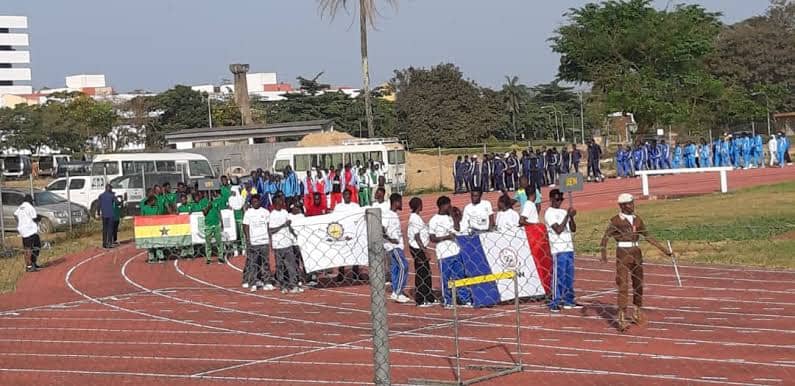
The emergence of Obafemi Awolowo University, Ile-Ife, as the overall winner of this year’s regional sports competition among undergraduates of West African institutions has been described as a good sign that ‘shows a bright future for Nigerian sports.’
This assertion was provided by the director-general of Nigeria’s National Institute for Sports (NIS), Comrade Philip Shaibu, who further praised the country’s other representatives for also putting in commendable performances.
Sports247 reports that Shaibu gave the verdict while speaking in the wake of Monday’s closing ceremony for the 15th West African University Games (WAUG) at the citadel of learning fondly called ‘Great Ife.’
Shaibu also praised athletes from OAU for what he referred to as their outstanding performances and dominance throughout the competition, asserting that their conquest came through hard work, discipline and investment in sports development.
His accolades came after the hosts topped 22 other universities to clinch the top spot with a total of 122 medals – 33 gold, 50 silver and 39 bronze – while the University of Ghana placed second with 26 gold, 21 silver and 12 bronze medals.
Shaibu declared gleefully, “The performances of Nigerian universities at the games show that the future of Nigerian sports is bright. We at the NIS will continue to support university sports as a veritable platform for discovering talents for the nation.”
-

 News3 days ago
Meta releases its first frontier model, Muse Wonder
-
Health3 days ago
Kwara public hospitals introduce digital medical records
-
News3 days ago
EuroMatch NPFL: ‘We Never Gave Up!’ — Fidelis Ilechukwu Hails Rangers’ Fighting Spirit, Reacts to Two Penalties Against Barau FC
-
News4 days ago
Will the HomeView be Apple’s first smart home success?