News
Group Endorses Rep. Asama for 2027, Purchases ₦10m for Nomination Form

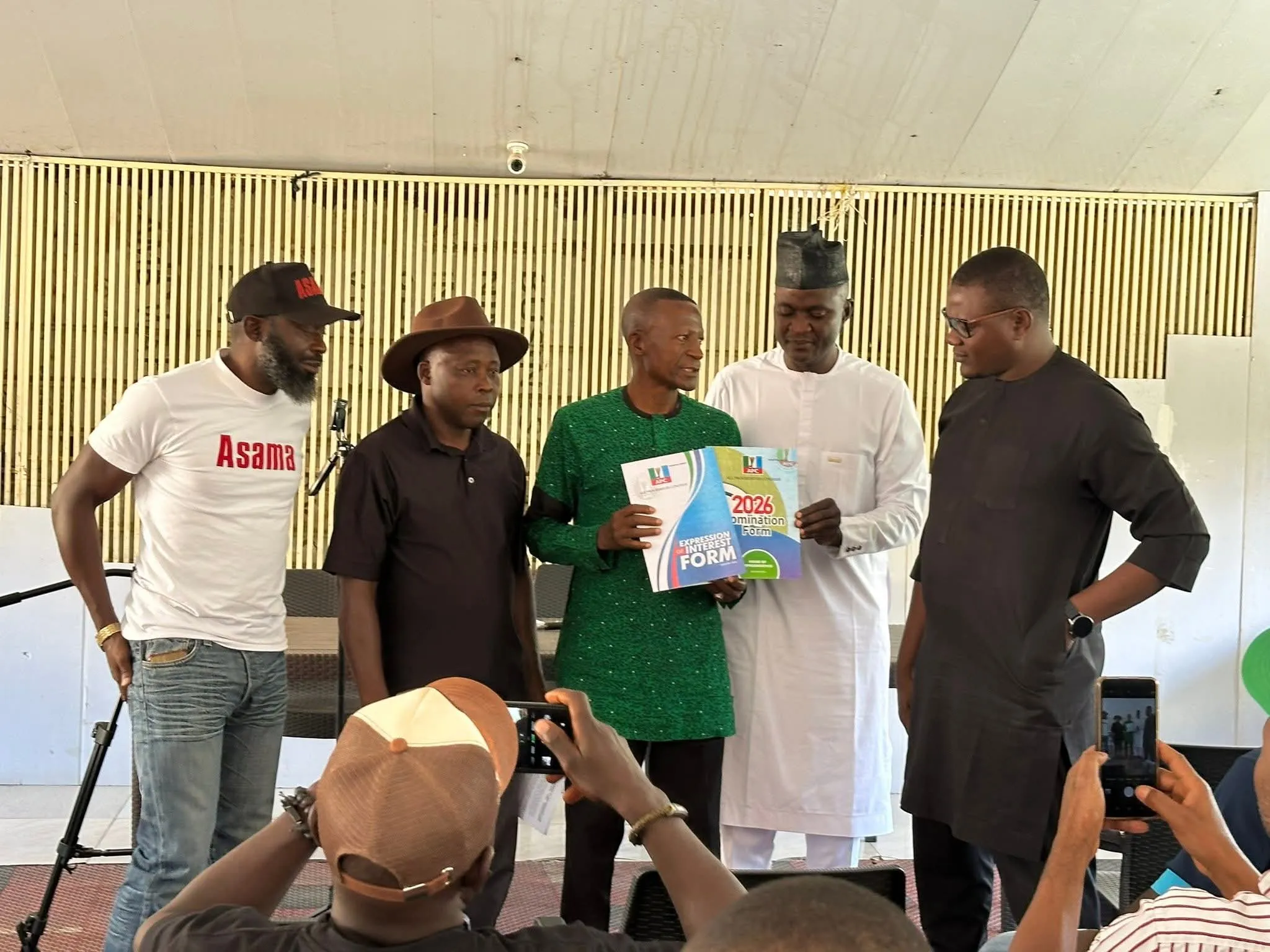
A political group, the Movement for Strategic Representation and Development (MSRD), has endorsed Daniel Asama Ago for a second term as member representing Bassa/Jos North in the House of Representatives.
The endorsement was announced during a press conference held in Jos, where the group’s Chairman, Danladi Kofa Baba, said the decision was based on the lawmaker’s performance and contributions since assuming office.

According to the group, Asama, who was sworn in February 2024, has sponsored several bills and motions, supported education through payment of examination fees for hundreds of students, and implemented various empowerment and infrastructure projects across the constituency.
The MSRD also cited initiatives in agriculture, youth development, and community security, as well as the provision of solar streetlights and boreholes, as part of the lawmaker’s achievements.
The group announced that it had raised ₦10 million to purchase the nomination form for Asama, describing the move as a demonstration of confidence in his leadership and a commitment to continuity.

Receiving the nomination form on behalf of the lawmaker, his Senior Legislative Aide, Ajik Amos Ajik, commended the group for the gesture and assured that the support would further motivate the lawmaker to continue delivering quality representation.
The group called on constituents to rally behind Asama ahead of the 2027 general elections, emphasizing the need to sustain ongoing development efforts in the constituency.


The Nigerian Army troops have rescued 28 kidnap victims in Katsina and Zamfara states.
The troops arrested three suspected pipeline vandals in Rivers State and kiled two suspected criminals in Bauchi State.
This is contained in an operational report detailing military activities across several theatres between Thursday and Friday, released in Abuja on Saturday.
The report said that troops of Operation Fansan Yamma rescued 27 victims kidnapped by suspected terrorists in Gamji community, Sabuwa Local Government Area of Katsina State, at about 12:25 a:m., on Friday.
It said the rescued victims were handed over to the community leader, Falalu Suleiman, for further action.
The report noted that troops responding to an attack on farmers in Dutsen Maru community, Maru Local Government Area of Zamfara State, forced the attackers to flee and abandon one kidnap victim.
According to the report, troops rescued the victim and recovered three motorcycles and a donkey.
It further said that in Rivers State, troops of the Joint Task Force South-South, Operation Delta Safe, arrested three suspects over an alleged vandalisation and removal of pipelines belonging to the Nigerian Pipelines and Storage Company (NPSC) along the Bonny export line serving the Port Harcourt refinery.
“The operation took place at Okochiri community, Okrika Local Government Area, on Thursday.
“The troops recovered 210 pieces of vandalised pipes, 12 boats, five motorcycles, six batteries, a generator, a fire extinguisher and two heavy-duty metal-cutting machines,” it said.
The report noted that efforts were ongoing to apprehend the suspected buyer.
It also said that troops of Operation MESA, acting on intelligence about ransom payment to kidnappers, engaged and neutralised two suspected criminals in the Ningi Local Government Area of Bauchi State.
According to the report, troops also arrested a herder and his son over an alleged killing in Jimpi village, Tafawa Balewa Local Government Area in separate operation.
The report further said that troops of Operation Enduring Peace recovered the body of a civilian kidnapped on October 14 in Gwol-Hoss community, Riyom Local Government Area of Plateau State.
“The decomposing body was discovered along the Gwol-Hoss-Makera Road on Friday and evacuated by family members for burial,” it said.
The report said that troops responding to an attack on illegal miners at Makale mining site in the Bokkos Local Government Area also found two bodies, while the assailants fled on sighting the troops.
According to the report, efforts are ongoing to apprehend the perpetrators of both incidents.
It added that troops of the 17 Brigade engaged armed terrorists on motorcycles in Kurba village, Kankara Local Government Area of Katsina state, forcing them to abandon one motorcycle.
It added, “The operations form part of ongoing efforts to rescue abducted persons, combat violent crime, protect critical infrastructure and strengthen security across the country.”
(NAN)

News
Flamingos’ Coach Akeem Busari, Star Player Harmony Chidi Catch FIFA’s Attention Ahead Of Clash With Poland

Nigeria’s cadet female national team, Flamingos’ coach, Akeem Busari and the squad’s captain, Harmony Chidi have caught global attention ahead of their tango with Poland at the FIFA Women’s U17 World Cup in Morocco.
Sports247 reports that, as both sides prepare for their opening game of this year’s Mundial on Saturday, Federation of International Football Associations (FIFA) served a detailed preview about what to expect from the two countries.
Read Also: “Every Team at the World Cup Is a Champion” — Busari Warns Flamingos Against Underestimating Opponents in Morocco
The preview, which appeared across two instalments on fifa.com some hours to the start of this year’s Female Cadet Mundial on Friday, noted that Busari is in charge of the Flamingos for the first time, while Chidi has been at this level once before.
The preview noted at length, “Fresh off the back of hosting their first FIFA U-20 Women’s World Cup, Poland are returning after missing last year’s event and will be keen to make up for lost time.
“Their path to these finals was secured by a 2-0 play-off win over England at the UEFA Women’s U-17 Championship (while) Nigeria stormed through African U-17 Women’s World Cup qualification with four straight wins.
“(The Nigerian team) will be led by Akeem Busari, following a fruitful three-tournament run under Bankole Olowookere. They defeated Benin in the final round of African qualifying.
“Participations: 9 (2008, 2010, 2012, 2014, 2016, 2022, 2024, 2025, 2026). Best U-17 World Cup result: Third place (2022). Player to watch: Harmony Chidi.
“(She) already has previous experience of these finals, having scored at Dominican Republic 2024. She was just 14 then, but returns to Morocco as captain.
“Having steered them with five goals and the WAFU B U17 Girls’ Cup in September with a further three, Chidi brings boundless energy and searing pace to the Flamingos’ frontline.
“(On the other hand, Poland qualified after winning) the UEFA Women’s U-17 Championship play-off. Participations: 2 (2024, 2026). Best U-17 World Cup result: Quarter-final. Coach: Paulina Kawalec
“Player to watch: Industrious midfielder Zofia Burzan is already making waves at club side Czarni Sosnowiec, where she has claimed four assists and a goal so far.
“She also dazzled at the UEFA Women’s U-17 Championship (and scored) all four of Poland’s goals – including both in their play-off win over England – to finish as the tournament’s top scorer.”
-

 News3 days ago
MTN, Airtel take 90% of Nigeria’s 15m new subscribers as Glo shifts ground – Technology Times
-
News2 days ago
Miners Association Seeks Support To Unlock $3bn Gemstone Export Potential
-
Health2 days ago
Katsina health professionals declare 7-day warning strike
-
Business3 days ago
AFC Appoints CBN Governor Yemi Cardoso as Board Chairman