News
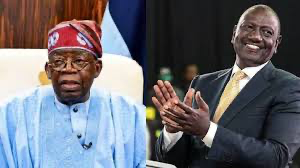
Tinubu–Ruto Exchange Sparks Social Media Debate Over Economic Comparisons


First HoldCo has shifted to a liberal dividend policy that seeks to distribute at least 60 per cent of its annual post-tax profit as dividends.
The board of directors of the bank holding company adopted the policy at a meeting on Tuesday, the group stated in a regulatory filing on Thursday, underscoring its resolve to prioritise shareholder returns over retaining most of its profits in the business to drive growth.
First HoldCo said the move highlights its directors’ confidence in its earnings capacity, enhanced capital position, improving asset quality, diversified revenue streams, and robust outlook for sustained profitability and growth. The move offers succour to shareholders who had to endure the last financial year without dividends—the first time in many years—after a massive bad-loan loss provision obliterated much of the cash that could have gone into rewarding shareholders.
The financial institution set aside ₦748.1 billion to cover problem loans on its books for 2025, after the Central Bank of Nigeria, in the spirit of international best practices, ordered lenders still carrying forbearance loans from the Covid-19 era to clear their balance sheets of toxic assets.
Profit for the year fell to ₦147.3 billion from ₦663.5 billion, following the provision.

“At First HoldCo, we decided to clean house properly. We took a huge one-time hit of ₦748 billion to admit old bad loans instead of pretending they do not exist,” Femi Otedola, the chairman of the banking group, said in January.
“That is why profit looks like it crashed by 92 per cent. A painful headline, but it is a serious long-term move,” he added.
Regulation also held back peers like United Bank for Africa and Access Holdings from distributing dividends to shareholders for the 2025 financial year on that score.
READ ALSO: Otedola acquires 1.78 billion First HoldCo shares, lifts stake to 26%
“Over the last two years, we have undertaken difficult but necessary actions to strengthen governance, clean up the balance sheet, restore confidence, rebuild capital, and reposition the group for long-term growth,” Mr Otedola said in the Thursday statement.
“We are now beginning to see the benefits of those strategic decisions. As performance continues to improve across our businesses, it is only appropriate that our shareholders participate more directly in the value being created.”
Revenue in the first half of 2026 rose 16.7 per cent to ₦1.9 trillion. Pre-tax profit ascended to ₦653.5 billion from ₦356.1 billion, while after-tax profit jumped to ₦526.3 billion from ₦283.8 billion.
Discover more from Premium Times Nigeria
Subscribe to get the latest posts sent to your email.
News
Nigeria should shape global AI rules, not merely adopt them, expert says amid WAICO talks – Technology Times
Nigeria should leverage its growing reputation in responsible artificial intelligence (AI) governance to help shape global AI rules rather than merely adopting standards developed by other countries, Dotun Adeoye, Co-founder of AI in Nigeria, has said as the Federal Government weighs China’s invitation to join a new international AI governance body.
Adeoye made the call amid discussions over Nigeria’s possible participation as a founding member of the World Artificial Intelligence Cooperation Organization (WAICO), an intergovernmental organisation proposed by China to promote international cooperation on AI governance.
Speaking during an interview on Arise News, the AI policy expert said Nigeria’s progress in developing AI governance frameworks places it in a strong position to influence international discussions at a time when global competition over AI standards is intensifying.
Rather than assuming a passive role in emerging international AI institutions, he argued, Nigeria should actively contribute to shaping global governance frameworks while ensuring every international partnership aligns with the country’s strategic interests.
“We should not just be takers; we should be leading,” Adeoye said. “Nigeria is already leading in Africa in terms of responsible AI, and that leadership should translate into a stronger voice in shaping how AI is governed globally.”


“We should not just be takers; we should be leading,” Adeoye said. “Nigeria is already leading in Africa in terms of responsible AI, and that leadership should translate into a stronger voice in shaping how AI is governed globally.”
WAICO: Nigeria’s AI governance credentials
According to Adeoye, Nigeria has established many of the institutional and regulatory foundations required to become a credible voice in international AI governance.
He cited the Nigeria Data Protection Act (NDPA) 2023 and the National Artificial Intelligence Strategy as key pillars supporting responsible AI development, noting that both government institutions and private sector organisations are increasingly embedding AI governance into their operations.
“When you look at the NDPA 2023, we are already strongly regulating and governing AI from a data protection perspective,” he said. “You also see many enterprise organisations taking AI governance much more seriously.”
He added that Nigeria’s National AI Strategy, developed through broad stakeholder engagement, provides a long-term roadmap for AI innovation, governance and capacity building.
National interest should guide WAICO decision
While describing China’s invitation as significant, Adeoye said the Federal Government was right to subject the proposal to careful review before making any commitment.
His comments align with the position of the Ministry of Foreign Affairs, which has said relevant government institutions are evaluating the proposal before Nigeria decides whether to join the organisation.
According to Adeoye, Nigeria should assess every international AI partnership through the lens of national interest, ensuring that participation strengthens rather than compromises the country’s sovereignty and regulatory priorities.
“Nigeria participated as an observer, while several African countries signed up,” he said. “But it is right for Nigeria to carefully evaluate every opportunity to promote responsible AI governance without compromising our sovereign interests or the rule of law.”
AI governance becoming geopolitical battleground
Adeoye also warned that AI governance is rapidly emerging as a new arena of geopolitical competition among major global powers, including China, the United States and the European Union.
As Africa’s largest economy and one of the continent’s leading digital markets, he said Nigeria should expect increasing interest from competing international partners seeking collaboration on AI policy and innovation.
“Because of Nigeria’s importance, different global powers, from the West to the Global South, will continue to court us,” he said. “But I am confident that those making these decisions understand the changing global landscape and Nigeria’s unique priorities.”
He stressed that maintaining strategic independence would require close collaboration among government, academia, industry and civil society to ensure AI policies are informed by local expertise and national development objectives.
Local expertise supports leadership ambitions
Adeoye expressed confidence that Nigeria possesses the technical expertise required to sustain its leadership in responsible AI, citing findings from the country’s AI Landscape Report that highlight a growing community of researchers, innovators and policy specialists.
“Our research shows there is significant AI expertise in Nigeria,” he said. “Being closely involved in this ecosystem, I am confident the country is moving in the right direction.”
WAICO signals new phase in global AI governance
The debate comes after 29 countries signed an agreement in Shanghai on July 16, 2026, establishing the World Artificial Intelligence Cooperation Organization (WAICO), a China-backed intergovernmental body designed to promote international cooperation on AI governance and develop global AI standards.
Headquartered in Shanghai, WAICO is expected to play a prominent role in shaping AI governance, particularly among countries in the Global South, at a time when governments worldwide are competing to influence the rules governing one of the world’s fastest-growing technologies.
For Nigeria, the invitation comes as the Federal Government accelerates efforts to build a domestic AI ecosystem through the implementation of the National Artificial Intelligence Strategy, stronger data governance under the Nigeria Data Protection Act (NDPA) 2023, and broader investments in AI research, innovation and digital skills.
As global AI governance enters a new phase, Adeoye believes Nigeria has an opportunity to move beyond adopting international standards to helping define them.
“Nigeria has built credible foundations for responsible AI,” he said. “The next step is ensuring that our voice helps shape the global conversation, not merely follow it.”
Stay ahead with real-time reports, breaking news, and exclusive insights delivered directly to your phone. Don’t settle for outdated information. Join TECHNOLOGYTIMES NEWS on WhatsApp for 24/7 updates.
Join Our Whatsapp Channel
-

 News16 hours ago
Prophet El-Buba Boosts Peace Ambassadors JTF with Security Outposts, CCTV and Patrol Bikes
-
Events3 days ago
PLABOMA Visits NOA, Commends State Director for Social Media Day Keynote
-
News3 days ago
Plateau CBM Youths Pledge 1m Votes For Tinubu In 2027 Elections
-
News4 days ago
Thea Energy lands $20M federal grant to build its magnets for fusion reactors