Connect with us

News

US government warns of severe CopyFail bug affecting major versions of Linux

info

Published

on

Lukas NLSXFjl nhc unsplash.jpg

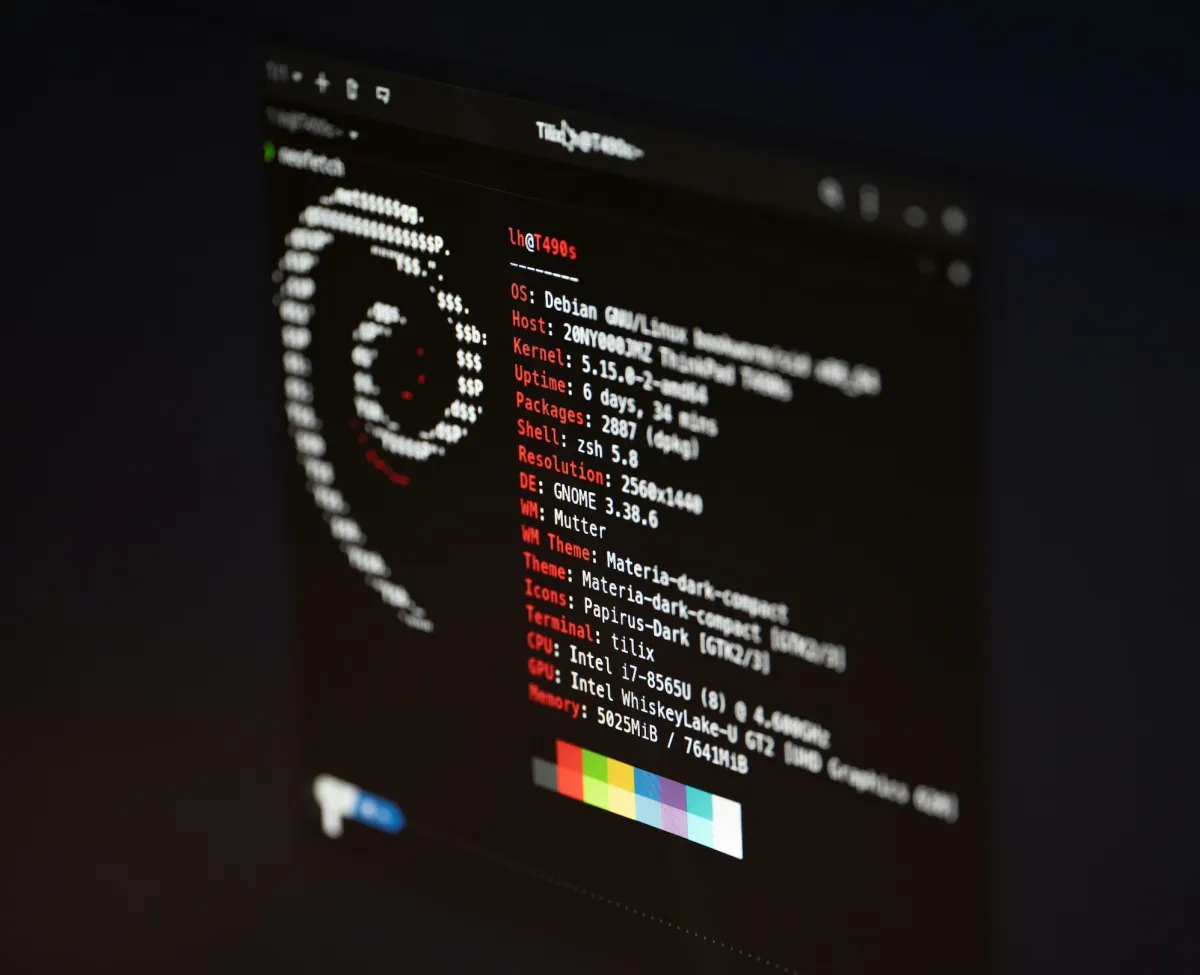
A severe security vulnerability affecting almost every version of the Linux operating system has caught defenders off-guard and scrambling to patch after security researchers publicly released exploit code that allows attackers to take complete control of vulnerable systems.

The U.S. government says the bug, dubbed “CopyFail,” is now being exploited in the wild, meaning it’s being actively used in malicious hacking campaigns.

The bug, officially tracked as CVE-2026-31431 and discovered in Linux kernel versions 7.0 and earlier, was disclosed to the Linux kernel security team in late March, and patched after about a week. But the patches have yet to fully trickle down to the many Linux distributions that rely on the vulnerable kernel, leaving any system running an affected Linux version at risk of compromise.

Linux is widely used in enterprise settings, running the computers that operate much of the world’s datacenters. 

The CopyFail website says that the same short Python script “roots every Linux distribution shipped since 2017.”  According to security firm Theori, which discovered CopyFail, the vulnerability was verified in several widely used versions of Linux including Red Hat Enterprise Linux 10.1, Ubuntu 24.04 (LTS), Amazon Linux 2023, as well as SUSE 16. 

Devops engineer and developer Jorijn Schrijvershof wrote in a blog post that the exploit works on Debian and Fedora versions, as well as Kubernetes, which relies on the Linux kernel. Schrijvershof described the bug as having an “unusually big blast radius” as it works on “nearly every modern distribution” of Linux.

The bug is called CopyFail because the affected component in the Linux kernel, the core of the operating system that has virtually complete access to the entire device, does not copy certain data when it should. This corrupts sensitive data within the kernel, allowing the attacker to piggyback the kernel’s access to the rest of the system, including its data.

If exploited, the bug is particularly problematic because it allows a regular, limited-access user to gain full-administrator access on an affected Linux system. A successful compromise of a server in a datacenter could allow an attacker to gain access to every application, server, and database of numerous corporate customers, and potentially gain access to other systems on the same network or datacenter.

The CopyFail bug cannot be exploited over the internet on its own, but can be weaponized if used in conjunction with an exploit that works over the internet. Per Microsoft, if the CopyFail bug is chained together with another vulnerability that can be delivered over the internet, an attacker could use the flaw to gain root access to an affected server. A user operating a Linux computer with a vulnerable kernel could also be tricked into opening a malicious link or attachment that triggers the vulnerability.

The bug could also be injected by way of supply chain attacks, in which malicious actors hack into an open source developer’s account and plant the malware in their code in order to compromise a large number of devices in one go.

Given the risk to the federal enterprise network, U.S. cybersecurity agency CISA has ordered all civilian federal agencies to patch any affected systems by May 15.

When you purchase through links in our articles, we may earn a small commission. This doesn’t affect our editorial independence.

Continue Reading
Click to comment

Leave a Reply

Your email address will not be published. Required fields are marked *

Business

NITDA debunks association with online earning platform demanding payment

info

Published

on

By

NITDA logo.jpg

The National Information Technology Development Agency has denied any affiliation with an online earning and marketing platform known as CPM. This rebuttal follows reports that the platform was demanding money from users to repair its allegedly hacked systems.

The agency issued the disclaimer in a statement signed by its Director, Corporate Communications and Media Relations Department, Hadiza Umar, on Monday, describing the reports as false and misleading.

According to media reports, subscribers via the platform operators reported that their systems had been hacked and that additional payments were required from subscribers to resolve the issue and recover funds.

NITDA allegedly was helping them to resolve the issue and that subscribers needed to make additional payments to support the process.

NITDA debunked those reports dissociating itself from CPM, noting that the agency, as a government agency, did not request money.

PT WHATSAPP CHANNEL

“NITDA wishes to categorically state that these claims are false and misleading.

“As a government agency and Nigeria’s Information Technology regulator, NITDA does not request or collect money from citizens to provide incident response support, recover funds, or assist private entities in resolving cybersecurity incidents,” NITDA said.

The agency alleged that the efforts of the so-called CPM to disguise itself as NITDA indicated possible social engineering and fraudulent activity. It said the efforts targeted exploiting affected individuals under the pretence of resolving a cybersecurity incident or recovering lost investments.

NITDA warned Nigerians against making financial payments to any bodies or organisations that claim NITDA requires such payments for operations.

“Members of the public are therefore strongly advised to exercise caution and avoid making any additional payments to any individual, group, or platform claiming that such payments are required by or connected to NITDA.

READ ALSO: NITDA, IDCA partner to transform Nigeria’s digital economy

“The reported pattern may indicate possible social engineering or fraudulent activity aimed at exploiting affected individuals under the guise of resolving a cybersecurity incident or recovering lost investments,” the agency said.

NITDA said Nigeria should exercise caution when dealing with online investment and trading platforms and must avoid sending additional funds in an attempt to recover previous investments or losses.

The agency added that online users must verify any claims of government involvement directly through official channels and refrain from sharing sensitive personal or financial information with unverified entities.

The regulator reiterated that Nigerians must promptly report suspicious cyber-related activities to the appropriate authorities to contain increasing risks of online attacks and fraud.

“NITDA remains committed to promoting cybersecurity awareness and protecting the public against cyber-enabled fraud and deceptive online activities.”


Continue Reading

News

The pope’s AI encyclical isn’t really about AI

info

Published

on

By

GettyImages 2213411719.jpg

Pope Leo XIV published his first encyclical on Monday, dubbed Magnifica Humanitas, on “safeguarding the human person in the time of artificial intelligence.” And while AI is the hook, the problems Leo focuses on are older and more pervasive: inequality, war, the erosion of democracy, and the concentration of power in the hands of those who don’t necessarily care whether humanity writ large remains magnificent.

Throughout the 200-page document, which the pope presented alongside Anthropic co-founder Chris Olah, Leo argues that technology built and governed by a small elite cannot, by definition, serve the common good. 

“When such power is concentrated in the hands of a few, it tends to become opaque and evade public oversight, increasing the risk of distorted forms of development that give rise to new dependencies, exclusions, manipulations and inequalities,” he writes. 

“In fact, as with every major technological shift, AI tends to amplify the power of those who already possess economic resources, expertise and access to data,” the encyclical continues, highlighting concerns that elites can use their power to “shape information and consumption patterns, influence democratic processes and steer economic dynamics to their own advantage.”

The encyclical comes a few days after President Donald Trump delayed signing his executive order on AI, which would have given the government oversight over new models before they are released, reportedly on the urging of VC investor and former White House AI czar David Sacks.

Pope Leo called for AI to be guided by “clear criteria and effective oversight” grounded in participation from communities that will be affected by it. More concretely, Leo called for an end to the AI arms race “for ever more powerful algorithms and larger datasets” that companies and countries believe will “secure geopolitical or commercial dominance.”

“To disarm means discrediting the assumption that technical power automatically confers the right to govern,” he wrote.

Again, these dynamics predate AI. Pope Leo XIII’s 1891 Rerum Novarum addressed the same concentration of power during the Industrial Revolution, but we needn’t look back that far. Elon Musk’s acquisition of Twitter and deployment of the platform to help elect Trump; the hundreds of millions flowing from tech elites into super PACs to block AI regulation — the kind of pattern that clearly inspired Leo XIV’s work.

The pope comes to the same conclusion that many have arrived at: the surreal power and capabilities of today’s AI raise the stakes enormously. 

Notre Dame Law School professor Paolo Carozza, a member of the Pontifical Academy of Social Sciences and chair of the Meta Oversight Board, told TechCrunch that AI-driven misinformation and deepfakes have “corroded our capacity to recognize what’s true and what’s not true, and that really has consequences for democratic politics.” The tech industry’s practice of “harvesting and manipulating” human data, he added, poses “fundamental challenges to cognitive freedom.”

When you purchase through links in our articles, we may earn a small commission. This doesn’t affect our editorial independence.

Continue Reading

Trending