News
John Terry roasts Arteta after Thiago Silva wins league at 41





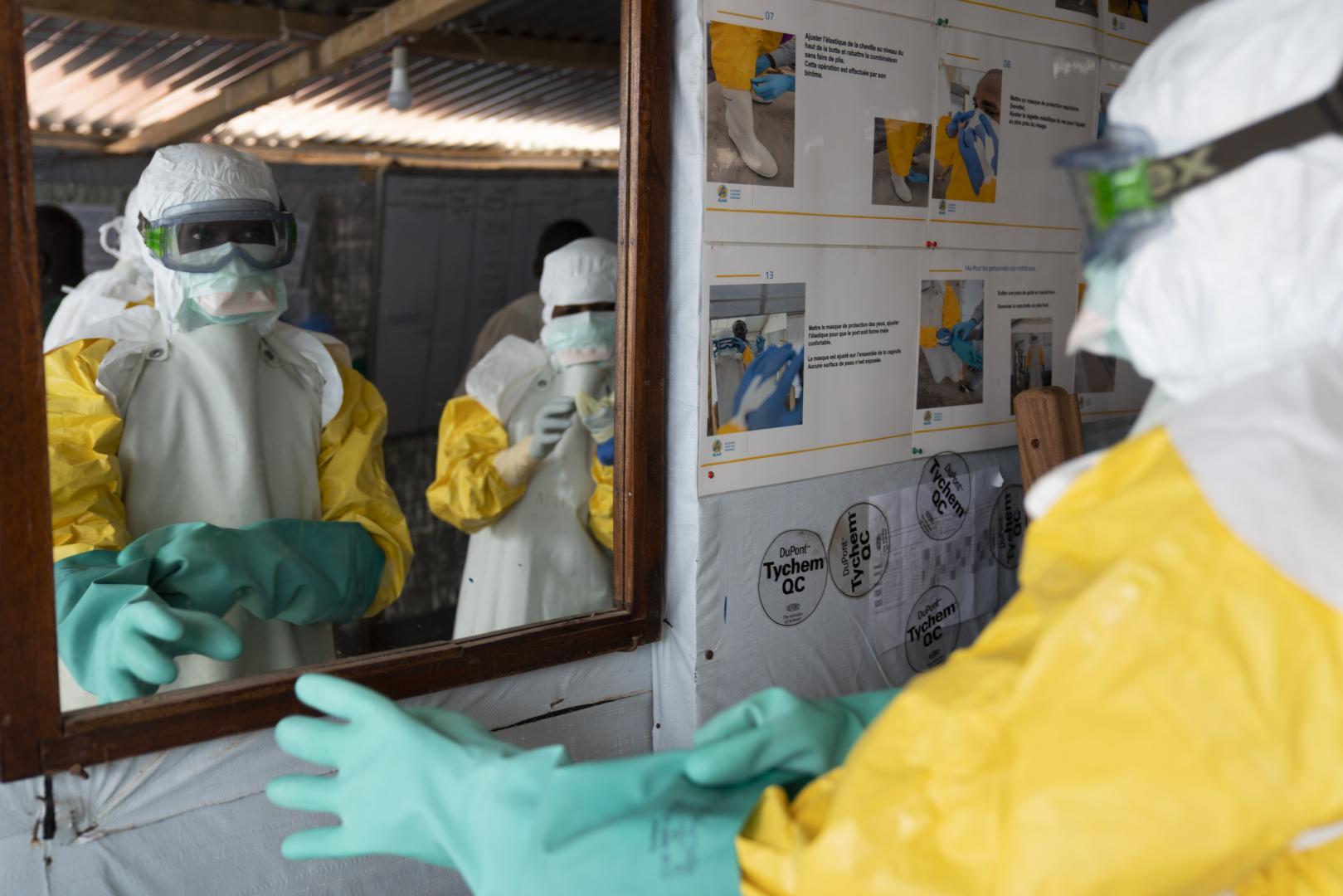
The World Health Organisation (WHO) has urged Nigerians to remain calm, noting that one confirmed case of Ebola does not mean the country is experiencing an outbreak.
WHO Regional Director for Africa, Mohamed Janabi, gave the reassurance in a video message posted on his X account on Wednesday night.
“One imported case does not by itself mean that Nigeria is experiencing an Ebola outbreak,” Mr Janabi said.
Mr Janabi said the agency is working with the Nigerian government and other partners to investigate the case, trace contacts, conduct laboratory testing, implement infection prevention and control, and protect health workers and communities.
He urged Nigerians to remain calm, stay informed and follow advice from public health authorities.
“There is no benefit in fear or misinformation,” he said. “What helps is early reporting, cooperation with the health authorities, and reliable information from reliable sources.”


Nigeria confirms case
Nigeria confirmed its first case of Ebola Bundibugyo virus disease on Tuesday after a woman who recently travelled to the country was diagnosed at a private hospital in Abuja.
The woman developed symptoms after arriving in Nigeria and is currently receiving treatment in isolation in the Federal Capital Territory.
The Nigeria Centre for Disease Control and Prevention (NCDC) has activated its incident management system, while health authorities have begun contact tracing. The 44 identified contacts include healthcare workers, patients, caregivers and travel contacts.
The Nigerian government said the case is currently being treated as an imported infection rather than community transmission.
WHO said Nigeria’s response demonstrates the importance of early detection and rapid public health action in preventing further transmission.
“Africa has considerable experience in responding to Ebola,” Mr Janabi said, adding that when cases are detected early, and contacts are followed closely, transmission can be stopped or interrupted.
Expert raises diagnosis concern
Meanwhile, virologist and Chairman of the West African National Academy of Scientists, Oyewale Tomori, raised concerns about the time taken to confirm the Nigerian case.
Speaking on Arise TV on Wednesday night, Mr Tomori said the gap between symptom onset and Ebola confirmation should prompt health authorities to strengthen their diagnostic response.
He said health workers should have a higher index of suspicion when treating travellers from areas where Ebola is circulating, rather than initially treating symptoms as more common illnesses such as malaria.
“If I hear somebody is coming from a country where Ebola is going on, or close to where Ebola has occurred, my first thought would be, is there Ebola?” he said.
Mr Tomori also urged authorities to prepare for the possibility that additional cases could emerge among the 44 contacts currently being monitored.
DRC outbreak continues
The Nigerian case comes amid a large Ebola outbreak in the Democratic Republic of the Congo (DRC), where the Bundibugyo virus has continued to spread.
According to the European Centre for Disease Prevention and Control (ECDC), the DRC reported 9,552 confirmed cases and 4,602 related deaths as of 19 October, based on data up to 18 October.
The outbreak has affected 66 of 178 health zones across eight provinces, with Ituri remaining the most affected province.
Kenya has also recorded imported cases linked to the DRC outbreak, with health authorities reporting nine confirmed cases as of 20 October.
Mr Janabi said the evolving situation in the DRC is a reminder for countries across Africa to maintain strong surveillance, laboratory readiness and rapid response capacity.
Discover more from Premium Times Nigeria
Subscribe to get the latest posts sent to your email.

The cost of cooking a pot of jollof rice in Nigeria fell by 11.5 per cent between June and September 2026, driven largely by declining prices of chicken, beef and vegetable oil as the main harvest reached markets, according to a report by SBM Intelligence.
The National Average Jollof Index dropped from N29,578 in June to N26,178 in September, marking the largest quarterly decline since the geopolitical research and strategic communications firm began tracking the cost in July 2016.
In its third-quarter 2026 report, titled ‘The Pot Cools, but Not Everywhere’, SBM Intelligence said the decline was concentrated in protein and oil prices, while rice prices remained largely unchanged.
SBM’s index prices the ingredients for one pot of jollof rice in fixed quantities across 13 Nigerian markets in the country’s six geopolitical zones.
The quantities include rice, chicken, tomatoes, vegetable oil, red pepper, tinned tomatoes, onions, beef, salt, curry, thyme and seasonings.
“Chicken and beef together account for N13,800 of the fall,” the report said, noting that protein had been the dominant driver of rising jollof rice costs in its second-quarter report.
The report attributed the sharpest decline to the period between June and July, when the index fell by N2,312, coinciding with the arrival of the main harvest in markets. Prices were relatively stable in August before falling further by N984 in September.
The movement was consistent with inflation data according to the National Bureau of Statistics (NBS), as food inflation eased to 19.57 per cent in August from 20.31 per cent in July, its first decline in six months. Headline inflation also fell to 15.39 per cent in August.
The report said vegetable oil prices fell in nine of the 13 Nigerian markets monitored, with the largest decline recorded in Lagos, where the price of 90 centilitres dropped from N5,000 to N3,000.
“Oil and protein together account for more than half the national decline,” the report said.
Price fall drivers
However, the report cautioned that the decline was uneven across the country, with Lagos and Ibadan accounting for much of the reduction.
Nine of the 13 markets recorded declines of less than 10 per cent, while two barely moved.
Port Harcourt was the only market where the cost of preparing a pot of jollof rice increased, rising from N31,200 in June to N32,000 in September, a 2.6 per cent increase.
SBM Intelligence linked the increase to flooding in Port Harcourt and Obio/Akpor in late September, which disrupted conditions in the city while other parts of the country benefited from the harvest.
The report also identified a recording error in Ibadan’s Bodija and Dugbe markets, where curry and thyme prices had been recorded at about N3,500 each between January and June before dropping to N650 each from July.
It said the apparent reduction in the spice prices was a unit-related error rather than a genuine market movement, meaning the reported 21.3 per cent decline in the cost of jollof rice in the two markets overstated the actual price reduction.
Despite the quarterly relief, the cost of preparing a pot of jollof rice remained 5.8 per cent higher than in September 2025 and 540 per cent above the July 2016 level.
The report also noted that rice prices contributed little to the latest decline, with the staple’s combined price movement across the 13 markets amounting to just N50.
“This clearly shows a point the index has made for years: the Jollof Index is not a rice-price measure. Everything but the grain sets the cost of the pot,” it said.
Regional breakdown
The South-South remained Nigeria’s most expensive region for preparing jollof rice, with Calabar Municipal closing September at N34,600 and Bayside Mbakpa at N34,500. Both markets recorded declines of just N150 from June.
READ ALSO: Knorr marks World Jollof Day 2026 with one-of-a-kind “TurnUpForJollof” Celebration
In contrast, the Southwest recorded some of the steepest reductions. Prices in Lagos’s Trade Fair and Balogun markets fell from N34,700 in June to N22,350 in September, a 35.6 per cent decline.
In the Southeast, the cost fell by 5.3 per cent in Onitsha to N21,350 and by 3.2 per cent in Awka to the same amount.
SBM Intelligence said household responses also suggested that consumers were adjusting their food choices as prices changed.
One respondent in Kumbotso, Kano State, who had stopped buying chicken, resumed buying one chicken a week after the price of a kilogram fell from N7,000 to N4,500.
Another respondent in Gwale said the price of a cup of pepper fell from N2,500 to N1,400 the previous year, making it possible to resume cooking stew daily.
The report, however, warned that one quarter of falling prices had not reversed the longer-term increase in food costs, with the national index still substantially above its level a year earlier.
Discover more from Premium Times Nigeria
Subscribe to get the latest posts sent to your email.
-

 News3 days ago
Euromatch NPFL: Matchday 9 results
-
News3 days ago
No agenda, no rush, no leaving San Francisco: Benchmark’s partners on investing in a frenzied market
-
News3 days ago
Amazon to fund 12 small nuclear reactors at former Indiana coal plant
-
News4 days ago
Meta removes language that raised scraping and AI training concerns