News
NWFL Championship: DreamStar Ladies, Imo Striker Queens, Wazbak Make Winning Statements on Opening Day

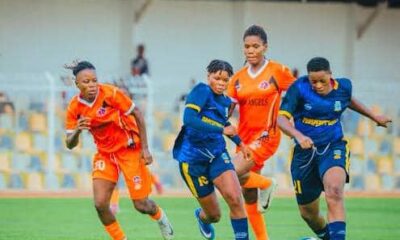
The 2026 Nigeria Women Football League (NWFL) Championship got off to a thrilling start in Calabar on Saturday, with six teams recording victories as the race for promotion to the NWFL Premiership officially commenced.
READ ALSO: NWFL Championship Return to Calabar, Kick Set for July Kick Off
Sports247 reports that 20 goals were scored across eight matches on an action-packed Matchday One, highlighting the quality and competitiveness of this year’s tournament.
In Group A, DreamStar Ladies delivered one of the standout performances of the day, defeating Rosaria Victrix 3-1. Anuoluwapo Awotidoye bagged a brace, while Khadija Kamarudeen added another to hand the Lagos side an impressive opening victory.
Delta Babes also began their campaign on a winning note, overcoming First Mahi Babes 2-1 courtesy of goals from Miracle Edafe and Nancy Kehinde.
Group B produced mixed fortunes as Pelican Stars edged Ikukuoma Queens 2-1 through strikes from Amarachi Abel and Ewa Peace.
Meanwhile, Moje Queens and Gallant Queens shared the spoils in a 1-1 draw, the first stalemate of the championship.
In Group C, Wazbak International Sports Academy emerged as one of the day’s biggest winners, battling to a dramatic 3-2 victory over Fortress Ladies despite facing stern resistance. Rangers Women and Unification FC, however, settled for a goalless draw in a tightly contested encounter.
Group D belonged to Imo Striker Queens, who produced the most dominant display of the opening round with a convincing 3-0 triumph over Chosen Generation Angels.
Mmesoma Amaechi scored twice after Anastasia Uzor had opened the scoring. Ghetto Tigers also secured a valuable 1-0 victory against Kwara Ladies, with Gift Udo Mama netting the decisive goal.
With only one team from each group progressing to the promotion playoffs, the opening results have already intensified the battle for qualification.
Attention now shifts to Matchday Two, where several clubs will be aiming to consolidate their positions, while others look to revive their promotion hopes after disappointing starts.
The championship continues in Calabar with every point proving crucial in the race for a place in the NWFL Premiership.



News
“If You Want to Be Ready for Ghana, Test Yourself Against Africa’s Best” — Hadejia Backs Senegal Gamble Despite Sand Eagles Defeat

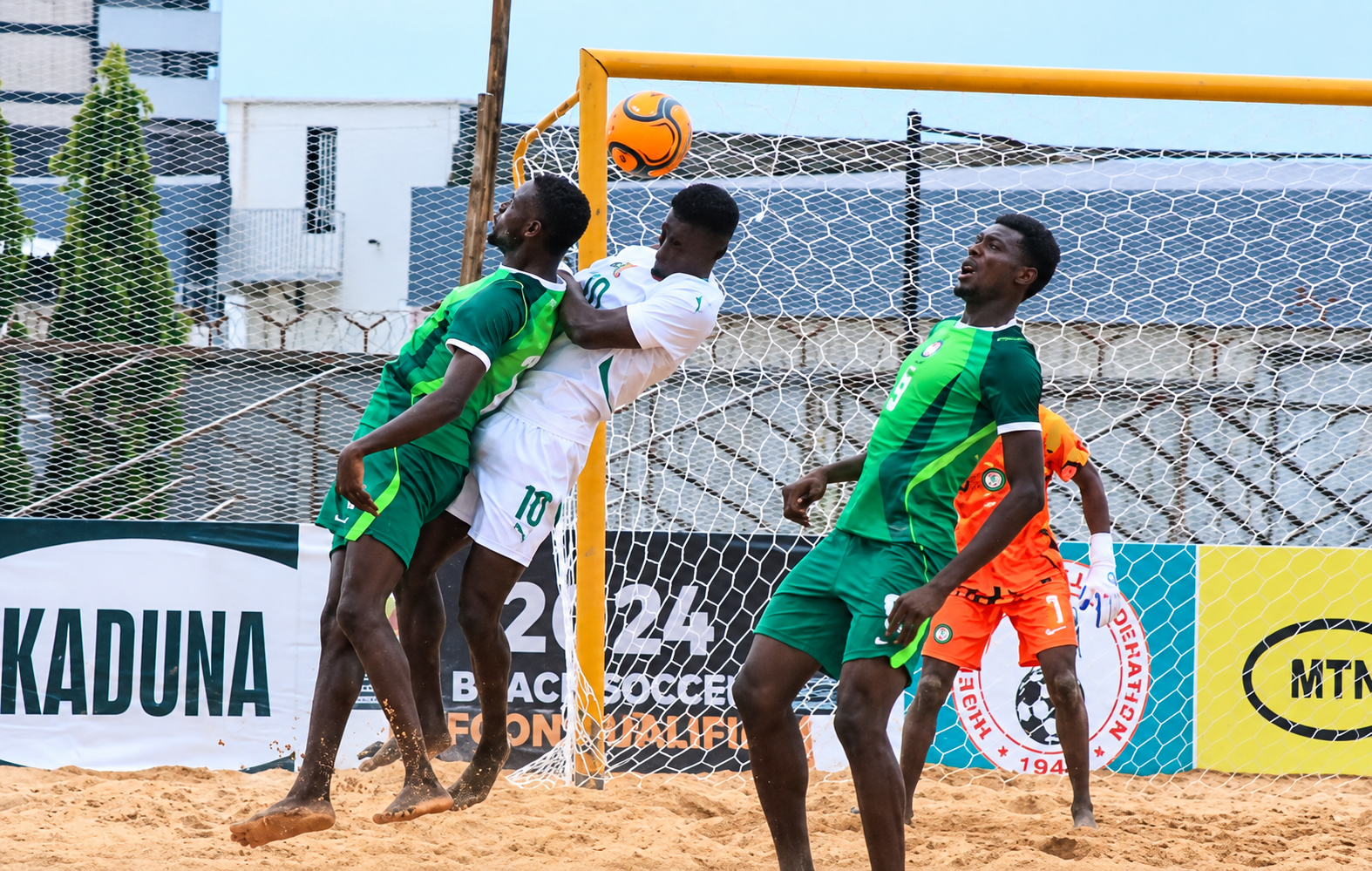
President of the African Beach Soccer Union, Mahmud Hadejia, believes Nigeria’s decision to test the Sand Eagles against African champions Senegal was exactly the preparation required ahead of their crucial Beach Soccer Africa Cup of Nations qualifier against Ghana.
Nigeria suffered a 6-4 defeat in the opening friendly at the Murtala Muhammed Square Beach Soccer Arena in Kaduna, but Hadejia insists the result was secondary to exposing the team to the intensity they should expect when the competitive battle with Ghana begins.
The Sand Eagles are rebuilding after spending two years without competitive international action, making the Senegal double-header an important opportunity to assess their readiness against the continent’s benchmark team.
According to Hadejia, Senegal were deliberately chosen because their quality, physical approach and beach soccer pedigree provide Nigeria with the kind of examination needed before facing Ghana’s Black Sharks.
Senegal are the defending African champions and have established themselves as the dominant force in African beach soccer, making the friendlies a demanding test rather than an exercise designed simply to produce comfortable victories.
Sand Eagles head coach Abdullahi Isa shared that assessment, describing Senegal as quality opposition capable of helping his players shake off match rust before the qualifiers.
Nigeria will host Ghana in the first leg in Kaduna on October 10, before travelling to Accra for the decisive return fixture. The winner over the two legs will qualify for the 2026 Beach Soccer Africa Cup of Nations in Senegal.
The assignment carries added importance after Nigeria narrowly missed the previous continental championship, losing to Mauritania on the away-goals rule during qualification in 2024.
For Hadejia, therefore, playing Senegal was about discovering weaknesses before Ghana gets the opportunity to exploit them.
The 6-4 scoreline may have gone Senegal’s way, but the real value of the friendly will be measured against Ghana — when lessons learned against Africa’s champions must translate into an AFCON ticket.

Seven-Up Bottling Company Ltd. (SBC), in collaboration with the Apapa-Iganmu Local Council Development Area (LCDA), has unveiled the rehabilitated Sari-Iganmu Primary Health Centre, following a comprehensive rehabilitation project undertaken by SBC to improve healthcare delivery and community wellbeing.
The facility now features a renovated maternity ward, a newly constructed and equipped laboratory, and solar power infrastructure, providing a safer, more functional, and better-equipped environment for healthcare workers and patients.

The event brought together Seven-Up Bottling Company Managing Director & CEO, Sari El-Khalil; HRM Oba Abdulfatai Oyeyinka Aremu Aromire II, the Ojora of Ijora and Iganmu Kingdom; Executive Chairman of Apapa-Iganmu LCDA, Hon. Jimoh Olawale Saliu; Chairman, House Committeeon Health, Hon. Lawal Aina Musbau; alongside government officials, community leaders, healthcare professionals and other stakeholders.

Apapa-Iganmu holds a special place in Seven-Up Bottling Company’s history, as the company rolled out its first bottle of 7UP from the community in 1960.
More than six decades later, Seven-Up Bottling Company continues to invest in the community that has been part of its story from the beginning.
 The intervention aligns with SDG 3 – Good Health and Well-being, reflecting SBC’s continued commitment to healthcare, community development and creating meaningful, lasting impact.


 Investing in health. Strengthening communities. Creating lasting impact.
READ ALSO: Ibom Air, Etihad sign deal to connect five Nigerian cities to global network
 #SevenUpBottlingCompany #SBC #SariIganmu #ApapaIganmu
#CommunityWellbeing #Healthcare #CommunityDevelopment #CommunityImpact
#SDG3
Discover more from Premium Times Nigeria
Subscribe to get the latest posts sent to your email.
-

 Health4 days ago
Plateau: Medical Women Association of Nigeria Marks Older Persons Day with Free Outreach
-
News3 days ago
MTN, Gates Foundation drive $25m AI digital health plan in Nigeria – Technology Times
-
News4 days ago
WAEC appoints Nigeria’s Dangut as Registrar, CEO
-
Health3 days ago
Drug-resistant bacterial infections kill one million people annually – WHO