Health
Zamfara approves six-month maternity leave for female civil servants


The Zamfara State government has approved six months’ maternity leave for female civil servants as part of efforts to promote exclusive breastfeeding and improve maternal and child health.
The State Head of Service, Yakubu Haidara, announced the approval on Thursday in Gusau while receiving a delegation from Civil Society–Scaling Up Nutrition in Nigeria (CS-SUNN).
The delegation, according to the News Agency of Nigeria (NAN), visited to advocate for six months’ maternity leave, increased funding for nutrition programmes and improved budget tracking to ensure timely release of funds.
Mr Haidara said the approval reflected Governor Dauda Lawal’s commitment to strengthening exclusive breastfeeding and improving nutrition outcomes for infants across the state
“I believe the governor’s approval is aimed at addressing malnutrition among children in the state,” he said.

He described maternity leave as essential for protecting mothers and babies during the perinatal period, while supporting healthier families and stronger child development.
“It provides essential time for physical recovery, prevents postpartum depression, facilitates exclusive breastfeeding and promotes vital emotional bonding,” he said.
Mr Haidara welcomed the advocacy team, saying government and civil society shared the common objective of protecting children and securing healthier future generations.
“I welcome you for this advocacy visit. I believe we are all working towards protecting our children and ensuring good health for future generations,” he said.
He recalled that the governor approved N500 million counterpart funding for nutrition activities last year to strengthen interventions across Zamfara.
Mr Haidara expressed confidence the governor would sustain, or even increase funding this year because of his commitment to improving nutrition programmes statewide.
“I believe this year also the governor will do the same or even more for nutrition activities in the state,” he said.
He assured the delegation that the state government would continue collaborating with development partners and civil society organisations to combat child malnutrition.
“I want to assure you of the state’s commitment to continue partnering with you in addressing malnutrition among children,” Mr Haidara added.
Earlier, CS-SUNN State Coordinator, Kabiru Jangeru, described the governor’s approval as a significant milestone in promoting maternal health and child nutrition.
Mr Jangeru said malnutrition remained a major threat to child survival, requiring sustained investment, policy support and stronger collaboration among stakeholders.
“We are working with UNICEF support to advocate enhanced nutrition funding and exclusive breastfeeding among children,” he said.
READ ALSO: Pregnant woman allegedly dies at Ondo fake medical facility
He said six months’ maternity leave would enable mothers to exclusively breastfeed their babies, significantly reducing malnutrition and improving children’s health.
“We appreciate the governor for the kind gesture and quick response to our advocacy,” he said.
He also commended the Head of Service for facilitating engagements that culminated in the approval of the extended maternity leave policy.
“We also appreciate the Head of Service for the timely facilitation that led to the governor’s approval,” he added.
(NAN)







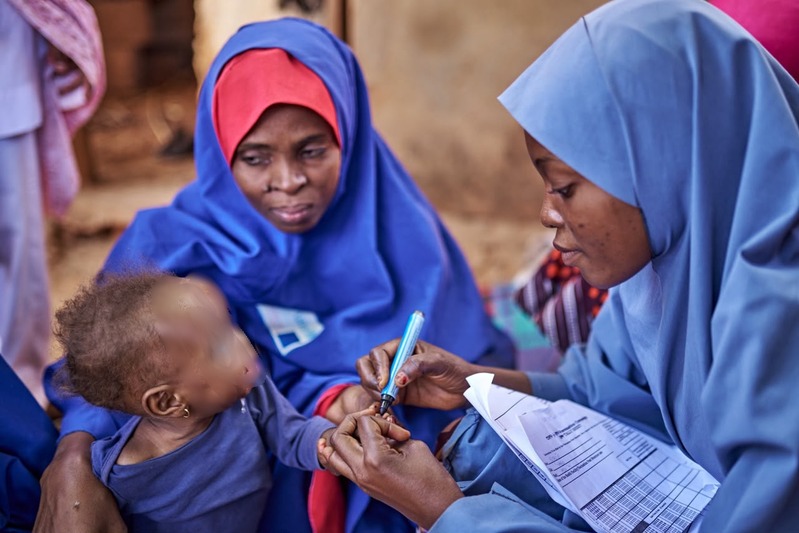
Gavi, the Vaccine Alliance, says 9.5 million children in 57 supported countries received no routine vaccine in 2025, despite gains in global immunisation.
The figure, described as the number of “zero-dose” children, was contained in Gavi’s 2025 Annual Progress Report, which reviewed the alliance’s 2021-2025 strategic period.
Gavi defines zero-dose children as infants who have not received the first dose of a diphtheria, tetanus and pertussis-containing vaccine by the end of their first year.
Number falls from 2021 peak
According to the report, the number of zero-dose children in 2025 was 600,000 lower than in 2024 and 25 per cent lower than the peak recorded in 2021 following disruptions to routine immunisation caused by the COVID-19 pandemic.
However, the figure remained four per cent above the 2019 baseline, partly because of continued growth in the number of children being born.
Gavi said children living in fragile, conflict-affected and humanitarian settings remain among those most likely to be missed by immunisation programmes.

Nigeria remains one of the countries with the highest number of zero-dose children. UNICEF estimated that about 2.2 million Nigerian children had never received a routine vaccine in 2025, the highest number in Africa.
Nigeria records gains in targeted areas
The report highlighted Nigeria, Ethiopia and Pakistan among countries where emerging data showed stronger immunisation coverage gains in sub-national areas that received greater Gavi focus and investment during the 2021-2025 period.
Gavi said the findings underscored the value of targeted, equity-focused investments in reaching communities that are being missed by routine immunisation.
The report also identified Nigeria among countries covered by Gavi’s Zero-Dose Learning Hubs, which examined what works and what does not in identifying and reaching zero-dose and under-immunised children.
The findings from Nigeria, Bangladesh, Mali and Uganda highlighted several issues, including gender-related barriers to immunisation.
73m children immunised in 2025
Despite the number of zero-dose children, Gavi said more than 73 million children were immunised through routine programmes with its support in 2025.
More than 351 million children were immunised during the 2021-2025 strategic period, “exceeding Gavi’s target of 300 million children.”
“By end 2025, Gavi-supported countries had immunised more than 1.3 billion unique children with Gavi support since 2000, exceeding our Investment Opportunity 2021-2025 commitment of more than 1.1 billion children immunised by 2025,” it noted.
Gavi said vaccination averted more than 2.2 million future deaths in 2025, bringing the total number of future deaths averted through its supported vaccination programmes to more than 7.8 million during the 2021-2025 period.
Generated economic benefits
The report said immunisation programmes generated more than $30 billion in economic benefits for Gavi-supported countries in 2025, the highest amount recorded in a single year.
The benefits were calculated from the costs of illness averted, including medical and associated costs, caretaker wages and productivity losses resulting from disability or death.
Gavi said the programmes generated more than $104 billion in economic benefits between 2021 and 2025 and more than $308 billion between 2000 and 2025.
Countries also contributed a record $301 million towards the co-financing of Gavi-supported vaccines in 2025, an 18 per cent increase from 2024.
About 80 per cent of the contribution came from domestic resources, while “approximately 20 per cent from low-interest loans from the World Bank.”
Gavi said countries had contributed a total of $2.2 billion towards vaccine co-financing since the policy was introduced in 2008.
More children
For its 2026 to 2030 strategic period, Gavi said it aims to protect another 500 million children through immunisation and avert between eight million and nine million future deaths.
READ ALSO:New TB vaccines could save 7.3m lives by 2050 – Gavi
The Alliance also targets more than $100 billion in economic benefits during the period. Gavi said it would place greater emphasis on reaching zero-dose and under-immunised children while strengthening the sustainability of national immunisation programmes.
In her comments, Gavi Chief Executive Officer, Sania Nishtar, said the results showed that immunisation generates benefits beyond preventing disease. “However, when it comes to immunisation we know that the return on investment extends far beyond health to supporting sustainable, inclusive economic growth,” Ms Nishtar said.
WHO Director-General, Tedros Ghebreyesus, also said immunisation delivers massive gains in lives saved and diseases prevented, but also in terms of economic benefits.
“Countries understand that the cost of failing to vaccinate is far too great, while the benefits extend across families, communities, economies and future generations,” Mr Ghebreyesus was quoted to have said.
Discover more from Premium Times Nigeria
Subscribe to get the latest posts sent to your email.

A military cardiologist, Life Ajemba, has warned that hypertension, prolonged stress, and inadequate sleep could increase the risk of cardiovascular disease among serving military personnel and veterans.
Mr Ajemba, a major-general, said hypertension remains one of the most common cardiovascular conditions among serving personnel and military retirees.
Speaking in an interview with the News Agency of Nigeria on Wednesday in Abuja, he urged military personnel and veterans to prioritise their heart health through regular medical checks, physical exercise, healthy diets and adequate rest.
He cited studies which showed that hypertension accounted for 15.31 per cent of cases treated among mainly military retirees between 2015 and 2020.
He also referenced another study which found a hypertension prevalence of 34.3 per cent among military personnel.
He noted that major risk factors included alcohol consumption, tobacco smoking, family history of cardiovascular disease and being overweight.
According to him, the demanding nature of military service could also increase cardiovascular risks due to physical stress, psychological trauma, irregular schedules and inadequate sleep.
“Military duties affect heart health through a combination of extreme physical stress, psychological trauma and environmental exposures that increase the risk of cardiovascular disease,” he said.
The military cardiologist explained that prolonged stress could increase the release of hormones such as adrenaline and cortisol, leading to increased heart rate and blood pressure.
He added that sleep deprivation, anxiety and other psychological pressures could further increase the risk of hypertension, coronary artery disease, heart attack and stroke.
Mr Ajemba stressed the importance of regular medical screening among military personnel, saying early detection could help identify silent conditions such as high blood pressure, abnormal cholesterol levels and elevated blood sugar.
He said routine medical checks could include blood pressure and heart rate monitoring, blood tests, lipid profiles, electrocardiograms (ECGs), chest X-rays, and echocardiography where necessary.
READ ALSO: PT Health Watch: How Pregnancy-Induced Hypertension puts mother, baby at risk
“Early detection ensures that soldiers receive treatment while remaining fit for duty, preventing medical evacuation and safeguarding their long-term health,” he said.
He also encouraged military personnel to maintain regular physical exercise, saying fitness helped reduce blood pressure, improve heart efficiency and increase resistance to operational fatigue.
Mr Ajemba, however, advised personnel to combine physical fitness with healthy eating, adequate rest and avoidance of smoking and excessive alcohol consumption.
He said maintaining a healthy lifestyle could help military personnel reduce cardiovascular risks and remain fit both during active service and after retirement.
(NAN)
Discover more from Premium Times Nigeria
Subscribe to get the latest posts sent to your email.
-

 News4 days ago
Lucid Motors’ EV output falls to lowest level in almost 2 years
-
News3 days ago
Mirror Particle is building a ‘world model’ of human behavior
-
News3 days ago
I Never Prayed for Tinubu, Shettima to Win 2027 Election – Plateau Cleric
-
News3 days ago
FCCPC reviews rules for Nigeria’s online sales promotions, giveaways – Technology Times