News
CWEENS, Partners Host Anti-Trafficking Town Hall in Bassa, Plateau State


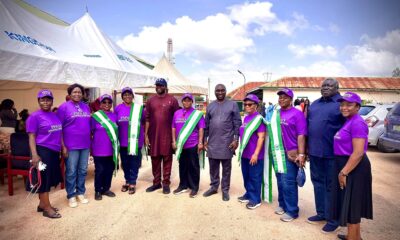
As part of ongoing efforts to tackle human trafficking in Plateau State, the Christian Women for Excellence and Empowerment in Nigerian Society (CWEENS), in collaboration with Women for Women International, organized a town hall meeting on Monday, May 26, 2025, in Bassa Local Government Area. The event follows similar engagements held in Riyom and Langtang North LGAs, aimed at mobilizing communities to take a collective stand against trafficking.
In a continued effort to combat human trafficking in Plateau State, the Christian Women for Excellence and Empowerment in Nigerian Society (CWEENS), in partnership with Women for Women International, held a town hall meeting in Bassa Local Government Area on Monday 26th May 2025. This follows similar engagements previously held in Riyom (Here) and Langtang North LGAs (Here), all aimed at mobilizing communities to take a stand against trafficking.
Themed “Human Trafficking Awareness and Support Services,” the Bassa town hall brought together a cross-section of stakeholders, including community leaders, women’s groups, youth activists, government representatives, and law enforcement agencies. Discussions focused on identifying the root causes of trafficking and devising local solutions to curb the growing menace.
Speaking at the event, Kiyenpya Mafuyai, Plateau State Coordinator of the National Human Rights Commission (NHRC), identified poverty, insecurity, and ignorance as key drivers of trafficking in the area. “Each of us has a role to play,” she said. “We must report traffickers, raise awareness, and support victims. There are no benefits to trafficking—only loss and trauma for individuals, families, and communities.”

Mafuyai also stressed the need for government intervention through education, empowerment, and adequate funding for agencies like NAPTIP. “Laws alone are not enough. Without the resources to enforce them, we cannot effectively prosecute offenders or support survivors,” she added.
Mrs. Rejoice Adamson, Head of the Women Unit in Bassa LGA, described the meeting as “timely and necessary,” pointing to the insecurity in Bassa as a factor increasing community vulnerability. “Many parents are deceived by false promises of better lives for their children. Out of desperation, they unknowingly hand them over to traffickers,” she warned.
Adding her voice, Mrs. Lillian Joshua Riti, wife of the Bassa LGA Chairman, called for sustained grassroots sensitization and investment in education. “We must continue this campaign in churches, markets, and community spaces. Education—both formal and informal—is a long-term solution,” she said.

Ward Councillor Hon. Musa Samuel highlighted the link between human trafficking and economic hardship. “When families are unable to afford school fees, they become easy targets for traffickers. We need to address unemployment and create local support systems,” he urged.
Youth activist Davidson Malison commended CWEENS for facilitating the engagement. “This meeting has given us the responsibility to carry this message home. As youth leaders, we must enlighten our communities on the dangers of child trafficking,” he said.
Mrs. Mary Jegfa, National President of the Irigwe Development Association Women’s Wing, shared a chilling account of trafficking in Rubuka community. “Over 300 children were taken under the guise of being offered education, and many are still missing. We must act now,” she declared, pledging to rally traditional women councils for intensified advocacy.
CWEENS Program Manager, Dirmicit B. Pyentam, emphasized the need for communities to break the silence around trafficking. “We’ve rescued and rehabilitated many trafficked children. Sadly, some residents still shield perpetrators due to fear or misplaced loyalty,” she revealed. “This town hall is a platform to raise awareness and build community-led prevention strategies.”
The Bassa town hall marks a critical step in CWEENS’ broader anti-trafficking campaign across Plateau State. With increasing collaboration among civil society, local authorities, and residents, the organization aims to create a safer environment for women and children vulnerable to exploitation.

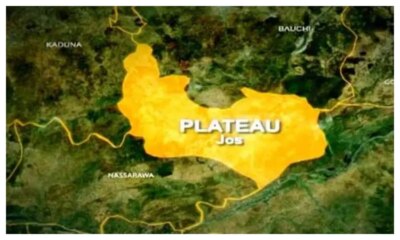





Three miners were reportedly killed by gunmen on Friday at a mining site in the Jamus area of Kazok village, Gashish District, Barkin Ladi Local Government Area of Plateau State.
In a statement on Friday, Rwang Tengwong, the spokesman for the Berom Youth Moulders Association (BYM), said the incident occurred at about 3:00 p.m.
He identified the deceased miners as John Mafulul, 53, and Ezekiel Yohanna, 50.
“These were not just two names added to a list of civilians killed by the armed Fulani terrorists; they were human beings with families, loved ones and people who depended on them,” Mr Tengwong said.
He explained that in another incident, Bulus Chun Pam was reportedly attacked on Wednesday and sustained injuries during the incident that occurred in the Foron district of Barkin Ladi.
Mr Tengwong noted that Mr Pam was taken to Jos University Teaching Hospital (JUTH) for treatment and later died on Friday.
“His death is another painful loss to his family and community, who would have hoped and prayed for his recovery,” Mr Tengwong stated.
He said the group was deeply concerned about the recurring attacks and mourned the victims of previous incidents.
According to him, the situation is particularly troubling because residents should be able to work, travel and go about their daily activities without the constant fear of being attacked.
“Mining sites, farmlands, rural settlements and community roads should not become places where residents risk losing their lives simply because they are trying to survive,” he said.
The state police spokesman, Alfred Alabo, did not immediately respond to Peoples Gazette’s request for comment.
On June 16, five miners were killed at a mining site after gunmen invaded Gero village, Gy district of the Jos

-
News4 days ago
FCCPC reviews rules for Nigeria’s online sales promotions, giveaways – Technology Times
-

 News3 days ago
Robot data startup Mecka AI nabs $60M from Sequoia
-
Business4 days ago
Nigeria has reduced reliance on oil revenue
-
Business2 days ago
Fuel subsidy would cost Nigeria over N20trn yearly — Minister