Business
CPPE cautions CBN against monetary tightening ahead of the MPC meeting


The Centre for the Promotion of Private Enterprise (CPPE) has warned the Central Bank of Nigeria (CBN) against excessive monetary tightening ahead of the 305th meeting of the Monetary Policy Committee (MPC).
The group cautioned that higher interest rates could weaken economic growth, private-sector investment, industrial productivity, and employment.
The warning came in a statement signed by the Chief Executive Officer of CPPE, Muda Yusuf, on Sunday.
At the February MPC meeting, the committee reduced the borrowing rate by 50 basis points to 26.5 per cent, and scheduled the 305th meeting for 19 and 20 May.
CPPE said expectations ahead of the MPC meeting should be viewed in the context of growing domestic macroeconomic pressures, geopolitical tensions, and rising fiscal liquidity risks.

According to the think tank, escalating geopolitical tensions involving the United States, Israel, and Iran have already triggered volatility in the global energy market, with implications for inflation, energy costs, and business operations in Nigeria.
“Of immediate significance are the escalating geopolitical tensions involving the United States, Israel, and Iran, which have triggered renewed volatility in the global energy market.
“The resulting surge in crude oil prices is already transmitting into higher domestic energy costs, with significant implications for inflationary pressures, production costs, transportation, logistics, and overall business operating conditions within the economy,” CPPE said.
Concerns
CPPE also raised concerns over increasing liquidity injections linked to political activities ahead of the 2027 general elections, warning that rising political spending and improved Federation Account Allocation Committee (FAAC) disbursements to states could worsen inflationary pressures.
“At the domestic level, early signs of election-related liquidity injections ahead of the 2027 electoral cycle are also becoming increasingly evident.
“Rising political spending by aspirants and political parties, increased election-related expenditures, and substantially improved Federation Account Allocation Committee [FAAC] disbursements to subnational governments present material risks to liquidity management and inflation containment,” the group stated.
It said recent engagement by the CBN with state governments on inflationary risks associated with fiscal injections reflects growing official concerns over excess liquidity in the economy.
CPPE noted that the MPC may therefore adopt a cautious tightening stance or maintain its current restrictive monetary policy position to manage inflation expectations and sustain investor confidence.
“Accordingly, there is a strong possibility that the Committee may be inclined towards a cautious tightening bias or a prolonged retention of the current tight monetary stance in order to contain inflation expectations, reinforce policy credibility and sustain investor confidence,” CPPE said
Warning
The CPPE warned that additional monetary tightening could significantly hurt the productive sector and undermine economic recovery.
“The Nigerian economy remains fragile and structurally constrained. Further tightening of monetary conditions could significantly weaken credit expansion, dampen investment appetite, and undermine the fragile momentum of the real-sector recovery.
“Excessively elevated interest rates also heighten the risks of loan defaults, weaken the financial sustainability of businesses, and exacerbate sovereign debt service pressures,” it said.
The think tank argued that Nigeria’s inflation challenge remains largely structural and supply-side driven, making aggressive monetary tightening less effective in addressing the root causes of inflation.
“It is equally important to recognise that the current inflationary pressures are predominantly cost-push and supply-side driven. The major inflation drivers remain energy costs, transportation expenses, logistics bottlenecks, and structural inefficiencies within the production environment.
“Monetary tightening is generally more effective in addressing demand-pull inflation arising from heightened aggregate demand and liquidity expansion. Its effectiveness in addressing supply-side inflation shocks is considerably more limited,” the group explained.
According to CPPE, further tightening under current economic conditions could raise the cost of capital, weaken manufacturing competitiveness, suppress SME growth, constrain household consumption, and slow investment expansion.
“Further tightening under prevailing conditions, therefore, risks imposing disproportionate costs on the productive sector without necessarily delivering commensurate gains in inflation moderation.
“Higher interest rates would increase the cost of capital, weaken manufacturing competitiveness, suppress SME growth, constrain household consumption, and slow investment expansion at a time when the economy urgently requires productivity-enhancing investments and job creation,” CPPE stated.
Advocacy
The think tank called for a balanced, carefully calibrated monetary policy framework that supports growth while maintaining macroeconomic stability and controlling inflation.
“The CPPE therefore advocates a carefully calibrated and balanced monetary policy stance that preserves macroeconomic stability while avoiding excessive tightening capable of undermining economic recovery and private sector resilience.
“The overarching policy priority should be to sustain investor confidence, support productive investments, stimulate output growth, and strengthen the economy’s supply-side capacity while maintaining vigilance on inflation management.”
READ ALSO: CPPE speaks on capital importation surge, raises structural concerns
The statement concluded that Nigeria’s long-term disinflation process would depend more on structural reforms and productivity improvements than on aggressive monetary tightening.
The group urged the monetary authorities to avoid excessive reliance on monetary policy orthodoxy in managing what is fundamentally a structurally-driven inflation environment.
“Sustainable disinflation in Nigeria will depend far more on improvements in productivity, energy security, logistics efficiency, exchange rate stability, domestic petroleum refining capacity, and overall supply-side reforms than on aggressive monetary tightening,” CPPE stated.




The Nigerian Ports Authority (NPA) has moved to address rail connectivity and logistics challenges affecting inland dry ports as part of efforts to integrate the facilities into the nation’s port system and improve cargo movement across the country.
The move followed a meeting between the NPA management, led by its Managing Director, Abubakar Dantsoho, and the Executive Director of Dala Inland Dry Port, Ahmad Rabiu, alongside representatives of Funtua Inland Dry Port, at the authority’s corporate headquarters in Marina, Lagos.
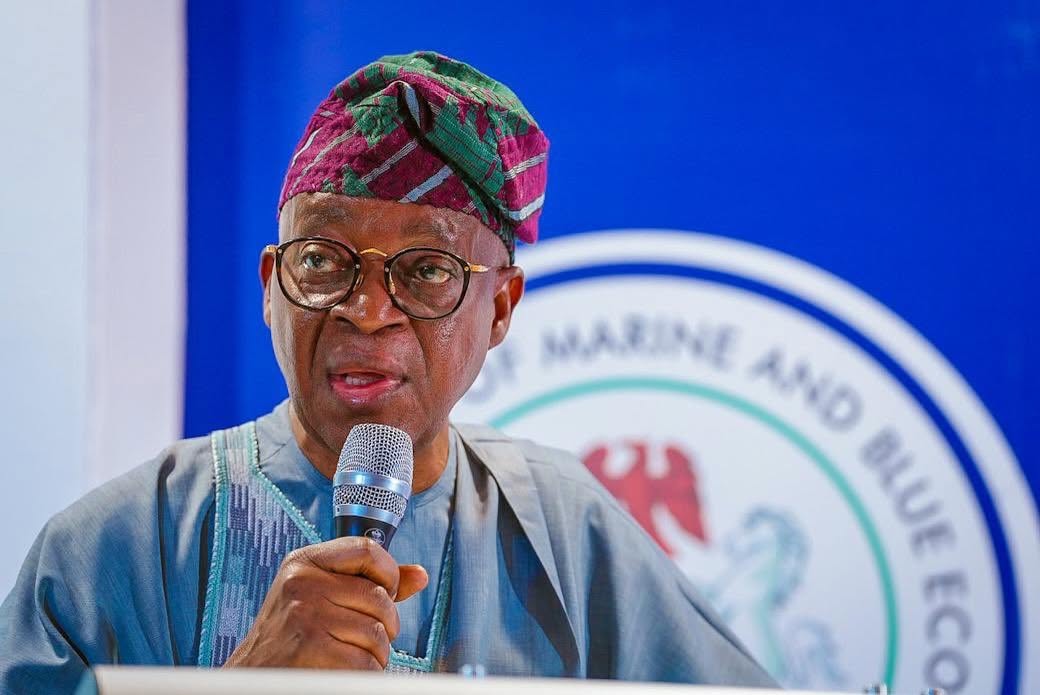
The engagement came after the Minister of Marine and Blue Economy, Adegboyega Oyetola, directed the transfer of operational oversight of inland dry ports to the NPA.
The discussions focused on strengthening institutional collaboration, addressing infrastructure constraints and improving operational efficiency across Nigeria’s maritime logistics chain.
Speaking during the meeting, Mr Dantsoho stressed the need to upgrade inland dry port infrastructure and technical capacity to complement ongoing modernisation efforts at the nation’s seaports.
He said the facilities must be equipped to handle increasing cargo volumes and support the broader transformation of Nigeria’s maritime sector.

“For our Inland Dry Ports to function at the same velocity as the ongoing modernisation across our seaports, we must proactively upgrade dry port infrastructure and technical capacity,” Mr Dantsoho said.
He explained that the integration of digital platforms, including the Port Community System (PCS) and the National Single Window, into seaport operations must be matched by corresponding improvements at inland dry ports.
“As we integrate digital systems such as the Port Community System (PCS) and the National Single Window in our seaports, the dry ports must deploy modern equipment and advanced technical capabilities to handle larger cargo volumes and bigger vessels coming to our coast,” he added.
Increased private-sector investment
The NPA managing director also called for increased private-sector investment in inland dry port infrastructure, noting that stronger investment would be critical to improving cargo handling capacity and operational efficiency.
He cited APM Terminals’ establishment of an Export Processing Terminal in Northern Nigeria as an example of private-sector participation in the development of inland logistics infrastructure.
ALSO READ: INVESTIGATION: Ganduje embroiled in multi-billion naira Kano dry port ownership scandal
Mr Dantsoho assured stakeholders that efforts to optimise the inland port system were underway and confirmed plans to visit the Dala and Funtua facilities to assess their operational conditions and infrastructure requirements.
Operational oversight
Speaking on behalf of the delegation, Hassan Bello welcomed the transfer of operational oversight to the NPA, expressing appreciation for what he described as a seamless transition.
Mr Bello referenced the gazetted Port Act, which recognises inland dry ports as official ports of origin and destination, while drawing attention to challenges confronting the facilities, particularly inadequate rail connectivity and broader logistics constraints.
Rail access is a critical component of inland dry port operations, as efficient connections to the national rail network can facilitate cargo movement between seaports and inland destinations, potentially reducing pressure on road transport and lowering logistics costs.
The meeting also established a framework for further technical consultations, infrastructure integration and physical planning to identify the requirements for improving operations at the facilities.
The discussions highlighted the need for detailed technical assessments, stakeholder coordination and physical inspections to establish infrastructure priorities and guide subsequent project development.
The planned visits to Dala and Funtua inland dry ports are expected to provide NPA with a clearer understanding of the facilities’ operational challenges and the interventions required to strengthen their roles in cargo distribution, trade facilitation and wider maritime logistics network.
Discover more from Premium Times Nigeria
Subscribe to get the latest posts sent to your email.
-

 Business3 days ago
Communications Ministry made ₦345.5 million duplicate payment for Abuja ICT Park project
-
News3 days ago
LumenUs helps automate tedious paperwork in times of grief
-
Business4 days ago
Fuel subsidy would cost Nigeria over N20trn yearly — Minister
-
News3 days ago
Inside INEC’s AI and cybersecurity plans to secure Nigeria’s 2027 Elections – Technology Times