News
Beyond Instagram: Introducing the next generation of social apps

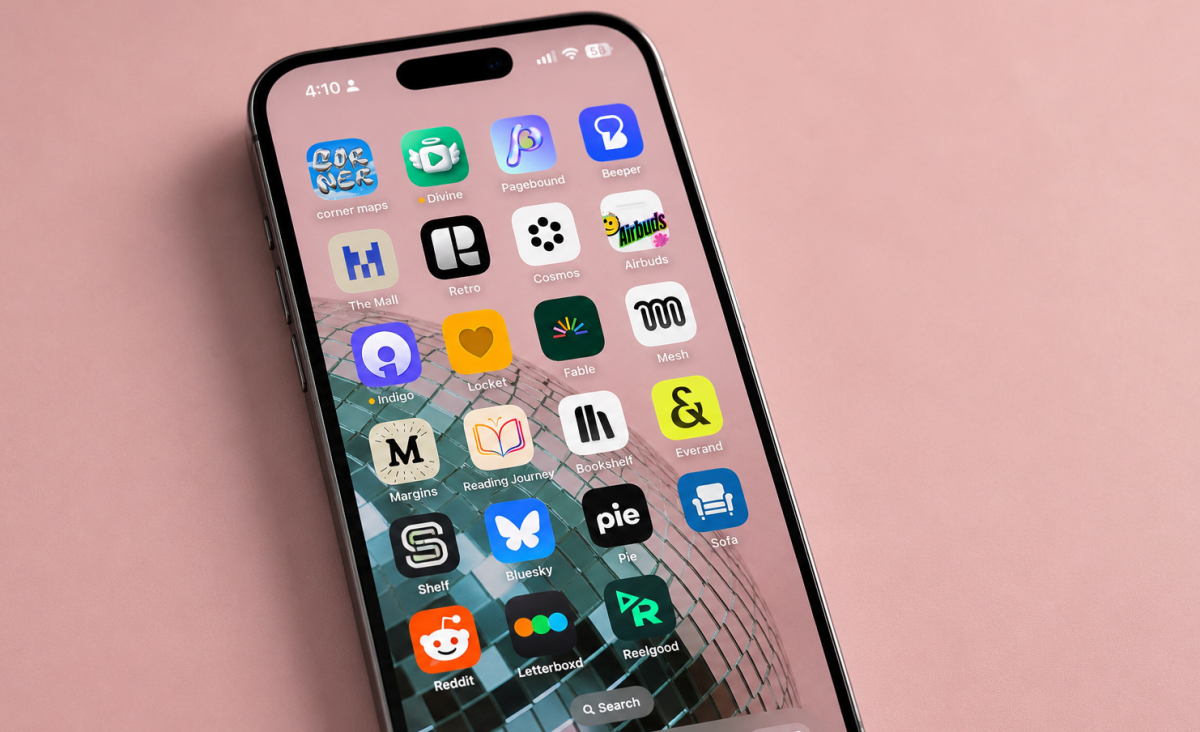
For years, our social media experiences have been dominated by Big Tech players like Meta (Facebook, Instagram, WhatsApp), Google (YouTube), Snapchat, TikTok, and X. But a growing number of startups are taking aim at these giants by building new, often smaller and more personal social networking experiences to connect people with friends, interests, and tighter-knit communities.
If you’re looking for a way to extricate yourself from the grip of traditional social media and Big Tech products in general, there are a number of interesting alternatives available. Many of them cater to Gen Z and younger, a group that’s often more willing to build their social networks within new spaces compared to people with well-established networks that sit on aging platforms.
Below are some of our favorites, all of which are worth a download.
Retro
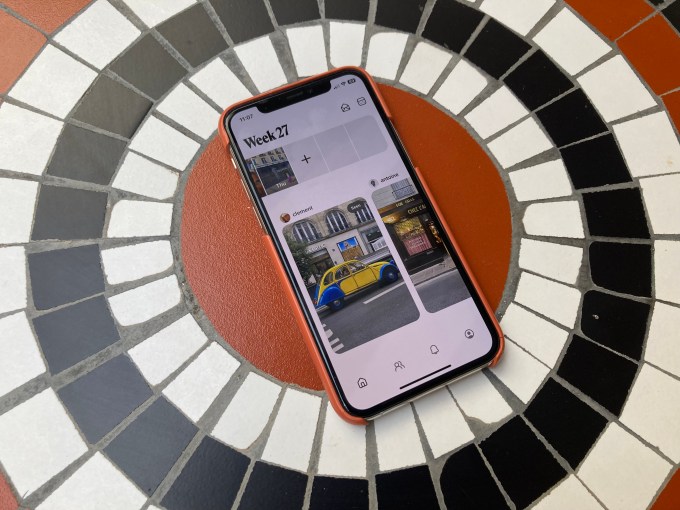
Retro is a thoughtfully designed photo-sharing app focused on building connections with friends in a more private format. Created by two former Instagram team members, Nathan Sharp and Ryan Olson, the app offers simple ways to share photos with the people in your life who matter, as well as others that help you reconnect with your own memories. You can select certain photos to highlight every week, dump photos into albums, and find and follow others via search features. You also have your own user profile that includes privacy controls that allow you to choose which of your friends can see more than your most recent month’s worth of photos.
Cosmos

Are you the creative type who’s sick of the AI slop on Pinterest? Another app, Cosmos, could offer an escape. Dubbed a “space for inspiration,” Cosmos allows you to search by color, keyword, or image, to shape a profile based on your taste. You can also follow friends and other tastemakers and collaborate with others on collections. Overall, the app is a bit more elevated than Pinterest, and it can also be used to shop for interesting products that match your style.
Indigo

Looking to get off X but don’t know which decentralized social network to choose — Mastodon or Bluesky? Indigo’s app solves that problem by offering a single app where you can participate in both networks at once. The app offers a unified timeline and a composer that lets you cross-post to both services at once, access to your custom feeds, and tons of personalization tools and configuration settings. The app has some polish, having been co-created by Ben McCarthy, who also developed the Obscura line of apps and others, alongside freelance iOS designer Aaron Vegh.
Indigo: iOS only
Corner

Corner says it best, calling its app “Google Maps but social,” which is an apt description. The company has a growing community of some 125,000+ users who curate their favorite places both locally and abroad into lists that they can “gatekeep” or make public for others to discover. With a definite Gen Z vibe, this isn’t just a place to find “good restaurants near me,” but to uncover unique lists, like those focused on where you can find the best dumplings, queer nightlife, live jazz spots, places to dance that aren’t clubs, indie bookshops, and anything else you want to categorize, organize, and recommend. The app also provides a personalized map where you can view your favorite places, those you want to try, other people’s suggestions, and more. It’s like Google Maps if someone from 2026 designed it.
Corner: iOS only
Divine

If you’re still missing Vine (thanks a lot, Twitter), you’ll want to download the reboot called Divine. Enterprising developer Evan Henshaw-Plath, an early Twitter employee, imported the Vine archive into his team’s new app, which aims to offer a home for short-form video creators. The app hosts roughly 500,000 videos from nearly 100,000 original Vine creators and allows users to make their own six-second videos once again. Several early Vine creators have returned to the app, as well, like Lele Pons, JimmyHere, MightyDuck, and Jack and Jack, among others. The project also has financial backing from Twitter co-founder and former CEO Jack Dorsey’s nonprofit, “and Other Stuff,” which aims to back open source social projects.
Mesh

While not exactly a social network in the sense that it’s a platform for connecting directly, Mesh is a helpful tool to throw into your lineup of networking apps. The app is something like an address book on steroids, as it lets you track what people in your network — personal, professional, and otherwise — have been up to, by tracking LinkedIn or X bio changes, posts, publications, and more. Plus, Mesh provides tools allowing you to reach out and reconnect on a cadence you configure, somewhat like a personal CRM. Acquired by WordPress.com owner Automattic in 2025 (when it was then known as Clay), Mesh plans to offer deeper integrations with Automattic’s universal messaging app, Beeper — which, by the way, you should download too.
Fable

Book club community app Fable recently got an upgrade that makes it worth another look, even if it’s not your main book tracker. The company is now offering a bundled service with digital reading subscription provider Everand (as they’re both owned by Scribd), which offers access to 1.5 million ebooks and audiobooks from the major publishers and more. Your ratings and reviews then sync over to Fable, where you can also see the recommendations from others and join virtual book clubs. Goodreads who?
To be fair, there are so many book trackers to choose from these days that it’s hard to narrow things down. I personally also enjoy Bookshelf, Reading Journey (which has a great widget), Margins, TBR, and PageBound, but there are even more! We truly have a wealth of choices in this space, so why not just download them all?
Locket

Locket is one of the pioneers of the idea to put your friends directly on your iPhone’s Home Screen. The social app offers a live widget that updates as your friends upload new photos or messages, which you can respond to through a lightweight chat option. You can also engage in weekly photo dumps, follow your favorite artists, and more.
Airbuds

Apple and Spotify never got social networks built around music right, but Airbuds seems to have done it. The app is a social network where you share what you’re streaming with your friends, then builds on top of that functionality to offer a range of other features. You can react to your friends’ music choices with emojis, stickers, or selfies, play clips of your friends’ recently streamed songs, message friends, configure your profile with favorite bands, or engage in music-related activities like music quizzes, getting your music style roasted, or finding out which friend has matching musical taste, to name a few.
The Mall

Newly launched app The Mall turns online shopping into a social experience. The app offers a universal feed for following updates and new releases from your favorite brands, largely fashion — though you can add others that have an online e-commerce storefront. Plus, you can visit friends’ profiles to see what sort of items are in their collections and “mall” and get inspiration and recommendations of other brands you might like, based on your tastes and style.
The Mall: iOS (waitlist)
Shelf

Shelf’s central idea is to offer you a way to organize your taste — meaning the music, movies, TV shows, books, and other things you’re into. By doing so, Shelf lets you learn more about yourself, get personalized recaps, dive into trend breakdowns, and more. But a social element comes into play here, too, because you can browse friends’ shelves as sources of discovery and inspiration. Plus, unlike much of traditional social media, Shelf is private by default because it’s not about gaining clout; it’s about keeping a history of your own digital life and interests, and that of your friends.
Shelf: iOS
When you purchase through links in our articles, we may earn a small commission. This doesn’t affect our editorial independence.





News
“He’s Not at the Level We Want, But I Believe in Him” — Simeone Backs Lookman to Rediscover Best Form


Atlético Madrid manager Diego Simeone has thrown his weight behind Nigerian international Ademola Lookman despite admitting that the Super Eagles forward is yet to reach the performance level expected of him at the Spanish club.
Simeone acknowledged that Lookman has not been performing at the standard either the player or the coaching staff desires, but insisted that his commitment in training and willingness to improve remain encouraging.
“Ademola isn’t at the level he wants or we want, but he works hard every day,” Simeone said.
The Argentine tactician also highlighted Lookman’s attacking qualities, particularly his ability to take on defenders, explaining that losing possession is sometimes an unavoidable part of a player’s efforts to create opportunities.
“He’s a dribbler, and he needs to lose the ball sometimes,” the Atlético manager explained.
Despite his assessment of the Nigerian’s current form, Simeone made it clear that he retains confidence in Lookman’s ability to deliver.
“I believe in him,” he declared.
The comments underline the balance Simeone is seeking between demanding improved performances and allowing the forward the freedom to express himself in attacking situations.
Lookman’s reputation has been built on his pace, movement and ability to unsettle defenders in one-on-one situations, qualities that have made him an important attacking option for both club and country.
However, Simeone’s remarks suggest that the Nigerian still has work to do to consistently meet the demands of his manager’s tactical approach.
Rather than questioning Lookman’s effort, the Atlético coach appears encouraged by his attitude and daily commitment, indicating that the player continues to enjoy the backing of the technical staff.
For Lookman, the challenge will be to translate that hard work into more decisive contributions on matchdays while retaining the attacking boldness that defines his game.
Simeone’s message is clear: Lookman has not yet reached the desired standard, but his manager remains convinced that the Nigerian has the qualities and determination to improve.

Financial experts, government officials, central bank chiefs, heads of multilateral organisations and other participants are gathered this week in Bangkok, Thailand, for the annual meetings of the International Monetary Fund (IMF) and World Bank scheduled to be held between October 12 and 18.
Participants are expected to deliberate on the disruptive potential of Artificial Intelligence (AI) in the global economy, the widening war in the Middle East and its impact on the global economy, the global energy supply shock, mounting debts, and rising interest rates that pose daunting risks to global economic growth.
IMF Managing Director Kristalina Georgieva says the Queen Sirikit National Convention Centre will host 18,000 people who were registered to attend the meetings, 4,000 more than the last off-site meetings held in Morocco in October 2023.
The IMF has made no significant change to its forecast of 3% global growth in 2026, and the body says some countries are expected to be downgraded because of war and reduced energy exports.
The meetings are also expected to address the growing public debt burden that has slowed growth and worsened inflation, as public debt remains at its highest level since World War Two and will exceed 100% of GDP before 2030, according to the IMF.
Emerging markets and low-income countries are particularly vulnerable, given high public debt levels that will have to be renegotiated at higher interest rates.


Equally important on the agenda is the precarity of platform-driven labour, amid AI-enabled automation and the changing future of work.
On Monday, Ms Georgieva said Artificial Intelligence (AI) could affect about 40 per cent of jobs globally, urging governments to prepare workers for the changing labour market. She described AI as a “slow-moving tsunami” for the labour market, saying it could augment, downgrade or eliminate jobs.
IMF estimates show that AI could affect about 60 per cent of jobs in advanced economies and 23 per cent in low-income countries, reflecting the slower spread of AI rather than greater protection from its effects.
Bangkok
The Bangkok meetings are taking place amid disruptions and a war that has negatively affected energy supplies, especially via the Middle East.
Flights to Bangkok, the host city of this year’s off-site meetings, often route through the Middle East, creating immediate challenges for global travellers heading to Thailand’s capital.
On Sunday, there were attacks on Saudi airports, prompting disruptions to international travel.
The IMF and World Bank’s last off-site annual meetings took place in Morocco in 2023.
Nigeria’s participation
Already, Nigeria’s Minister of Finance and Coordinating Minister of the Economy, Taiwo Oyedele, has arrived in Bangkok, Thailand, to lead the nation’s delegation to the meetings
A statement from the Federal Ministry of Finance said the annual gathering provides Nigeria with an opportunity to engage with international financial institutions and development partners on economic issues affecting the country and its development priorities.
Mr Oyedele’s presence at the meetings is equally expected to allow the Federal Government to present its economic priorities to development organisations and international partners. He is also expected to discuss how external cooperation can support domestic reform efforts.
The finance ministry website also says that, on the sidelines of the meetings, Nigeria will convene investors, project sponsors and public institutions around a curated pipeline of bankable opportunities across strategic sectors. The programme is focused on private-capital mobilisation, food security and infrastructure development. Another event focuses on investor and project-owner conversations at Fairmont Bangkok Sukhumvit.
PREMIUM TIMES newspaper is in Bangkok, Thailand’s capital, to report on the meetings and other policy decisions as they affect the global economy and Nigeria’s domestic affairs.
Discover more from Premium Times Nigeria
Subscribe to get the latest posts sent to your email.
-

 Business4 days ago
Communications Ministry made ₦345.5 million duplicate payment for Abuja ICT Park project
-
News4 days ago
LumenUs helps automate tedious paperwork in times of grief
-
News3 days ago
Inside INEC’s AI and cybersecurity plans to secure Nigeria’s 2027 Elections – Technology Times
-
News3 days ago
EuroMatch NPFL: Ikorodu City Return to Winning Ways as Salami, Ikechukwu Sink Kwara United in Lagos