Connect with us

News

Mira Murati steps back into the spotlight, carefully

info

Published

on

Mira Murati at Bloomberg.jpg

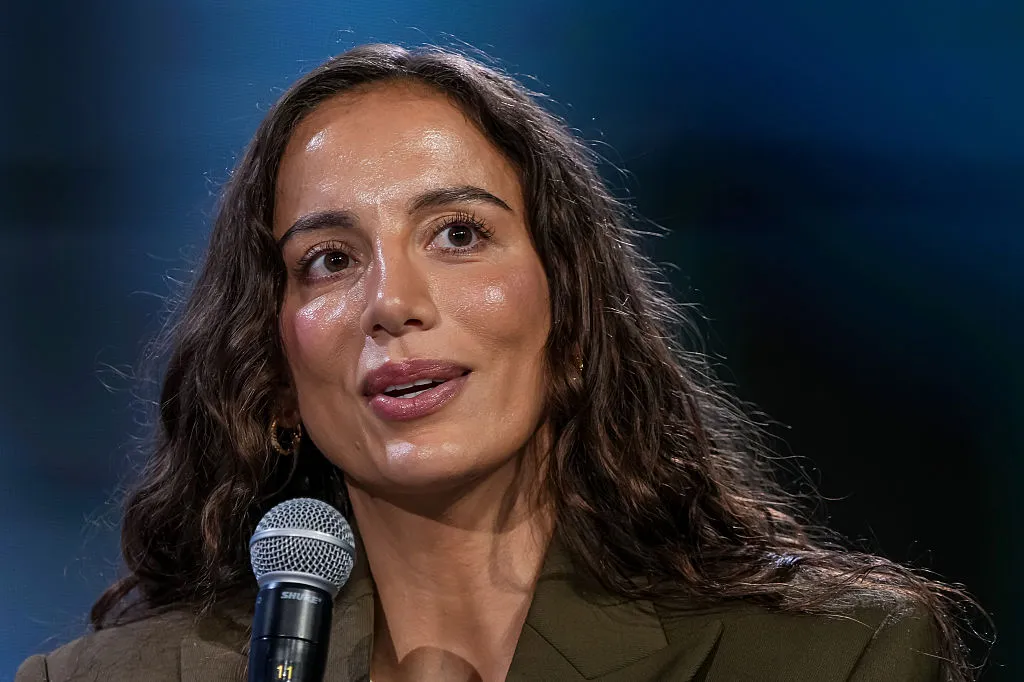
Mira Murati isn’t a natural creature of the conference stage. As the CTO of OpenAI, she was present but rarely the public face of the company. As CEO of her own company, Thinking Machines Lab, she has been even harder to find. So when she sat down with Bloomberg in San Francisco on Thursday — her first major media appearance in roughly 18 months — it was worth paying attention, even if she was careful not to say too much.

The timing makes sense. Thinking Machines has spent the better part of a year and a half operating largely in the background: raising capital, hiring researchers, and shipping one product, Tinker, an API for fine-tuning open-source AI models.

In the meantime, the companies competing for the same talent, customers, and headlines have only grown more omnipresent. OpenAI, where Murati spent six years as CTO, is constantly in the news cycle. Anthropic’s momentum is all that anyone can talk about right now. And xAI, Elon Musk’s AI venture, has been folded into SpaceX ahead of what is expected to be its massive public offering, generating its own gravitational pull on attention and investment. In that environment, staying heads down has diminishing returns; at some point, you have to make some noise just to remind the market you exist.

Murati used the Bloomberg appearance to do exactly that and not much more. She previewed what Thinking Machines is calling “interaction models,” which she described as a fundamentally different kind of AI interface. Rather than the turn-based, prompt-and-response dynamic that defines most AI products today, she told interviewer Emily Chang, the company’s models are designed to process continuous streams of audio, text, and video in 200-millisecond intervals. The idea is that they can pick up on the texture of human communication — the interruptions, the mid-thought corrections, even pauses to think — in something closer to real time. But Murati was careful to frame it as a first step, not a finished product, and she declined to put a specific release date on anything.

She also answered questions about the episode that first put her more squarely in the public eye: the chaotic week in November 2023 when OpenAI’s board fired Sam Altman and she became interim CEO. Inside OpenAI it came to be called “the blip.” Murati said she felt clear about her decisions in each moment — that protecting the mission and the team was the through-line that made the choices feel obvious even as the situation appeared to be falling apart from the outside. She said the company would have “imploded” if not for her involvement through that strange five-day stretch and its immediate aftermath. But she acknowledged that clarity of intent is not the same thing as clarity about consequences. In retrospect, she said, she would have pushed harder for more information, a better transition plan, and more transparency. What she did not say, at least not directly, is whether she thinks things turned out well.

Asked whether she still trusts her former boss, she sidestepped the question, steering the conversation toward a larger concern that she returned to several times: the concentration of consequential decisions in too few hands — not just at OpenAI but across the industry. Her worry, she said, is less about the character of any individual leader (though she acknowledged that matters) and more about the absence of structural checks. Good people make bad calls. Well-intentioned organizations drift. Too much attention has been paid to virtue and too little to governance, she suggested.

Chang also politely pressed her on the departures of several high-profile researchers from Thinking Machines in recent months , a subject Murati has largely avoided in public and that she downplayed on Thursday. First, she said, building a frontier AI lab from scratch compresses years of normal organizational volatility into months. She also acknowledged that compensation — the nine-figure packages that have become standard currency in the war for AI talent — captures people’s imaginations, but she suggested it isn’t usually the whole story. To some audience laughter, she said of her own competitive instincts, “When I wake up in the morning, I am not thinking about how to kill the competitor.”

Naturally, Chang asked about what comes next for AI broadly, including for the humans who AI companies once said would be empowered by AI but who’ve more recently grown scared by talk of mass job displacement, not to mention a future where AI is used to create chemical weapons.

Murati, who was born in Albania and speaks with a slight Eastern European accent, was measured in her response. She pushed back on the framing of inevitable dystopia or inevitable utopia, arguing that neither outcome is predetermined and that the period we’re in right now is the one that will determine which way things go. Still, she said — and not for the first time during the interview — that if humans take their hands off the wheel too soon, the future will look very different, and not better.

When you purchase through links in our articles, we may earn a small commission. This doesn’t affect our editorial independence.

Continue Reading
Click to comment

Leave a Reply

Your email address will not be published. Required fields are marked *

News

Ebola Outbreak Worsens As Death Toll Rises – Africa CDC

info

Published

on

By

The Director-General of the Africa Centres for Disease Control and Prevention (Africa CDC), Dr Jean Kaseya, says the worsening Ebola outbreak recorded 89 deaths in one week.

He said the development had raised concerns over treatment capacity and the growing level of community transmission.

Kaseya spoke on Thursday during an online media briefing on Ebola, warning that treatment centres were already operating at 95 per cent bed occupancy.

He said the situation required a dual response involving expansion of treatment facilities and earlier detection of cases to reduce the number of patients requiring hospital admission.

“Authorities must build more treatment capacity while detecting cases sooner. Early detection prevents patients from needing hospital admission.

“Bunia, Gwampara, Mugwalu and Nyankunde remain the main hotspots. Katwa, Benin and Butimbo in North Kivu are also active.

“South Kivu has not recorded new confirmed cases recently. Officials are monitoring to confirm if the plateau holds,” he said.

According to him, five health zones in Ituri and one in North Kivu account for more than 85 per cent of reported cases, making targeted interventions critical to controlling the outbreak.

Kaseya said Uganda had recorded 19 cases in total, including one new case reported last week, while five infections involved local contacts of travellers from the Democratic Republic of Congo (DRC).

He said that Uganda previously monitored about 800 contacts linked to 19 cases and had gradually discharged most of them, leaving only nine active contacts under 100 per cent follow-up.

“Rural areas average 20 contacts per case, while urban areas average 40. That ratio will be updated with new data.

“Current data shows 8,000 contacts listed, but 40,000 are expected based on averages. Only 77 per cent are monitored daily, below the 95 per cent target.

“Just 30 per cent of new confirmed cases come from known contacts. That means 70 per cent originate from community spread, a critical concern.

“Africa CDC is zooming in on contact tracing to stop community transmission. Strong surveillance is key to reaching and confirming the peak,” he said.

According to him, plans are underway to deploy 20,000 local youths as community response teams to help identify and trace missing contacts.

Kaseya warned that after 35 days, the outbreak had already grown 3.6 times larger than comparable outbreaks in Uganda and West Africa in 2014, and could become the largest Ebola outbreak on record if left unchecked.

He said that a colleague who had worked in Turin tested positive for Ebola after returning to France without symptoms, adding that Africa CDC and European partners were intensifying technical and financial cooperation.

“The government decided people flying from Ituri to Kinshasa must avoid further travel for 21 days. The move aims to prevent cross-border spread.

“The approved response plan was 518 million dollars. Pledges reached 910 million dollars, but only 13 per cent has been released as actual funding.

“Sixty-nine camps in Ituri and North Kivu house about 1.15 million people, in addition to one million returnees. These camps remain difficult areas for case detection and contact tracing.

“With humanitarian needs added, the required budget rose to 1.4 billion dollars. Without it, the outbreak will expand and cost more in the long term,” he said.

Kaseya said the DRC had received an antiviral treatment, while MDP-134 was expected to arrive on Friday night.

He added that Obel-Dezivir for post-exposure prophylaxis was already in the country and clinical trials would begin next week in Bunia.

The Africa CDC chief said four candidate vaccines were under consideration, including MVA Ebola developed by Amina Pharma.

According to him, Phase 1 trials will commence shortly, with hopes of having at least one vaccine available before the end of the year.

Kaseya further stated that Africa CDC was leading the laboratory response pillar, having delivered 52 diagnostic machines and 130,000 testing cartridges.

“Plans include 100 more machines and tests for DRC, Uganda and other at-risk countries.

“All platforms in Ituri will use DHIS2. Africa CDC deployed 150 Starlink units and is digitalising points of entry for cross-border data sharing.

“Officials will present weekly updates on cases, contacts and response indicators, while journalists will continue to receive briefings on therapeutics and vaccine development,” he said.(NAN)(www.nannews.ng)

Edited by Abiemwense Moru


Continue Reading

News

Benue PDP disowns Emmanuel Agbo, affirms Aondoakaa as guber candidate

info

Published

on

By

Pdp 1.jpg image.jpg

The Benue State chapter of the Peoples Democratic Party, PDP, has distanced itself from Dr. Emmanuel Agbo, describing him as an impostor and political con artist over claims that he is the party’s governorship candidate for the 2027 elections.

The party made the clarification following the circulation of what it described as a fake Certificate of Return allegedly paraded by Agbo on social media to support his claim of emerging as the PDP governorship flagbearer.

In a statement issued by the party’s State Secretary, Comrade Dan Nyikwagh, the PDP categorically stated that Agbo is neither its governorship candidate nor has he ever been recognized as such for the 2027 general elections.

The party said any publication, video, or statement presenting Agbo as its candidate amounts to impersonation and an attempt to mislead the public.

“Emmanuel Agbo is an imposter and a political con artist peddling and sponsoring fake news for selfish and mischievous reasons,” the statement said.

The PDP urged media organisations, social media users, and members of the public to disregard Agbo’s claims, insisting that they are false and fraudulent.

The party further stated that Chief Michael Kaase Aondoakaa (SAN) remains its duly affirmed governorship candidate for the 2027 election, having emerged through what it described as a transparent and unanimous consensus process endorsed by party leaders, stakeholders, and members and monitored by the Independent National Electoral Commission (INEC).

According to the statement, Aondoakaa’s emergence reflects the collective decision of the party and enjoys widespread support across the state.

The PDP also warned that it would not tolerate actions capable of creating confusion within its ranks, adding that legal and constitutional measures have already been initiated against Agbo and others allegedly involved in impersonation.

“Impersonating a party candidate is a serious offence, and the full weight of the law will be brought to bear on anyone engaging in such criminal conduct,” the party stated.

It called on security agencies, the media, and residents of Benue State to remain vigilant and dismiss any narrative portraying Emmanuel Agbo as the PDP governorship candidate.

The party reaffirmed its commitment to what it described as rebuilding Benue State under the leadership of Chief Michael Kaase Aondoakaa, SAN.

Continue Reading

Trending