Connect with us

Business

NERC to set net billing regulations, boost renewable energy

info

Published

on

NERC 2.jpg

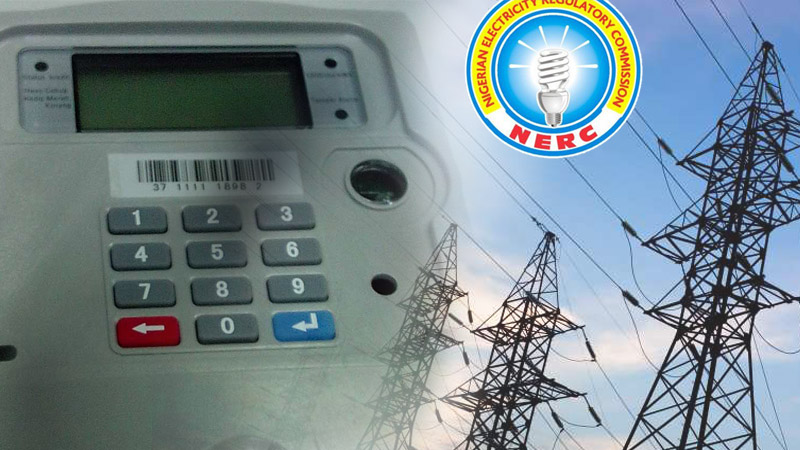
The Nigerian Electricity Regulatory Commission (NERC) will kick off the Net Billing Regulations 2026 to strengthen energy security and expand renewable energy nationwide.

The commission announced its plan in a public notice on Wednesday, addressed to electricity consumers, distribution companies, renewable energy developers, commercial and industrial customers, and the general public.

According to NERC, the regulations establish a framework that enables eligible electricity customers, referred to as “prosumers,” to generate electricity primarily through renewable energy sources such as solar photovoltaic systems for their own consumption while exporting excess electricity to distribution networks under a net billing arrangement.

“The Nigerian Electricity Regulatory Commission (NERC) hereby notifies electricity consumers, distribution companies, renewable energy developers, commercial and industrial customers, and the general public of the commencement of the Net Billing Regulations 2026.”

NERC further stated that the new framework is designed to promote the adoption of renewable energy technologies, enhance energy security, and reliability for electricity consumers.

Similarly, the regulators explained that the move was aimed at encouraging private sector participation in distributed electricity generation, supporting efforts to reduce greenhouse gas emissions and facilitate efficient integration of renewable energy systems into distribution networks.

Eligibility requirements:

To participate in the net billing scheme, the commission explained that customers must be connected to the network of a licensed electricity distribution company.

Moreover, the customers must install renewable energy systems that comply with technical standards and regulatory requirements; deploy renewable energy systems with installed capacities ranging from a minimum of 50 kilowatt peak (kWp) to a maximum of 1.5 megawatt peak (MWp).

Besides, the customers are also required to obtain approval from the relevant distribution company and execute a Net Billing Agreement and register with NERC.

The commission said interested customers are expected to apply through their distribution companies for technical feasibility assessments before approval.

“Upon approval and execution of a Net Billing Agreement, the applicant shall register with NERC in accordance with the provisions of the Regulations.”

Metering/compensation

NERC said approved participants would be provided with bidirectional net meters to measure electricity imported from and exported to distribution networks.

The commission added that surplus electricity exported to the grid would attract credits based on export tariffs approved under the regulations.

The move comes amid increasing interest in decentralised power generation and rising adoption of solar energy solutions among households and businesses seeking alternatives to unreliable grid supply.

Continue Reading
Click to comment

Leave a Reply

Your email address will not be published. Required fields are marked *

Business

Nigeria Targets $21 Billion Investment in Landmark Bonga Southwest Deal

info

Published

on

By

BYAGENCY REPORTERS —The Nigerian National Petroleum Company Limited (NNPC Ltd), and the OML 118 Contractor Parties  — Shell Nigeria Exploration and Production Company Limited (SNEPCo), Esso Exploration and Production Nigeria (Deepwater) Limited, and Nigerian Agip Exploration Limited (NAE) — yesterday executed the Addendum to the OML 118 Production Sharing Contract (PSC) and the Addendum to the Dispute Settlement Agreement (DSA), marking a major milestone in the advancement of the deepwater Bonga Southwest/Aparo  project (BWSAp) towards Final Investment Decision (FID).

The execution gives effect to the fiscal and commercial terms approved by the Federal Government to support the development of BSWAp and it reinforces Nigeria’s commitment to creating a competitive, stable and attractive environment for large-scale deepwater investment.

The milestone follows the approval by President Bola Ahmed Tinubu of the Deep Offshore Oil and Gas Projects Incentives (Tax Remission) Order, 2026, an important component of the Federal Government’s ongoing reforms to enhance the competitiveness of Nigeria’s deepwater sector and unlock new investment. The BSWA PSC and DSA Addenda demonstrate the practical impact of these reforms in translating policy into investment and project development.

BSWAp is expected to be one of Nigeria’s largest deepwater developments, with the potential to attract US$15 billion to US$21 billion in investment over the life of the project and achieve peak production of about 175 kbopd of oil and 140 mmscfd of gas. The development is expected to contribute significantly to Nigeria’s economy through increased oil and gas production, government revenues, foreign exchange earnings, local content development, employment and expanded opportunities for Nigerian businesses.

Speaking on the milestone, the Group Chief Executive Officer of NNPC Ltd, Engr. Bashir Bayo Ojulari, said: “The execution of the BSWAp PSC and DSA Addenda demonstrates the effectiveness of President Tinubu’s reforms in translating policy into investment. This is about unlocking a major deepwater project and demonstrating that Nigeria has a competitive fiscal framework and a clear pathway for sustainable investment in its energy sector. NNPC Ltd will continue to work closely with the Federal Government, our partners and other stakeholders to ensure that this project delivers maximum value for the Federation and the Nigerian people.”

The Contractor Parties also announced the successful completion of the project’s Pre-Front End Engineering Design (Pre-FEED) phase, marking an important milestone in maturing the technical and commercial scope of the development and positioning the project to progress into the Front End Engineering Design (FEED) phase, subject to applicable partner, assurance and governance requirements.

Following a competitive selection process, a bidder has been identified as the preferred Floating Production Storage and Offloading (FPSO) contractor for the BSWA project, subject to completion of applicable partner, regulatory, assurance and governance processes. The selection provides a basis for progressing the FPSO concept into FEED and for undertaking the further engineering and commercial work required to mature the project towards FID. Any eventual award of the FPSO Engineering, Procurement, Construction and Installation (EPCI) contract remains subject to the completion of all applicable approvals and requirements.

Once operational, BSWAp is expected to become one of Nigeria’s most significant new deepwater production hubs, contributing materially to national oil production and supporting the country’s ambition to sustainably grow oil and gas output over the coming years.

The project is expected to deliver substantial benefits to Nigeria through billions of dollars of investment, increased participation by Nigerian contractors and suppliers, and significant direct and indirect employment opportunities across engineering, fabrication, offshore construction, logistics and operations.

BSWAp is also expected to strengthen Nigerian content through increased contracting opportunities for indigenous companies, enhance local fabrication, marine and engineering capabilities, facilitate technology transfer and skills development, and create lasting value across the wider Nigerian economy.

The milestone reflects the strong collaboration among NNPC Ltd, the Federal Government, relevant regulatory agencies and the OML 118 Contractor Parties , and reinforces Nigeria’s position as a competitive destination for deepwater investment.

NNPC Ltd reaffirmed its commitment to working with all stakeholders to advance the BSWA project safely, competitively and responsibly, while maximising value for Nigeria and the Nigerian people.

The post Nigeria Targets $21 Billion Investment in Landmark Bonga Southwest Deal appeared first on Business Today NG.

Continue Reading

Business

Africa largest beneficiary of GEF funding – Official

info

Published

on

By

Images 2.jpg

MTN ADVERT

The Global Environment Facility (GEF), a family of funds supporting environmental action globally, says African countries are the largest beneficiaries of its funding for sustainable environmental projects.

Ulrich Apel, GEF Senior Environmental Specialist, disclosed this on Monday while responding to questions on mechanisms for accessing environmental finance.

Apel said Africa had received about 30 per cent of GEF funding, ahead of Asia, which received 18 per cent, and Latin America and the Caribbean, which received 15 per cent.

“First of all, we have programmes that cover all the available funding. We programme all of our available funding, and in fact, the African region is the largest beneficiary of our funding, having received about 30 per cent of the funds, followed by Asia with 18 per cent, and Latin America and the Caribbean with 15 per cent,” he said.

He was responding to PREMIUM TIMES’ questions about how African countries, including Nigeria, could more easily access GEF funding.

PT WHATSAPP CHANNEL

According to him, African countries are a particular focus of the GEF’s funding because of the region’s vulnerability to land degradation, desertification and drought, which are central issues at the ongoing United Nations Convention to Combat Desertification (UNCCD) COP17.

“So, I don’t think the problem is necessarily the accessibility of funds, because we programme all the funding that we have available,” Apel said.

The disclosure came as governments, financial institutions and businesses at UNCCD COP17 in Mongolia intensified efforts to mobilise finance for land restoration and drought resilience.

Finance takes centre stage at COP17

24 August was designated as Finance Day at UNCCD COP17 in Ulaanbaatar, Mongolia, with discussions across meeting rooms and the plenary hall focused on mobilising public and private investment for land restoration and drought resilience.

The 17th Conference of the Parties to the UNCCD is placing particular emphasis on rangelands — including drylands, grasslands, shrublands, wetlands and deserts — which cover more than half of the Earth’s land surface.

Despite their importance to pastoralists, biodiversity, food systems and carbon storage, about half of the world’s rangelands are estimated to be degraded.

Against this backdrop, governments, development banks, investment funds and businesses participating in COP17 on Monday announced $1.3 billion in new and pipeline financing for land restoration and drought resilience across 23 countries on five continents.

GEF unveils drought programme

The GEF also announced the development of a new Drylands and Drought Management Integrated Program aimed at helping countries proactively manage drought, strengthen resilience in drylands and respond to growing risks to ecosystems, food security, water availability, livelihoods and health.

The programme will be implemented during the GEF-9 investment cycle, covering 2026 to 2030.

The facility said the programme responds to requests from parties to the UNCCD for the GEF to prioritise drought resilience in its programming.

It will support countries and communities in better preparing for, monitoring, assessing, mitigating, and responding to the cascading impacts of drought.

“Investing in healthy land and healthy people means investing in food security, climate resilience, biodiversity, water, jobs, and peace,” said Claude Gascon, GEF Interim CEO and Chairperson.

“Through this new Integrated Program, we will support countries in moving from crisis response toward proactive drought resilience.”

The Drylands and Drought Management Integrated Program has a tentative GEF grant envelope of $140 million.

It will work closely with the Riyadh Global Drought Resilience Partnership, the Drought Resilience Investment Facility, and other initiatives that support resilience across drylands and rangelands.

GEF backs rangelands initiative

As part of the broader push, the GEF is also supporting the Rangelands Flagship Initiative, a multi-partner global initiative led by Mongolia and the UNCCD to significantly increase investments in conserving, sustainably managing and restoring rangelands.

The GEF supports the development and coordination of the initiative through the UNCCD COP17 Legacy Project, a $3.3 million GEF investment implemented by the International Union for Conservation of Nature (IUCN).

The project is leveraging an additional $8 million in co-financing from Mongolia and IUCN.

During the GEF-8 cycle, which runs from 2022 to 2026, the GEF approved 50 projects across its family of funds supporting sustainable rangeland management and restoration, as well as pastoralist livelihoods.

The projects represent a total investment of more than $300 million.

The GEF said the projects, which are at various stages of development, could complement the Rangelands Flagship Initiative and help scale up successful approaches to rangeland management and restoration.

What GEF-9 means for Africa

With an initial programming level of $3.9 billion, GEF-9 will support expanded investments in nature-positive development, drought resilience and sustainable land management.

Four GEF-9 Integrated Programs are strongly aligned with UNCCD objectives and are expected to attract more than $800 million in GEF grant funding.

READ ALSO: COP17 advances $1.3bn for land restoration, puts rangelands at centre

They include programmes focused on Food Systems, Critical Forest Biomes, Blue and Green Islands, and the new Drylands and Drought Management Integrated Program.

Under GEF-9, drought resilience is expected to become more central, targeted and measurable.

The cycle includes a dedicated objective for implementing national drought plans, a drought vulnerability index incorporated into the resource allocation formula for countries, and new indicators to track improvements in drought resilience.

The GEF said GEF-9 would enable investments that help countries address urgent environmental priorities through a whole-of-government and whole-of-society approach.

Across the GEF family of funds, 20 per cent of resources are expected to benefit Indigenous Peoples and local communities directly.

The replenishment also places greater emphasis on mobilising private capital for environmental action. Ten per cent of total GEF-9 funding is allocated to the blended finance window, with an overall target of using 25 per cent of GEF resources to help mobilise private-sector investment


Discover more from Premium Times Nigeria

Subscribe to get the latest posts sent to your email.

Continue Reading

Trending