News
2023: Six parties scramble for Plateau gubernatorial sit



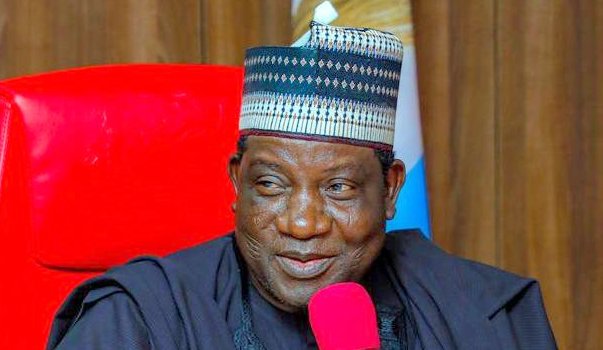


The All Progressives Congress, APC, has formally launched its campaign for President Bola Tinubu’s re-election in 2027, drawing thousands of supporters, political officeholders and party leaders to Kaduna, even as differing opinions among northern Nigerians raise questions about the extent of the president’s support in the region.
The rally, held on Saturday under heavy security, attracted governors, ministers, senators, members of the National Assembly and state legislatures, as well as APC leaders from across the country.
Reports from Kaduna indicated that hotels were fully occupied, with some supporters reportedly spending the night in vehicles and along the streets because of the large turnout.
Speakers at the rally called for northern unity behind Tinubu’s re-election bid, citing projects and policies they said had benefited the region. They also argued that the president had demonstrated political consideration for the North by supporting the emergence of leaders from the region at different levels of government.
However, the large turnout has not settled the debate over Tinubu’s popularity in the North, where some citizens have expressed dissatisfaction with the administration’s economic policies, while others believe the president deserves another term to consolidate ongoing reforms.
Some spectators were reportedly heard expressing disapproval as prominent guests made their way to the venue. However, the significance of such reactions remains difficult to establish without broader evidence of public opinion.
Rally crowds do not guarantee electoral support — Fagge
Speaking to DAILY POST, Professor Kamilu Sani Fagge, a political scientist at Bayero University, Kano, cautioned against interpreting the number of people at the APC rally as evidence that Tinubu enjoys widespread support among northern voters.
He said political rallies could attract people for reasons other than a commitment to vote for the candidate being promoted.
“This rally does not show love for the president, and not everyone who attends it will vote for President Tinubu,” Fagge said.
“In a democratic system, such gatherings should not be taken as a decisive measure of electoral support. The people who come to watch a rally may simply want to see what is happening and have something to report. Even when another politician organises a rally, you may see the same people attending as spectators.”
The professor also commented on the choice of venue, suggesting that it could influence perceptions of the size of the gathering.
“The APC’s decision to use Ranchers Bees Stadium instead of Ahmadu Bello Stadium makes strategic sense because Ranchers Bees is not so large. When people gather there, their numbers may appear more substantial than they would in a bigger stadium,” he said.
Businessman cites rising costs as reason to reject Tinubu
To examine the differing opinions among Nigerians ahead of the 2027 elections, DAILY POST spoke with individuals from different professional and social backgrounds about their assessment of Tinubu’s administration and whether they would support his re-election.
Alhaji Nasir Tukur, an Abuja-based businessman and former bank employee, said the economic difficulties experienced by businesses under the current administration had weakened his confidence in the president.
He attributed the challenges to rising transportation costs, higher commodity prices and government policies that, according to him, had increased the cost of doing business.
“The harsh economic conditions businesses are experiencing have led to the collapse of many of them. Federal Government policies have directly affected our businesses by causing unprecedented increases in the prices of commodities,” Tukur said.
He recalled that when he began distributing products for major manufacturers in 2016, prices were considerably lower than they are today.
According to him, flour products that previously sold for between N5,000 and N7,000 now cost between N50,000 and N55,000, a development he said had forced many retailers out of the market.
Tukur also criticised what he described as increasing tax pressures on businesses, arguing that changes to taxation and government revenue policies had further weakened commercial activities.
“Another factor responsible for the increase in prices is the recent review of tariffs and revenue derivation by the federal, state and local governments. The pressure has pushed many businesses to their lowest point,” he said.
He added that the difficulties had contributed to companies laying off workers, further increasing the number of people seeking employment.
“All these unpopular government policies have significantly contributed to business collapses, forcing companies to lay off a large number of employees into the labour market,” Tukur said.
The businessman questioned why anyone experiencing such difficulties would consider voting for the incumbent administration in 2027.
His position reflects the concerns of some business owners who say rising operating costs, inflation and taxation have undermined their ability to sustain their businesses and retain employees.
Lecturer backs Tinubu, cites economic reforms and infrastructure
However, Dr Faruk Sadi, a lecturer at a tertiary institution in Kano, offered a contrasting assessment, arguing that the administration should be judged by its policies, implementation and measurable outcomes rather than solely by the immediate difficulties associated with economic reforms.
Sadi said he supported giving Tinubu another opportunity to complete ongoing programmes and consolidate the administration’s policies.
“My position rests on the record of what has been started, what has been delivered, and what remains to be completed. I believe that governments should be judged by their policies, their implementation, and the measurable difference they make in the lives of ordinary people,” he said.
The lecturer cited the unification of the foreign exchange market, changes to the national minimum wage, the student loan scheme and infrastructure projects as reasons for his position.
He also pointed to the administration’s efforts to expand alternative transportation through compressed natural gas, alongside railway and highway projects intended to improve connectivity and trade.
Sadi acknowledged that the economic situation remained difficult for many Nigerians but argued that the impact of government reforms should be assessed through evidence of their results.
“I acknowledge that many households still feel the weight of high prices, and the benefits of these reforms must be measured by evidence, not promised by rhetoric,” he said.
His position reflects the argument among supporters of the administration that, despite the immediate costs associated with some policies, the reforms could deliver longer-term economic and infrastructural benefits.
North’s political mood remains contested ahead of 2027
The contrasting views show the competing considerations shaping political discussions ahead of the 2027 general elections.
For some voters, the cost of living, business survival, employment opportunities and household purchasing power remain central to their assessment of the administration. Others place greater emphasis on economic reforms, infrastructure development and the completion of ongoing projects.
The APC’s campaign has provided an opportunity for the party to demonstrate its organisational strength. However, the extent to which its rally mobilisation reflects broader public support remains an open question.
Attention is also expected to turn to opposition parties, including the African Democratic Congress, ADC, and the Nigeria Democratic Congress, NDC, as they prepare their own activities ahead of the 2027 elections.
Their ability to present credible alternatives and persuade voters will form part of the wider contest over the political direction of the North.
Ultimately, the extent of Tinubu’s support among northern voters will become clearer as the election approaches, with voters’ decisions at the ballot box providing the decisive measure of his electoral backing in the region.
2027: Tinubu’s northern support faces test amid economic hardship

Nigeria’s first confirmed case of Ebola in more than a decade has raised questions about how prepared state governments are to detect and contain the virus before it spreads through their communities.
The World Health Organisation said on 20 October that Nigeria had recorded an imported case of Ebola caused by the Bundibugyo virus. The patient is the wife of a Swiss diplomat based in Abuja. She arrived in Nigeria on 3 October after travelling from Uganda and developed symptoms a few days later. The patient and her spouse were later evacuated to Switzerland on Monday while health authorities identified 53 contacts and began monitoring them.
The confirmation followed weeks of warnings from the Nigeria Centre for Disease Control and Prevention (NCDC) about the risk of the virus entering Nigeria from an outbreak that began in the Democratic Republic of the Congo.

Health authorities are identifying people who may have been exposed, tracing their movements, testing suspected cases, protecting healthcare workers and preventing further transmission. Much of this work depends on coordination across states, local government areas and health facilities, where people live and seek treatment.
A PREMIUM TIMES review of states’ 2026 approved budgets shows differences in allocations for disease surveillance, infection control, emergency operations and infectious disease facilities.
Some states made substantial provisions for health emergencies, while others allocated smaller sums to specific disease-control activities. Some budgets provide for preparedness under general health emergency headings, while others identify particular diseases, facilities or surveillance programmes.


The allocations do not establish how much money is available for an immediate Ebola response or whether the systems funded are operational. They show what state governments have provided for in their 2026 budgets, offering a basis for examining their stated priorities for public health preparedness.
The NCDC (Establishment) Act 2018 provides the statutory foundation for the agency’s work in preventing, detecting and controlling diseases of public health importance. The agency coordinates disease surveillance, provides technical support to subnational authorities and supports responses to public health emergencies.
The International Health Regulations (2005), a legally binding international framework, also requires countries to develop and maintain the capacity to detect, assess, notify and respond to public health risks.
The National Health Act 2014 provides another part of the framework. Section 11 establishes the Basic Health Care Provision Fund to support essential health services, particularly at the primary healthcare level. Although the fund is not a substitute for state emergency-response budgets, primary healthcare facilities play an important role in early detection, referral and disease reporting.
These frameworks do not prescribe a uniform amount that every state must earmark specifically for Ebola. They nevertheless underscore the need for functional public health systems capable of identifying and responding to infectious disease threats.
In May, the NCDC warned that the risk of Ebola being imported into Nigeria was high. It cited international travel, population movements and the difficulty of distinguishing early Ebola symptoms from common illnesses such as malaria. The agency urged states and the Federal Capital Territory to strengthen their preparedness and ensure they could detect and contain suspected cases promptly.
The subsequent confirmation of an imported case has made those preparations more urgent.
On Monday, the World Health Organisation said Nigeria currently has no active Ebola case after the country evacuated its index patient to Switzerland. The WHO Regional Director for Africa, Mohamed Janabi, said this in a post on X, shortly after Nigeria’s Coordinating Minister of Health and Social Welfare, Muhammad Pate, confirmed the patient’s evacuation from Nigeria.

Billions budgeted for state’s preparedness
Among the largest provisions identified in the 2026 approved state budgets are Delta’s N37.28 billion for emergency operations centres, Zamfara’s N20 billion for a health emergency response fund and Lagos’s combined N17.79 billion for two infectious disease research facilities.
Delta’s 2026 budget also provides N590 million for integrating national disease surveillance, N100 million for the control and management of infectious diseases and N50 million for communicable diseases.
Zamfara’s N20 billion allocation for a health emergency response fund could provide substantial funding for public health crises. Its effectiveness will depend on how the money is released and deployed.
Lagos’s combined N17.79 billion allocation comprises N15.27 billion for a public health epidemics and infectious disease research institute and N2.52 billion for an infectious disease research institute at Mainland Hospital, Yaba. The facilities could strengthen the state’s capacity to respond to outbreaks such as Ebola, although their contribution will depend on their completion, staffing, diagnostic capabilities and recurrent funding.
Meanwhile, Ogun provides N2.5 billion for a medical emergency preparedness and response project and N4.8 billion for national disease surveillance. Akwa Ibom allocated N1 billion for upgrading statewide emergency health interventions and N100 million for upgrading its health emergency operations centre.
These allocations show the amounts the states have provided for emergency preparedness in their 2026 budgets. They do not, on their own, establish how much funding has been released or which systems are ready for immediate use.
An operational emergency operations centre with trained staff, reliable communications and established response procedures may be more useful in the early hours of an outbreak than a facility still under construction. Similarly, a functioning surveillance system may detect a suspected case before a large emergency allocation translates into operational capacity.
Funding for surveillance, hospitals and infection control
The 2026 approved budgets show different approaches to health security, ranging from hospital rehabilitation and emergency equipment to disease surveillance and community-level prevention.
Cross River allocated N350 million to upgrade the abandoned tuberculosis hospital in Obubra into an infectious disease hospital, N300 million for a disease-control and partners complex, and N20 million for communicable disease prevention and control. The combined allocation is N670 million for infrastructure and disease-control activities.
Enugu’s 2026 budget includes N129.33 million for communicable diseases, N100 million for medical equipment intended to strengthen health security, N20 million for furniture and information technology equipment for a health sector command centre or public health emergency operations centre, and N10 million for fencing an infectious disease hospital. The four provisions total N259.33 million.
Kaduna allocated N179.69 million for monitoring and tracking public health emergencies and N620.68 million for the Kaduna State Centre for Disease Control. Together, the two provisions amount to N800.37 million.
Kebbi allocated N410.37 million for disease surveillance tools, equipment and essential emergency drugs for its emergency operations centre. Kwara set aside N301.5 million for integrated national disease surveillance, while Plateau provided N25.7 million for the same general purpose.
Kogi allocated N500 million for health security involving emergency preparedness, response and disease control, alongside N3.02 million for controlling emerging public health diseases. Benue provided N19.38 million for infection control and community awareness.
Other states made provisions for surveillance vehicles, emergency response systems and outbreak management. Taraba allocated N107 million for disease surveillance and response vehicles, in addition to N27.37 million for establishing and maintaining a responsive public health emergency system.
Adamawa’s 2026 budget includes N10 million for communicable diseases, N2 million for emergency response to rural outbreaks and N27.8 million for chemicals used in fumigation and decontamination.
In the North-east, Bauchi allocated N500 million for surveillance and disease outbreak prevention, N100 million for medical equipment for communicable diseases, N100 million for rehabilitating the infectious disease hospital at Bayara and N300 million for renovating another infectious disease hospital.
Gombe provided N35 million for disease surveillance under its public health emergency system, N10 million for emergency operations centres and N3 million for communicable diseases. Yobe allocated N1.09 billion for health emergency services, while Borno earmarked N35 million for research on communicable diseases.
In the North-west, Jigawa allocated N135 million for renovating its infectious disease hospital in Dutse. Kano’s 2026 budget includes N92.7 million for integrated disease surveillance, N115 million for coordinating communicable disease activities in primary healthcare, N20 million for coordinating public health emergencies at local government level and N54.67 million for strengthening its communicable disease prevention task force.
Katsina provided N50 million for an infectious disease fund and another N50 million for communicable disease control. Sokoto allocated N500 million as counterpart funding for health emergencies, N73 million in recurrent funding for the Infectious Disease Hospital in Amanawa and N75 million for an ambulance for the hospital. The budgets also contain provisions for equipment and community-level prevention.
In the South-east, Abia allocated N4.5 million for research on vaccine hesitancy and disease burden, N4.5 million for an electronic surveillance system for communicable diseases and N10 million for distributing buckets with taps to 903 primary healthcare centres.
Anambra provided N90 million for a disease control and surveillance centre, N10 million for controlling emerging communicable diseases and N15 million for surveillance and epidemic response equipment.
Ebonyi allocated N15 million for equipment for emergency response to epidemic disease control. Imo’s N500 million provision is specifically for operational funding for its COVID-19 emergency operations centre. The existing centre could potentially support an Ebola response, depending on its capacity and readiness.
READ ALSO: Ebola: Why Nigeria evacuated patient to Switzerland – NCDC
In the South-west, Ondo’s appropriation includes N95 million for disease outbreak monitoring, response and free health commodities, N60 million for emergency preparedness and disease surveillance, and N13.6 million for procuring 10,000 personal protective equipment items. Osun allocated N119.7 million for communicable diseases, while Oyo provided N38 million for a responsive public health emergency preparedness system.
Bayelsa budgeted N30 million for research and development into early warning systems and integrated national disease surveillance. Niger State’s 2026 budget includes N860 million for a USAID grant-related consortium programme focused on universal health coverage, malaria and other communicable diseases.
Nasarawa allocated N590 million for vehicles, an ambulance, isolation ward equipment, oxygen and medical air plants, and other infrastructure at the state’s Infectious Diseases, Diagnosis and Research Centre in Lafia. The budget also includes N4 million for communicable diseases and N7 million for disease surveillance, prevention and control.
This review did not identify a relevant emergency allocation in Ekiti’s approved 2026 budget. The state may have provisions for health emergencies under other headings, but the review could not identify an allocation for that purpose. The 2026 approved budgets for Rivers State and the Federal Capital Territory were not publicly available for this review.
Why the money must translate into operational capacity
The NCDC’s preparedness guidance identifies several requirements for responding to Ebola, including early detection, isolation and referral, laboratory diagnosis, contact tracing, infection prevention and control, risk communication, and protection for health workers.
These activities require more than construction projects. They depend on trained surveillance officers, functioning reporting systems, reliable transport, protective equipment, access to testing and facilities capable of safely managing suspected cases.
Nigeria’s experience in 2014 illustrates the importance of these systems. After an infected traveller arrived in Lagos, cases were subsequently recorded in Port Harcourt. Nigeria recorded 20 cases and eight deaths before transmission was interrupted.
The outbreak demonstrated the importance of quickly identifying exposed people, tracing their contacts, isolating cases and coordinating public health action across jurisdictions.
The recent Ebola case has not been reported to have spread across Nigeria. Preparedness measures are designed to prevent an imported infection from developing into sustained community transmission.
Koko Udo, a director of Bestway Initiative for Health, Education and Self Sufficiency, who holds a PhD in virology, said the immediate question for state governments was whether the systems provided for in their budgets were operational and accessible when needed.
“A state may have a designated infectious disease hospital, but do they have trained staff, suitable isolation arrangements, adequate protective equipment and the ability to refer patients safely?” he said.
Mr Udo said an emergency operations centre should be assessed on its staffing, communications, surveillance links and capacity to coordinate a response, rather than its mere inclusion in a budget.
“There is need for states to learn from the 2014 Ebola and Covid-19 outbreak. The state governments need to release money for these preparations immediately,” he said.
Mr Udo said surveillance funding should translate into health workers who could recognise suspected cases, report them promptly and receive support to investigate alerts. He also called for clear procedures for releasing emergency funds to prevent avoidable administrative delays in procurement and deployment.
He urged the NCDC and federal health authorities to publish state-by-state preparedness assessments identifying gaps and the support needed to address them. Such assessments, he said, would help the public distinguish states with functioning emergency systems from those whose provisions existed only on paper.
The legal and policy frameworks provide a basis for coordinated disease surveillance and response. The 2026 approved budgets show how state governments have chosen to fund parts of that responsibility. Neither the frameworks nor the allocations establish that the systems are working.
As Nigeria responds to its latest Ebola threat, the test is not simply which governor has announced the largest allocation or which state has budgeted for the most expensive infectious disease facility.
It is whether a health worker who encounters a patient with symptoms consistent with Ebola knows what to do, whether the alert reaches the relevant authorities promptly, whether a response team can arrive without delay, and whether the state can isolate and refer the patient safely while protecting other patients and health workers.
This is because while Nigerians need to know what their governments budgeted for health emergencies, they also have to know what those funds have made possible.
Discover more from Premium Times Nigeria
Subscribe to get the latest posts sent to your email.
-

 News3 days ago
Plateau Activates Ebola Preparedness Measures, Urges Residents to Observe Safety Guidelines
-
Business3 days ago
CBN grants JP Morgan approval-in-principle to set up merchant bank
-
News2 days ago
Troops rescued 70 abductees, recovered N10 million ransom: DHQ
-
News4 days ago
Agent cloud startup Daytona hits $1B valuation backed by FirstMark and a who’s who of angels