Business
NUPRC announces 2026 licensing round



The Nigerian Upstream Petroleum Regulatory Commission (NUPRC) has announced that the 2026 oil and gas licensing round will commence by the third quarter of 2026, following approval from the Minister of Petroleum Resources.
The commission disclosed this in a statement issued on Wednesday after a visit by Meren Energy, formerly Africa Oil, to its headquarters in Abuja.
According to the statement, NUPRC Chief Executive Officer, Oritsemeyiwa Eyesan, announced the timeline while receiving the delegation.
“The Nigerian Upstream Petroleum Regulatory Commission (NUPRC) says the 2026 Licensing Round will commence latest by Q3 2026, having received the approval of the Minister of Petroleum Resources in line with the Petroleum Industry Act,” the statement said.
Mrs Eyesan expressed satisfaction with the progress of the ongoing 2025 Licensing Round, noting that the commercial bid phase is scheduled for July, after which preparations for the next round would begin.

A licensing round is a competitive process through which governments allocate oil and gas exploration and production rights to companies.
2025 licensing round
The announcement comes months after the NUPRC, under its former Chief Executive, Gbenga Komolafe, launched the 2025 licensing round, which took effect from 1 December 2025.
At the launch, Mr Komolafe said the commission was focused on addressing funding constraints in the upstream sector by improving collaboration among stakeholders.
“One of the factors that affected business is that activities were happening in silos, but the NUPRC now realises the need to bring everyone together,” he said.
As part of preparations for the 2025 exercise, the commission in January invited global energy investors, upstream operators, financial institutions and strategic partners to a webinar ahead of the bid process.
In March, the NUPRC announced the completion of the pre-qualification stage, enabling successful applicants to access and lease relevant geological and technical data required for technical and commercial bid submissions.
“With the pre-qualification stage now successfully completed, the Commission will, from today, March 17, 2026, permit successful applicants to lease data in preparation for the technical and commercial bid submissions,” the commission said at the time.
The regulator added that applicants would only be allowed to source data from approved channels and must provide evidence of payment before submitting bids.
‘Attractive investment destination’
Speaking on Wednesday, Mrs Eyesan said increased participation in the 2025 licensing round reflects growing confidence in Nigeria’s oil and gas sector.
She attributed this to rising investments, improved production levels and reforms implemented under President Bola Tinubu’s administration.
“We are also fortunate that the President and Minister of Petroleum Resources have approved the 2026 Licensing Round,” she said.
“So, we are in the process of finalising the 2026 launch which will happen latest by the third quarter. So, this is the make-or-break point, and we want to make sure we make it.”
ALSO READ: Nigerian govt inaugurates new NUPRC board members
Also speaking, Meren Energy Group CEO, Oliver Quinn, said reforms in Nigeria’s oil and gas sector have encouraged the company to expand its investments and participate more actively in asset acquisitions and licensing opportunities.
Mr Quinn said Nigeria remains Meren Energy’s top investment destination in Africa.
“We have operated in Agbami, Akpo and Egina world-class fields. I think till date, in 20 years, about $11 billion in capital from our side has gone into these assets, and about $4 billion has gone to tax and royalties,” he said.
“Nigeria remains the core of our business today because of the quality of these assets.”
According to him, the company is encouraging its partners to deepen investments in existing assets to boost production.
Mr Quinn also said Meren Energy was the first company in Nigeria to sell crude oil to the Dangote refinery and would continue to meet its Domestic Crude Supply Obligation, provided commercial terms remain favourable.






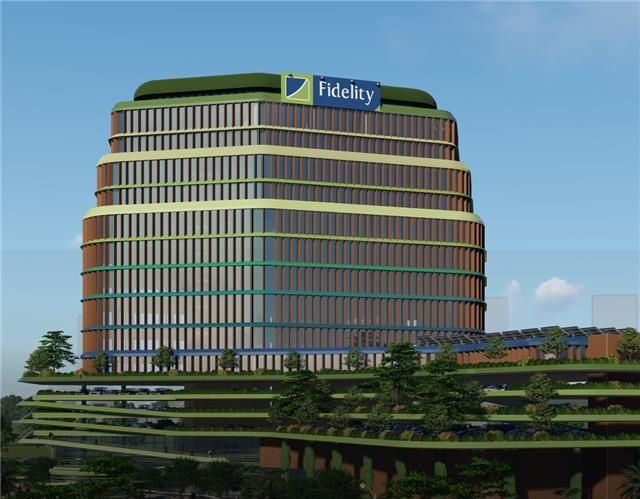
GCR Ratings has upgraded Fidelity Bank Plc‘s national-scale long-term issuer rating to A Plus (NG) from A (NG), while affirming its short-term issuer rating at A1 (NG). The outlook remains stable.
The upgrade reflects Fidelity Bank’s significantly strengthened capital position following the addition of NGN227.0 billion to its total core capital. GCR also recognised the bank’s strong domestic market position, stable funding base and healthy liquidity profile.
Fidelity Bank’s competitive position remains a key rating strength, supported by its strong domestic franchise and nearly four decades of operating experience. With total assets of NGN10.5 trillion and an estimated 8.0 per cent share of the banking industry’s gross loans as of December 2025, the bank ranks as Nigeria’s sixth-largest bank.
The bank also plans to leverage its international banking licence to enter three additional African markets over the medium term. The expansion is expected to diversify its country exposure and further strengthen its competitiveness among rated peers.
Fidelity Bank raised NGN227.0 billion in additional equity capital in 2025, enabling it to fully comply with the revised capital requirement for its licence category. The capital was officially recognised as the core capital in 2026.
Consequently, the bank’s GCR core capital ratio increased substantially to 29.4 per cent at the end of March 2026, from 17.2 per cent in December 2025. Its stage three loan loss reserve coverage also remained strong at more than 100.0 per cent.

GCR expects the bank’s core capital ratio to remain above 20.0 per cent over the outlook period, supported by good earnings retention. The rating agency also noted that Fidelity Bank’s exposure to the oil and gas sector is diversified across the upstream, downstream and services segments. Foreign currency exposure is further moderated through natural hedging.
Fidelity Bank’s funding profile remains positive, underpinned by a large and stable deposit base. Customer deposits grew by 16.1 per cent as of December 2025 and by a further 7.1 per cent as of March 2026, reaching NGN7.4 trillion.
Customer deposits accounted for 89.5 per cent of the bank’s total funding base in March 2026. Approximately 90 per cent of these deposits were held in relatively inexpensive current and savings accounts, providing a strong foundation for sustainable funding.
READ ALSO: Fidelity Bank gets extension to publish H1 2026 audited results
The bank also maintained a robust liquidity position, supported by a substantial portfolio of liquid assets. Its liquid assets-to-customer deposits ratio stood at 56.9 per cent in March 2026, while liquid assets covered wholesale funding by 4.8 times.
The stable outlook reflects GCR’s expectation that Fidelity Bank will maintain a strong financial profile, with its core capital ratio remaining above 20.0 per cent, supported by stable funding, strong liquidity and resilient asset quality indicators.
Discover more from Premium Times Nigeria
Subscribe to get the latest posts sent to your email.
Business
FG Continues NEMSAS Rollout, Strengthens Emergency Care and Hospital Infrastructure in Bauchi
-

 Business2 days ago
Lingzhi Global, NACOFTAN Announce 2026 Coffee Festival in Cross River
-
Events2 days ago
Peace Walk: WOPPI Urges Plateau Citizens to Invest in Peace Every Day
-
Business4 days ago
Tinubu reacts as Nigeria wins arbitration against Sunrise Power
-
News4 days ago
Why I refused to join APC – Seriake Dickson