Connect with us

News

2023: Plateau Police Command warns officers to shun unprofessional conduct

editor

Published

on

POLICE

The Plateau State Police Command has warned its personnel to shun corrupt practices, unprofessional conduct, and other sharp practices in the discharge of their duties during Saturday’s presidential elections.

The Commissioner of Police in charge of Election Security in the state, Mamman Dauda, gave the warning at a news conference Friday in Jos.

He said any personnel found wanting would be made to face the full wrath of the law.

Dauda said that the command would not spare any act that would tarnish its good image.

”It is expected of us as security agents to ensure that the security of lives and property, voters and electoral officials are properly protected.

”Let me sound this warning that on no account should any of you engage  in any form of corrupt practices.

”You have been taught on several occasions to shun corruption and be professional during this election and beyond.

”If you are caught engaging in such act, you will be severely dealt with according to the laid-down principles of the law,”he said.

Dauda stated that security personnel would not intimidate any law abiding citizen during the polls.

He advised residents without the Permanent Voters Cards (PVCs) to stay away from elections venues.

The commissioner also advised residents of Plateau, particularly eligible voters to be law abiding and conduct themselves in a peaceful manner.

Dauda promised to deal with any religious and traditional leader making unguarded political utterances capable of throwing the state into chaos.

He called on politicians to play the game according to the provision of the Electoral Act, adding that any politician caught would be prosecuted not minding his or her status.

The commissioner urged residents of the state to cooperate and support the police and other security agencies, towards peaceful and credible elections in the state.

Continue Reading
Click to comment

Leave a Reply

Your email address will not be published. Required fields are marked *

News

A startup founder who served time in prison is looking to court an untapped market: ex-cons

info

Published

on

Richard Bronson Pic.jpg

Richard Bronson, an entrepreneur who recently launched a startup called Commissary Club, has an unusual background for a founder: in a previous life, he spent time in prison.

In the 1980s, Bronson worked for the notorious Stratton Oakmont — the corruption-riddled brokerage firm that was run by Jordan Belfort, the so-called “Wolf of Wall Street” whose story became a 2013 film. The firm collapsed in the mid-1990s under the weight of misconduct accusations.

Bronson was a partner at Stratton, but left after a year to start his own firm in South Florida. He was quite successful in that venture, until he wasn’t.

“I built a $100 million business taking these small cap companies public,” Bronson told TechCrunch. “Some of the success, however, came through breaking the law — securities laws — and ultimately, as I knew inevitably would happen, I had to pay the price. I lost everything, and most significantly, my freedom. And I was sent to federal prison for a couple of years.”

Bronson has been out of prison for a long time now, but he has never forgotten the struggles he had when he initially emerged from prison.

“Nobody would hire me, despite all of my education and work experience and everything else. I was like completely radioactive,” he said.

Bronson’s experience after prison helped inform his current startup, an employment-focused social media platform called Commissary Club, which takes its name from the store inside a prison where inmates buy snacks and toiletries. The site is specifically marketed to ex-cons, and uses AI to help them navigate the often confusing process of finding employment and housing after they reenter the world.

“I could not help but notice how little assistance was available to people coming out of prison,” said Bronson. “If it was this bad for me, what about the guys I was in prison with who had very little education and very little job experience? What were their chances?”

Commissary Club also has a social component, which Bronson said he added because he knows how isolating the post-prison experience can be. “It’s almost like Facebook,” he said, “where people can not only find job, and get the help with the jobs and the housing and access to benefits, but they find the other missing ingredient that’s existentially important to them that isn’t satisfied elsewhere. They find community.” Judging by the site, Commissary Club also appears primed to become a referral network, and it offers a way for users to find dates.

For now, Bronson’s startup is a team of two — just him and his co-founder, Roman Kissin, who Bronson called the technical mind (or “the brains”) behind the project. Kissin previously worked for eBay and IBM and, between 2022 and 2025, served as the CTO of LexisNexis, according to his LinkedIn profile.

The site is free at first, then switches to paid. Users get “the first 10 applications for free, and then we bundle the next at $149 for 10 applications, or $14.99 each,” Bronson told TechCrunch. Some may balk at that for-profit model, and for people just out of prison, it may be a tough sell.

Yet Bronson sees it as a win-win — a business that can help a community that few others are trying to help.

“People immediately assume, ‘Oh, is this a nonprofit?’ And the answer is no,” said Bronson. There’s a strong mission component, certainly,” he continued,” and I have devoted my life, when I came out of prison, to helping my brothers and sisters with records. Part of it is because I just felt so remorseful for the shit that I had done. I still wake up every day regretting choices I made.

“But we’re going after a huge, huge market that nobody — I mean nobody — does anything about,” said Bronson. “People talk about AI taking away employment and people losing jobs. I look at it differently. We’re building AI that creates employment for people that society left behind.”

Bronson’s Commissary Club was selected for this year’s TechCrunch Startup Battlefield 200, as part of TechCrunch’s storied Battlefield Competition; come join us next week in San Francisco to see the competition live.

When you purchase through links in our articles, we may earn a small commission. This doesn’t affect our editorial independence.

Continue Reading

Health

9.5m children received no routine vaccine in 57 countries in 2025

info

Published

on

Width 800 1.jpg

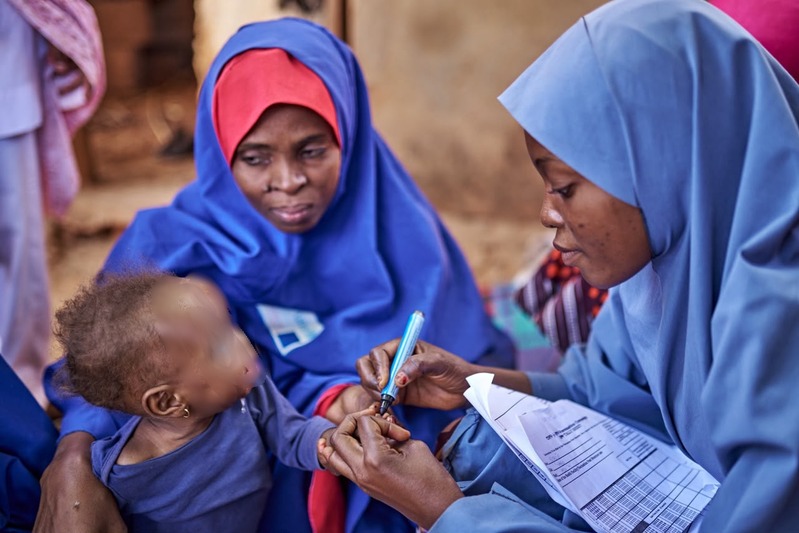
Gavi, the Vaccine Alliance, says 9.5 million children in 57 supported countries received no routine vaccine in 2025, despite gains in global immunisation.

The figure, described as the number of “zero-dose” children, was contained in Gavi’s 2025 Annual Progress Report, which reviewed the alliance’s 2021-2025 strategic period.

Gavi defines zero-dose children as infants who have not received the first dose of a diphtheria, tetanus and pertussis-containing vaccine by the end of their first year.

Number falls from 2021 peak

According to the report, the number of zero-dose children in 2025 was 600,000 lower than in 2024 and 25 per cent lower than the peak recorded in 2021 following disruptions to routine immunisation caused by the COVID-19 pandemic.

However, the figure remained four per cent above the 2019 baseline, partly because of continued growth in the number of children being born.

Gavi said children living in fragile, conflict-affected and humanitarian settings remain among those most likely to be missed by immunisation programmes.


PT WHATSAPP CHANNEL
Dangote Refinery AD

Nigeria remains one of the countries with the highest number of zero-dose children. UNICEF estimated that about 2.2 million Nigerian children had never received a routine vaccine in 2025, the highest number in Africa.

Nigeria records gains in targeted areas

The report highlighted Nigeria, Ethiopia and Pakistan among countries where emerging data showed stronger immunisation coverage gains in sub-national areas that received greater Gavi focus and investment during the 2021-2025 period.

Gavi said the findings underscored the value of targeted, equity-focused investments in reaching communities that are being missed by routine immunisation.

The report also identified Nigeria among countries covered by Gavi’s Zero-Dose Learning Hubs, which examined what works and what does not in identifying and reaching zero-dose and under-immunised children.

The findings from Nigeria, Bangladesh, Mali and Uganda highlighted several issues, including gender-related barriers to immunisation.

73m children immunised in 2025

Despite the number of zero-dose children, Gavi said more than 73 million children were immunised through routine programmes with its support in 2025.

More than 351 million children were immunised during the 2021-2025 strategic period, “exceeding Gavi’s target of 300 million children.”

“By end 2025, Gavi-supported countries had immunised more than 1.3 billion unique children with Gavi support since 2000, exceeding our Investment Opportunity 2021-2025 commitment of more than 1.1 billion children immunised by 2025,” it noted.

Gavi said vaccination averted more than 2.2 million future deaths in 2025, bringing the total number of future deaths averted through its supported vaccination programmes to more than 7.8 million during the 2021-2025 period.

Generated economic benefits

The report said immunisation programmes generated more than $30 billion in economic benefits for Gavi-supported countries in 2025, the highest amount recorded in a single year.

The benefits were calculated from the costs of illness averted, including medical and associated costs, caretaker wages and productivity losses resulting from disability or death.

Gavi said the programmes generated more than $104 billion in economic benefits between 2021 and 2025 and more than $308 billion between 2000 and 2025.

Countries also contributed a record $301 million towards the co-financing of Gavi-supported vaccines in 2025, an 18 per cent increase from 2024.

About 80 per cent of the contribution came from domestic resources, while “approximately 20 per cent from low-interest loans from the World Bank.”

Gavi said countries had contributed a total of $2.2 billion towards vaccine co-financing since the policy was introduced in 2008.

More children

For its 2026 to 2030 strategic period, Gavi said it aims to protect another 500 million children through immunisation and avert between eight million and nine million future deaths.

READ ALSO:New TB vaccines could save 7.3m lives by 2050 – Gavi 

The Alliance also targets more than $100 billion in economic benefits during the period. Gavi said it would place greater emphasis on reaching zero-dose and under-immunised children while strengthening the sustainability of national immunisation programmes.

In her comments, Gavi Chief Executive Officer, Sania Nishtar, said the results showed that immunisation generates benefits beyond preventing disease. “However, when it comes to immunisation we know that the return on investment extends far beyond health to supporting sustainable, inclusive economic growth,” Ms Nishtar said.

WHO Director-General, Tedros Ghebreyesus, also said immunisation delivers massive gains in lives saved and diseases prevented, but also in terms of economic benefits.

“Countries understand that the cost of failing to vaccinate is far too great, while the benefits extend across families, communities, economies and future generations,” Mr Ghebreyesus was quoted to have said.


Discover more from Premium Times Nigeria

Subscribe to get the latest posts sent to your email.

Continue Reading

Trending