News
Plateau Govt, HD Reaffirm Commitment to Lasting Peace, Call for Border Demarcation to Curb Cross-Border Conflicts


The Plateau State Government and the Centre for Humanitarian Dialogue (HD) have renewed their joint commitment to fostering sustainable peace and stability across the state, stressing the urgent need for clear border demarcation to curb recurring cross-border conflicts.
This was the key highlight of the Multi-Agency and Multi-Sectoral Roundtable with State and Non-State Actors Towards a Sustainable Peace Architecture in Plateau State, held on Tuesday, October 7, 2025, at Novel Suites, Rayfield, Jos. Themed “Unity in Diversity for Peaceful Coexistence in Plateau State,” the dialogue brought together stakeholders from government institutions, civil society, traditional councils, and peacebuilding organizations.
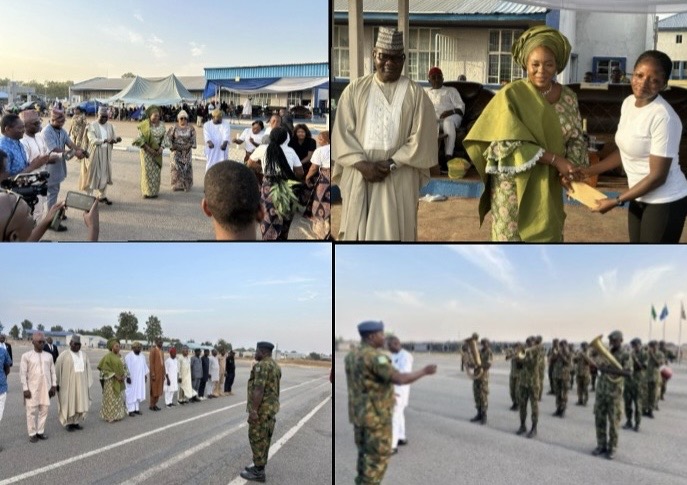
Representing Governor Caleb Mutfwang, Deputy Governor Her Excellency Ngo Josephine Piyo commended HD for its continued partnership in promoting harmony among Plateau’s diverse communities.
“This meeting is timely, especially at a period when our state continues to grapple with security challenges that have affected our growth and unity,” she said. “The Plateau State Government remains committed to restoring lasting peace so that our people can live without fear and sleep in safety.”

Piyo urged relevant federal agencies to take swift action in clearly defining Plateau’s borders with neighboring states, warning that the current porous boundaries have worsened insecurity and human trafficking.
“The porous nature of our borders not only poses security challenges but also makes our children vulnerable to trafficking. We therefore call on relevant federal agencies to define and mark our borders to help mitigate cross-border conflicts,” she added.
In his remarks, Dr. Chris Agboha, Country Manager of the Centre for Humanitarian Dialogue (HD) Nigeria, noted the connection between weak border control and the rise of violent crimes such as cattle rustling, land grabbing, kidnapping, and illegal mining.
“Borders are one of the primary indicators of a state’s control over its territory. When they cease to function effectively, different forms of criminality thrive, putting communities at risk,” Agboha said, while calling for collaborative approaches to managing diversity and fostering inclusivity as pathways to peace.

Professor Chris Kwaja, Special Envoy on Peace and Security to the Plateau State Government, warned that misinformation, hate speech, and social media manipulation continue to inflame tensions, urging stronger intergovernmental cooperation and deeper community engagement.
Similarly, the Director General of the Plateau Peace Building Agency, Dr. Julie Sanda (represented by Nantip Joseph), reaffirmed the agency’s collaboration with HD and other partners, noting that the initiative aligns with efforts to strengthen Plateau’s peace architecture.

Other contributors, including Sam Godongs, National Expert Adviser to HD Nigeria, commended the progress made through local and zonal peace structures, emphasizing their role in sustaining peacebuilding even beyond donor interventions.
The two-day roundtable will continue to examine cross-border conflicts, diversity management, and inclusive governance, ending with a unified call for synergy among all stakeholders to build a resilient, united, and peaceful Plateau.



African Democratic Congress, ADC, chieftain and former presidential candidate, Dele Momodu, has urged political leaders to embrace peaceful coexistence ahead of the 2027 general elections, citing former President Goodluck Jonathan’s handling of political opposition during the 2015 election period.
Momodu said Jonathan demonstrated political maturity in 2014 and 2015 when opposition figures united against his administration, despite having the power to use state institutions against his political opponents.
The former presidential candidate made the remarks in a statement titled 'A lesson from President Goodluck Jonathan,' in which he reflected on the political atmosphere ahead of the 2027 general elections.
According to Momodu, Jonathan faced an unprecedented alliance of opposition leaders who sought to remove him from power during the 2015 presidential election.
He maintained that rather than resorting to measures that could endanger the lives of his opponents, Jonathan chose the path of peace and national unity.
Momodu recalled Jonathan’s position that his personal ambition was not worth the blood of any Nigerian, describing it as an important lesson for political leaders in the country.
He, however, expressed concern over the current political climate, alleging that violence and insecurity were becoming major threats to Nigeria’s democratic process.
The ADC chieftain specifically referenced the forthcoming governorship election in Osun State, claiming that about 50 people had allegedly lost their lives in election-related violence.
He warned that the situation could worsen as the country approaches the 2027 presidential and general elections if political actors fail to prioritise peace.
Momodu also questioned the credibility of the electoral process under President Bola Tinubu, alleging that Nigerians had lost confidence in the President and the leadership of the Independent National Electoral Commission, INEC.
He said many Nigerians, including members of the ruling class, were apprehensive about whether the electoral body could conduct a free, fair, transparent and credible election in 2027.
According to him, “No Nigerian, including members of the over-pampered ruling class, trusts President Bola Ahmed Tinubu and his handpicked electoral body, INEC, to conduct a free, transparent, and credible election.”
He further criticised the judiciary, alleging that it had been dragged into the country's political struggles at the expense of public confidence in the justice system.
The former presidential candidate expressed fears that Nigeria's democracy could be endangered if the political environment continued to deteriorate.
Momodu questioned whether Nigerians who fought against military dictatorship had inadvertently created room for another form of authoritarianism under civilian rule.
He asked, “Did we fight against military dictatorship only to, inadvertently, replace it with barefaced civilian tyranny?”
He said the country was confronted with several unanswered questions about the future of its democracy, urging Nigerians to reflect on the direction of the nation.
Momodu concluded his message by calling for divine intervention, expressing hope that God would grant Nigeria mercy and guide the country through its political challenges.
2027: ‘Learn from Goodluck Jonathan’ – c warns Tinubu, others
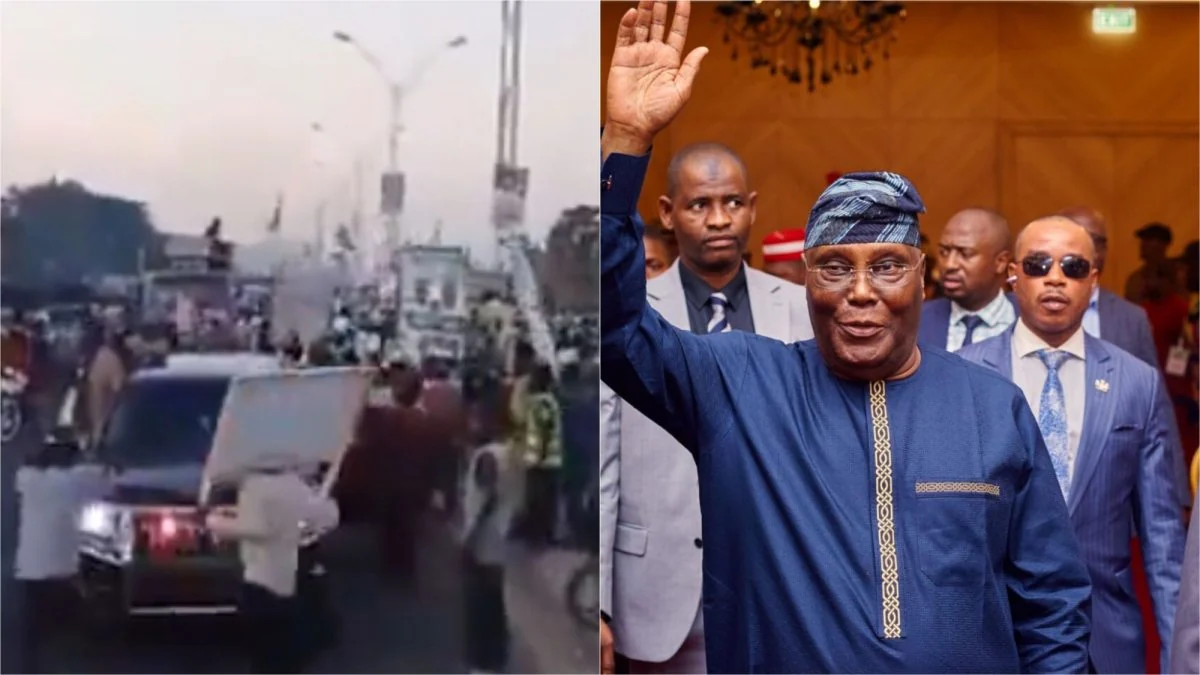
The African Democratic Congress (ADC) presidential candidate Atiku Abubakar has taunted President Bola Tinubu over the controversy surrounding an alleged AI-generated photograph of the All Progressives Congress (APC) rally in Jos, Plateau State.
Atiku made the remark while expressing appreciation to residents of Potiskum and Yobe State for the reception he received during his campaign visit to the state.
In a statement issued on Monday by his Director of Strategic Communication, Phrank Shaibu, Atiku also commended the Yobe State governor for providing a level playing field for the ADC’s Affordable Life campaign.
He described the reception from Azare in Bauchi State to Potiskum as a demonstration of the people’s support for his campaign.
“The welcome from the moment we entered Potiskum from Azare was simply breathtaking. The sea of heads, the joyful faces, the chants and the warmth of the people will remain in my heart,” he said.
However, taking a swipe at the Presidency over the disputed photograph from Tinubu’s Jos rally, Atiku suggested that the ruling party needed artificial intelligence to create an impression of a large crowd at its campaign events.
“The Presidency may need artificial intelligence to conjure a crowd, but in Potiskum the people came out in flesh and blood, unfiltered, unedited and impossible to fabricate. Our Affordable Life campaign needs no artificial crowd; the people’s presence and their voices speak for themselves,” he said.
He further mocked the photograph, saying, “The Presidency’s AI must have forgotten that crowds need seats and that people do not fly. Perhaps in Tinubu’s imaginary rally, the supporters were expected to hover through the speech.”
Atiku also said the chants of “Tinubu Must Go” at ADC rallies reflected Nigerians’ demand for political change.
He pledged to take immediate steps to address the country’s economic challenges and make life affordable if elected president in the January 16, 2027 presidential election.
“The ADC’s Affordable Life campaign is not mere sloganeering. When I hear the crowd chanting ‘Tinubu Must Go’ at our rallies, I take those words personally. They are a call for change and a reminder of the responsibility that will come with the people’s mandate,” he said.
“When President Tinubu leaves office on 29 May 2027, good governance and an affordable life must follow. I solemnly pledge to take immediate steps to make life affordable again when elected president at the January 16 presidential election. That is my promise to our teeming supporters.”
Atiku added that the reception in Yobe had reinforced his belief that Nigerians were responding to the ADC’s campaign message.
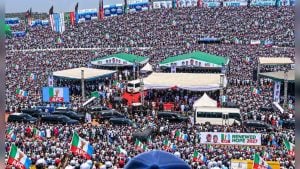
The photograph was posted on X on Sunday, November 15, a day after Tinubu attended the rally, with the caption, “Plateau State for PBAT”.
However, social media users questioned the authenticity of the image after comparing it with photographs and videos from the event showing sections of the venue with fewer people.
Some accused the presidential aide of using artificial intelligence to manipulate the image and exaggerate the crowd turnout ahead of the 2027 general election.
The photograph was subsequently deleted from Olusegun’s social media account.
-

 News3 days ago
Every ₦1 spent on advertising generates ₦16.50 in Nigeria’s GDP, ARCON says – Technology Times
-
News3 days ago
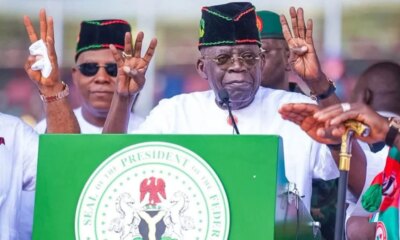
Tinubu (APC) in Jos: Promises to restore peace in the State and Nigeria
-
News3 days ago
Heavy Security as Tinubu Takes Campaign to Jos
-
News3 days ago
Yari Defends Tinubu on Insecurity, Says Opposition Failed to Tackle Crisis for Over 20 Years