Health
NOH Jos Now Fully Operational, Strengthens Access to Orthopaedic and Trauma Care


The National Orthopaedic Hospital, Jos (NOH-Jos), has officially commenced full orthopaedic services, marking a significant step in advancing specialized healthcare delivery across North Central Nigeria.
At a press briefing on Wednesday, October 8, 2025, the Chief Medical Director, Professor Icha Inalegwu Onche, described the development as “a huge milestone” in the hospital’s journey since its establishment.
Professor Onche recalled that the hospital’s foundation began with the signing of its establishment act by the President on July 17, 2021, and noted key milestones including the Plateau State Government’s infrastructural support and his eventual confirmation as substantive CMD in November 2024.
“This day represents a major leap for us,” he said. “The hospital serves the entire North Central zone — Plateau, Nasarawa, Benue, Kogi, Niger, and the FCT. We are grateful to God, the Federal Government, and the Plateau State Government for their support in making this vision a reality.”
He commended the Plateau State Governor for his personal involvement in developing the hospital’s infrastructure — including roads, pavements, and water supply — describing it as a testament to the administration’s commitment to healthcare improvement.


The CMD also appreciated the Jos University Teaching Hospital (JUTH) for providing mentorship, personnel, and equipment support. “JUTH has been our big sister institution. Their guidance and collaboration have been invaluable to our growth,” he said.
Highlighting available services, the Director of Clinical Services, Dr. David W. Ngwan, announced that NOH-Jos is now fully operational, offering outpatient and emergency care, trauma and reconstructive surgeries, joint replacement, spine and pediatric orthopaedic surgeries, sports medicine, physiotherapy, prosthetics, orthotics, and other essential services.
Since starting partial operations in May 2025, he disclosed that the hospital has attended to over 700 patients, with more than 450 awaiting surgery. “Our mission is to build a generation of mobile, pain-free, and functional people,” he said.


In his goodwill message, the CMD of JUTH, Dr. Pokop W. Bupwatda, congratulated Prof. Onche and his team for their resilience and achievement. He reaffirmed JUTH’s commitment to continued partnership until NOH-Jos attains full excellence.
The event concluded with a vote of thanks by the Director of Administration, Mr. Gideon Nchoka Adamu, and a guided tour of the facility’s wards, theatres, laboratories, and service units.
With its full operational launch, the National Orthopaedic Hospital, Jos, stands as a major boost to Nigeria’s healthcare infrastructure, promising improved access to orthopaedic and trauma care across the North Central region.


A worker at Frankfurt Airport in Germany has died of malaria in a rare outbreak believed to have been caused by infected mosquitoes brought into the country on an aircraft.
Five other airport workers have also contracted the disease and are receiving medical treatment, according to the BBC.
The airport operator, Fraport, confirmed the death on Wednesday. “Sadly, we must confirm that one employee has died as a result of the infection,” a Fraport spokesperson told the BBC.
The outbreak is being investigated by Frankfurt’s Public Health Department, with officials trying to establish how the workers became infected.
The BBC reported that the six infected workers are men who work in different areas and perform different jobs at the airport. None is known to have travelled to a country where malaria is common.

German health authorities believe the infections may have been caused by mosquitoes brought into Germany on an aircraft. Mosquito traps have now been installed at the airport, while captured mosquitoes are being analysed to determine their species and origin.
Rare outbreak
The cases are described as “airport malaria”, a rare form of transmission that can occur when an infected mosquito is transported on an aircraft or in luggage and later bites people at or near an airport.
Germany’s Robert Koch Institute (RKI), the country’s federal public health and disease control agency, said the first four workers became ill between 4 and 6 July.
The institute said malaria cases in Germany exclusively involve people who were infected while travelling to malaria-endemic areas, making transmission at a German airport unusual.
READ ALSO: WHO, Africa CDC warn of widening malaria funding gap in Africa
The last documented case of airport malaria at Frankfurt Airport was in 2023, the RKI said.
Frankfurt’s public health authorities have said the risk to the general population remains very low because malaria is not transmitted directly from person to person. It is spread through the bites of infected mosquitoes.
Malaria remains a major public health concern in Nigeria, although recent data show signs of progress.
In July, Malaria Consortium reported that malaria prevalence in Nigeria had fallen from 42 per cent in 2010 to 15.2 per cent in 2025.
Despite the decline, the organisation said Nigeria continues to carry one of the world’s heaviest malaria burdens, with children under five and pregnant women disproportionately affected.
Malaria is caused by parasites transmitted through the bites of infected mosquitoes. It is preventable and curable, but can become severe or fatal when diagnosis and treatment are delayed.
Discover more from Premium Times Nigeria
Subscribe to get the latest posts sent to your email.
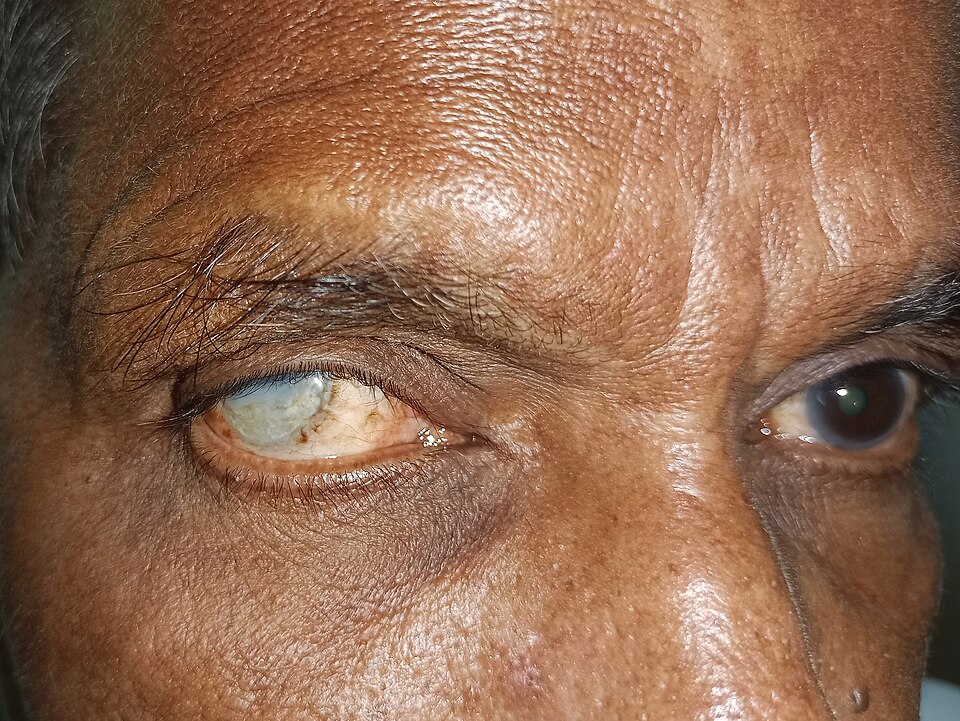
The Ophthalmological Society of Nigeria (OSN) has revealed that more than two million Nigerians are living with avoidable blindness, largely caused by cataracts.
The vice-president of the OSN, Abubakar Rafindadi, a professor, disclosed this on Wednesday at a press briefing ahead of the 51st Annual General Meeting and Annual Scientific Conference, Abuja ASO 2026, scheduled for 2 to 4 September in Abuja.
Mr Rafindadi said that despite ongoing efforts to tackle avoidable blindness, the country has not attained the cataract surgical rates required to reduce the burden significantly.
“The statistics have not changed dramatically. We are still fighting a heavy burden of avoidable blindness, with over two million people having avoidable blindness, mainly cataracts, despite the efforts we are making.
“We are not matching the required cataract surgical rates that we need,” he said.
The OSN vice-president, however, said the country had recorded significant progress in ophthalmic training, technology, and service delivery since its last annual conference.
Establishment of centres
Mr Rafindadi identified the establishment of simulation centres in Lagos and Ibadan as one of the major developments, saying the facilities would enable ophthalmologists to improve their skills in cataract and vitreoretinal surgery.
He said the society had also expanded the integration of eye care into primary healthcare, with the number of states participating in the programme increasing from 14 to 21.
According to him, more than 2,500 primary healthcare workers have been trained under the programme, including during a recent exercise in Bauchi State.
He said the society was also exploring technology, including tele-screening and artificial intelligence, to extend quality eye care to rural communities and underserved populations in urban centres.
Mr Rafindadi noted that although Nigeria had become increasingly urbanised, many people living in underserved communities within major cities still faced difficulties accessing quality eye care.
He said, “We are trying to see how we can adopt the new technological innovations to reach the rural populace and also the underserved populace within the metropolis.
“We are looking at how we can use technology to bridge these gaps through things like tele-screening, artificial intelligence technology, and so on.”
The OSN Vice-President also highlighted improvements in the availability of ophthalmic equipment and advanced surgical services, noting that posterior segment surgeries were now being offered in several parts of the country where such services were previously unavailable.
He said centres in Benin, Lagos, Ibadan, Kaduna, and Kano were among those providing advanced posterior segment surgical services.
Mr Rafindadi said the society was also concerned about the shortage and uneven distribution of ophthalmologists and other eye-care professionals across the country.
He attributed the concentration of specialists in major population centres partly to insecurity and inadequate employment opportunities in rural areas.
According to him, state and local governments must increase the employment of ophthalmologists, optometrists, opticians, and ophthalmic nurses to ensure equitable distribution of eye-care services.
He further disclosed that more than 1.5 million reading glasses had been distributed under the Jigibola 2.0 initiative, with a target of five million by 2027.
Harmful practices
On the dangers of harmful traditional eye practices, Mr Rafindadi urged Nigerians to avoid unverified substances and treatments that could lead to irreversible vision loss.
He said the society was working with the government and traditional medicine institutions to identify practices that could be safely integrated into healthcare while eliminating harmful ones.
READ ALSO: Kogi targets 4.5 million residents for river blindness prevention treatment
“We must keep talking to the public. Please don’t go to these people. They should be aware that these practices can be harmful and can cause irreversible loss of vision to them,” he said.
The OSN said it would conduct more than 500 free cataract surgeries as part of activities leading up to the 51st Annual General Meeting and Scientific Conference.
The cataract surgery outreach, which is scheduled for 27 and 28 August, with the possibility of extending to 29 August if necessary, is expected to benefit patients screened and selected from various centres in the Federal Capital Territory and neighbouring areas.
The Society said more than 500 patients had already been selected and medically assessed as fit for surgery.
The conference, themed “Re-imaging Eye Care in the Digital Era,” will focus on the application of artificial intelligence, tele-ophthalmology, digital diagnostics, and other emerging technologies to improve access to eye care in Nigeria.
Mr Rafindadi said the society would use the conference to develop evidence-based recommendations and a strategic roadmap for improving eye care delivery in the country.
Discover more from Premium Times Nigeria
Subscribe to get the latest posts sent to your email.
-
Business3 days ago
Police Arrest of Five Suspected Telecommunication Vandals, Recovery of Truckload of Suspected Stolen Iron Rods
-

 Health3 days ago
FCTA trains health workers in basic life support, plans Code Blue teams in hospitals
-
News3 days ago
SSA Adeboye: National Intermediate Games Will Give Nigeria’s Young Talents the Platform to Shine
-
News3 days ago
Who’s behind the new ‘stealth model’ Ox Alpha?