Health
PT Health Watch: Why sleep paralysis feels like a spiritual attack — Expert



Many Nigerians who wake up unable to move, speak or call for help often describe the experience as a spiritual attack, saying “something pressed me” or “a witch held me down.”
However, health experts say the frightening phenomenon, known as sleep paralysis, has a medical explanation rooted in the brain’s sleep cycle and is often linked to stress, sleep deprivation and irregular sleeping patterns.
Speaking with PT Health Watch, Joshua Nnatus, a senior manager at Lagos MiND and a public health professional, explained that while the experience can feel terrifyingly real, it is a recognised sleep condition with a well-understood neurological basis.
When the brain wakes before the body
Mr Nnatus described sleep paralysis as a temporary inability to move or speak that occurs either while falling asleep or, more commonly, while waking up.
“It is classified as a parasomnia, one of the sleep-related experiences recognised in the American Psychiatric Association’s DSM-5 and the International Classification of Sleep Disorders,” he said.

He explained that the condition is closely tied to rapid eye movement (REM) sleep, the stage of sleep associated with vivid dreaming, which typically accounts for about 20 to 25 per cent of an adult’s sleep cycle.
During REM sleep, the brain activates a protective mechanism called REM atonia, which temporarily switches off voluntary muscles to prevent people from physically acting out their dreams.
Normally, this muscle “off-switch” ends immediately upon waking. However, in sleep paralysis, the transition between sleep and wakefulness becomes misaligned.
“The mind becomes awake and aware before the muscle switch has been turned back on,” Mr Nnatus said.
As a result, the person is conscious, aware of their environment, but unable to move or speak. Breathing and eye movements remain unaffected, which is why people can still look around and breathe normally despite feeling completely “frozen”.
Episodes typically last from a few seconds to a couple of minutes and resolve on their own.
A common but misunderstood experience
Although many people are reluctant to discuss it, sleep paralysis is relatively common.
Research suggests that a significant proportion of people experience at least one episode during their lifetime, particularly adolescents, university students and young adults who are exposed to high levels of stress, sleep deprivation or irregular sleeping schedules.
Because the experience is often sudden and frightening, it is frequently misunderstood and interpreted through cultural or spiritual beliefs.
Why it feels like a spiritual attack
Mr Nnatus said the experience is often interpreted as supernatural because several frightening sensations occur at the same time.
The first is the sudden loss of control, which triggers intense fear. Second is the persistence of dream-like activity in the brain, which produces vivid hallucinations.
These may include sensing a presence in the room, seeing a figure, feeling pressure on the chest, or believing something is sitting on or holding the body down.
He added that the brain’s fear-processing centres remain highly active during REM sleep, which amplifies panic and makes the experience feel extremely real.
“The result feels absolutely real because, in a neurological sense, it is real to the person experiencing it. It is not imagination, and it is not a sign of madness,” he said.
Across cultures, similar experiences have been explained through spiritual beliefs.
In parts of Europe, it has been described as the “Old Hag” phenomenon. In some Middle Eastern traditions, it is linked to Jinn. In parts of China, it is associated with ghost oppression.
In south-west Nigeria, it is widely referred to as ogun oru, interpreted by many as nocturnal spiritual attack, while others describe it as a witch “pressing” the body during sleep.
Mr Nnatus said these interpretations reflect cultural frameworks, but the underlying process remains the same across populations.
Stress, disrupted sleep and lifestyle factors
According to Mr Nnatus, the strongest trigger for sleep paralysis is disrupted sleep.
Common risk factors include sleep deprivation, irregular sleep schedules, late-night studying, shift work, and constantly changing sleep routines.
He noted that stress and anxiety, particularly among students and young professionals, significantly increase vulnerability.
Other triggers include sleeping on the back, caffeine or alcohol close to bedtime, jet lag, and prolonged screen use at night, which delays sleep onset.
Mental health conditions such as anxiety, depression and post-traumatic stress disorder may also increase the likelihood of episodes.
In some cases, sleep paralysis occurs alongside narcolepsy, a neurological sleep disorder characterised by excessive daytime sleepiness and sudden sleep attacks.
He added that research suggests a possible genetic component in some individuals.
When it becomes a concern
Mr Nnatus stressed that sleep paralysis is not physically dangerous.
He, however, said repeated episodes can lead to significant distress, including fear of sleeping, anxiety and poor-quality rest.
He advised medical attention if episodes become frequent or are accompanied by excessive daytime sleepiness, or sudden uncontrollable sleep episodes during the day, symptoms that may suggest narcolepsy.
“That pattern is a core warning sign and should be properly evaluated,” he said.
Managing and reducing episodes
Mr Nnatus recommended maintaining consistent sleep and wake times, ensuring adequate sleep duration, and reducing stress levels.
Limiting caffeine and alcohol intake in the evening, reducing screen exposure before bedtime, and improving sleep environment can also help.
According to sleep health guidance from the US Centres for Disease Control and Prevention (CDC), adults require at least seven hours of sleep per night for optimal health.
He also noted that sleeping on one’s side may reduce the likelihood of episodes in people who are prone to them.
For people experiencing frequent or distressing episodes, Mr Nnatus said support and referral services are available through Lagos MiND’s Lagos Lifeline on 070 0000 6463, 020 1410 6463, or via WhatsApp on 090 9000 6463.







The Ebola outbreak caused by the Bundibugyo virus in the Democratic Republic of the Congo (DRC) has intensified, with 3,605 confirmed cases and 1,587 deaths recorded as of 30 July.
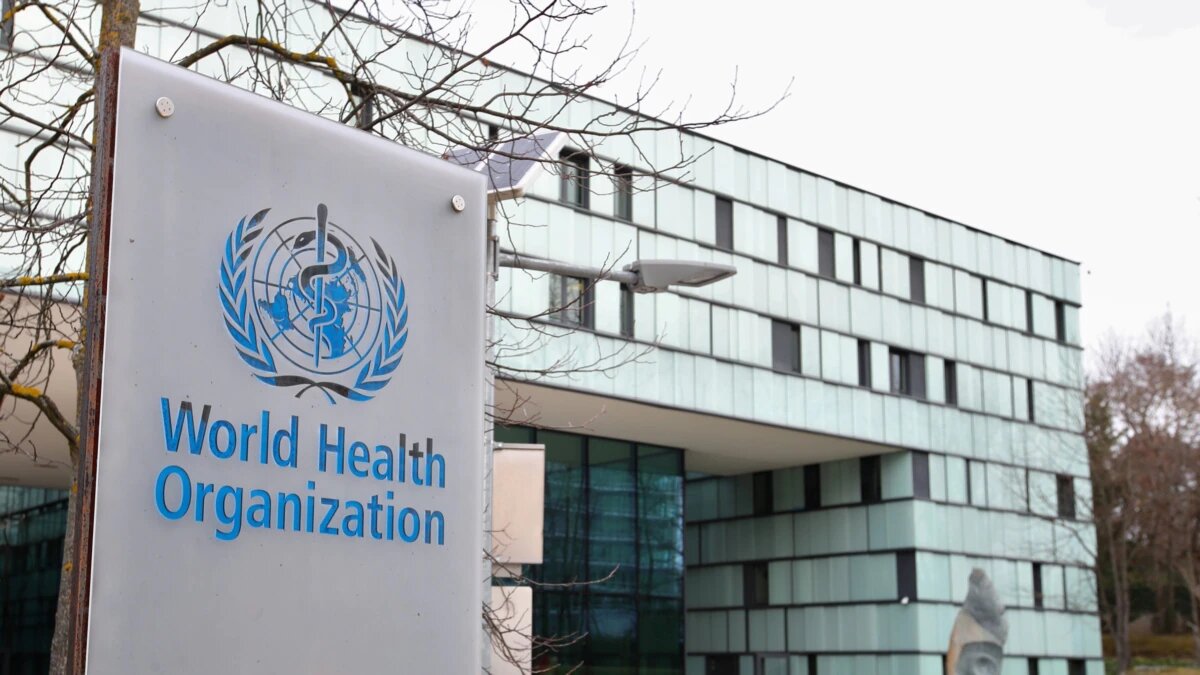
In a situation update released on Saturday, the World Health Organisation (WHO) warned that sustained transmission and the disease’s expanding geographical spread continue to fuel what has become the country’s largest Ebola outbreak on record.
The agency said the rapid rise in infections and deaths highlights the urgent need to scale up response efforts.
Outbreak reaches five provinces
WHO said the outbreak was initially confined to the Mongbwalu Health Zone in Ituri Province but has expanded significantly over the past two months.
The virus has now spread across five provinces, including Ituri, North Kivu, South Kivu, Haut-Uélé, and Tshopo, affecting 49 health zones.
According to the agency, epidemiological week 30 recorded the highest weekly figures since the outbreak began, with 567 confirmed cases and 296 deaths.
“The continued increase in cases, expanding geographic spread, and persistently high mortality underscore the rapidly evolving nature of this public health emergency,” WHO said.
The organisation added that the outbreak’s rapid growth highlights the need for a substantial scale-up of response efforts to bring transmission under control.
Response hampered by insecurity
The health agency said insecurity, population displacement, high population mobility and frequent cross-border movements continue to complicate response operations and increase the risk of further spread within the region.
It noted that the Congolese government, WHO and its partners have intensified surveillance, case management, contact tracing, community engagement and other emergency response measures.
However, the agency stressed that significantly more resources are required to keep pace with the growing outbreak.
“National authorities in the DRC, in collaboration with WHO and partners, continue to implement extensive response measures. However, a substantial scaling up of response activities is needed to get ahead of the outbreak,” it said.
WHO added that a regional preparedness and prioritisation framework remains in place to strengthen readiness and response efforts across African countries at risk.
Uganda declares outbreak over
Meanwhile, Uganda has officially declared an end to its Bundibugyo virus disease outbreak after completing 42 consecutive days without a new locally transmitted confirmed case.
According to WHO, Uganda’s Ministry of Health made the declaration on 28 July after the last locally transmitted patient was discharged from treatment on 16 June.
The agency noted that the country’s most recent imported case was discharged on 16 July after testing negative twice for the virus.
In line with international guidelines, WHO said it will continue to monitor Uganda for another 42 days from that date to ensure that no undetected chains of transmission remain.
Despite declaring the outbreak over, WHO warned that Uganda remains at risk of new imported infections because of ongoing transmission in neighbouring DRC.
The agency urged countries in the region to maintain heightened surveillance, preparedness, and infection-prevention measures, particularly in border communities where population movement remains high.
Nigeria on alert
The worsening outbreak comes as Nigerian health authorities continue to strengthen preparedness measures against a possible importation of the virus.
PREMIUM TIMES recently reported that the Nigeria Centre for Disease Control and Prevention (NCDC) classified the risk of Ebola importation into the country as high, despite there being no confirmed case in Nigeria.
The agency attributed the elevated risk to ongoing transmission in the DRC and neighbouring countries, international travel, porous land borders and regional population movements.
The NCDC has also directed states to intensify surveillance, strengthen screening at points of entry, improve infection prevention and control in health facilities, and ensure rapid detection and isolation of suspected cases.
READ ALSO: CEPI begins first human trial of Bundibugyo Ebola vaccine
Echoes of the 2014 outbreak
The resurgence of Ebola in Central Africa also revives memories of Nigeria’s successful containment of the disease in 2014 after an infected Liberian-American traveller, Patrick Sawyer, introduced the virus into Lagos.
Health experts, however, have warned that the ongoing outbreak in the DRC presents a different challenge because it involves the Bundibugyo strain, unlike the Zaire strain responsible for the 2014 West African epidemic.
Unlike the Zaire strain, there is currently no licensed vaccine or approved targeted therapy for Bundibugyo virus disease, making early detection and strong public health measures even more critical.
Discover more from Premium Times Nigeria
Subscribe to get the latest posts sent to your email.
As one of Africa’s largest pharmaceutical markets — trailing only South Africa by value, and among the continent’s largest by population and consumption volume — Nigeria nonetheless leans heavily on imports to bridge a wide domestic supply gap, with roughly 70 per cent of medicines still sourced from overseas to meet its healthcare needs.
However, some local drug manufacturing companies, such as Fidson, May & Baker, and Mecure Industries, continue to overcome local manufacturing challenges to ensure local drug production and even export some of the locally produced drugs.
Yet, even the local drug manufacturing market is at the mercy of importation as it sources more than 90 per cent of its active pharmaceutical ingredients and excipients overseas.
Population growth, the pressure of urbanisation and increasing healthcare awareness are stoking demand for medicines in Nigeria, notably over-the-counter drugs which are seen taking up 69.4 per cent of total market share this year.
From $2 billion to $3.3 billion, estimates diverge as to the size of the Nigerian pharma market, with compound annual growth rate (CAGR) put at 6.5 per cent from 2025 to 2029.
Fidson’s dominance
On the exit of British multinational biopharma firm GlaxoSmithKline from Nigeria in 2023, the active pharmaceutical companies listed on the Nigerian Exchange are now four, namely Fidson Healthcare, May & Baker, Mecure Industries and Neimeth. That is only a fragment, considering that over 120 functional drugmakers altogether operate in Nigeria.
Fidson, which has a contract manufacturing relationship with Haleon, a British multinational consumer health giant and producer of brands such as Sensodyne, Panadol, Advil and Centrum, has led the publicly quoted pharma market for quite a while.
It holds the biggest slice of that market, alone accounting for well above half of the market share in the quarter to March 2026, when revenue soared to N42.6 billion year on year from N35 billion.

Mecure Industries, May & Baker (where Theophilus Danjuma, a former chief of army staff and minister of defence, is the biggest shareholder) and Neimeth came in tow, recording N20.2 billion, N8.4 billion and N1.8 billion in that order.
Little as it looks, exports by Fidson, at N1.8 billion, constituted only 4.3 per cent of revenue, but was a vast progress over the N146.5 million earned in the same period of the previous year.
Fidson’s topline performance in the period, as in recent years, built on a domestic prescription drug market boom, which Statista forecasted to touch $2.9 billion in sales in 2025 and thereafter advance at an annual growth rate of 3.6 per cent through 2029.
Ethical drugs, which have secured a place for themselves as the lifeblood of revenue, alone contributed 56.3 per cent of turnover.
For the financial year 2025, annual revenue climbed to an all-time peak of N119.1 billion from N84.1 billion, 53.3 per cent higher than that of Mecure, its closest rival.

Investment management firm Cardinal Stone has estimated that revenue for Fidson recorded a CAGR of around 28.5 per cent from FY 2021 to FY2024.
Beyond the favourable market dynamics, sales growth has reaped gains in no small measure from the forward-looking sectoral reforms of a government that is dreaming of ramping up the local share of national drug production to 70 per cent by 2030.
Nigeria’s pharma industry watchdog, the National Agency for Food and Drug Administration and Control, issued a provisional approval in April for R21 Malaria Vaccine to be marketed in Nigeria.
The push cleared the hurdle for a deal between Fidson and Serum Institute of India Pvt Limited, the maker of the vaccine, targeting prevention of clinical malaria in children aged 5 to 36 months and reduction of malaria-related mortality in tropical Africa.
In September 2024, the company reached a joint venture pact with Chinese companies Jiangsu Aidea Pharma, Nanjing PharmaBlock, and the Beijing-based China-Africa Development Fund to set up a facility for the manufacturing of HIV drugs in the Lekki Free Trade Zone in Lagos, aiming for West African pharmaceutical markets.
The management took its international partnership further last September when it had an agreement with Ohara Pharmaceutical Co. Limited.
The move would enable the Tokyo-based company to support Fidson’s capital raise and offer advisory support “based on insights from the Japanese pharmaceutical industry that will expand the capabilities of Fidson to produce more specialised medicines for the management of diverse disease conditions.”
Profit After Tax

Fidson’s post-tax profit went up by 39.4 per cent to N4.6 billion in Q1 2026, compared to a year ago, helped by a stronger sales expansion and, in part, by cost management. Mecure and May & Baker jointly came second, each reporting N1.3 billion, while Neimeth posted N113.4 million.
After-tax profit for 2025 grew to N9.9 billion from N4.4 billion. The company was followed by Mecure (N6.5 billion), May & Baker (N4.4 billion) and Neimeth (N976.4 million).
“Notably, during the period, the company commenced the export of its products, earning an additional N523.1 million in revenue,” Cardinal Stone stated in a research note in January on the 2025 rreport.
The Financial Times, in its African Fastest Growing Companies’ list for 2024, ranked Fidson 65th at a CAGR of 42.1 per cent. The company took the 67th position the following year with a CAGR of 42.6 per cent.
EBIT Margin

EBIT margin, which shows the operational profitability of a company by measuring its core profit in proportion to revenue, stood at 19.4 per cent for Fidson in the first quarter of the year, slightly up from Q1 2025 level of 18.9 per cent.
Neimeth led in this performance parameter, scoring 32.4 per cent, followed by Mecure (22.5 per cent) and May & Baker (21.3 per cent).
Fidson reported 18.4 per cent in EBIT margin for 2025, significantly higher than 5.2 per cent in 2024.
NET PROFIT MARGIN

Fidson’s net profit margin stood above all its peers’ but May & Baker’s (15.2 per cent) in the first quarter of 2026 as it jumped to 10.7 per cent from 9.3 per cent a year ago. Mecure reported a net profit margin of 6.7 per cent in the period, while Neimeth recorded 6.5 per cent.
For FY2025, the company posted a net profit margin of 8.3 per cent, up from 5.2 per cent in the corresponding period of the preceding year.
TOTAL ASSETS

The company is regarded as Nigeria’s biggest drugmaker on the strength of its asset base, which topped N93.7 billion in the period under review, increasing by 16.7 per cent year on year.
That was spurred largely by a more than twofold surge in trade & other receivables and, in part, by property, plant and equipment, following increased construction work in progress.
Total assets stood at N80.3 billion as of FY2025 and at N73.5 billion at FY2024.
Last December, Fidson launched a N21 billion rights issue, which was oversubscribed by 117 per cent, to raise capital to beef up production capacity, accelerate its pan-African expansion and deleverage its balance sheet.
Mecure Industries’ total assets for the period rose 36.4 per cent to N81.3 billion, May & Baker’s climbed by 1.5 per cent to N26.8 billion, while Neimeth’s jumped by 13.7 per cent to N14.1 billion.
READ ALSO: Drug maker Fidson posts 28% jump in half-year profit
RETURN ON AVERAGE EQUITY (ROAE)

Fidson’s ROAE dropped to 7 per cent from 12.8 per cent as its shareholder fund sharply expanded at a rate disproportionate to its net profit during the period, diluting the indicator. As a financial metric, ROAE implies how effectively the shareholder fund of a company has been used in earning profit over a period of time.
For FY2025, ROAE stood at 37.6 per cent, up from 28.9 per cent the year before.
May & Baker recorded an ROAE of 8.9 per cent within the period, down from 10.9 per cent in the first quarter of 2025. Mecure reported 6.5 per cent, up from 4.5 per cent, while Neimeth recorded 4.2 per cent, compared with 6.8 per cent a year earlier.
RETURN ON AVERAGE ASSETS (ROAA)

Fidson topped others in terms of ROAA, an indicator of how well a company puts its assets to use in generating profit, scoring 5.2 per cent in Q1 2026, relative to 4.2 per cent a year ago.
It recorded 12.9 per cent for FY2025 and 8.5 per cent for FY2024.
May & Baker came next at 4.9 per cent ROAA in Q1 2026, up from 4.5 per cent, while Mecure fell to 1.6 per cent from 4.1 per cent. Neimeth dropped to 0.8 per cent from 0.9 per cent.
Editor’s Note: This is a Native Advertising story.
Discover more from Premium Times Nigeria
Subscribe to get the latest posts sent to your email.
-

 News3 days ago
Prophet El-Buba Boosts Peace Ambassadors JTF with Security Outposts, CCTV and Patrol Bikes
-
News4 days ago
Microsoft is openly competing with OpenAI, Anthropic more than ever
-
News3 days ago
Abia N150m campaign billboard fee, APC agenda against opposition – Kenneth Okonkwo
-
News3 days ago
2027: Defections, reconciliation moves reshape Niger’s political landscape