Business
NAICOM Boss Leads Insurance Team to Abia for Strategic Alliance

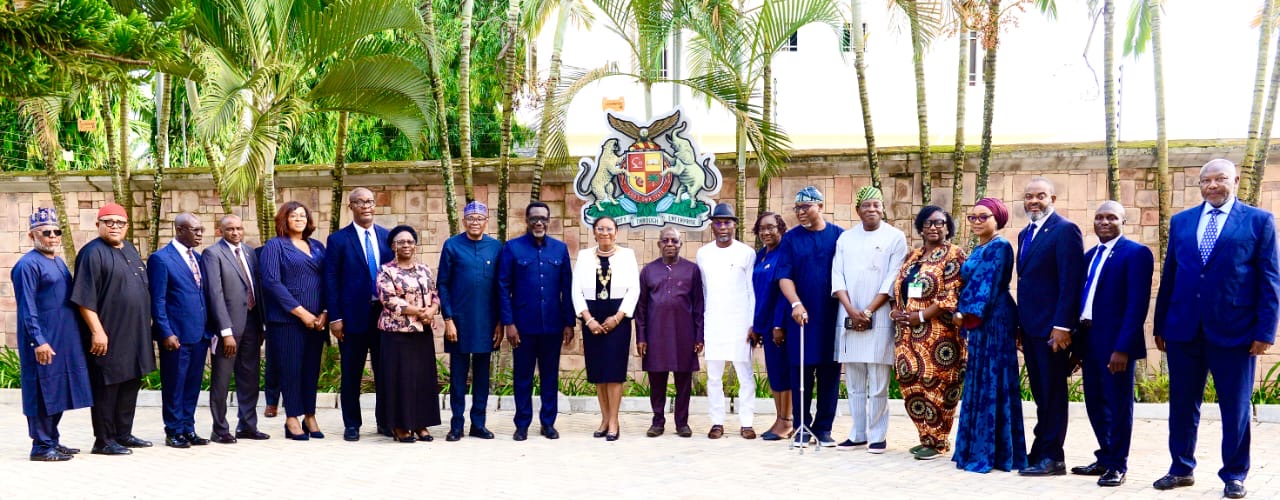
NKECHI NAECHE-ESEZOBOR—The Commissioner for Insurance and Chief Executive Officer of the National Insurance Commission, NAICOM, Olusegun Ayo Omosehin, yesterday led a high-level delegation of insurance industry leaders to Abia State as part of efforts to strengthen collaboration between the insurance sector and the state government.
The delegation paid a courtesy visit to Governor Alex Otti at the Government House in Umuahia to explore areas of partnership aimed at enhancing economic protection, risk management, and investor confidence.
During the engagement, Omosehin emphasized the critical role of insurance in safeguarding businesses, public assets, and livelihoods, noting that stronger cooperation between government and the insurance industry is essential for sustainable economic growth.
He also highlighted NAICOM’s ongoing reforms, including the establishment of the Insurance Policyholders’ Protection Fund (IPPF), designed to strengthen policyholder protection, promote prompt claims settlement, and reinforce public confidence in the insurance sector.
He explained that the Fund, created by NAICOM under the provisions of NIIRA 2025, is designed to protect policyholders by ensuring the prompt and equitable settlement of valid claims. According to him, the initiative will further strengthen consumer confidence and promote stability within the insurance market.
Governor Otti commended NAICOM for the progress recorded in the insurance sector and pledged the support of his administration toward building a sustainable partnership with industry stakeholders.
He noted that enhanced risk management, increased insurance awareness, and stronger consumer protection mechanisms would contribute significantly to economic resilience and growth in Abia State.
The delegation included the Deputy Commissioner for Finance and Administration, Mr. Ekerete Ola Gam-Ikon, as well as presidents and senior executives of the Nigerian Council of Registered Insurance Brokers, Nigerian Insurers Association, Chartered Insurance Institute of Nigeria, and Institute of Loss Adjusters of Nigeria.
The post NAICOM Boss Leads Insurance Team to Abia for Strategic Alliance appeared first on Business Today NG.


Moove, a global mobility company, on Thursday announced that it will conclude its operations in Nigeria, six years after the company was founded in Lagos.
“The company does so with deep gratitude to the customers, team members, partners and communities who gave Moove its start,” a statement said Thursday.
Moove was founded in 2020 by Ladi Delano and Jide Odunsi after they saw that many gig workers in Nigeria wanted to earn through mobility but could not access the vehicle financing they needed.
The company began with 76 vehicles in Lagos and developed its Rental & Drive-to-Own model to give mobility entrepreneurs access to new vehicles and a pathway to ownership.
What Moove built in Lagos became the foundation for a business that today operates 42,000 vehicles across 29 cities globally.
Since its inception, Moove has served more than 9,000 customers across both its Drive-to-Own and rental products, helping customers generate approximately ₦57 billion in revenue, supporting livelihoods, families and businesses across Nigeria.


As Moove concludes its Nigerian operations, the company said eligible vehicles with an estimated total value of approximately ₦35 billion will pass into full ownership of the customers who currently operate them, with no payment to Moove required for the vehicles themselves from 1 October 2026.
Moove will also reward all staff members with a free car as a sign of appreciation, the statement said.
The ‘Thank You Nigeria’ initiative is Moove’s way of recognising the customers, employees and wider community whose trust, skill and support shaped the company from its earliest days, it added.
Ladi Delano, Co-Founder, Co-CEO and Advisory Board Chairman of Moove, said:
“Nigeria is where Moove began, and everything we have built since carries something of Lagos with it. Jide and I started the company because talented, hardworking mobility entrepreneurs wanted the opportunity to earn, but could not get access to the vehicles and finance they needed. Our first customers trusted us when Moove was still an idea, and that trust made everything that followed possible and for that we “thank you”.
“More than 9,000 customers have used our Drive-to-Own and rental products in Nigeria.
Their work generated approximately ₦57 billion in revenue through Moove-financed
vehicles. Those numbers matter because they represent people earning, supporting their families and building their own futures.
“This is an emotional moment for us. Nigeria gave Moove its beginning, its first customers and many of the people who built the foundations of our company.”
READ ALSO: Moove secures $100 million in series B funding
The cofounder explained that eligible vehicles worth approximately N35 billion will pass into full ownership of the customers who operate them, with no further payment to Moove required for the vehicles themselves.
“To our Nigerian team, thank you. Your commitment, resourcefulness and belief in the mission carried Moove through its earliest and most important years. You turned an idea that began in Lagos into a company that now operates across 29 cities globally. Jide and I will always be grateful for what you have built and for the way you have represented Moove,”he said.
“To our customers, thank you for partnering with us and realising our collective ambitions. To our partners, regulators and the wider community, thank you for supporting a young Nigerian company and helping it grow into a global business.
“Nigeria will always be where Moove started. As we continue to grow internationally, we will do everything we can to make Nigeria proud and to build a lasting global success story that never forgets where it began. Wherever Moove goes next, our story will always start in Lagos.”
Moove will work directly with affected customers and employees as it concludes its Nigerian operations and completes the transfer of eligible vehicles.
Discover more from Premium Times Nigeria
Subscribe to get the latest posts sent to your email.
Business
Sierra Leonean President Bio, Elumelu rally West African private sector to turn regional potential into investment, jobs

The President of Sierra Leone and immediate past Chair of the ECOWAS Authority of Heads of State and Government, Julius Maada Bio, and leading African investor and Chairman of Heirs Holdings, Tony Elumelu, have called on West Africa’s private sector to move decisively from the promise of regional integration to its delivery.
They both called for support to mobilise capital, build competitive industries, create jobs, and transform the region’s vast economic potential into shared prosperity.
Hosting President Bio in Lagos ahead of the inaugural West Africa Integration and Investment Summit (WAIIS), Mr Elumelu brought together leading private sector and financial institution leaders for the inaugural physical meeting of the WAIIS Private Sector Advisory Board.
The meeting focused on four strategic areas with the potential to reshape West Africa’s economic future: energy trade and industrialisation, strategic minerals, agribusiness, and digital transformation.
President Bio set out an ambitious vision for WAIIS to consolidate a regional market of more than 400 million people and mobilise businesses from within West Africa and across the world to deepen trade, investment and economic cooperation.
“We are partners in execution — let us transform ideas into partnerships, partnerships into investments, and investments into lasting prosperity for our continent,” Mr Bio told members of the Advisory Board.
He added: “But potential is not prosperity. Our task is to convert these advantages into productive enterprises, competitive industries, regional value chains, jobs and wealth.”
Mr Elumelu welcomed President Bio’s initiative to place private capital and enterprise at the heart of the regional agenda, reaffirming his commitment to mobilising African and international investment alongside leading African financial institutions, including the Africa Finance Corporation, Afreximbank, United Bank for Africa (UBA), Ecobank, etc., to support the execution of priority projects.
The approach reflects Mr Elumelu’s philosophy of Africapitalism—the belief that the African private sector has a defining role to play in catalysing the continent’s economic transformation through long-term investment in critical sectors.
Mr Elumelu stressed that Africa’s businesses must increasingly look beyond national borders and combine capital, expertise and capabilities to build enterprises and industries capable of competing at scale, while creating jobs and expanding opportunity across the sub-region.
“This is consistent with our aspirations to create jobs for our young people,” Mr Elumelu said. “We have all it takes to be prosperous.”
But private sector ambition, he noted, must be matched by decisive government action.
“Governments must provide the policy certainty, regulatory efficiency and security required to give investors the confidence to commit capital for the long term.”
Lagos State Governor, Babajide Sanwo-Olu, underscored the importance of industrialisation and the free movement of goods and services in building a truly integrated West African market. He stressed that political leaders must provide the enabling environment, certainty and assurances required for businesses to invest, produce and trade across borders.
At the centre of the discussion was a shared conviction that West Africa has the scale, resources, talent and entrepreneurial capacity to become one of the world’s most dynamic economic regions.
With the Summit now less than two months away, Mr Bio called on members of the Advisory Board to move from advocacy to active mobilisation: engaging prospective investors directly, matching them with viable projects, and identifying the financing gaps, policy decisions and other interventions required to move transactions forward.
WAIIS will take place on 17–18 November 2026 at the Julius Maada Bio International Conference Centre in Lungi, Sierra Leone, bringing heads of state, investors and business leaders together to advance investment across energy, strategic minerals, agribusiness and digital transformation.
READ ALSO: How Nigeria’s Population Commission mismanaged N245 billion on undelivered products, other controversial contracts – Auditor-General
Notable names on the WAIIS Private Sector Advisory Board are Tony Elumelu — Chairman, Heirs Holdings; Aliko Dangote— Group President/Chief Executive, Dangote Group; Folorunso Alakija — Executive Vice Chairman, FA Limited; Samuel Dossou-Aworet — Founding Chairman, Petrolin Group; George Elombi — President & Chairman of the Board of Directors, Afreximbank; and Abdul Samad Rabiu, Chairman/CEO, BUA Group.
Others are Wale Tinubu — Group Chief Executive, Oando PLC; Samaila Zubairu — President & Chief Executive Officer, Africa Finance Corporation; Alain Ebobissé — Chief Executive Officer, Africa50; Jean-Claude Kassi Brou — Governor, Central Bank of West African States; Paulo Gomes — Founder and Chairman, Orango Investment Corporation; Benedict Okey Oramah — Chairman, Africa Trading Minerals (ATMIN); and Habib Yérim Sow — Group Chairman & CEO, Teyliom Group.
Discover more from Premium Times Nigeria
Subscribe to get the latest posts sent to your email.
-

 News3 days ago
2027: El-Rufai’s detention could hurt APC, generate sympathy – SEDSAC director, other analysts express views
-
News3 days ago
Lucid Motors’ EV output falls to lowest level in almost 2 years
-
Business3 days ago
NAIPE 11th Annual Conference Moves to 12 Noon as 28 Stakeholders Back Event
-
News2 days ago
Mirror Particle is building a ‘world model’ of human behavior