News
Warp’s new system is an out-of-the-box software factory for AI development

Companies are still grappling with exactly how software development should work in the AI area, but one early answer is the so-called software factory. Essentially an agent loop that’s built around the traditional stages of software development, the software factory approach has become a popular way for companies to remake their engineering organizations for the AI era.
Now, a system from Warp could make that transition a lot easier. On Tuesday, the AI coding company introduced Warp Factories, a new system designed to make building and operating AI software factories as easy as possible.
Operating as an infrastructure layer, Warp Factories gives companies a simple environment for deploying agents and a roadmap for how to use them.
To be clear, many companies are already having success with the factory model without any help from Warp. Stripe has been particularly public about its technical progress, developing a “minions” system to automate development within its own codebase. Ramp has made similar progress, developing a background agent that can monitor its own code after it is deployed.

As Warp CEO Zack Lloyd sees it, the target market for Warp Factories will be smaller companies without the resources to develop a system from the ground up.
“[If you look at] things like running your agents in the cloud and steering those agents as they run, or bringing the work that they’re doing into your local environment, or setting up memory that goes across those agents, or setting up evals that go across those agents — it’s actually a huge infrastructure undertaking to do this right,” Lloyd told TechCrunch.
In Warp Factories, the architecture is already built out of the box, with many of the most difficult decisions already made. Warp’s system is based on the standard phases of software development (triage, specification, implementation, review, and verification) but the agentic approach means any of those steps can be automated.
Users can choose their own coding model and harnesses as necessary; the system works as well with Codex as Claude Code. It also integrates with ticketing systems like Linear and Jira, and messaging systems like Slack and Teams, in an effort to plug in seamlessly to existing workflows.
Beyond just shipping code, Warp Factories will also give managers the tools to track how well the factory is performing. With all the agents running in the same environment, it’s easy to compare performance metrics for different configurations, and to keep an eye on the overall token spend. Warp Factory also allows for self-improvement loops to optimize the overall system, automating management of the process itself.
Even so, Warp Factories is not built to completely replace software engineers — just give them an easier way to collaborate with the new agentic workforce. In Lloyd’s own experience, there are still a lot of tasks that require a human at the wheel.
“We automate like 30% of our tasks, 30 to 35% on a weekly basis,” Lloyd told TechCrunch, “and as models improve, as the context improves, as the harness improves, I think that that number is going to go up over time.”
When you purchase through links in our articles, we may earn a small commission. This doesn’t affect our editorial independence.






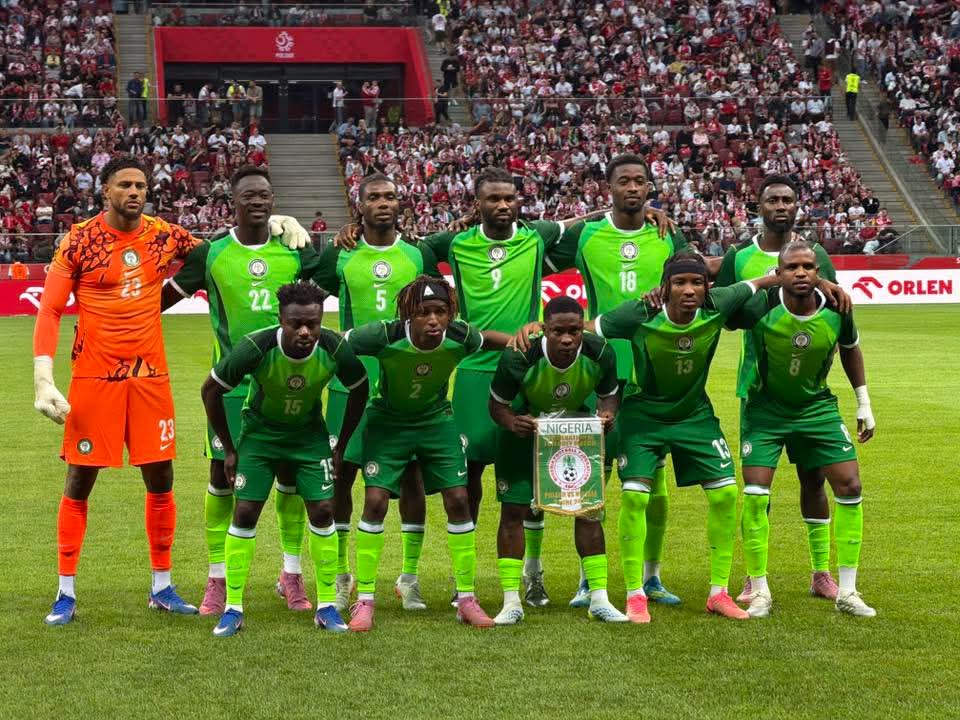
George Ilenikhena and Akor Adams both missed training on Sunday, raising doubts over their availability for the match in Bissau.
The two strikers featured in Nigeria’s 2-1 win over Madagascar last week but failed to finish the game. Adams was substituted after just over an hour, while Ilenikhena was taken off in the 69th minute.
Their latest injury concerns come at a difficult time for Nigeria, with Victor Osimhen already missing out of the squad through injury.
Coach Eric Chelle, however, still has other options in attack. Taiwo Awoniyi and Tolu Arokodare both came off the bench against Madagascar and could be handed starting roles if Ilenikhena and Adams are unavailable.
Moses Usor is also pushing for a place in the starting XI after scoring off the bench against Madagascar.
Wilfred Ndidi and Alex Iwobi are expected to continue in midfield, while Ademola Lookman and Samuel Chukwueze could provide attacking support from the flanks.
Stanley Nwabili is expected to keep his place in goal, with Arthur Okonkwo still waiting for his Nigeria debut.
Chelle could also make changes to the defence after most of his defenders played almost the entire game against Madagascar. Bright Osayi-Samuel could come into the starting XI to provide fresh legs.
Predicted Nigeria XI vs Guinea-Bissau
Nwabili; Osayi-Samuel, Ajayi, Bassey, Onyemaechi; Chukwueze, Ndidi, Iwobi, Lookman; Awoniyi, Arokodare.

-

 News3 days ago
Crusoe abandons $1.25B plan to use Boom turbines at AI data centers
-
Health4 days ago
WHO expands recommended contraceptive options, backs longer-lasting methods
-
News2 days ago
Alex Otti should be campaigning for Peter Obi not backing Tinubu – NDC
-
News4 days ago
Waymo is scaling fast. Here’s what the fleet data shows.