Business
First HoldCo to pay 60% of annual profit as dividends



First HoldCo has shifted to a liberal dividend policy that seeks to distribute at least 60 per cent of its annual post-tax profit as dividends.
The board of directors of the bank holding company adopted the policy at a meeting on Tuesday, the group stated in a regulatory filing on Thursday, underscoring its resolve to prioritise shareholder returns over retaining most of its profits in the business to drive growth.
First HoldCo said the move highlights its directors’ confidence in its earnings capacity, enhanced capital position, improving asset quality, diversified revenue streams, and robust outlook for sustained profitability and growth. The move offers succour to shareholders who had to endure the last financial year without dividends—the first time in many years—after a massive bad-loan loss provision obliterated much of the cash that could have gone into rewarding shareholders.
The financial institution set aside ₦748.1 billion to cover problem loans on its books for 2025, after the Central Bank of Nigeria, in the spirit of international best practices, ordered lenders still carrying forbearance loans from the Covid-19 era to clear their balance sheets of toxic assets.
Profit for the year fell to ₦147.3 billion from ₦663.5 billion, following the provision.

“At First HoldCo, we decided to clean house properly. We took a huge one-time hit of ₦748 billion to admit old bad loans instead of pretending they do not exist,” Femi Otedola, the chairman of the banking group, said in January.
“That is why profit looks like it crashed by 92 per cent. A painful headline, but it is a serious long-term move,” he added.
Regulation also held back peers like United Bank for Africa and Access Holdings from distributing dividends to shareholders for the 2025 financial year on that score.
READ ALSO: Otedola acquires 1.78 billion First HoldCo shares, lifts stake to 26%
“Over the last two years, we have undertaken difficult but necessary actions to strengthen governance, clean up the balance sheet, restore confidence, rebuild capital, and reposition the group for long-term growth,” Mr Otedola said in the Thursday statement.
“We are now beginning to see the benefits of those strategic decisions. As performance continues to improve across our businesses, it is only appropriate that our shareholders participate more directly in the value being created.”
Revenue in the first half of 2026 rose 16.7 per cent to ₦1.9 trillion. Pre-tax profit ascended to ₦653.5 billion from ₦356.1 billion, while after-tax profit jumped to ₦526.3 billion from ₦283.8 billion.
Discover more from Premium Times Nigeria
Subscribe to get the latest posts sent to your email.







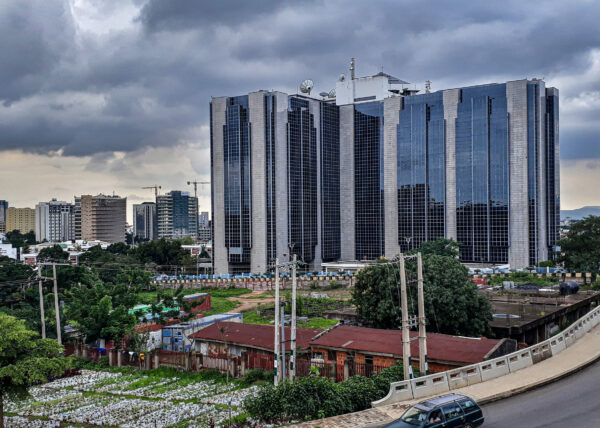
Nigeria’s business activity strengthened in September 2026, but households became more pessimistic about economic conditions, finances and prices, according to new reports by the Central Bank of Nigeria (CBN).
The CBN’s September Purchasing Managers’ Index (PMI) showed that overall economic activity expanded for the fourth consecutive month, with the Composite PMI rising to 53.0 points from 52.7 points in August.
The survey, conducted between 7 and 11 September among 1,900 purchasing and supply executives across the Industry, Services and Agriculture sectors, showed that 23 of the 32 subsectors surveyed recorded expansion, while nine declined.
The improvement was supported by stronger industrial activity, with the Industry PMI rising to 52.0 points in September from 50.6 points in August, marking a second consecutive month of expansion.
The sector’s Output Index also rose to 53.2 points, supported by increases in new orders and employment, while the Raw Materials Inventory Index returned to expansion at 51.1 points from 49.4 points in August.
The Services sector remained in expansion at 53.2 points, compared with 53.3 points in August, while the Agriculture PMI eased slightly to 53.1 points from 53.4 points.

The regulatory body said agriculture had now recorded 26 consecutive months of expansion.
However, the improvement in business activity was accompanied by renewed pressure on input prices.
The Composite input price index increased by 0.8 points in September, while the output price index declined by 0.5 points.
CBN said the September PMI pointed to a “broadening recovery” in economic activity, although the renewed increase in input price pressures warranted close monitoring.
Household expectations
Meanwhile, the picture was less positive among households. In a separate report, CBN’s September Household Expectations Survey, it was revealed that the Overall Consumer Sentiments Index fell sharply to -18.7 points from -9.9 points in August, indicating increased pessimism about the economy.
The Economic Conditions Index stood at -21.5 points, while the Family Financial Situation Index was -23.9 points and the Family Income Sentiments Index stood at -10.5 points.
This indicates a pessimistic outlook on current economic conditions among households and regarding their family financial situation.
Also, the report showed that Nigerian households also reported stronger concerns about prices.
The average price sentiment index rose to 33.5 points from 23.0 points in August, indicating that respondents perceived prices as remaining high. Among the selected items, households reported the lowest perceptions of price changes for food and telecommunication services.
The Central Bank said households expected price pressures to remain elevated over the next three and six months, with the price outlook indices standing at 29.7 and 28.4 points, respectively.
Meanwhile, Nigeria’s headline inflation eased marginally to 15.39 per cent in August 2026 from 15.43 per cent in July, according to the National Bureau of Statistics (NBS), while month-on-month inflation fell more sharply to 0.71 per cent from 1.57 per cent.
CBN said the respondents’ cautious mood was also reflected in household spending intentions, with food remaining the dominant expenditure priority, followed by transportation, other household goods, education, and electricity and water.
It said households remained particularly reluctant to make major purchases. The sentiment indices for house purchases, motor vehicles, investments and consumer durables were all negative, at -68.2, -67.3, -50.7 and -49.5 points, respectively.
Buying conditions also remained weak, with the index for consumer durables at 24.8 points and that for motor vehicles and buildings and landed properties at 24.2 points, all below the 50-point threshold.
The survey further showed that 61.1 per cent of respondents believed faster price increases would weaken the Nigerian economy, while 62.2 per cent preferred lower lending rates.
However, 45.1 per cent favoured higher interest rates when they were presented as a means of containing inflation, while 44.8% preferred lower interest rates, even at the cost of rising inflation.
READ ALSO: CBN urges Nigerians to handle Naira with care
Despite the weak September sentiment, households expected confidence to improve gradually, with the Overall Consumer Sentiments Index projected at -8.7 points next month, -0.4 points over the next three months and 7.1 points over the next six months.
The contrasting findings suggest that while business conditions continued to improve in September, households remained under pressure from high prices, interest rates and concerns about their finances.
The regulatory body said households remained cautious during the month, with subdued buying conditions and purchase intentions pointing to persistent concerns about household finances and economic conditions.
Discover more from Premium Times Nigeria
Subscribe to get the latest posts sent to your email.
-

 Health2 days ago
Plateau: Medical Women Association of Nigeria Marks Older Persons Day with Free Outreach
-
News3 days ago
PLASU Opens Doors to Global Investors at 2nd Inaugural Lecture
-
News4 days ago
Nigeria At 66: Rotjimwa Yilyok Salutes President Tinubu, APC Leadership and Plateau Government
-
News4 days ago
Plateau Specialist Hospital Celebrates Nigeria at 66, Salutes Mutfwang’s Health Initiatives