Business
Tinubu Flags Off N73bn Customs Project in Ogun







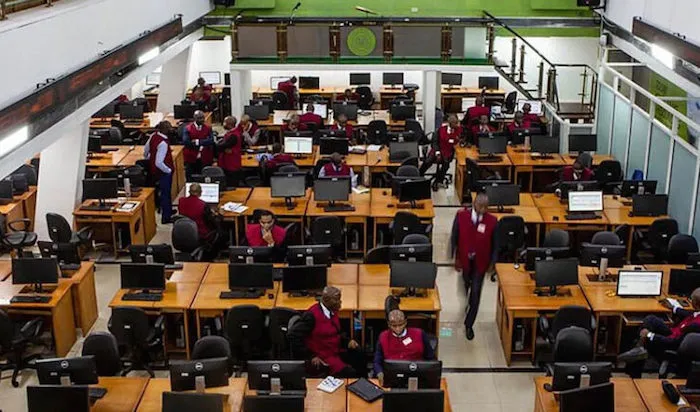

Nigerian stocks slid by 1.6 per cent last week, following profit-taking activities across all sectors except oil & gas.
The Insurance Index was worst hit, declining by 5.5 per cent, and remains the only sector index so far this year with a negative yield.
“Stocks with strong earnings, attractive valuations and consistent dividend payouts should also remain in focus,” investment bank United Capital Plc said in a note to investors ahead of the week.
This week, focus will shift to the primary market, where the landmark $1.6 billion initial public offering of Dangote Refinery will be commencing.
PREMIUM TIMES has assembled some stocks with sound fundamentals, adopting rigorous approaches to save you the risk of picking equities at random for investment.

The pick, a product of an analytical market watch, offers a guide to entering the market and taking strategic positions, with the expectation that selected stocks will record reasonable price appreciation with the passage of time.
This is not a buy, sell or hold recommendation but a stock investment guide. You may need to involve your financial advisor before taking investment decisions.
Transnational Corporation (Transcorp)
Transcorp tops this week’s list for its strong fundamentals and for trading below its intrinsic value. The net profit ratio (NPR) of the conglomerate is 24.7, while the price-to-earnings (PE) ratio is 4.5x. Its 10-day relative strength index (RSI) is 31.5.
AXA Mansard
AXA Mansard appears on the pick on the basis of its attractive fundamentals. The NPR of the insurer is 3.4, while the PE ratio is 29.8x, while the RSI is 47.3.
Guaranty Trust Holding Company (GTCO)
GTCO makes the selection for its strong fundamentals and for trading below its intrinsic value. The banking group’s NPR is 37.4, while the PE ratio is 5.4x. Its RSI is 47.8.
ALSO READ: Stanbic IBTC, Mutual Benefits, Aradel top stock picks this week
NPF Microfinance Bank
NPF Microfinance Bank makes the cut for its sound fundamentals. The PE ratio of the micro-lender is 7.2x, while the RSI is 22.5.
Neimeth
Neimeth makes the cut for its sound fundamentals. The NPR of the pharmaceutical company is 12.2, while the PE ratio is 33.2x. The RSI is 40.8.
Discover more from Premium Times Nigeria
Subscribe to get the latest posts sent to your email.

The Centre for the Promotion of Private Enterprise (CPPE) has cautioned against restoring the petrol subsidy, describing the policy as fiscally unsustainable despite the severe economic pressures caused by rising petrol prices.
The private-sector advocacy group, in a policy brief signed by its Chief Executive Officer, Muda Yusuf, on Sunday, said the recent escalation in petrol prices had increased transportation, logistics and production costs, weakening consumers’ purchasing power.
It added that the recent increase in fuel prices also worsened the competitiveness challenges confronting businesses, particularly micro, small and medium enterprises (MSMEs).
CPPE’s position comes amid renewed calls for a return to fuel subsidy, including a pledge by former Vice-President Atiku Abubakar to restore a targeted petrol subsidy if elected in 2027.
The organisation said the subsidy debate should not be reduced to the issue of pump prices, arguing that it has wider implications for Nigeria’s fiscal sustainability, foreign exchange stability, investment, domestic refining, industrialisation, employment and energy security.
“The central policy question is therefore not whether Nigeria should return to the old subsidy regime, but how to preserve the gains of the reform while reducing its social costs and translating the resulting fiscal space into tangible improvements in citizens’ welfare,” CPPE said.
Subsidy regime
According to the think tank, Nigeria previously spent an estimated $10 billion to $15 billion annually on petroleum-product imports before the subsidy reform.
It said subsidy and under-recovery obligations also consumed significant public resources, constrained remittances to the Federation Account and intensified fiscal pressures.
CPPE said artificially low domestic petrol prices also encouraged arbitrage and cross-border diversion, effectively resulting in Nigerian public resources subsidising fuel consumption outside the country.
“The old regime was therefore not merely a subsidy problem; it was a major fiscal, foreign-exchange and resource-allocation problem,” the think tank said.
Domestic refining
The group said the shift to market-based petrol pricing had improved the commercial viability of domestic refining by creating stronger investment incentives in the sector.
The think tank argued that a competitive domestic refining industry would generate opportunities beyond petrol production, including in diesel, aviation fuel, petrochemicals, fertiliser, plastics, chemicals, logistics, storage and maritime services.
“Domestic refining also conserves foreign exchange through import substitution, creates export opportunities and retains refining, engineering, logistics and technical jobs within the Nigerian economy,” CPPE said.
It urged Nigeria to pursue the transition from dependence on imported petroleum products to becoming “a competitive regional refining and petrochemical hub.”
CPPE acknowledged that subsidy removal had increased revenues available to the federal, state and local governments but said higher government revenues alone could not justify the reform.
“Citizens must see tangible benefits through improved public transportation, electricity, healthcare, education, food security, infrastructure and social protection,” it said.
The organisation said the debate should now focus increasingly on fiscal accountability and the quality of government spending.
It called on the three tiers of government to transparently demonstrate how the additional resources arising from the reform were being used to improve economic and social outcomes.
Global oil shock
The group also stressed the need to distinguish the price increase associated with subsidy removal from more recent increases attributed to movements in global crude oil and refined-product prices.
According to CPPE, petrol was selling at about N774 to N800 per litre before the latest escalation in international energy prices, while prices subsequently rose above N1,300 per litre amid what it described as a sharp increase in global energy prices linked to the Middle East crisis.
“It would therefore be incorrect to attribute the entirety of the latest petrol-price increase to subsidy removal,” the organisation said.
The think tank described the two developments as separate issues requiring different policy responses: the first, a domestic structural reform involving the transition to market-based pricing, and the second, an external commodity price shock.
N20 trillion subsidy bill
CPPE said restoring a universal petrol subsidy could recreate the fiscal and foreign-exchange pressures that prompted the reform.
Using an estimated petrol consumption benchmark of 50 million litres per day and an indicative subsidy requirement of N1,050 per litre, the organisation estimated that the potential subsidy exposure could amount to about ₦ 152.5 billion daily, N1.575 trillion monthly, and approximately N19.16 trillion annually.
It described the figure as an annual burden of about N20 trillion, while acknowledging that the actual cost would depend on factors including consumption, crude oil prices, exchange rates, refining or landing costs, and the regulated pump price.
CPPE also warned that consumption could increase under a subsidy regime as price differentials could recreate incentives for cross-border diversion.
“An annual subsidy bill approaching N20 trillion would impose an enormous opportunity cost,” it said.
According to the organisation, such spending could compete with funding for infrastructure, education, healthcare, security, agriculture and social protection, while potentially widening the fiscal deficit and increasing borrowing and debt-service pressures.
It further warned that increased government borrowing could crowd out private-sector credit, sustain high interest rates and weaken investment, productivity, job creation and economic growth.
“Nigeria would therefore risk replacing an energy-price problem with a much larger fiscal, debt, foreign-exchange and investment problem,” CPPE said.
Targeted relief
Rather than restoring the the petrol subsidy, the organisation urged the government to implement targeted interventions to reduce household vulnerability and business costs.
It recommended expanding affordable public transportation, rail freight, and logistics infrastructure; improving electricity supply; accelerating compressed natural gas (CNG), solar, and distributed energy solutions; and strengthening food production through improved agricultural security, irrigation, rural infrastructure, and logistics.
CPPE also called for targeted support for vulnerable households, improved public healthcare and education, and measures to reduce energy, logistics and financing costs for productive enterprises, particularly MSMEs.
READ ALSO: CPPE urges NMDPRA to tie petrol imports to verified supply gaps
It urged the government to maintain a predictable, market-oriented framework for the downstream petroleum sector to protect investor confidence and encourage further investment in domestic refining.
“The appropriate policy direction is to preserve the downstream petroleum reforms while aggressively mitigating their social and economic costs,” the organisation said.
CPPE said the fiscal gains from subsidy removal must become more visible through infrastructure, public services and productive investment, alongside greater transparency and accountability in the utilisation of additional revenues accruing to the federal, state and local governments.
“The subsidy debate should therefore move beyond the binary question of whether petrol subsidy should be restored.
“The more consequential issue is how Nigeria can convert the gains of the reform into lower structural costs, stronger domestic production, improved competitiveness, greater energy security and measurable improvements in citizens’ welfare,” it said.
The organisation said the recommendations would make the reform “economically sustainable and socially defensible.”
Nigeria’s petrol subsidy was removed in May 2023 after President Bola Tinubu announced during his inauguration on 29 May that “the fuel subsidy is gone.”
The announcement effectively ended the government’s previous system of subsidising petrol costs, prompting the Nigerian National Petroleum Company Limited (NNPC Ltd) to adjust pump prices nationwide in June 2023.
The reform was intended to reduce the government’s financial burden from subsidising petrol.
Discover more from Premium Times Nigeria
Subscribe to get the latest posts sent to your email.
-

 Featured4 days ago
Children Are Suffering in Silence: Plateau Child Protection Network Rates Abuse Crisis 9/10
-
Business4 days ago
CBN disowns purported $46 billion grant approval
-
Health3 days ago
23 million children vaccinated against polio, other diseases in six months — Report
-
News3 days ago
Mecka AI nears $500M valuation in Sequoia-led deal amid rush for robot training data