Connect with us

News

Starship’s path to reusability looks murky after SpaceX’s S-1

info

Published

on

Screenshot 2026 05 26 at 11.33.33 AM.png

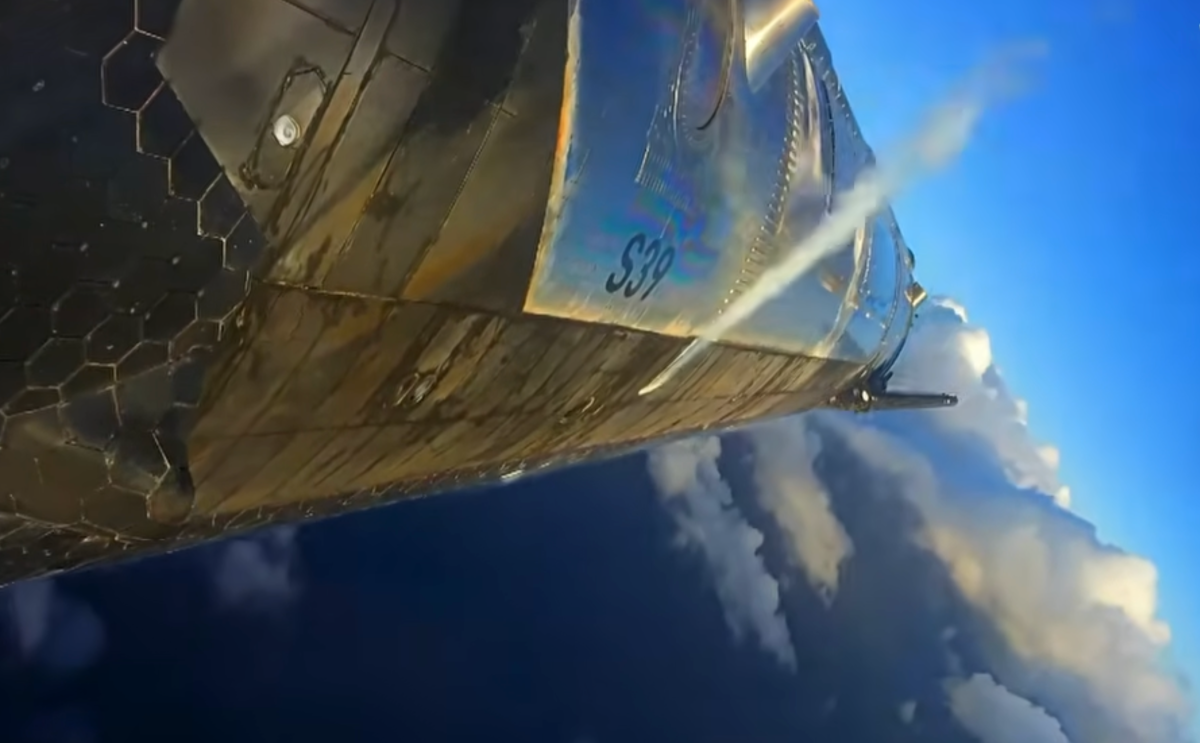
SpaceX’s recent IPO and Starship rocket test flight delivered two big data points that offer a realistic vision for the coming years — and one that may disappoint both the company’s boosters and its critics.

Hidden behind the fantastic expectations for AI enterprise profits and plans for a Moon base is a more grounded reality: an expendable Starship could keep SpaceX in business, but doesn’t achieve the cost reductions — or frontier business models — Elon Musk is betting on.

SpaceX is many businesses, but right now only one is producing significant revenue. Starlink, its satellite communications network, is the tent-pole of the firm’s public offering. The top line is fairly incredible; SpaceX’s connectivity business generated $11.4 billion in revenue last year, the bulk of the company’s earnings.

But underneath, you can see the capital expenditure treadmill that scared previous entrepreneurs away from this model. SpaceX needs to replace about a fifth of its satellites every year just to maintain its current level of service. It has invested more in its satellite business ($11.4 billion) since the beginning of 2023 than it has building Starship and its launch infrastructure ($8.4 billion).

SpaceX’s S-1 filing with the U.S. Securities and Exchange Commission predicts costs will continue growing, but expects that improvements to its technology will allow it to reduce them as a percentage of its revenue.

Musk has said that Starship is the key to keeping Starlink’s costs under control, even saying that SpaceX could go bankrupt without the vehicle’s ability to replace those satellites cheaply. In that context, a note that stood out in SpaceX’s S-1 was the first acknowledgment that full reusability of Starship isn’t necessary to launch the new generation of Starlink satellites. But without full reusability, the cost will go up, making the business less attractive.

“If this reusability is not achieved then the cost of launch on Starship may not be much lower than Falcon 9, even if the full 100 ton capability is realized (which is by no means a foregone conclusion),” satellite market analyst Tim Farrar wrote in a note to clients last week. “The cost per launch may be as much as $100M (i.e. $1000 per kg) while tempo remains constrained by the rate at which second stages can be manufactured and first stages can be refurbished.”

Last week’s test flight of the third version of Starship and its booster bore those concerns out. The newest rocket’s maiden flight saw issues with a key capability for reusability — relighting the Raptor rocket engines on both the booster and Starship in order to make a controlled return to the Earth. Starship did, however, deploy a set of dummy satellites and two test vehicles in space.

That helps square SpaceX’s prediction that it will begin launching a new generation of higher-throughput Starlink satellites 60 at a time, a twenty-fold increase in capacity compared to a single Falcon 9 launch, later this year. At first glance a classic example of Musk’s timelines, it may actually be an expectation that initial launches will expend the Starship. If so, SpaceX might not be able to count on as much free satellite cash as expected, and its plans to launch space data centers will become untenable until the rocket is reusable.

At the same time, SpaceX’s S-1 shows that Starlink’s growth is slowing.

SpaceX’s total addressable market calculation is based on its ability to offer service to every fixed-broadband subscriber or mobile handset in the world. That’s unlikely though because Starlink isn’t competing on price with terrestrial fiber. The rest of the document suggests SpaceX continues to see direct-to-device as a complement, rather than a replacement, for terrestrial mobile providers.

Starlink has just over 10 million subscribers, more than any other satellite communications network. But Farrar notes the rate of user growth fell over the course of the first quarter of 2026. Quilty Space, a space consulting firm, projected earlier this year that SpaceX would end the year with 16.8 million subscribers. That would require the company’s quarterly growth rate to roughly double from where it is now, which may be difficult after recent price increases.

Growth matters for SpaceX because its new Starlink users are paying less than previous ones. Starlink’s average revenue per user has fallen from $99 in 2023 to $66 in the first quarter of 2026 — a change propelled by its expansion into new international markets where it can’t charge as much as it does in developed economies. Without a fast-growing user base, each new satellite launched is making less money.

Increased competition also threatens Starlink. Amazon’s Leo network is approaching the scale required to put pressure on SpaceX, although it is waiting for the Federal Communications Commission to extend a deadline that requires it to launch 1,600 internet satellites by July.

Data in the SpaceX filing presents a gloomy growth forecast for the company as well as rivals like Blue Origin. Farrar says that if SpaceX — much further ahead than any other company — is seeing slowing demand, that may signal the market for space broadband is smaller than the players anticipated.

When you purchase through links in our articles, we may earn a small commission. This doesn’t affect our editorial independence.

Continue Reading
Click to comment

Leave a Reply

Your email address will not be published. Required fields are marked *

News

Super Eagles Impressive in Narrow Defeat by World Cup-bound Portugal in Leiria

info

Published

on

By

IMG 20260610 WA0370.jpg

The Super Eagles showed great form, confidence and praiseworthy fighting spirit despite losing 1-2 to FIFA World Cup-bound Portugal in an explosive friendly match in Leiria on Wednesday night.

Just before kick-off, Chairman of the National Sports Commission, Mallam Shehu Dikko and NFF Executive Committee member Sharif Rabiu Inuwa presented a special framed shirt to midfielder Alexander Iwobi to mark the occasion of his 100th appearance for the Super Eagles.

Cristiano Ronaldo, one of the greatest individuals to have played the game, led the Seleção das Quinas out onto the turf of the Estádio Dr Magalhães Pessoa, but the home team and crowd soon realized that the three-time African champions were not in any mood to simply turn up and be dazzled.

Ronaldo missed with only goalkeeper Maduka Okoye to beat in the 9th minute, but at the other end, Akor Adams also missed as he dragged his shot a little too wide to the left.

In the 23rd minute, Pedro Neto steered Portugal in front as he fired a grounder past Okoye from close range, after a pass by Diogo Dalot as das Quinas broke forward again.

Ten minutes later, Okoye spectacularly saved a fierce shot by Bruno Fernandes, and just a minute after, Ronaldo missed narrowly with a glancing header from Fernandes’ corner.

Nigeria kept probing. The fit-fight Akor contested an aerial ball close to the centre circle and tipped the ball away from two Portuguese defenders, ran to his left to await delivery by Fisayo Dele-Bashiru, and blasted past Diogo Costa for Nigeria’s leveller with 37 minutes gone.

In the second half, Okoye made a double save from João Félix, in the 48th and 49th minutes. Five-time Ballon d’Or winner Ronaldo also continued his search for a goal, but he failed to connect well from a cross in the 50th minute.

On the hour, Coach Éric Chelle made a number of changes, bringing in Abdullahi Bewene, Zaidu Sanusi, Terem Moffi, Raphael Onyedika and Frank Onyeka.

This appeared to rejuvenate Nigeria’s game, and they were once more pushing forward with elan, as Ronaldo exited in the 65th minute without the goal he wanted so much.

With 15 minutes left, Francisco Çonceicao got the winner for the das Quinas, firing home after cutting in from the right and with Okoye’s sight somewhat impaired.

Félix’s efforts to get on the scoresheet was again scuttled in the 84th minute by Okoye, who pushed away another fierce delivery by the forward.

The loss was only the second in regulation time for Coach Chelle after leading the Super Eagles in 25 matches over the past 15 months.

Continue Reading

Business

NCC Chief Aminu Maida to Keynote 2026 DigitalSENSE Forum in Lagos

info

Published

on

By

IMG 2059.jpeg

The Executive Vice Chairman and CEO of the Nigerian Communications Commission (NCC), Dr. Aminu Maida, is set to deliver the Keynote Address at the upcoming 2026 Nigeria DigitalSENSE Forum (NDSF) on Internet Governance for Development (IG4D). Scheduled for this Thursday, June 11, 2026, at the Banquet Hall, Welcome Centre Hotels in Lagos, the landmark 17th milestone edition will anchor its deliberations on the crucial theme: “Sustaining WSIS Vision with Multistakeholder Synergy in Nigeria.”

Dr. Maida’s address will focus on the regulatory frameworks required to preserve the World Summit on the Information Society (WSIS) vision through inclusive, multi-stakeholder partnerships. The high-level forum and its prestigious industry awards have rallied robust support from the foundational pillars of Nigeria’s telecommunications and digital infrastructure ecosystem.

Major public and private sector players are heavily backing the forum as part of their commitment to promoting critical national infrastructure and securing Nigeria’s digital possibilities. Among the leading sponsors driving this momentum are IHS Nigeria—the nation’s premier digital infrastructure champion boasting over 16,000 telecom towers and 15,000km of fiber optic cables—and data center colocation leader Digital Realty.

Ogbuefi Remmy Nweke, the Editor-in-Chief of host media organization ITREALMS Media Group, commended the immense institutional support flowing from the industry ahead of the event.

“Achieving sustainable internet governance and digital trust requires an intentional alignment of regulation and infrastructure,” Nweke remarked. “The active collaboration of the NCC, IHS Nigeria, and Digital Realty ensures that the 2026 forum will move beyond mere dialogue to produce clear, actionable policy recommendations for our digital economy.”

The event will be presided over by Dr. Olusola Teniola (hon), Director of Strategic Business Initiatives at ipNX Nigeria and former President of the Association of Telecommunications Companies of Nigeria (ATCON), who will deliver the Chairman’s Opening Speech on the 2026 NDSF blueprint.

A broad coalition of leading telecommunications, technology, and internet governance stakeholders have also thrown their weight behind the event. These include ICT infrastructure leader MTN Nigeria; the Association of Licensed Telecoms Operators of Nigeria (ALTON); premier software and DNS infrastructure firm Upperlink Limited; and the Nigeria Internet Registration Association (NiRA), managers of the .NG country code Top Level Domain name.

The post NCC Chief Aminu Maida to Keynote 2026 DigitalSENSE Forum in Lagos appeared first on Business Today NG.

Continue Reading

Trending